

Quick Answer
Chakra colors follow a rainbow sequence from red to violet, with each of the seven chakras representing a different energy center along the spine: Root (red), Sacral (orange), Solar Plexus (yellow), Heart (green), Throat (blue), Third Eye (indigo), and Crown (violet or white).
This chakra guide covers the traditional Sanskrit names, meanings, and symbolism behind each of the seven chakra colors, rooted in yogic and Tantric traditions dating back roughly 1500-500 BCE. These are spiritual and symbolic frameworks, not medical claims, used in meditation, yoga, and energy-awareness practices rather than clinical treatment.
What Are Chakras? A Quick Primer
Chakra is Sanskrit for “wheel,” referring to spinning energy centers believed to run along the spine from the base to the crown of the head. In this tradition, chakra energy, or prana, flows through these centers, and balance across all seven is considered key to physical, emotional, and spiritual wellbeing.
The system originates in ancient Hindu and Tantric Buddhist texts, with the seven main chakras most widely recognized today, though more complex traditional models describe up to 114 total energy points. Each of the seven chakras is associated with a Sanskrit name, a location in the body, an element, and a color.
A quick historical note worth knowing: the now-famous rainbow (ROYGBIV) chakra color sequence isn’t as ancient as it’s often presented. According to chakra historian Kurt Leland, the system gradually picked up its rainbow and endocrine-gland associations between the 1920s and 1950s, with the color scheme appearing in print for the first time in 1977. The chakras themselves are ancient; the specific rainbow color-coding is a more recent Western addition layered onto that older tradition.
The Seven Chakra Colors Explained
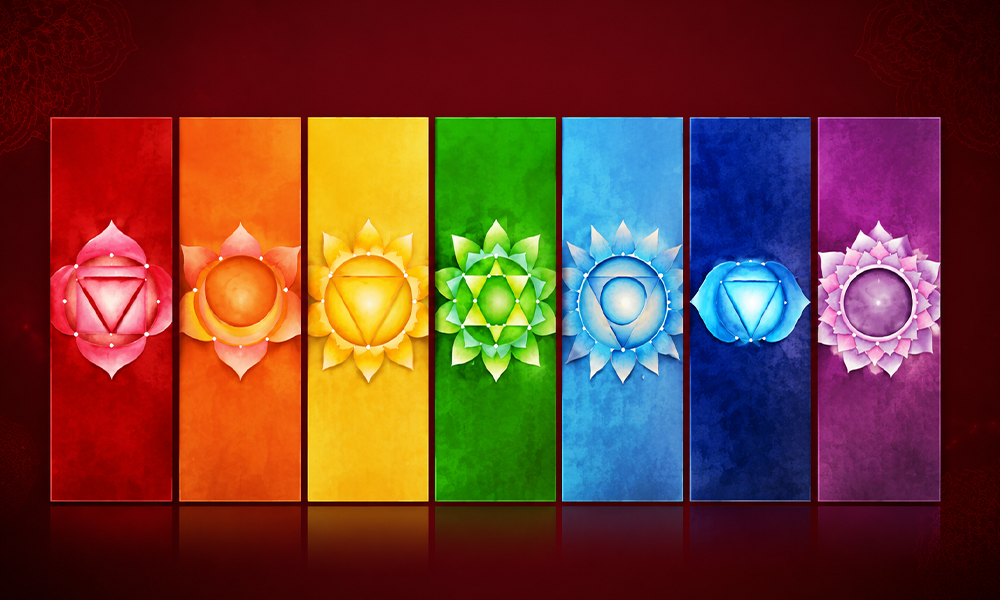
These chakra color meanings move from the most physical, grounding energy at the base of the spine to the most spiritual, transcendent energy at the crown of the head.
1. Root Chakra (Muladhara) Red
The Root Chakra sits at the base of the spine. Its Sanskrit name, Muladhara, combines “mula” (root) and “adhara” (support or foundation).
Color meaning: Red represents grounding, safety, survival, and connection to the physical world and the earth. It’s tied to the adrenal glands and the body’s fight-or-flight response.
Symbol: A four-petaled lotus surrounding a square, representing stability, with an inverted triangle symbolizing the anchor of the physical world.
When balanced: A sense of security, stability, and groundedness. When blocked: Restlessness, insecurity, or feeling disconnected from your body and surroundings.
2. Sacral Chakra (Svadhisthana) Orange
Located just below the navel, the Sacral Chakra governs creativity, emotional expression, and sensuality.
Color meaning: Orange represents creativity, pleasure, passion, and the ability to flow with change rather than resist it.
Symbol: A lotus with crescent moon imagery, tied to the water element and emotional fluidity.
When balanced: Creative flow, healthy emotional expression, and comfort with sensuality. When blocked: Creative blocks, emotional numbness, or guilt around pleasure.
3. Solar Plexus Chakra (Manipura) Yellow
Positioned in the upper abdomen, the Solar Plexus Chakra is the seat of personal power and confidence.
Color meaning: Yellow represents self-esteem, willpower, and the ability to take decisive action. It’s associated with the element of fire.
Symbol: A downward-pointing triangle inside a lotus, representing the transformative power of fire.
When balanced: Confidence, motivation, and a clear sense of purpose. When blocked: Low self-esteem, indecision, or a need for control over others.
4. Heart Chakra (Anahata) Green
The Heart Chakra sits at the center of the chest and bridges the lower, physical chakras with the upper, spiritual ones.
Color meaning: Green represents love, compassion, and connection through empathy. It’s linked to the element of air and is often associated with self-healing.
Symbol: A six-pointed star (two overlapping triangles) within a lotus, symbolizing the union of masculine and feminine energy.
When balanced: Compassion, healthy relationships, and emotional openness. When blocked: Difficulty trusting others, holding grudges, or emotional withdrawal.
5. Throat Chakra (Vishuddha) Blue
Located at the throat, this chakra governs communication, self-expression, and speaking your truth.
Color meaning: Blue represents clarity, honesty, and the courage to express yourself authentically.
Symbol: A lotus surrounding a circle, often shown with an inverted triangle representing pure expression.
When balanced: Clear, confident communication. When blocked: Difficulty speaking up, fear of judgment, or a tendency to talk over others.
6. Third Eye Chakra (Ajna) Indigo
Positioned between the eyebrows, the Third Eye Chakra is associated with intuition, insight, and inner wisdom.
Color meaning: Indigo represents deep intuition, imagination, and the ability to see beyond the purely physical world.
Symbol: A two-petaled lotus surrounding a downward triangle, representing the union of the analytical and intuitive mind.
When balanced: Strong intuition, clarity of thought, and self-awareness. When blocked: Confusion, overthinking, or disconnection from inner guidance.
7. Crown Chakra (Sahasrara) Violet or White
The Crown Chakra sits at the very top of the head and represents the highest point of spiritual connection in the system.
Color meaning: Violet, said to carry the highest vibrational frequency in the visible spectrum, represents spirituality, unity, and transcendence. White is sometimes used instead or alongside it, symbolizing purity and connection to higher consciousness.
Symbol: A thousand-petaled lotus, representing infinite awareness and spiritual awakening.
When balanced: A sense of purpose, spiritual connection, and inner peace. When blocked: Feeling disconnected, directionless, or spiritually closed off.
The Seven Chakra Colors at a Glance
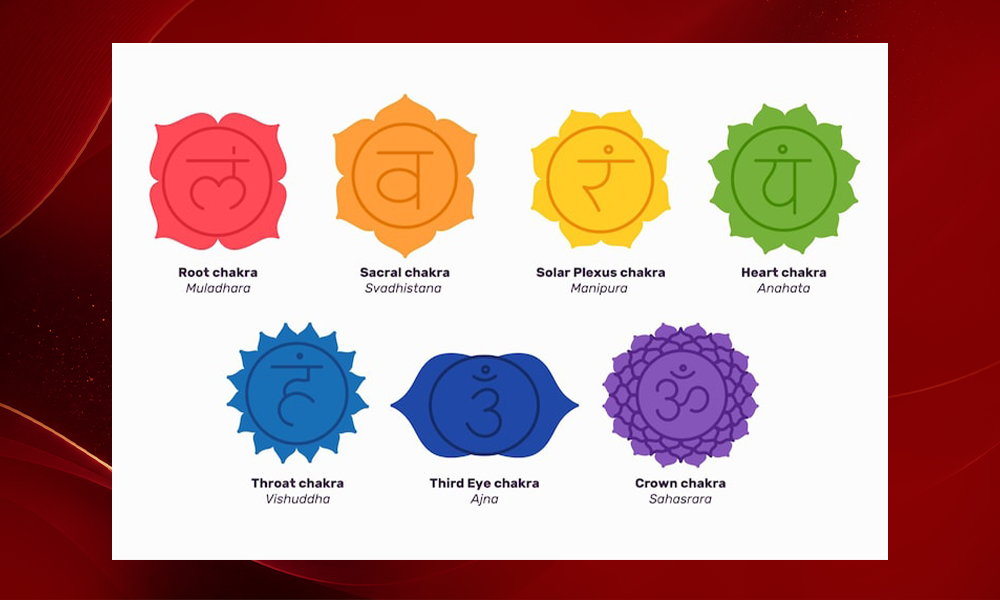
| Chakra | Sanskrit Name | Color | Location | Element |
| Root | Muladhara | Red | Base of spine | Earth |
| Sacral | Svadhisthana | Orange | Lower abdomen | Water |
| Solar Plexus | Manipura | Yellow | Upper abdomen | Fire |
| Heart | Anahata | Green | Center of chest | Air |
| Throat | Vishuddha | Blue | Throat | Space/Ether |
| Third Eye | Ajna | Indigo | Between eyebrows | Light/Mind |
| Crown | Sahasrara | Violet/White | Top of head | Thought/Spirit |
How Chakra Colors Are Used in Practice
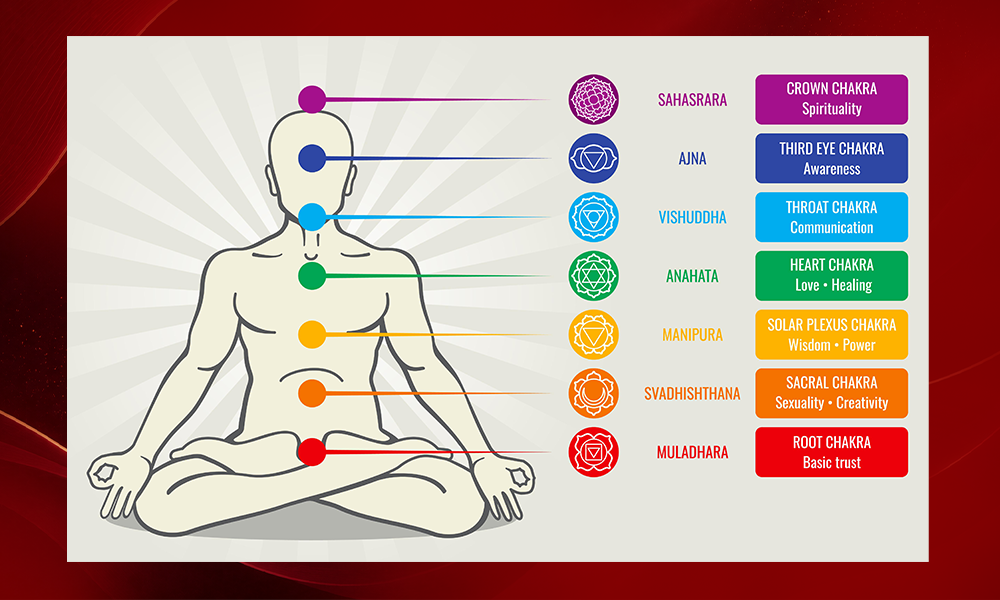
Meditation and visualization. A common chakra meditation technique involves visualizing each chakra’s color in its corresponding location, moving from Root to Crown, to bring focused awareness to that energy center.
Yoga. Specific poses are traditionally associated with different chakras. Grounding poses like Mountain Pose and Tree Pose are linked to the Root Chakra, while heart-opening poses like Cobra and Fish Pose are linked to the Heart and Throat Chakras.
Crystals and gemstones. Practitioners often pair stones with matching chakra colors, garnet or red jasper for the Root, citrine for the Solar Plexus, amethyst for the Crown, believed to support that energy center’s qualities.
Color and clothing. Some practitioners intentionally wear or surround themselves with a chakra’s color when they want to focus on strengthening that particular area of their life.
It’s worth being direct here: these are traditional, symbolic, and spiritual practices, not medically validated treatments. They’re widely used as tools for reflection, intention-setting, and mindfulness, not as a substitute for medical or mental health care.
Key Takeaways
- The seven chakra colors follow a rainbow sequence, red at the Root to violet or white at the Crown, moving from physical, grounding energy to spiritual, transcendent energy.
- Each chakra has a Sanskrit name, location, and symbolic meaning rooted in centuries-old Hindu and Tantric Buddhist tradition.
- The rainbow color-coding is a relatively modern addition, formalized in print only in 1977, layered onto a much older energy-center tradition.
- Chakra colors are used practically through meditation, yoga, and visualization, tools for reflection and intention, not medical interventions.
- Balance, not perfection, is the traditional goal. Each chakra is understood to shift between balanced and blocked states rather than staying fixed.
FAQ: Chakra Colors
What are the seven chakra colors in order?
Red (Root), Orange (Sacral), Yellow (Solar Plexus), Green (Heart), Blue (Throat), Indigo (Third Eye), and Violet or White (Crown).
What does the root chakra color mean?
Red, the root chakra color, represents grounding, safety, survival, and connection to the physical body and the earth.
What does the crown chakra color represent?
Violet or white, representing spiritual connection, transcendence, unity, and higher consciousness.
Are chakra colors based on science?
No. Chakra colors are part of a traditional spiritual and symbolic system rooted in yogic and Tantric practice, not a scientifically validated framework. They’re used for meditation and reflection, not medical diagnosis or treatment.
How do I use chakra colors in meditation?
Visualize each chakra’s color glowing at its corresponding location in the body, typically moving from Root to Crown, while focusing on the emotional or energetic quality associated with that center.
The Bigger Picture
Chakra colors offer a structured, visual language for something hard to put into words: the idea that different aspects of our experience, safety, creativity, confidence, love, expression, intuition, purpose, deserve focused attention of their own.
Whether or not you approach this system as literal energy centers or as a symbolic framework for self-reflection, the seven chakra colors give you seven distinct lenses for checking in with yourself. Red for grounding. Green for compassion. Violet for purpose.
That’s the real value of this chakra guide: not a medical claim, but a centuries-old vocabulary for paying closer attention to different parts of a whole life.