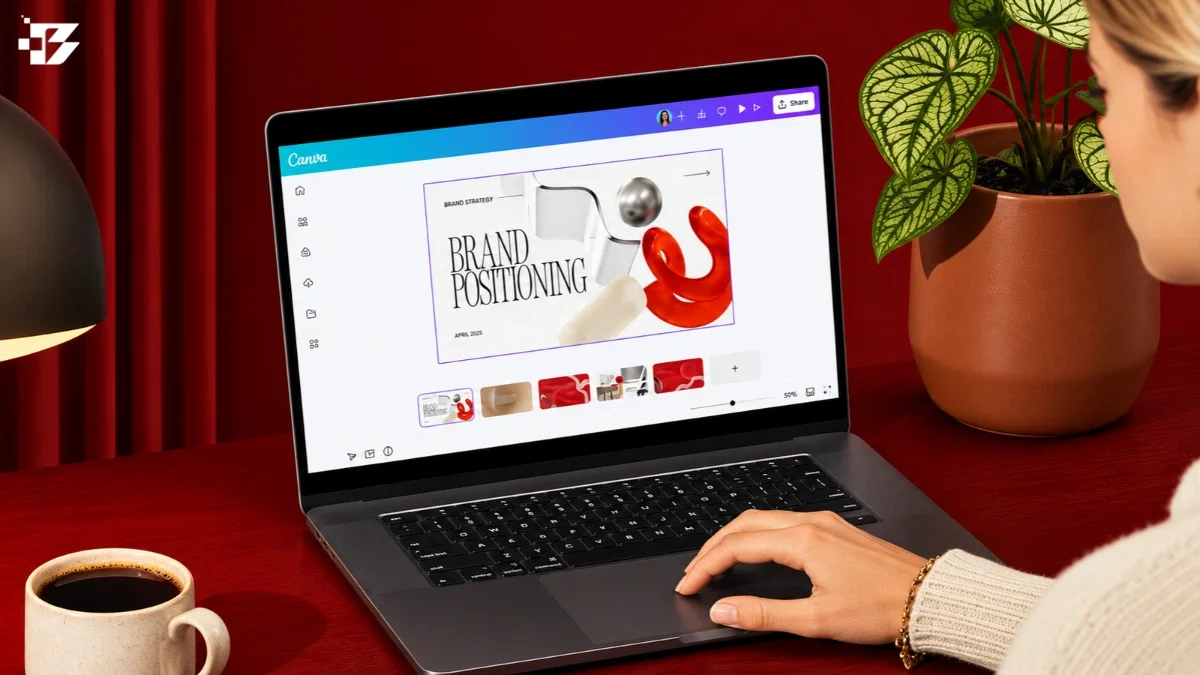
A clear brand positioning statement names the audience, category, main benefit, and proof that makes the benefit believable. It gives your team a shared guide for marketing, not a ready-made tagline. A market category is the frame that tells buyers what kind of offering they are comparing.
When customers see similar offers, they may struggle to tell why one brand fits them better. A broad claim aimed at everyone often makes that choice harder. Use a five-step process based on customer needs and evidence, so your marketing efforts give consumers a clear reason to choose.
Keep the statement internal, then use it to align customer-facing messages rather than paste it in place of a tagline.
Key Takeaways
- Choose an audience whose needs your offer can meet.
- Compare against the alternatives customers really consider.
- State one clear benefit and support it with proof.
- Test whether customers understand the message.
- Use the statement to guide consistent marketing.
What does a positioning statement do for a brand?

Sales and marketing teams use a positioning statement to keep their explanation of the offer consistent. It describes a product, its target audience, and the market need it fills, giving your business a practical way to align its message.
A positioning statement is an internal tool, not necessarily a public tagline. A value proposition explains customer benefits; a mission statement expresses the brand’s broader purpose. The Business Model Canvas has nine blocks for customers, offerings, delivery, costs, and revenue. Its scope is much wider than brand positioning.
Treat the statement as an internal decision filter, not a substitute for the company’s mission or business model.
The inbound lead generation strategies your team uses can reflect the same core message across content, email, and calls to action. A positioning statement can inform public messaging without serving as finished copy. Explore the nine Business Model Canvas blocks to see how that larger tool covers the whole business.
Step 1: Who should your brand serve?
Start with the group of people whose needs your product or service can meet especially well. Choose an audience by shared needs and behaviors, not a broad label alone. In the STP framework, segmentation groups buyers, targeting selects a group, and positioning defines how your offer fits them.
Those stages work in that order because positioning needs a clear group to address. The target audience may share a problem or buying habit without sharing the same age or income. A demographic label alone does not prove that people face the same problem.
Choose a segment by need, not just demographics
Research can reveal what customers need and how they make choices. Review four dimensions before choosing a target:
- Needs: the problems customers want solved.
- Behaviors or purchasing habits: how they search, compare, and buy.
- Location: where they live or seek your service.
- Age or life stage: details that may shape needs or buying power.
A local service business, for example, can define its audience by the neighborhoods it can serve well. A guide to local SEO in New York can help you think through service areas and neighborhood searches.
Check that the audience’s priorities match your offer
Compare the group’s most important needs with what your product or service can reliably deliver. A low-cost offer may suit buyers who value price, while a hands-on service may fit customers who want expert help. Use customer interviews, sales questions, and support requests to look for the same need across real interactions.
Market patterns can complicate a neat segment plan. Research on competition suggests brands often share customers, rather than serving entirely separate groups. Read the study of brand competition for evidence across retail and service markets. Choose the segment whose needs and your offer’s strongest capabilities overlap most clearly.
Step 2: What counts as a real competitor?
A customer’s real alternative may be a manual workaround or no action at all. Compare your brand with the options customers actually weigh, even when those options come from another category. That gives your brand positioning statement a more useful basis than a list of familiar competitors.
April Dunford’s positioning framework has five parts: competitive alternatives, differentiated capabilities, customer value, target customer segmentation, and market category. It sets the original category aside before identifying unique attributes and the value they create. Your competitive alternatives may include a direct competitor, a spreadsheet, or doing nothing.
Compare the alternatives customers actually consider
Ask what the customer would do without your product. Search competitors can differ from the brands and workarounds buyers compare during a sale. Tools and ways to find competitors’ keywords can show which sites overlap in search, but search overlap alone does not prove a buying alternative.
| Alternative type | Concrete example | Comparison question |
|---|---|---|
| Direct competitor | Another product in the category | What does the customer get here that the alternative does not? |
| Manual workaround | Spreadsheet or manual process | What effort or outcome changes? |
| Status quo | Doing nothing | What makes switching worthwhile? |
Use a positioning canvas to organize the evidence
A positioning canvas is a working structure for the competitive field, target audience, and value proposition. It helps you gather evidence before distilling the decisions into a sentence. Think of it as a working document, not finished customer copy.
A useful financial services branding strategy also calls for customer research and clear proof of value. Link each capability to a customer outcome, such as less manual effort or a faster response. Keep only differences that change an outcome the selected customers care about.
Step 3: Where does your brand sit on a positioning map?
A positioning map makes comparisons visible by plotting brands against two attributes customers care about. Its axes can show price and quality, or other traits that matter in your market. Choose attributes that are measurable, independent, and important to your audience.
To make a brand positioning map, set a goal, identify alternatives, pick two attributes, gather comparable data, plot brands, then review clusters, outliers, and gaps. In some markets, innovation, design, or customer service may matter more than price. A Harvard Business Review explanation of the centrality-distinctiveness map shows another way to compare how consumers see brands.
- Choose the decision or goal the map should support.
- Identify the competitors and products customers compare.
- Select two customer-important attributes for the axes.
- Gather comparable data for each brand or product.
- Plot the brands using the same scale.
- Review clusters, outliers, and possible gaps.
Mailchimp’s example considers a market for US-made pet bones positioned as safe and free of dangerous ingredients. An empty area on your map does not prove buyers want an offer there. Check whether any apparent gap reflects a genuine customer need before treating it as an opportunity.
Step 4: How to Build a Brand Positioning Statement Buyers Understand
Draft one sentence that connects a specific audience to a category, its main benefit, and a believable difference. Use decisions you have already made, rather than restarting your research or polishing every word first. One clear benefit is easier for buyers and teams to understand than several competing claims.
A brand positioning statement should help your team make choices about marketing, service, and content. This internal guide can keep the value proposition consistent without turning every message into identical copy. Use plain language that a customer might use when describing the product.
Combine the audience, category, benefit, and difference
Build the core from four parts: your target audience, the market category, the key benefit, and the difference that makes the benefit credible. A problem-focused structure can also name the customer’s need and the alternative. For instance, start with “For [audience] who need [need], [brand] is a [category] that [benefit].”
Templates use slightly different labels, but they serve the same purpose. One may call for target market, need, differentiating benefit, and reason to believe. Another may add the problem, solution, market context, and advantage. Keep the words that clarify your offer, rather than treating a template as a script.
Choose a functional or values-led structure
A functional statement leads with a practical result, such as saving time or reducing effort. It suits a product whose main appeal is a task customers can describe and measure. A values-led structure may start with a shared worldview and emotional benefit, then show how the offer supports that feeling.
Values can add meaning, but they still need a link to the actual experience. A customer should be able to see how the product or service reflects the stated belief. Your brand positioning strategy should connect the audience, market context, distinctive value, and reason to choose you.
Make the key benefit concrete
Use customer language to describe the main result. “Spend less time on invoices” gives a clearer picture than “improve efficiency.” If your product is a meal delivery service, name a benefit such as having dinner ready after work, rather than saying it “enhances lifestyle.”
Pick one primary benefit. Stacking lower costs, speed, support, and convenience can hide the point customers should remember. Supporting features can prove the main benefit, but they should not compete with it.
Add proof customers can believe
Give buyers a reason to trust the claim. Proof might include a verifiable product capability, customer evidence, or an operational fact your team can show. For example, a delivery company could point to tracking or a stated delivery window, if its service can meet that promise.
A value proposition sounds stronger when the proof matches the benefit. A fast setup claim needs a clear basis, such as a setup process customers can see or test. Avoid claims that depend on vague superlatives like “best” or “leading.”
Edit for clear, buyer-friendly language
Read the sentence aloud and cut words a buyer would not use. Remove jargon, extra qualifiers, and unsupported claims. Keep one main point of difference, then use features or proof to support it.
Check that the category makes sense to someone outside your company. If the sentence names an industry term, explain it in simpler words or replace it. Clear copy gives your marketing team a better base for headlines and landing pages; these landing page copy tips also stress concrete benefits and customer proof. If the reason to believe cannot be checked, soften the claim or remove it.
Step 5: How should you test and update the statement?
Ask current customers to describe the offer before showing them the statement. Interview 10 to 15 customers about what your company does and why they chose it over alternatives. Compare their words with the message your team intends to send.
Then test two or three message versions in email subject lines, ads, or landing page headlines. Compare click-through and conversion rates, since clicks alone may show curiosity without strong fit. Check whether:
- Customers describe the offer accurately.
- Customers recognize the intended benefit.
- The message attracts qualified action.
A high click-through rate with weak conversion may mean the headline attracts interest but not the right buyers. Review the positioning canvas quarterly and revise it when customer preferences or competitive conditions change.
Which positioning examples make the strategy concrete?

A useful positioning example starts with a customer need, not a brand’s slogan. Eight common approaches include price-based, quality-based, value-based, benefit-based, problem-solution, niche or audience-based, innovation-based, and emotional positioning. Choose the approach that fits the reason customers choose your offer.
These labels can overlap. A brand might sell high quality at a fair price, or solve a problem through a new product. The right strategy depends on the strongest customer appeal, not the label that sounds most impressive.
Match the positioning type to the customer need
Use price-based positioning when affordability leads. Quality-based positioning stresses how well the offer works; value-based positioning weighs benefits against cost. A practical benefit or clear problem-solution fit works when buyers want a specific result. Niche positioning serves a defined audience, while innovation-based positioning highlights a new approach.
Emotional positioning connects the offer to a feeling or belief. One example of how to build a brand positioning statement buyers understand is FedEx: its audience needs quick, reliable delivery, and its angle is dependable speed. That example joins a customer need with a benefit, rather than repeating a slogan.
Compare how established brands frame their value
These market positioning examples show how a brand’s experience can support its chosen angle. Apple’s premium position rests on an integrated ecosystem that includes iPhone, AirPods, iCloud, Apple Pay, and the App Store. A well-known brand’s promise is not a template to copy unless your own customer experience can support it.
| Brand | Positioning type | Audience need or context | Example angle |
|---|---|---|---|
| FedEx | Benefit-based | Quick, reliable delivery | Dependable speed |
| Slack | Problem-solution | Team collaboration and productivity challenges | Bring teams together to get work done |
| Lululemon | Niche or audience-based | Commitment to health and wellness | Premium, exclusive fitness brand |
| Dove | Emotional | Beauty and self-image | Campaign for Real Beauty |
Do not copy a well-known brand’s promise unless your own customer experience can support it.
Slack frames collaboration and productivity as a problem to solve, while Lululemon speaks to people committed to health and wellness. Dove’s Campaign for Real Beauty uses an emotional angle tied to beauty and self-image. Choose the positioning type that your product experience can consistently support.
Conclusion
A useful positioning statement makes the customer, benefit, and reason to choose the brand easy to recognize. It links a real customer need to a specific benefit and a difference your business can prove. That connection gives your values a clear place in customer-facing messaging.
Share the draft with a small internal group before it guides marketing work. Ask each person to explain the offer in their own words, then note where their answers differ. Write a first draft today and ask one customer to explain what they understand from it.