
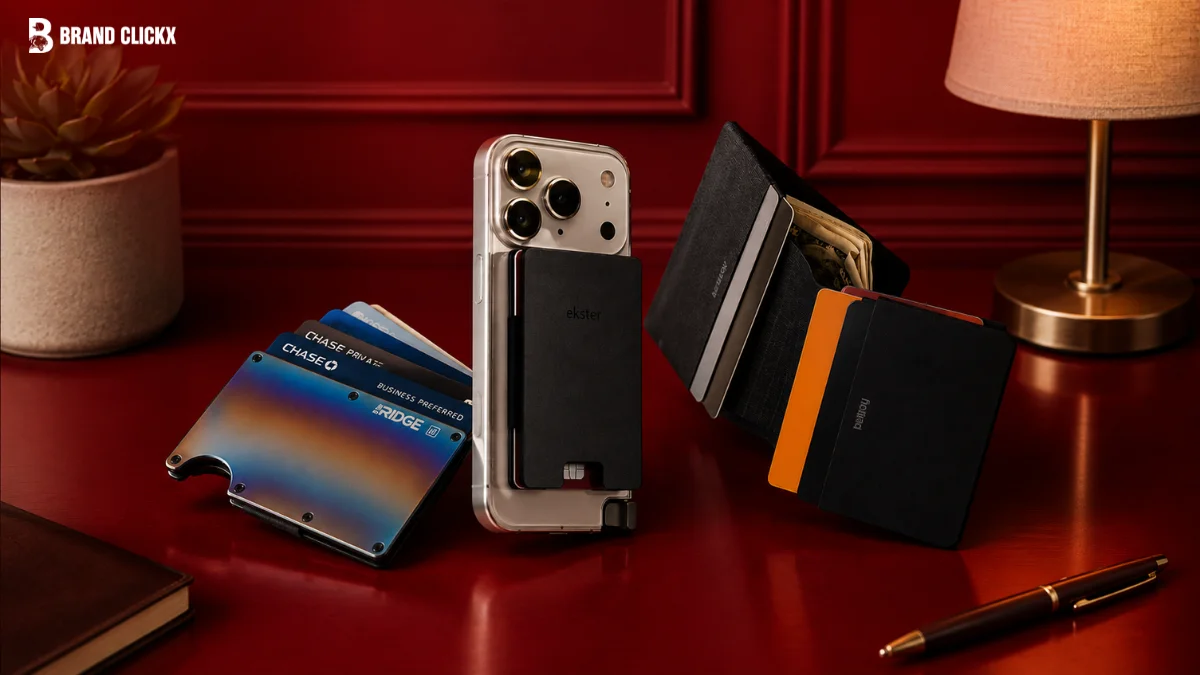
The best minimalist wallet is not simply the smallest wallet you can find. It needs to fit the cards and cash you actually carry, remain comfortable in a pocket, and make everyday access simple.
After our careful review, we selected three wallets. The Ekster Cardholder Pro uses a button-operated card ejection system, the Ridge Wallet takes a simpler two-plate approach with no card-ejection mechanism, and the Peak Design Everyday Billfold Wallet keeps the familiar bifold shape while using thinner technical materials.
Our Top Picks
| Minimalist Wallet | Best For | Card Capacity | Main Advantage |
| Ekster Cardholder Pro | Best Overall | Up to 14 cards and bills | Fast button-operated card access |
| Ridge Wallet | Best Non-Mechanical | Up to 12 cards | Simple, durable two-plate design |
| Peak Design Everyday Billfold Wallet | Best Bifold | Up to 12 cards | Traditional bifold layout in a slim technical fabric |
What Is the Best Minimalist Wallet in 2026?
The Ekster Cardholder Pro is our best overall pick because it offers quick access to your cards while maintaining a compact metal design. Its button-operated system pushes the cards upward so you can quickly choose the one you need.
The Ridge Wallet is a better choice if you do not want a moving card-ejection mechanism. Its two metal plates and elastic system keep the wallet simple while still giving you room for up to 12 cards.
The Peak Design Everyday Billfold Wallet is the best option for people who still like a traditional bifold. It holds cards and unfolded cash but uses lightweight technical fabric instead of a bulky leather construction.
1. Best Minimalist Wallet Overall
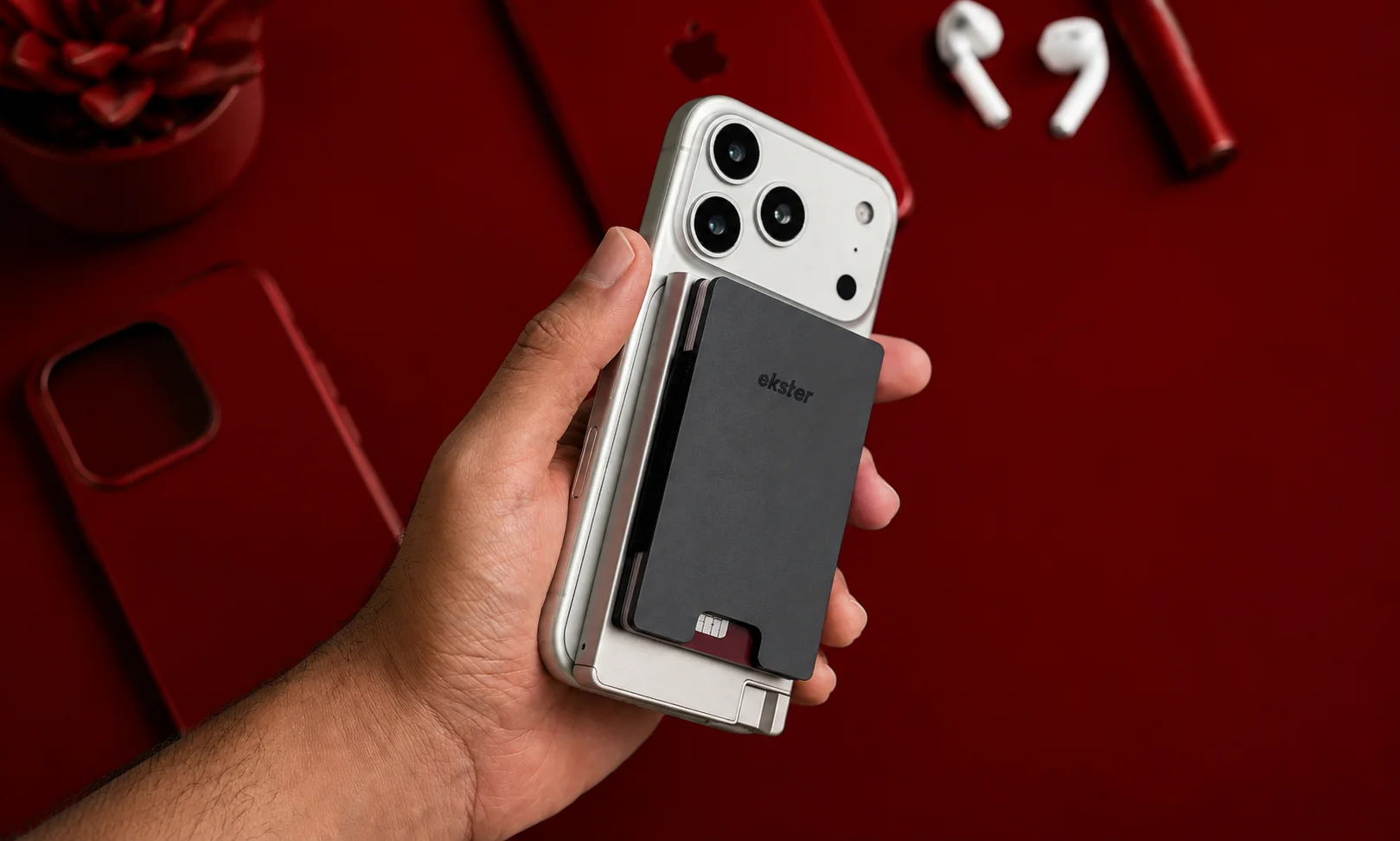
Ekster Cardholder Pro
The Ekster Cardholder Pro is our top pick for most people because it combines a small metal body with one of the easiest card-access systems in this group.
Pros
- Fast button-operated card access
- Holds up to 14 cards and bills
- 100% recycled 6061 aluminum body
- RFID protection
- Expandable backplate
- Supports modular add-ons
- Lifetime warranty
Cons
- The mechanical system adds moving parts
- More expensive than many basic minimalist wallets
- The button system may not appeal to people who prefer a completely simple wallet
Expert Take
The main reason to choose the Ekster is its card-ejection system. Instead of pulling cards from a tight stack, you press the button and the cards come up together. This makes everyday access quick and easy. The aluminum body also keeps the wallet compact while giving it a solid feel. The Pro model holds up to 14 cards and bills.
How It Works
The cardholder uses a button-operated mechanism. Pressing the button moves the cards upward, allowing you to fan them out and select the card you want.
This is different from the Ridge Wallet, which uses tension from elastic rather than a mechanical ejection system. The mechanism is simple to understand, and you can quickly get used to the way the cards come out.
Card Capacity
The Cardholder Pro can hold up to 14 cards and bills. The main cardholder is designed for around 5 to 7 cards, while the expandable backplate can provide additional space. Your ideal setup will depend on the thickness of your cards and how much cash you carry.
As with most minimalist wallets, it is better not to fill it simply because there is available space. Carrying fewer cards keeps the wallet thinner and makes the cards easier to access.
Build and Materials
The wallet uses a 100% recycled 6061 aluminum body. It feels much more solid than a soft fabric wallet and is designed for everyday carry.
The all-metal button and mechanism are another major part of the Pro model. The expandable aluminum backplate also gives you more flexibility if you need additional storage.
RFID Protection
The Ekster Cardholder Pro includes RFID protection. This can help protect compatible contactless cards from unwanted wireless reads. It is useful for people who prefer having this feature built into the wallet rather than adding a separate RFID sleeve.
Cash and Other Everyday Items
The main wallet is focused on cards, but its expandable design lets you carry additional items. You can also customize the wallet with modular add-ons depending on what you need to carry. If you mostly use cards and only carry a small amount of cash, the basic setup should be enough for everyday use.
Who Should Buy It?
The Ekster Cardholder Pro is a good choice if:
- You want very quick access to your cards
- You like metal wallets
- You carry several cards
- You want RFID protection
- You like the option of adding accessories
- You do not mind paying more for extra features
Who Should Skip It?
You may want another wallet if:
- You want the simplest possible design
- You do not want moving parts
- You carry a lot of cash
- You want to spend less
Specifications
| Feature | Ekster Cardholder Pro |
| Card Capacity | Up to 14 cards and bills |
| Main Material | 100% recycled 6061 aluminum |
| Card Access | Button-operated ejection |
| RFID | Yes |
| Dimensions | 0.6 x 4.25 x 2.4 inches |
| Warranty | Lifetime |
| Price | $119 |
Score
- Overall: 9.5/10
- Card Access: 9.8/10
- Build: 9.5/10
- Slimness: 9.4/10
- Versatility: 9.6/10
- Value: 8.8/10
The Ekster Cardholder Pro is the easiest wallet here for quickly getting to your cards. It is compact, well-built and flexible enough for different carrying styles.
2. Best Non-Mechanical Minimalist Wallet
Ridge Wallet
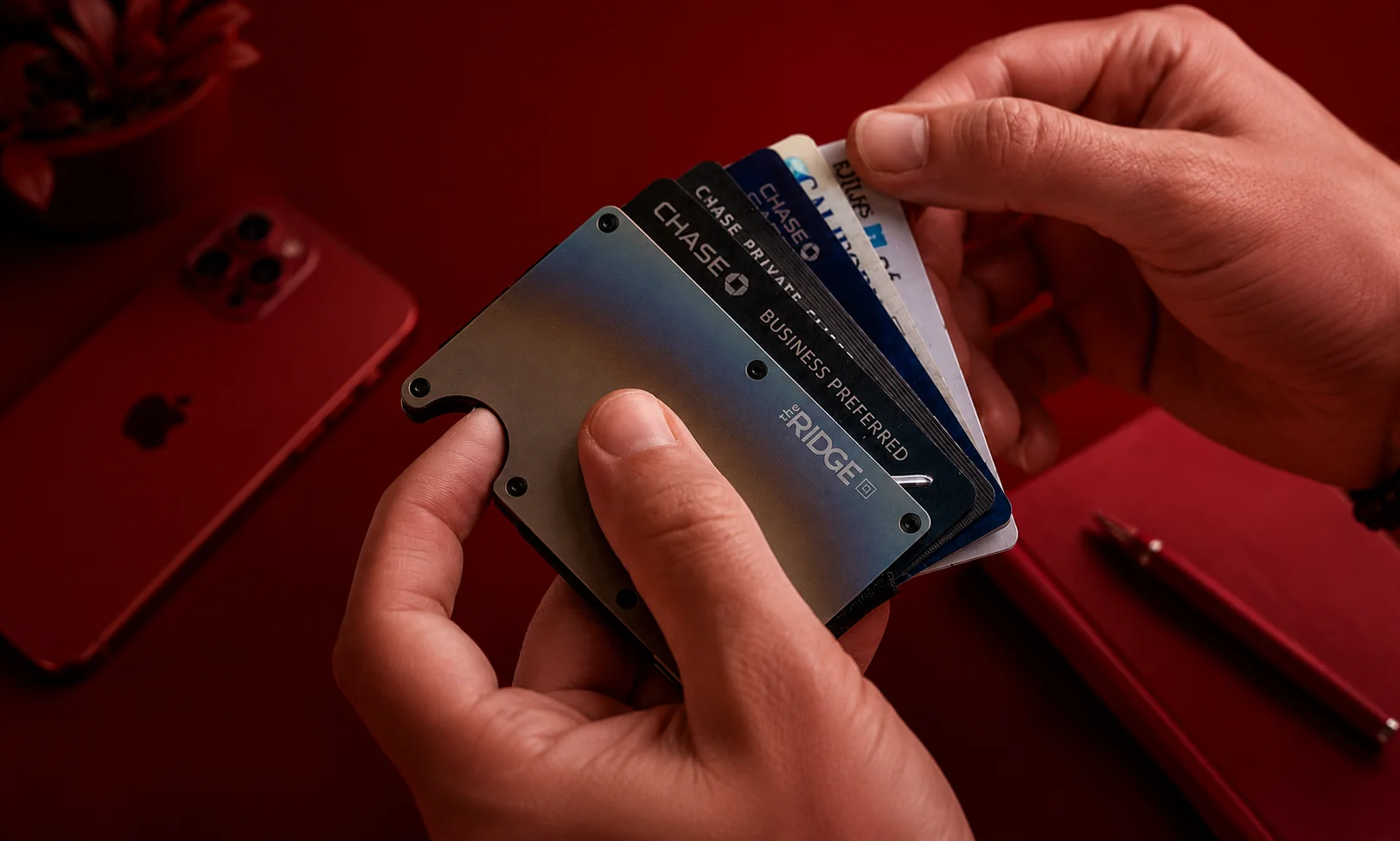
The Ridge Wallet takes a very different approach. There is no card-ejection button or complicated mechanism. Instead, two plates hold your cards together with an elastic system. That simple design is the main reason we picked it as the best non-mechanical minimalist wallet.
Pros
- Simple two-plate design
- No card-ejection mechanism
- Holds up to 12 cards
- RFID blocking
- Compact 86 x 54 x 6 mm size
- Replaceable elastic and screws
- Cash strap or money clip options
- 99-day risk-free trial
Cons
- Cards are not pushed out automatically
- Can feel less convenient when you need a card quickly
- Metal construction may feel less familiar than a traditional wallet
Expert Take
The Ridge is made for people who want to remove unnecessary parts from their everyday carry. Its basic construction uses two plates with elastic holding everything together. You simply push the cards out with your fingers when you need them.
It does not have the quick card-ejection feature of the Ekster, but that is also part of its appeal. There are fewer moving parts to think about.
How It Rides in a Pocket
The Ridge measures 86 x 54 x 6 mm, making it small enough for front-pocket carry. Its flat shape is especially useful if you dislike sitting on a thick wallet.
The exact feel will depend on how many cards and how much cash you put inside. Keeping the wallet close to its intended capacity also helps maintain its slim shape.
How Card Access Works
The Ridge does not use a button. Instead, the elastic tension keeps your cards between the two plates. You can push the cards upward, fan them out, and choose the card you need. It takes a little more effort than the Ekster’s button system, but the process is straightforward.
Build Quality
The Ridge uses 6061-T6 aluminum on standard aluminum models. The wallet is built around a simple structure, and parts such as the elastic and screws can be replaced.
This makes it a good option for someone who wants a wallet that can be repaired rather than simply replaced when a small component wears out.
RFID
The Ridge includes RFID-blocking plates. This provides an extra layer of protection for compatible cards against unwanted wireless reads.
Cash Storage
The Ridge can be configured with a cash strap or money clip. The cash strap is useful if you only carry a few folded bills. The money clip provides another way to keep cash attached to the wallet.
If you normally carry a large amount of unfolded cash, however, a bifold wallet such as the Peak Design Everyday Billfold may be more convenient.
Why It Is the Best Non-Mechanical Option
The Ridge is a strong choice because it does not try to make a simple wallet complicated. There is no button to press and no card-ejection system to maintain. You get two plates, elastic, card storage, RFID blocking, and a few ways to carry cash. That makes it especially appealing to people who value simplicity.
Who Should Buy It?
The Ridge is a good choice if:
- You want a simple wallet
- You do not need automatic card ejection
- You prefer metal construction
- You carry several cards
- You mostly use folded cash
- You want replaceable parts
Who Should Skip It?
You may want another wallet if:
- You want one-handed card access
- You carry lots of unfolded cash
- You prefer a traditional bifold shape
- You dislike metal wallets
Specifications
| Feature | Ridge Wallet |
| Card Capacity | 1–12 cards |
| Material | 6061-T6 aluminum on standard aluminum models |
| Card Access | Manual |
| RFID | Yes |
| Dimensions | 86 x 54 x 6 mm |
| Weight | About 2 oz for standard aluminum models |
| Warranty | Built for Life Warranty |
| Trial | 99 days |
Score
- Overall: 9.2/10
- Simplicity: 9.8/10
- Build: 9.6/10
- Card Access: 8.5/10
- Slimness: 9.7/10
- Value: 9.0/10
The Ridge is one of the easiest minimalist wallets to understand. Its simple construction, compact size, RFID blocking, and replaceable parts make it a strong choice for people who do not need mechanical card access.
3. Best Bifold Minimalist Wallet
Peak Design Everyday Billfold Wallet
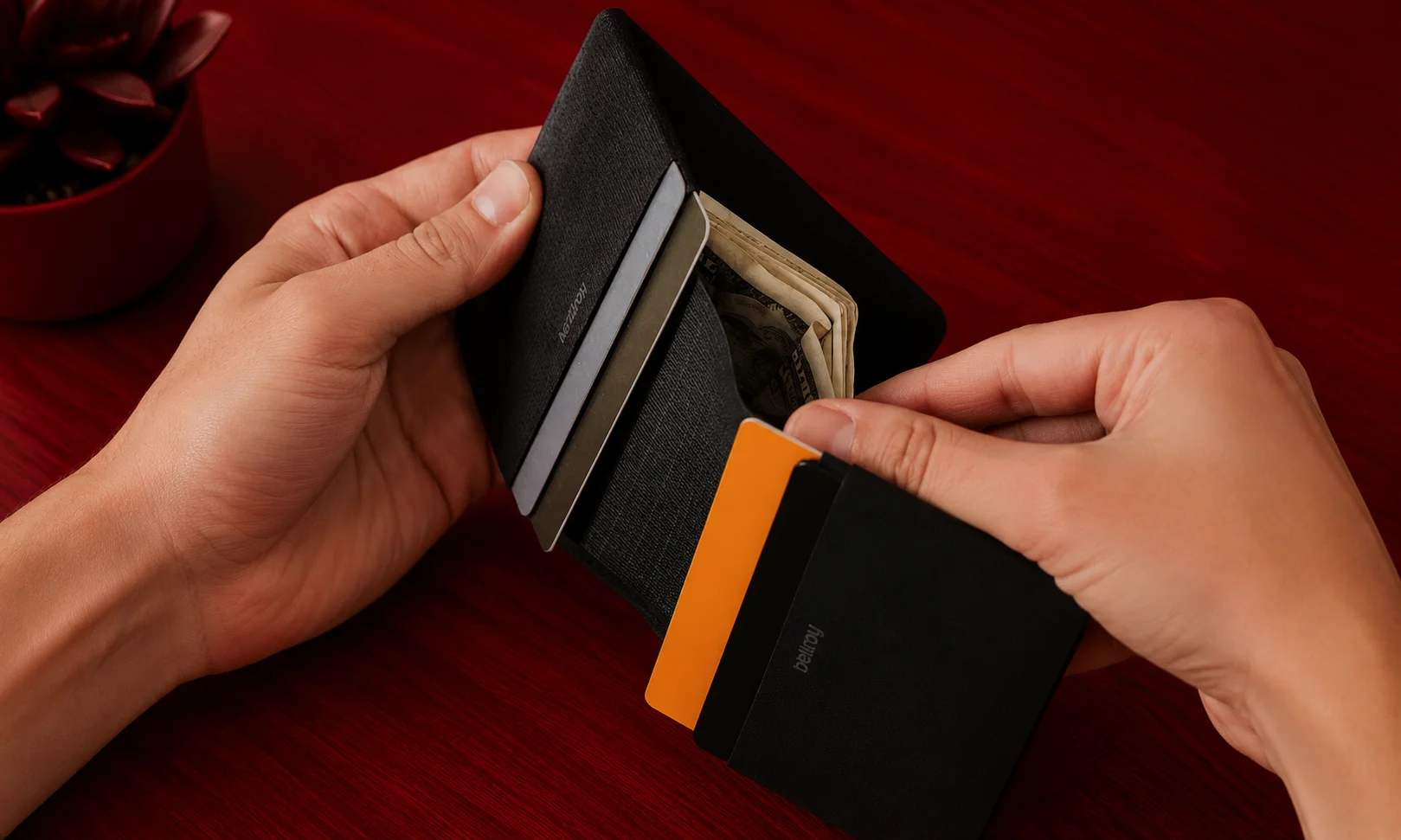
The Peak Design Everyday Billfold Wallet is the most traditional-looking option of the three. Instead of using metal plates, it keeps the familiar bifold shape, replacing bulky materials with a technical fabric construction.
Pros
- Familiar bifold design
- Holds up to 12 cards
- Carries unfolded cash
- Four card slots
- Magnetic closure
- RFID protection
- Technical fabric construction
- Slim when lightly loaded
Cons
- Gets thicker when fully loaded
- Not as compact as a metal cardholder
- Fabric can show minor wear over time
- Better suited to people who like traditional wallet layouts
Expert Take
The Everyday Billfold is for someone who wants a minimalist wallet without sacrificing the basic shape of a normal wallet. It opens like a traditional bifold, giving you separate areas for cards and cash. That makes it easier to organize than a metal cardholder.
The wallet can hold up to 12 cards and plenty of unfolded cash, making it the most practical option here for people who still carry regular bills.
How It Works
The wallet has four card slots and a rear bill compartment. Cards sit in dedicated slots rather than being held between two rigid metal plates. Cash can stay unfolded inside the bill section. The magnetic closure keeps the wallet shut when it is folded.
Magnetic Closure
The magnetic closure is one of the most useful design details. It keeps the two sides together without requiring a button or snap. When the wallet is opened, you can see the cards and cash without pulling everything out. The closure also helps keep the wallet neatly folded in your pocket.
Materials and Durability
The wallet uses TerraShell Ultra fabric with UHMWPE ripstop thread. The outer construction is designed to stay lightweight while resisting everyday wear. The material also provides weather resistance, which is useful if the wallet is exposed to light rain or moisture. Because it uses fabric rather than metal, it has a softer feel in your pocket.
Cash Carrying
This is where the Peak Design wallet has an advantage over the other two. It can carry unfolded cash, so you do not have to fold bills around a money clip or squeeze them between metal plates. It can carry up to 15 unfolded cash bills, although carrying fewer items will keep the wallet thinner.
RFID Protection
The wallet includes RFID protection. This adds protection for compatible contactless cards while keeping the wallet’s traditional bifold layout.
Size
When folded, the wallet measures about 3.46 x 3.5 inches and opens to about 6.69 x 3.5 inches. Its relaxed folded thickness is around 0.39 inches. When compressed, it can be about 0.31 inches, while a fully loaded wallet can reach around 0.79 inches. That means how you pack it has a big effect on its final size.
Who Should Buy It?
The Peak Design Everyday Billfold is a good choice if:
- You prefer a traditional bifold
- You carry unfolded cash
- You want separate card slots
- You do not want a metal wallet
- You want a soft fabric feel
- You regularly carry several cards
Who Should Skip It?
You may want another wallet if:
- You want the smallest possible metal wallet
- You carry very few cards
- You want automatic card access
- You want a completely rigid wallet
Specifications
| Feature | Peak Design Everyday Billfold |
| Card Capacity | Up to 12 cards |
| Cash Capacity | Up to 15 unfolded bills |
| Card Slots | 4 |
| Material | TerraShell Ultra fabric |
| Thread | UHMWPE ripstop |
| Closure | Magnetic |
| RFID | Yes |
| Folded Size | 3.46 x 3.5 inches |
| Open Size | 6.69 x 3.5 inches |
| Warranty | Lifetime |
| Price | $69.95 |
Score
- Overall: 9.0/10
- Organization: 9.5/10
- Cash Carrying: 9.6/10
- Slimness: 8.8/10
- Materials: 9.3/10
- Value: 9.2/10
The Peak Design Everyday Billfold is the best choice for people who want minimalist storage without giving up the familiar bifold format.
Minimalist Wallets Compared
| Feature | Ekster Cardholder Pro | Ridge Wallet | Peak Design Everyday Billfold |
| Best For | Overall | Non-Mechanical | Bifold |
| Card Capacity | Up to 14 | Up to 12 | Up to 12 |
| Main Material | Recycled 6061 aluminum | 6061-T6 aluminum | TerraShell Ultra fabric |
| Card Access | Button ejection | Manual | Individual slots |
| RFID | Yes | Yes | Yes |
| Cash | Bills/add-ons | Folded bills | Unfolded bills |
| Closure | Card mechanism | Elastic | Magnetic |
| Shape | Cardholder | Metal cardholder | Bifold |
| Price | $119 | Varies by model | $69.95 |
What We Look For When Testing a Minimalist Wallet
A minimalist wallet needs to do more than look thin. When reviewing one, we focus on the things that affect everyday use:
1. Card Access
We look at how quickly you can get to your most-used card. A wallet can be extremely thin, but if getting one card out is difficult, the small size does not help much.
2. Pocket Comfort
We consider the wallet’s shape, thickness, edges, and overall feel in a pocket. A good minimalist wallet should not feel like a large object pressing against your leg.
3. Card Capacity
We look at the number of cards the wallet can realistically carry without becoming difficult to use. The maximum capacity listed by a manufacturer is not always the most comfortable everyday setup.
4. Cash Carrying
Some people only carry cards. Others still use cash regularly. We consider whether the wallet works well with the cash you typically carry.
5. Build Quality
Materials matter because a wallet gets used every day. We look at the body, stitching, elastic, buttons, closures, and other parts that could wear out.
6. Security Features
RFID protection can be useful for people who carry compatible contactless cards.
We consider whether it includes this feature without making the wallet unnecessarily thick.
7. Long-Term Use
A minimalist wallet should be designed for everyday carry. Replaceable parts, strong materials, and a good warranty can make a big difference over several years.
How to Choose the Right Minimalist Wallet
Start with the way you normally carry your cards and cash. If you want fast card access, the Ekster is the easiest choice. If you prefer simple construction, the Ridge makes more sense. If you carry unfolded cash and like a traditional wallet, the Peak Design is the better fit.
Do not choose based only on the smallest measurement. A wallet that is slightly thicker but much easier to use can be a better everyday option.
Metal vs. Fabric Minimalist Wallets
Metal wallets are usually more rigid and protective. They can also feel more solid and durable in your pocket. The Ekster and Ridge both use metal construction, but they approach card storage differently.
Fabric wallets are softer and can provide more flexible storage. The Peak Design Everyday Billfold is a good example. Its bifold layout also makes it easier to organize cash and cards separately. Neither material is automatically better. The right choice depends on how you carry your wallet.
How Many Cards Should You Carry?
Most people do not need every card they own in their everyday wallet. A useful starting point is to carry your main payment cards, identification, driver’s license if needed, and any card you regularly use.
Removing old membership cards, expired cards, and cards you rarely use can make a surprisingly large difference. Even a wallet that holds 12 or 14 cards can become uncomfortable when filled.
How Much Should You Spend on a Minimalist Wallet?
You do not need to spend a lot to get a thin wallet. However, paying more can make sense when you are getting better materials, easier card access, replaceable parts, stronger construction, or a longer warranty.
The important thing is to buy based on how you use the wallet rather than simply choosing the most expensive option.
Do You Need RFID Protection?
RFID protection is useful if you carry compatible contactless cards and want an extra layer of protection against unwanted wireless reads.
All three wallets in this guide include RFID protection. Still, RFID should not be the only reason to buy a wallet. Size, card access, cash storage, comfort, and construction matter just as much for everyday use.
Do You Need a Tracker?
A tracker can be useful if you often misplace your wallet.
Some minimalist wallets support tracker accessories, while others can work with tracker cards or dedicated attachments.
If you rarely lose your wallet, you may not need one. If your wallet regularly disappears under a sofa or gets left somewhere, a tracker can be worth considering.
Minimalist Wallet Maintenance
Keeping a minimalist wallet clean is simple. Remove unnecessary cards from time to time and wipe the outside when needed. If your wallet uses elastic, avoid overfilling it because constant stretching can reduce its life.
For fabric wallets, keep an eye on the edges and stitching. For metal wallets, check screws and other replaceable parts occasionally. A few minutes of basic care can help your wallet stay in good condition for much longer.
Who Shouldn’t Buy a Minimalist Wallet?
A minimalist wallet is not right for everyone. You may want a larger traditional wallet if you carry many cards, receipts, coins, or a lot of cash. Minimalist wallets are best for people who are willing to carry only the things they actually use.
Minimalist Wallet Buying Checklist
Before buying a minimalist wallet, ask yourself:
- How many cards do I really carry?
- Do I carry cash?
- Do I need unfolded cash storage?
- Do I want metal or fabric?
- Do I want automatic card access?
- Do I need RFID protection?
- Do I want a tracker?
- How much pocket space do I have?
- Is the wallet comfortable when fully loaded?
- Does it have a warranty?
- Are replacement parts available?
Answering these questions makes it much easier to choose the right wallet.
Minimalist Wallet FAQs
What is the best minimalist wallet in 2026?
The Ekster Cardholder Pro is our best overall pick. It combines a compact aluminum body, RFID protection, and quick button-operated card access.
Which minimalist wallet is best without a card-ejection mechanism?
The Ridge Wallet is our pick. It uses two plates and elastic instead of a mechanical card-ejection system.
Which minimalist wallet is best for cash?
The Peak Design Everyday Billfold is the strongest choice if you regularly carry unfolded cash.
Is the Ekster Cardholder Pro worth it?
It can be worth the higher price if you value fast card access, metal construction, RFID protection, and the ability to add accessories.
How many cards can the Ridge Wallet hold?
The Ridge Wallet is designed to hold up to 12 cards.
How many cards can the Peak Design Everyday Billfold hold?
The Peak Design Everyday Billfold can hold up to 12 cards.
Are minimalist wallets comfortable?
They can be very comfortable when you carry only what you need. The main advantage is reducing unnecessary bulk in your pocket.
Do minimalist wallets protect against RFID skimming?
The three wallets in this guide include RFID protection for compatible cards.
Is a metal wallet better than a fabric wallet?
Not necessarily. Metal wallets offer a rigid structure, while fabric wallets can feel softer and offer a more traditional carrying layout.
Final Verdict
The Ekster Cardholder Pro is our best overall minimalist wallet because it combines compact metal construction with fast card access.
The Ridge Wallet is the better choice if you want something simpler. Its two-plate design has no mechanical card-ejection system, and its replaceable parts make it a practical long-term option.
The Peak Design Everyday Billfold Wallet is the best choice for people who still want a traditional bifold. It carries unfolded cash, provides separate card slots, and uses technical fabric to keep the design relatively slim.
All three take a different approach to minimalist carry. The best one for you depends less on the number of millimeters saved and more on how you actually carry your cards and cash every day.