On the last day of March 2026, OpenAI closed the largest private funding round in the history of business: $122 billion, at a valuation of $852 billion. To put that in plain terms, investors handed one company more money in a single deal than most countries collect in taxes in a year.
So is OpenAI worth it? The honest answer is that it depends on which document you read. The press release describes the fastest growing technology platform ever built. The leaked internal plans describe a company that expects to burn through more than a quarter of a trillion dollars before it turns a profit.
Both documents are real. Here is what they actually say.
Key Takeaways
- OpenAI closed a $122 billion round on March 31, 2026 at an $852 billion post-money valuation. Amazon, SoftBank and NVIDIA each committed $30 billion or more.
- Revenue is genuinely explosive: about $2 billion per month when the round closed, an annualized run rate past $40 billion by August, and 1.2 billion people using ChatGPT every week.
- The losses are just as real. Audited 2025 financials, leaked and verified by the Financial Times, show an operating loss of roughly $21 billion on $13 billion of revenue.
- A July 2026 internal deck, reported in September, projects $278 billion of negative free cash flow from 2026 through 2030, with profitability somewhere beyond 2030.
- The company confidentially filed for an IPO in June 2026. CFO Sarah Friar told employees it will be a public company in 2027.
- In September 2026, investors discussed a new round at $1.2 to $1.4 trillion. It had not closed as of this writing.
The Round That Rewrote The Record Books
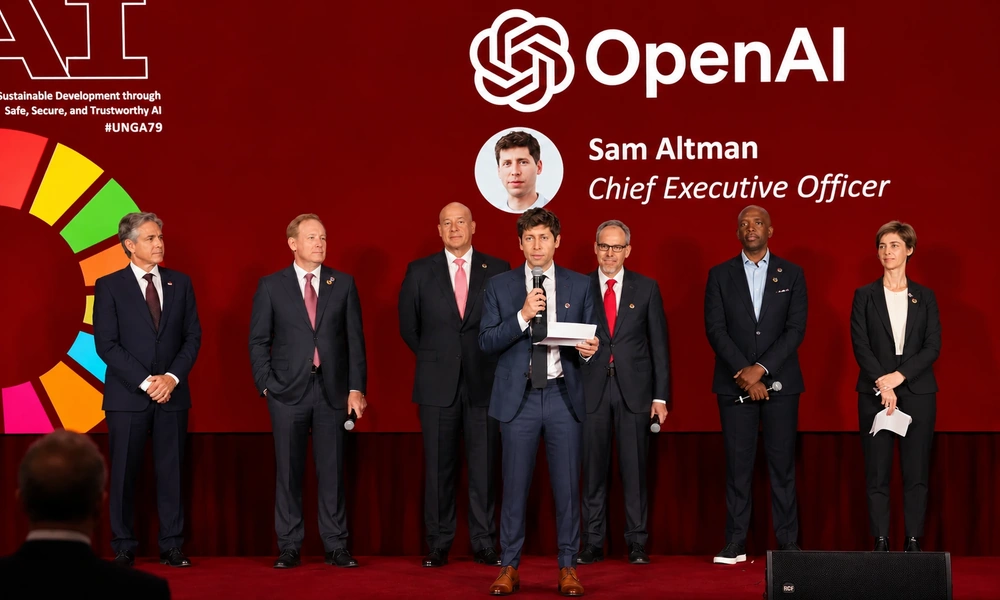
The deal announced February 27 and closed March 31 was supposed to be $110 billion. It closed at $122 billion because demand exceeded supply, a sentence that would have sounded insane about any company five years ago.
Amazon anchored it with a commitment of up to $50 billion, its largest investment in anything, ever. SoftBank and NVIDIA put in $30 billion each. The rest came from a roster that reads like the entire institutional investment world: Andreessen Horowitz, Sequoia, BlackRock, Blackstone, Fidelity, T. Rowe Price, TPG, Coatue, Thrive, MGX and more. About $3 billion came from ordinary retail investors through bank partners.
There is an important detail buried in Amazon’s commitment. Only $15 billion was guaranteed. The other $35 billion was contingent on OpenAI either reaching AGI, however the contracts define it, or going public. Amazon finished paying the full $50 billion by the end of July 2026, according to its own SEC filing. Read that again. Amazon’s payment schedule was written so that OpenAI’s success, or its IPO, triggers the rest of the money. That is not a bet on a product. That is a bet on an event.
The money comes with strings that point back at the investors themselves. A large share of the round is tied to cloud and chip purchase commitments. Amazon’s deal makes AWS the exclusive third-party cloud for OpenAI’s new agent platform, Frontier, with infrastructure agreements that could total $100 billion over eight years. NVIDIA sells the chips. Microsoft, which owns about 27% of OpenAI’s for-profit arm, collected $7.5 billion in a single quarter from its stake and holds a $250 billion Azure commitment from OpenAI on top.
Much of the $122 billion, in other words, flows right back to the companies that invested it. That does not make it fake. It does mean you should read the headline number as an ecosystem financing itself, not as a stranger writing a check.
The Part That Is Genuinely Astonishing
Strip away the financial engineering and the underlying business is still unlike anything the industry has seen.
OpenAI reached $1 billion in annual revenue within a year of launching ChatGPT. By the end of 2024 it was doing $1 billion a quarter. When the March round closed, it was doing $2 billion a month. The company says it is growing revenue four times faster than Alphabet or Meta did at the same stage, and the audited numbers back the arc: $3.7 billion in 2024, $13.1 billion in 2025, and an annualized run rate that passed $40 billion by mid-August 2026, per company statements and press reporting.
The user numbers are even harder to wrap your head around. Sam Altman confirmed at DevDay on September 29, 2026 that ChatGPT reaches 1.2 billion people every week, up 300 million in seven months. Around 50 million people pay for it. More than 2 million businesses are customers, and on August 14, 2026, enterprise revenue quietly passed consumer revenue for the first time, two quarters ahead of schedule. Even the advertising business, which did not exist a year ago, hit a $1 billion annual run rate in under 200 days.
This is the strongest version of the OpenAI story, and it deserves to be stated plainly: no consumer product in history has scaled like this, and the consumer funnel is now feeding a business customer base that pays far more per user. That flywheel is exactly what we track across the agentic AI ecosystem, and OpenAI sits at the center of it.
The Part They Do Not Put In The Press Release
Now the other document. In mid-2026, OpenAI’s audited 2025 financials leaked and were verified by the Financial Times. They show a company that earned $13.1 billion and spent about $34 billion doing it. The operating loss was roughly $21 billion. Research and development alone consumed $19.2 billion, more than half of it flowing to Microsoft for computing power. Gross margin was about 33%, far below a normal software company, because every time someone asks ChatGPT a question, answering it costs real money on rented chips.
2026 has not fixed it. In the first quarter, OpenAI brought in $5.7 billion and burned $3.7 billion in cash, per internal documents reported by The Information. That is a negative 122% operating margin. The Wall Street Journal reported that second quarter losses deepened further, even as revenue rose to $6.7 billion.
Then there is the July 2026 internal planning deck, reported in September. It projects revenue growing from $36 billion in 2026 to $350 billion by 2030, a number that would make OpenAI bigger than most Fortune 50 companies. It also projects $278 billion of negative free cash flow over the same period and roughly $856 billion in computing and infrastructure spending by 2030. The $122 billion raised in March is projected to last until 2028. Profitability sits somewhere beyond 2030.
Independent estimates are not kinder. Sacra, a private markets research firm, pegs cash burn around $27 billion for 2026 and $63 billion for 2027. HSBC analysts estimated OpenAI may need more than $207 billion in additional capital through 2030. CFO Sarah Friar has reportedly raised concerns internally about how to fund the data center contracts the company keeps signing.
These are not the numbers of a company in trouble. They are the numbers of a company making the largest bet in corporate history with other people’s money, and telling you so in its own planning documents.
OpenAI vs Anthropic: Two Very Different Machines
The comparison matters because Anthropic, OpenAI’s smaller rival, publicly filed for its own IPO in October 2026 and disclosed its books first.
| Metric | OpenAI | Anthropic |
|---|---|---|
| Latest valuation | $852B (March 2026) | $965B (May 2026) |
| Revenue base | ~$40B+ annualized (Aug 2026) | ~$65B annualized (July 2026, press reports) |
| Growth engine | ChatGPT: 1.2B weekly users, ads, subscriptions | Enterprise API and Claude Code |
| Enterprise revenue share | Passed consumer in Aug 2026 | Majority from the start |
| Profitability signal | Profitability projected beyond 2030 | First operating profit, Q2 2026 |
| IPO status | Confidential filing, 2027 target | Public S-1, ticker ANT |
The surprise in that table is the smaller company pulling ahead on revenue quality. Anthropic’s enterprise-heavy book of business reached profitability faster, while OpenAI’s consumer scale costs enormous money to serve. The counterweight is that no enterprise vendor has 1.2 billion weekly users to sell into. We covered the earlier chapter of this rivalry in our piece on Amodei, Altman, Musk and the AI slowdown debate, and the marketing stakes of Anthropic’s listing in our Anthropic IPO analysis.
What To Watch Before The 2027 IPO
For anyone following this company, five signals will tell you which document was right:
- The September round. Talks at $1.2 to $1.4 trillion were reported in September 2026 but had not closed. If a round closes at that level, the private market is endorsing the growth story. If it stalls or prices flat, that is your answer about appetite.
- Enterprise mix. Consumer subscriptions pay the bills slowly. Enterprise contracts pay them fast. Watch whether the August crossover accelerates.
- Gross margin. It was 33% in 2025 and about 39% in early 2026. If inference costs keep falling faster than prices, the model works. If not, the losses compound with scale.
- The 2028 wall. OpenAI’s own plan says the March money runs out in 2028. The IPO, or another mega round, has to land before then.
- Anthropic’s first earnings as a public company. ANT’s debut will set the valuation benchmark OpenAI’s bankers have to beat. AI stocks have swung violently before, as we covered in our report on the AI stock market crash, and a weak Anthropic debut would chill OpenAI’s window.
Frequently Asked Questions
What is OpenAI’s valuation right now?
$852 billion post-money, set by the $122 billion round that closed March 31, 2026 and confirmed by an employee share sale at the same price in August. Press reports in September described talks for a new round at $1.2 to $1.4 trillion, but nothing had closed as of this writing.
How much revenue does OpenAI make?
About $2 billion per month as of March 2026, per the company, and an annualized run rate above $40 billion by August 2026. Audited 2025 revenue was $13.1 billion.
Is OpenAI profitable?
No. The leaked audited financials show a roughly $21 billion operating loss for 2025, and the company’s own internal plans project negative free cash flow through at least 2029, with profitability beyond 2030.
Can I buy OpenAI stock?
Not on a public exchange. OpenAI remains private. Some funds, including Robinhood Ventures (ticker RVI), hold small positions and trade publicly, which gives indirect exposure.
When is the OpenAI IPO?
OpenAI filed a confidential S-1 in June 2026 with Goldman Sachs and Morgan Stanley. CFO Sarah Friar told employees in August 2026 the company “will be a public company in 2027.” No date is set.
Why did Amazon invest $50 billion?
For position. The deal makes AWS the exclusive third-party cloud for OpenAI’s Frontier agent platform, brings OpenAI models to Amazon’s Bedrock service, and locks in up to $100 billion of infrastructure spending over eight years. Much of the investment flows back to Amazon as cloud revenue.
The Bottom Line
OpenAI is simultaneously the fastest growing business ever built and the most expensive experiment ever run. Both things are true, and pretending only one of them is true is how people get this story wrong.
The $852 billion question is really a bet on sequence: that enterprise revenue, advertising and falling compute costs can outrun a $278 billion burn before the money runs out in 2028. The company that taught a billion people to talk to machines has about two years to prove the machines can pay for themselves.