The inbox is the last channel marketers actually own. Google referrals to publishers fell 40 percent in the past year, AI answers now eat the searches that used to build marketing careers, and every social platform rents you an audience it can take back by Thursday. But an email address, given willingly, is a direct line no algorithm sits between.
That is why Marketing Brew crossed 4 million subscribers, why Lenny Rachitsky built a million person readership on product and growth, and why the humble newsletter quietly became the most defensible media format in marketing.
It is also why your inbox is a disaster. The average marketer now subscribes to 8 to 12 newsletters, receives 15 to 20 of them a week, spends 90 plus minutes reading, and gets the same Google algorithm update explained five different ways by five different people. The scarce resource is not information. It is the slot.
So we ranked the fifteen newsletters that earn the slot, with the numbers most lists skip: real subscriber counts, frequency, price, and the specific job each one does. Counts are publisher reported or industry estimates as of November 2026.
Methodology. We scored newsletters on five factors: signal density (insight per minute of reading), originality (does it create ideas or curate them), consistency of quality across issues, career leverage (does reading it make you better at a named job), and cost honesty (free versus paid, and what the paid tier really adds).
Subscriber figures from publisher pages and industry estimates, April through November 2026. Ranked for working marketers. Operators ranked here may request the BrandClickX Top 15 citation assets for their subscribe pages.
The Quick Verdict
| Rank | Newsletter | Author | Subscribers | Frequency | Price | Best For |
| 1 | Marketing Brew | Morning Brew team | 4M+ | Daily | Free | The daily industry briefing |
| 2 | Lenny’s Newsletter | Lenny Rachitsky | 1M+ | Weekly | Free + $20/mo | Growth and product strategy |
| 3 | Demand Curve | Demand Curve team | 100K+ | Weekly | Free | Tactical playbooks |
| 4 | Marketing Examples | Harry Dry | 130K+ | Weekly | Free | Copywriting and landing pages |
| 5 | TLDR Marketing | TLDR team | 330K | Daily | Free | The five minute scan |
| 6 | Moz Top 10 | Moz team | 500K+ | Biweekly | Free | SEO news that matters |
| 7 | Ahrefs Digest | Ahrefs team | 284K | Weekly | Free | SEO case studies |
| 8 | Link in Bio | Rachel Karten | 100K+ | Twice weekly | Free + $8/mo | Social media craft |
| 9 | Stacked Marketer | Stacked team | Undisclosed | Daily | Free | Paid media operators |
| 10 | Growth Unhinged | Kyle Poyar | 85K+ | Weekly | Free + $15/mo | PLG and pricing |
| 11 | Why We Buy | Katelyn Bourgoin | 63K+ | Weekly | Free | Buyer psychology |
| 12 | The Marketing Millennials | Daniel Murray | 155K+ | 3x weekly | Free | Broad tactics, zero fluff |
| 13 | SEOFOMO | Aleyda Solis | 45K+ | Weekly | Free | The Sunday SEO catch up |
| 14 | Growth Memo | Kevin Indig | 29K+ | Weekly | Free + paid | Original research |
| 15 | Total Annarchy | Ann Handley | Undisclosed | Biweekly | Free | Writing that earns attention |
The Daily News Tier
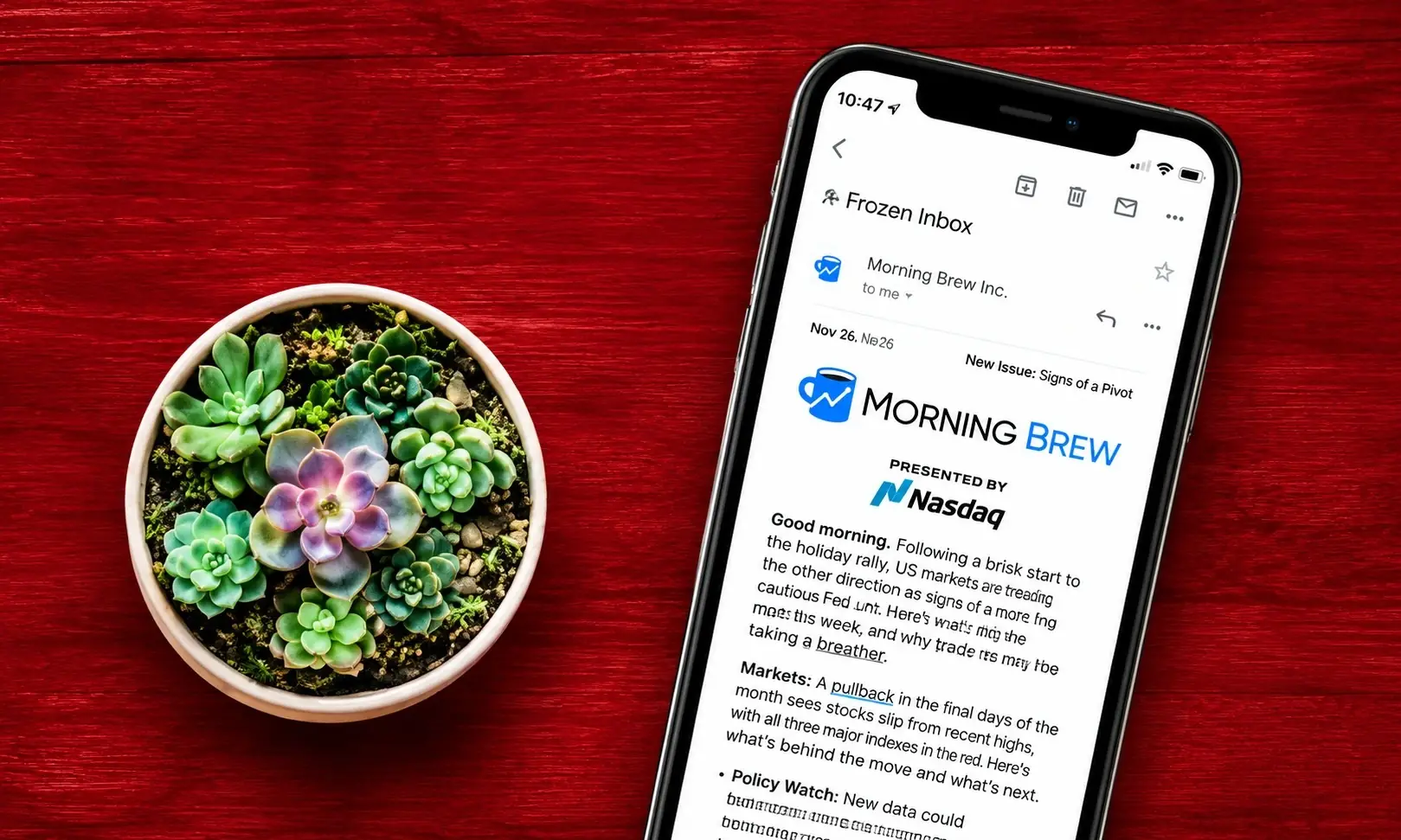
- Marketing Brew. The industry’s morning paper. Four million subscribers read it before standup, which makes it the closest thing marketing has to a shared front page: agency moves, platform changes, campaign autopsies, and ad tech news in the witty digestible style the Morning Brew family invented.Free, daily, and genuinely reported rather than aggregated. The catch: breadth over depth, so pair it with one specialist from below.

Morning Brew delivers a daily business and marketing news briefing, keeping professionals informed about market developments, industry trends, and important business stories. - TLDR Marketing. The five minute daily. Part of the 7.2 million reader TLDR network, it compresses growth, SaaS, ad platform, and analytics news into a scan that respects your calendar. When weekly newsletters lean toward strategy, this is the layer that keeps you current on what changed overnight.
- Stacked Marketer. The operator’s daily. Built for people who spend money on ads: paid media tactics, platform updates, and quick hits written in operator language, every weekday. If your job has “performance” in the title, this is your first coffee read.
The Tacticians
- Demand Curve. The playbook library. Over 100,000 subscribers and a reported open rate above 50 percent, numbers that would be respectable for a daily and are remarkable for a dense weekly. Each issue delivers tested growth tactics, teardowns, and frameworks from an agency that runs the plays it teaches, plus open marketing roles.
This is the newsletter most likely to produce something you implement the same week. - Marketing Examples. The swipe file with a teacher. Harry Dry’s Monday email, three examples, two copywriting tips, one tweet, has passed 130,000 readers by proving that the best marketing education is visual.
Landing pages, positioning, headlines, broken down so you see the thinking. When we write about conversion on this site, from high converting landing pages to SEO copywriting, we are playing in the arena Dry popularized. - The Marketing Millennials. Tactics with a personality. Daniel Murray’s three times weekly letter reaches 155,000 plus marketers with a conversational style that hides real strategy inside jokes. The trade off of the frequency is hit rate: not every issue fits your role, but the voice keeps you reading, and reading is the point.
The Channel Specialists
- Moz Top 10. The SEO institution. Half a million subscribers get ten links every two weeks, curated from across search: algorithm updates, studies, tactics. It has survived every format trend because curation by people who actually do SEO beats aggregation by machines. For the AI search era specifically, our own AEO and SEO guide covers where the discipline is heading.
- Ahrefs Digest. The case study weekly. 284,000 subscribers, Monday delivery, and a useful bias to know about: the tutorials naturally lean on Ahrefs’ own tools. Read it for the case studies and link building data, which are excellent, and keep the vendor context in mind.
- Link in Bio. The social craft letter. Rachel Karten’s twice weekly read for the people who run brand accounts: interviews with working social managers, platform observations, and respect for social as a craft rather than a posting schedule. 100,000 plus subscribers, with a paid tier adding strategy and quarterly trend reports. The best argument in the industry that social media management is a profession.
- SEOFOMO. The Sunday catch up. Aleyda Solis rounds up the week’s SEO and AI search news for 45,000 plus readers every Sunday, so Monday starts informed without a weekend spent doomscrolling. The single most efficient subscription in search.
SEOFOMO by Aleyda Solis delivers weekly SEO and AI search updates, helping marketers stay informed about the latest industry developments.

The Thinkers
- Lenny’s Newsletter. The million person operating manual. Not strictly a marketing newsletter, and indispensable to marketers anyway: growth benchmarks, pricing research, hiring data, and operator interviews that have made it the reference document of product led companies. The free weekly is substantial; the $20 a month paid tier buys the archive and community, which is where the real value compounds.
- Growth Unhinged. The pricing brain. Kyle Poyar’s weekly on product led growth and monetization, 85,000 plus readers, is where marketers learn the thing they are worst at: charging money. His PLG and usage based pricing research gets cited in board decks. The $15 monthly tier goes deeper on benchmarks.
- Why We Buy. The psychology shortcut. Katelyn Bourgoin explains why people actually purchase, one behavioral principle at a time, for 63,000 plus readers. It is the newsletter most likely to improve your copy by Friday, because it attacks the layer under tactics: what makes a human choose.
- Growth Memo. The research desk. Kevin Indig, who led growth at Shopify, G2, and Atlassian, publishes data driven essays on organic growth and AI search for 29,000 plus readers. The smallest list on this ranking and one of the most cited, because when you need a number to defend a strategy to leadership, his work is where numbers come from. It pairs naturally with our own AI search visibility measurement research.
- Total Annarchy. The craft letter. Ann Handley’s biweekly essay on writing is the oldest wisdom on this list and the most durable: in an industry drowning in AI generated adequacy, the ability to write like a person is a career moat. Every marketing leader we know reads it. Almost none admit how much they steal from it.
The Inbox Diet: How Many Is Too Many
The practitioners’ consensus is two to three newsletters, not fifteen. One for your core discipline, one for broader context, and a ruthless rule: if an issue sits unread for a month, unsubscribe and use the archive on demand.
The newsletters above are ranked, but they are not meant to be stacked. A marketer who reads three of these carefully will outperform one who skims fifteen, and the math backs it: 90 minutes a week of duplicated news summaries is a part time job producing nothing.
Building your own newsletter, for your brand or yourself? Our guide to newsletter writing covers the craft, the content marketing ROI study makes the business case, and the growth marketing playbook connects the channel to revenue. For distribution infrastructure, see the best bulk email services, and for where email fits in the modern mix, the content marketing trends report maps the landscape.
FAQ
What is the best marketing newsletter in 2027?
Marketing Brew for daily industry news (4 million plus subscribers), Demand Curve for tactical playbooks, Lenny’s Newsletter for growth strategy, and Moz Top 10 for SEO. The best single answer depends on your job: pick the one mapped to your discipline in the table above.
Are marketing newsletters free?
Almost all of the best ones are free at the base tier, funded by sponsorships. Paid tiers exist at Lenny’s (20amonth),GrowthUnhinged(20 a month), Growth Unhinged (15), and Link in Bio ($8), and each is worth it only if you will use the archive or community, not just the weekly email.
How many marketing newsletters should I subscribe to?
Two or three. Research on marketer reading habits shows most subscribe to 8 to 12 and read a fraction. One newsletter for your core discipline, one for broad context, and a standing rule to unsubscribe from anything unread for a month.
What is the biggest marketing newsletter?
Marketing Brew with over 4 million subscribers, followed by Lenny’s Newsletter at over 1 million, Moz Top 10 at 500,000 plus, TLDR Marketing at 330,000, and Ahrefs Digest at 284,000, based on publisher reported figures as of 2026.
Which marketing newsletter is best for SEO?
Moz Top 10 for curated news, Ahrefs Digest for case studies and link building, SEOFOMO for the weekly Sunday roundup, and Growth Memo for original research on AI search. All four are free.
Why do marketers love newsletters so much?
Ownership. Search traffic can be summarized away by AI answers and social reach can be throttled by platforms, but a subscriber relationship arrives directly. Newsletters are the one channel where the marketer, not an algorithm, controls distribution, which is why every major marketing voice now publishes one.