For most businesses, the best bulk email service in 2026 is SendPulse, because its free plan covers 500 subscribers and 15,000 emails a month, paid plans start at $12 a month with unlimited sends, and the same account includes a free SMTP tier, automation and a CRM.
Brevo is the pick if you’d rather pay per email than per contact; Mailchimp for polished templates and integrations; MailerLite for clean, simple newsletters; Constant Contact for small businesses that want phone support; and Twilio SendGrid for developers sending very high volumes through an API.
Sending one newsletter to a few hundred people is easy. Sending tens of thousands of emails and actually landing in the inbox is a different job. Since February 2024, Google has required anyone who sends more than 5,000 messages a day to Gmail addresses to authenticate their domain with SPF, DKIM, and DMARC, offer one-click unsubscribe, and keep reported spam below 0.3%. Yahoo introduced similar rules at the same time.
A good bulk email service handles most of that for you. The hard part is choosing one, because the pricing models differ more than the features do: some charge by contacts, some by emails sent, and some by both. Below are the six mass email services that came up most often in comparisons and reviews, compared on what they cost, what the free plans really include, and how they help with deliverability.
How we picked these bulk email services
- Pricing model: whether you pay by contacts, by emails sent, or both, and how fast the bill grows with a large list.
- Free plan or trial: what you can actually send before paying.
- Deliverability tools: domain authentication, list cleaning, dedicated IPs and warm-up.
- Campaign features: drag-and-drop editor, segmentation, A/B testing and automation.
- Reviews: ratings and review counts on G2 and Capterra, checked on October 5, 2026.
- Scale: how well the service handles high volume, from small business lists to enterprise sends of a million emails or more.
Bulk email services compared
| Service | Pricing based on | Free plan | Paid from | Sending limit on entry plan | Dedicated IP | G2 / Capterra rating | Best for |
| SendPulse | Subscribers | 500 subscribers, 15,000 emails/mo | $12/mo (500 subscribers) | Unlimited emails | Included on SMTP Pro and Enterprise | 4.6 / 4.6 | Small and growing businesses |
| Brevo | Emails sent | 300 emails/day, 100,000 contacts | $9/mo (5,000 emails) | 5,000 emails/mo | Add-on on Professional ($251/yr) | 4.5 / 4.6 | Large lists, occasional sends |
| Mailchimp | Contacts | 250 contacts, 500 emails/mo | $13/mo (500 contacts) | 10x contacts per month | Not listed for marketing plans | 4.3 / 4.5 | Brands that want templates and integrations |
| MailerLite | Subscribers and volume | 250 subscribers, 2,500 emails/mo | $12/mo (500 subscribers) | 5,000 emails/mo | Enterprise add-on | 4.6 / 4.7 | Simple newsletters |
| Constant Contact | Contacts | Free trial only | $12/mo (500 contacts) | 10x contacts per month | Not listed | 4.1 / 4.3 | Small businesses and nonprofits that want phone support |
| Twilio SendGrid | Emails sent (API) or contacts (Marketing Campaigns) | 60-day trial, 100 emails/day | $19.95/mo (50,000 emails, API) | 50,000 emails/mo | Included from Email API Pro ($89.95/mo) | 4.0 / 4.2 | Developers and high volume |
Prices as listed on October 5, 2026, monthly billing in US dollars, lowest tier. Annual billing is cheaper on most services. Official pricing pages: SendPulse pricing, Brevo pricing, Mailchimp pricing, MailerLite pricing, Constant Contact pricing, Twilio SendGrid pricing.
The 6 best bulk email services in 2026
1. SendPulse
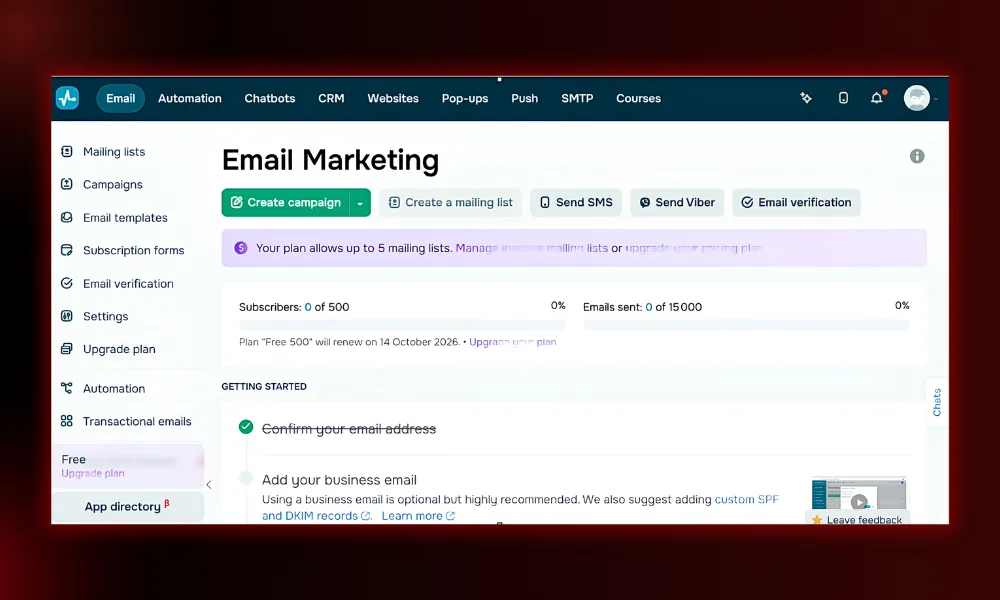
SendPulse is a bulk email service with a free plan for 500 subscribers and 15,000 emails a month, paid plans from $12 a month with unlimited emails, and a dedicated IP on its SMTP Pro plan.
SendPulse is an AI-driven email marketing and chatbot platform built for scaling businesses that want to attract leads and turn them into customers. It’s an international company with substantial operations in Brazil and Ukraine, a Meta Partner and an official WhatsApp Business API provider, so the same account can run email campaigns alongside chatbots on WhatsApp, Instagram, Facebook, Telegram, TikTok and Viber. SendPulse is best for small and growing businesses that want generous bulk sending, automation and a CRM without paying for each email.
What it does well
- Drag-and-drop editor with 130+ templates, so a campaign doesn’t need a designer.
- Automation 360: flows triggered by sign-ups, purchases or clicks, which can switch between email and chatbot messages.
- Segmentation and A/B testing on paid plans, with dynamic segments that update as subscribers act.
- Deliverability tools: SPF, DKIM and DMARC domain authentication, an email verifier and a spam checker to clean a list before a big send and protect your sender reputation.
- AI assistant that drafts, translates and adjusts the tone of email copy.
- Built-in CRM that unifies contacts, deals and requests from every channel, plus 40+ integrations.
Pricing: The free plan covers 500 subscribers and 15,000 emails a month. Standard starts at $12 a month for 500 subscribers (or $9.60 billed annually), $78 for 10,000 and $472 for 100,000, all with unlimited emails. Pro adds dynamic segmentation and the email verifier. A pay-as-you-go option and a separate SMTP service are also available: SMTP is free for 12,000 emails a month, and SMTP Pro, at $74.85 a month for 100,000 emails, includes a dedicated IP. See SendPulse official pricing for every tier.
Ratings: 4.6/5 on G2 (720 reviews) and 4.6/5 on Capterra (773 reviews), for the whole platform.
Pros
- Most generous free plan of the six for sending volume
- Unlimited sends on every paid plan
- Email, SMTP, chatbots and CRM in one account
Cons
- A dedicated IP is tied to the SMTP plans
- The Enterprise plan needs at least 2,500 contacts
- Some reviewers find the interface busy
2. Brevo
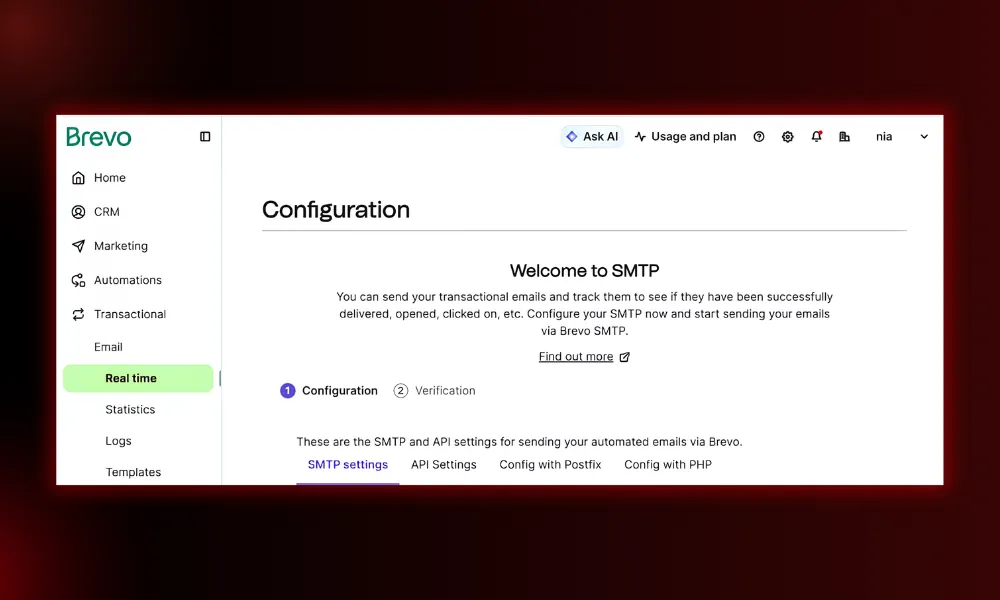
Brevo is a bulk email service that charges by emails sent rather than contacts: Free allows 300 emails a day for up to 100,000 contacts, and Starter costs $9 a month for 5,000 emails.
Brevo (formerly Sendinblue) flips the usual pricing model. You can store a large contact list cheaply and pay for the volume you actually send, which suits businesses with big lists that email them occasionally. Brevo is best for businesses with large contact lists that send campaigns now and then rather than every week.
What it does well
- Drag-and-drop editor and template library for quick campaign builds.
- Marketing automation for welcome series, birthdays and abandoned carts (Standard and up).
- Segmentation by contact attributes and behavior.
- AI tools for subject lines, content and send-time optimization.
- Transactional email via API and SMTP on every plan, including Free.
- Sales CRM for teams that want deals and email in one place.
Pricing: Free allows 300 emails a day and up to 100,000 contacts, with Brevo branding. Starter is $9 a month for 5,000 emails, $17 for 10,000, $39 for 40,000 and $69 for 100,000. Standard is $18 a month for 5,000 emails, $35 for 10,000, $75 for 40,000 and $129 for 100,000. Professional starts at $499 a month from 150,000 emails. A dedicated IP is an add-on on Professional and Enterprise at $251 a year. See Brevo official pricing.
Ratings: 4.5/5 on G2 (2,743 reviews) and 4.6/5 on Capterra (3,523 reviews).
Pros
- Cheap way to keep a very large list
- Transactional email on every plan
- Strong automation for the price
Cons
- 300 emails a day on Free is too little for real bulk sends
- Automation and A/B testing start at Standard
- Dedicated IP only from Professional ($499/mo)
3. Mailchimp
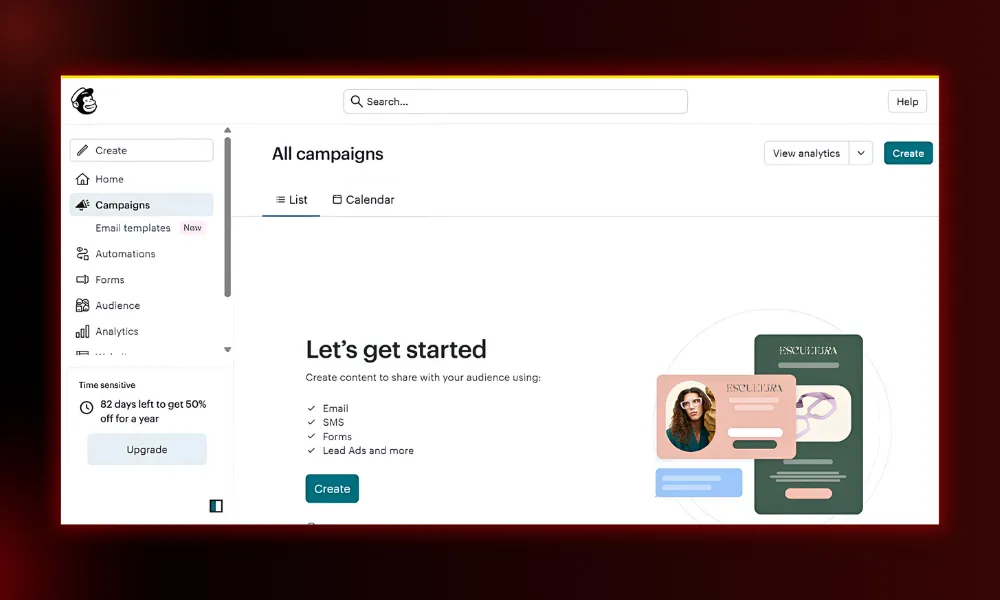
Mailchimp is an email marketing platform with a free plan for 250 contacts, paid plans from $13 a month for 500 contacts, and 300+ integrations on every plan.
Mailchimp is often the first name people hear, and its strength is the experience: good-looking templates, a mature editor and integrations with almost every e-commerce and CRM tool. The trade-off is cost, which rises quickly as a list grows. Mailchimp is best for brands that value design and integrations and are comfortable paying more as their list grows.
What it does well
- Email builder and templates that look good with little effort.
- Automation flows, up to 200 on Standard and Premium (Essentials is limited to 4 flow steps).
- Segmentation, with predictive segments on Premium.
- A/B testing from Essentials and multivariate testing on Premium.
- Generative AI tools included on Standard and Premium.
- 300+ integrations on every plan.
Pricing: Free covers 250 contacts and 500 emails a month (250 a day). At 500 contacts, Essentials is $13 a month, Standard $20 and Premium $350. These are introductory prices for the first 12 months, after which the regular price applies. At 10,000 contacts, Essentials is $110 a month and Standard $135. Sending limits are a multiple of your contacts: 10x on Essentials, 12x on Standard and 15x on Premium. See Mailchimp official pricing.
Ratings: 4.3/5 on G2 (12,989 reviews) and 4.5/5 on Capterra (about 17,600 reviews).
Pros
- Polished templates and editor
- Huge integration library
- Generative AI on Standard and up
Cons
- Smallest free plan of the six (250 contacts)
- Price climbs quickly with list size
- Introductory pricing lasts 12 months
4. MailerLite
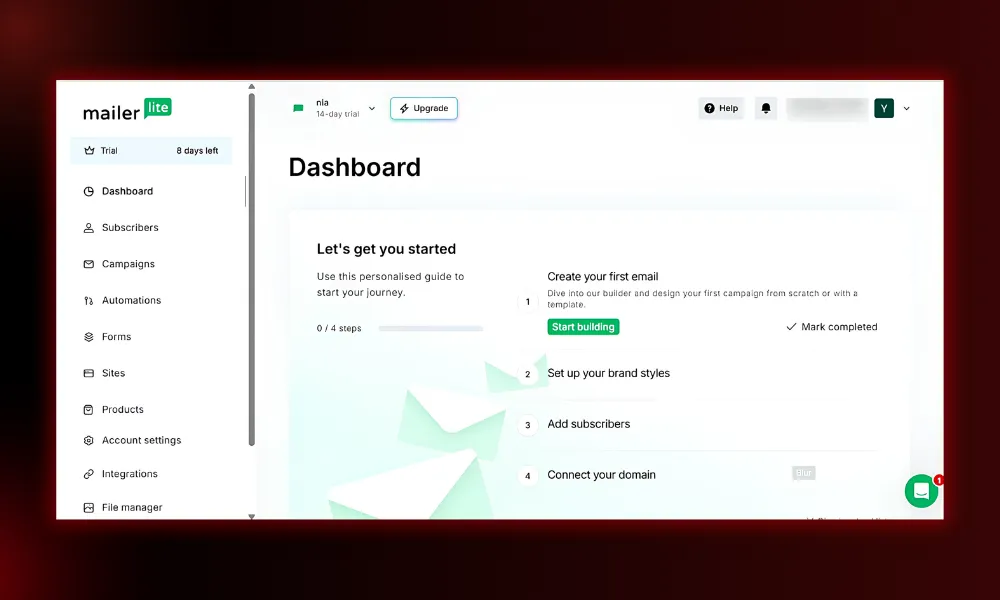
MailerLite is an email marketing tool with a free plan for 250 subscribers and 2,500 emails a month, and paid plans from $12 a month for 500 subscribers.
MailerLite keeps things simple, which is exactly why people like it. You get a tidy editor, automation and landing pages without a steep learning curve, and the free plan includes features others charge for. MailerLite is best for creators and small businesses that want simple, good-looking newsletters.
What it does well
- Drag-and-drop, rich-text and HTML editors, all on Free.
- Visual automation builder with e-commerce triggers and RSS campaigns.
- Unlimited segments and groups on every plan.
- A/B testing on every plan and multivariate testing from Comfort.
- AI writing assistant and smart sending on Comfort and up.
- Email verifier for cleaning a list before sending.
Pricing: Free covers 250 subscribers and 2,500 emails a month. Comfort starts at $12 a month for 500 subscribers (and $89 for 10,000) and allows 10x your subscriber tier in monthly emails. Power starts at $25 a month and removes the monthly email cap under a fair-use policy. Enterprise (200,000+ subscribers) is custom and offers a dedicated IP as an add-on. Yearly billing saves 10%. See MailerLite official pricing.
Ratings: 4.6/5 on G2 (1,113 reviews) and 4.7/5 on Capterra (2,324 reviews).
Pros
- Very easy to learn
- A/B testing and segments even on Free
- Fair pricing for small lists
Cons
- Comfort caps monthly sends
- Dedicated IP only on Enterprise
- Account approval can delay your first send
5. Constant Contact
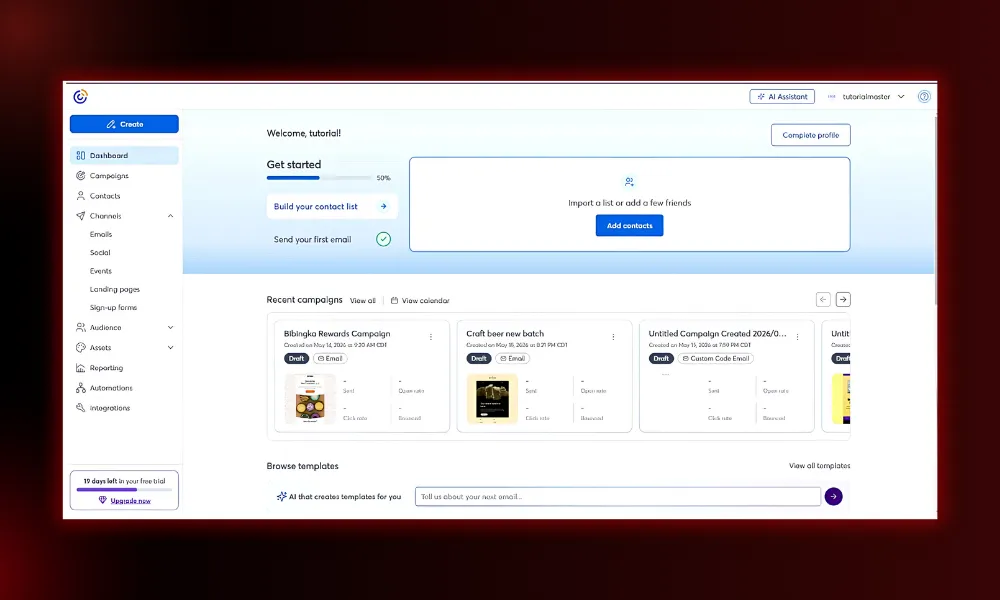
Constant Contact is an email marketing service for small businesses and nonprofits, with a free trial, paid plans from $12 a month for 500 contacts, and live phone support on every plan.
Constant Contact has been around for a long time and still shows up in most comparisons of mass email services. Its strength is support and simplicity: live phone help from the cheapest plan, an easy editor and built-in event registration. The trade-off is contact-based pricing that rises quickly as a list grows. Constant Contact is best for small businesses and nonprofits that want hands-on support more than advanced automation.
Source: YouTube
What it does well
- Drag-and-drop editor and templates that need no HTML.
- Live phone support starting on the Lite plan.
- Event registration and ticketing, free or paid, on every plan.
- Segmentation and contact management for organizing lists across campaigns.
- SMS marketing as an add-on from $10 a month (500 messages included on Premium).
Pricing: There’s no free plan, only a free trial. At 500 contacts, Lite is $12 a month, Standard $35 and Premium $80. At 10,000 contacts, Lite is $120, Standard $160 and Premium $275. Monthly sends are 10x your contacts on Lite, 12x on Standard and 24x on Premium, with overage at $0.002 per send. Prepaying for 12 months saves up to 15%, and nonprofits save up to 30%. See Constant Contact official pricing.
Ratings: 4.1/5 on G2 (7,570 reviews) and 4.3/5 on Capterra (2,953 reviews).
Pros
- Live phone support on every plan
- Built-in event registration and ticketing
- Easy to learn for non-technical teams
Cons
- No free plan
- Automation is limited below Premium (one active path on Lite, three on Standard)
- A/B testing starts on Standard and covers subject lines only
6. Twilio SendGrid
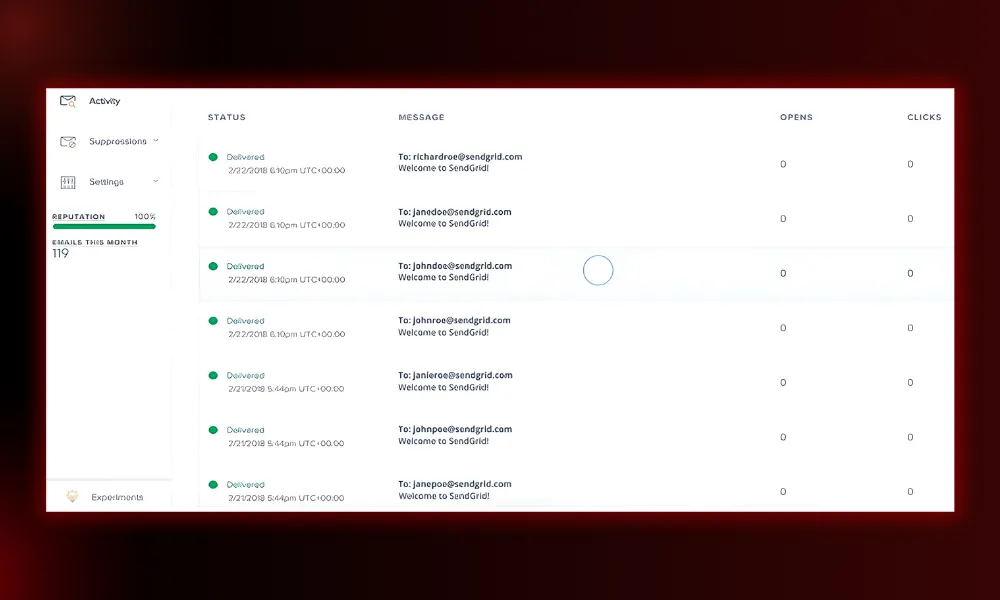
Twilio SendGrid is an email API and marketing platform for high-volume senders, with API plans from $19.95 a month for 50,000 emails and a dedicated IP from Email API Pro ($89.95 a month).
SendGrid is the most technical service here. Its Email API is a common choice when a product needs to send millions of receipts, alerts or notifications, and a separate Marketing Campaigns product covers newsletters. Twilio SendGrid is best for developers and product teams sending high-volume transactional or bulk email through an API.
Source: Twilio
What it does well
- Email API and SMTP relay that scale to millions of emails a month.
- Dedicated IPs with automated warm-up on Email API Pro and Marketing Campaigns Advanced.
- Domain authentication (SPF, DKIM), link branding and suppression management on every plan.
- Email address validation included on Pro and Premier.
- Marketing Campaigns with design and code editors, segmentation and A/B testing.
- Subusers and SSO for larger teams.
Pricing: There’s no permanent free plan, only a 60-day trial at 100 emails a day. The Email API starts at $19.95 a month for 50,000 emails; Pro starts at $89.95 for 100,000 and includes a dedicated IP. Marketing Campaigns starts at $15 a month for 5,000 contacts and 15,000 emails, with automation and a dedicated IP on Advanced (from $60). The two products are billed separately. See Twilio SendGrid official pricing.
Ratings: 4.0/5 on G2 (368 reviews for the Email API) and 4.2/5 on Capterra (754 reviews).
Pros
- Built for very high volume
- Dedicated IP and warm-up on Pro
- Strong deliverability tooling
Cons
- No permanent free plan
- API and marketing tools billed separately
- Reviewers report slow support
Other bulk email services we considered
A few other names come up often when people compare bulk email services. They didn’t make the main list because they’re built for a narrower audience or are usually pricier per contact for plain bulk sending.
- Kit (formerly ConvertKit): built for creators who sell newsletters, courses and digital products.
- HubSpot: email marketing inside a full CRM, best for teams already using HubSpot.
- Klaviyo: e-commerce email and SMS built around store data, popular with Shopify brands.
- Amazon SES, Mailgun and Postmark: developer-focused sending APIs with no marketing editor, often the cheapest per email at very high volume.
SendPulse vs Mailchimp vs Brevo vs Constant Contact vs SendGrid: what a 10,000-contact list costs
For a 10,000-contact list on monthly billing, SendPulse Standard costs $78 with unlimited emails, Brevo Starter $39 for 40,000 emails (about four campaigns a month), MailerLite Comfort $89, Mailchimp Essentials $110, Constant Contact Lite $120 and SendGrid Marketing Campaigns $25 for 30,000 emails. If you send more than about ten campaigns a month (over 100,000 emails), SendPulse’s unlimited sends work out cheaper than paying per email on Brevo.
| Service and plan | Monthly price at 10,000 contacts | Emails included |
| SendPulse Standard | $78 | Unlimited |
| Brevo Starter | $39 (40,000 emails) or $69 (100,000 emails) | Pay per volume |
| Brevo Standard | $75 (40,000 emails) or $129 (100,000 emails) | Pay per volume |
| Mailchimp Essentials | $110 | 100,000 (10x contacts) |
| Mailchimp Standard | $135 | 120,000 (12x contacts) |
| MailerLite Comfort | $89 | 100,000 (10x subscribers) |
| MailerLite Power | $129 | Unlimited (fair use) |
| Constant Contact Lite | $120 | 100,000 (10x contacts) |
| SendGrid Marketing Campaigns | $25 | 30,000 |
At 100,000 subscribers, SendPulse Standard is $472 a month with unlimited emails. For a million emails or more a month, an API service such as SendGrid Pro or Amazon SES is usually the cheapest route.
Bulk email marketing vs. transactional email: which do you need?
Bulk email marketing means newsletters, promotions and announcements sent to a list. Transactional email means one-to-one messages your app triggers, such as receipts and password resets. Marketing tools like SendPulse, Brevo, Mailchimp, MailerLite and Constant Contact focus on the first; SendGrid, Amazon SES, Mailgun and Postmark focus on the second through an API. SendPulse and Brevo cover both in one account, which is handy for small business teams that don’t want two tools.
Deliverability: what Gmail and Yahoo expect from bulk senders
Whichever service you choose, inbox placement depends on a few basics. Authenticate your sending domain with SPF, DKIM and DMARC, add one-click unsubscribe, keep spam complaints under 0.3% (ideally under 0.1%), and remove addresses that bounce. All six services in this list support domain authentication. SendPulse, MailerLite and SendGrid also include list-cleaning tools: SendPulse pairs its email verifier with a spam checker that reviews a campaign before you send it. A dedicated IP only helps once you send consistently at high volume; SendPulse SMTP Pro and SendGrid Email API Pro include one.
Which bulk email service should you choose?
All six platforms are reliable for mass email at small volumes. The differences show up as your mailing list grows past 100,000 subscribers, when the pricing model matters more than any single feature.
Best bulk email service for small business
SendPulse, for the biggest free plan and unlimited sends on paid plans. MailerLite is the simpler alternative, and Constant Contact suits teams that want phone support.
Best for large lists you email occasionally
Brevo, because you pay per email rather than per contact and can store up to 100,000 contacts for free.
Best for high volume (1M+ emails a month)
Twilio SendGrid, with Amazon SES, Mailgun or Postmark as API alternatives. For frequent marketing sends to a large list, SendPulse’s unlimited emails keep costs predictable.
Best for design and integrations
Mailchimp, with 300+ integrations on every plan.
Best for enterprise
SendPulse VIP, Brevo Enterprise, Mailchimp Premium or SendGrid Premier, all with custom pricing.
Conclusion
SendPulse is the strongest all-round choice for bulk email in 2026: its free plan covers 500 subscribers and 15,000 emails a month, paid plans start at $12 with unlimited sends, and SMTP, automation and a CRM come in the same account. Brevo wins for large lists you email occasionally, Mailchimp for design and integrations, MailerLite for simplicity, Constant Contact for phone support, and Twilio SendGrid for developers sending at very high volume.
Frequently asked questions
What is the best bulk email service in 2026?
SendPulse is the best bulk email service for most businesses in 2026: it offers 15,000 free emails a month for up to 500 subscribers and unlimited sends on paid plans from $12 a month. Brevo is better for large lists you email rarely, and Twilio SendGrid for developers sending through an API.
What is the cheapest bulk email service?
On free plans, SendPulse allows the most sending (15,000 emails a month for up to 500 subscribers), followed by Brevo (300 emails a day). For paid plans, Brevo starts at $9 a month, and SendPulse, MailerLite and Constant Contact at $12. For millions of emails, API services like Amazon SES and SendGrid are usually the most affordable bulk email software per email.
Mailchimp vs Brevo: which is cheaper for bulk email?
Brevo is usually cheaper for large lists because it charges by emails sent: 40,000 emails a month cost $39 on Starter, while Mailchimp Essentials costs $110 a month for 10,000 contacts. If you email the same list several times a week, SendPulse at $78 a month with unlimited sends can be cheaper than both.
Which bulk email service is best for large lists?
Brevo suits large lists you email occasionally because it charges by emails sent and stores up to 100,000 contacts for free. For frequent sends to a large list, SendPulse’s unlimited sends on paid plans keep costs predictable.
Which bulk email service has the best deliverability?
Deliverability depends more on how you send than on the provider. All six services support SPF and DKIM authentication; SendPulse, MailerLite and SendGrid add list-cleaning tools, and SendPulse SMTP Pro and SendGrid Email API Pro include a dedicated IP for consistent high-volume senders.
Can I send bulk email for free?
Yes, with limits: SendPulse allows 15,000 emails a month to 500 subscribers, Brevo 300 emails a day, MailerLite 2,500 a month and Mailchimp 500 a month. Constant Contact and SendGrid offer only free trials.
Do I need a dedicated IP for bulk email?
Only if you send high volumes consistently, roughly tens of thousands of emails a week. Smaller senders usually do better on a well-managed shared IP. SendPulse SMTP Pro and SendGrid Pro include one; Brevo and MailerLite sell it as an add-on on top plans.
What about Kit, HubSpot or Klaviyo?
They’re solid alternatives that also come up in comparisons. Kit focuses on creators, HubSpot on teams already using its CRM, and Klaviyo on e-commerce stores; each is usually pricier per contact for plain bulk