In the second quarter of 2026, the most profitable company on Earth was not NVIDIA. It was Samsung Electronics, which posted $58.4 billion in operating profit, surpassing NVIDIA’s $53.5 billion quarter, and it did not get there with logic chips. It got there with memory, the component the industry spent a decade treating as a commodity.
That quarter is the whole story of the semiconductor year. The Korea Advanced Institute professor known as the father of HBM put the thesis bluntly on television: memory read and write operations account for almost all of AI computing time, while GPUs spend most of their time waiting.
The market agreed with its wallet. The World Semiconductor Trade Statistics organization projects the industry growing more than 25 percent in 2026 to approximately $975 billion, with memory expanding 30 percent and the memory market alone exceeding $440 billion.
Bank of America called it a supercycle similar to the boom of the 1990s, forecasting DRAM revenue up 51 percent and NAND up 45 percent in a single year. Memory vendors became trillion dollar market caps. HBM supply sold out through 2026.
And yet this is a Leaders and Flops ranking, because the same year that crowned memory also produced a 45 percent single month collapse at Intel, an AI chip IPO trading 40 percent below its debut, and the quietest assassination of the decade: NVIDIA absorbing Groq, its most hyped rival, for $20 billion on Christmas Eve. Thirty two companies, 22 leaders, 10 flops, and the scoreboard as of November 2026.
Methodology. Leaders are ranked on market performance, technology position, and momentum entering 2027. Flops are defined as a market value decline of 25 percent or more, a lost technology crown, a down round, or a loss of independence.
Market data from Morningstar, Finviz, and exchange filings. Industry projections from WSTS, Bank of America, Goldman Sachs, UBS, and Counterpoint Research. Every figure dated as of November 2026. Rankings re-scored quarterly.
The 22 Leaders
| Rank | Company | The One Line Verdict |
| 1 | SK Hynix | The HBM king: 62 percent share, first to HBM4 mass production, largest ADR listing in US history |
| 2 | NVIDIA | The first $4 trillion company, now playing banker to the entire industry |
| 3 | TSMC | The foundry every leader on this list depends on, building $165 billion of Arizona fabs |
| 4 | Samsung Electronics | A $58.4 billion profit quarter, briefly the most profitable company in the world |
| 5 | Micron | Up 110 percent year to date, America’s memory champion |
| 6 | AMD | Up 98 percent, winning in CPUs while holding second in AI accelerators |
| 7 | Broadcom | Architect of the custom silicon era, printing ASICs for the hyperscalers |
| 8 | ASML | Still the only source of the machines that print advanced chips |
| 9 | SanDisk | Up 633 percent at its September peak, the year’s wildest chip ride |
| 10 | Western Digital | Up 139 percent; every AI query has to live somewhere |
| 11 | Seagate | Up 144 percent, the other half of the storage renaissance |
| 12 | Lumentum | Up 274 percent in a year, selling the lasers that light the data centers |
| 13 | Marvell | Up 98 percent, with NVIDIA itself investing $2 billion |
| 14 | Arm | The instruction set underneath the CPU boom |
| 15 | Qualcomm | The handset king pivoting to hyperscale AI, with a mystery customer |
| 16 | Applied Materials | Selling the tools that make the tools |
| 17 | Lam Research | Etching the supercycle, wafer by wafer |
| 18 | Coherent | $2 billion of NVIDIA money says photonics is the next bottleneck |
| 19 | Astera Labs | The connectivity chips holding the racks together |
| 20 | Ayar Labs | $155 million raised for optical interconnects, the post copper bet |
| 21 | Eliyan | $60 million to kill the reticle limit, backed by Samsung and Tiger Global |
| 22 | Lightmatter | Photonic computing’s IPO to watch in 2027 |
The Five Leader Profiles That Matter Most
SK Hynix: the company that won the decade’s most important race. High Bandwidth Memory is the bottleneck component of the AI era, and SK Hynix owns it: 62 percent of HBM shipments, the world’s first HBM4 mass production line running since September 2025, and UBS predicting it will take roughly 70 percent of HBM4 supply for NVIDIA’s next generation Rubin platform.
It is the first HBM3E supplier for Google’s newest TPUs. And in July 2026 it rang the Nasdaq bell for the largest ADR listing in American history. Goldman Sachs expects its total HBM share to stay above 50 percent through at least 2026. Ten years ago this was the number two memory company in Korea. Today it may be the most strategically important chip company on Earth.
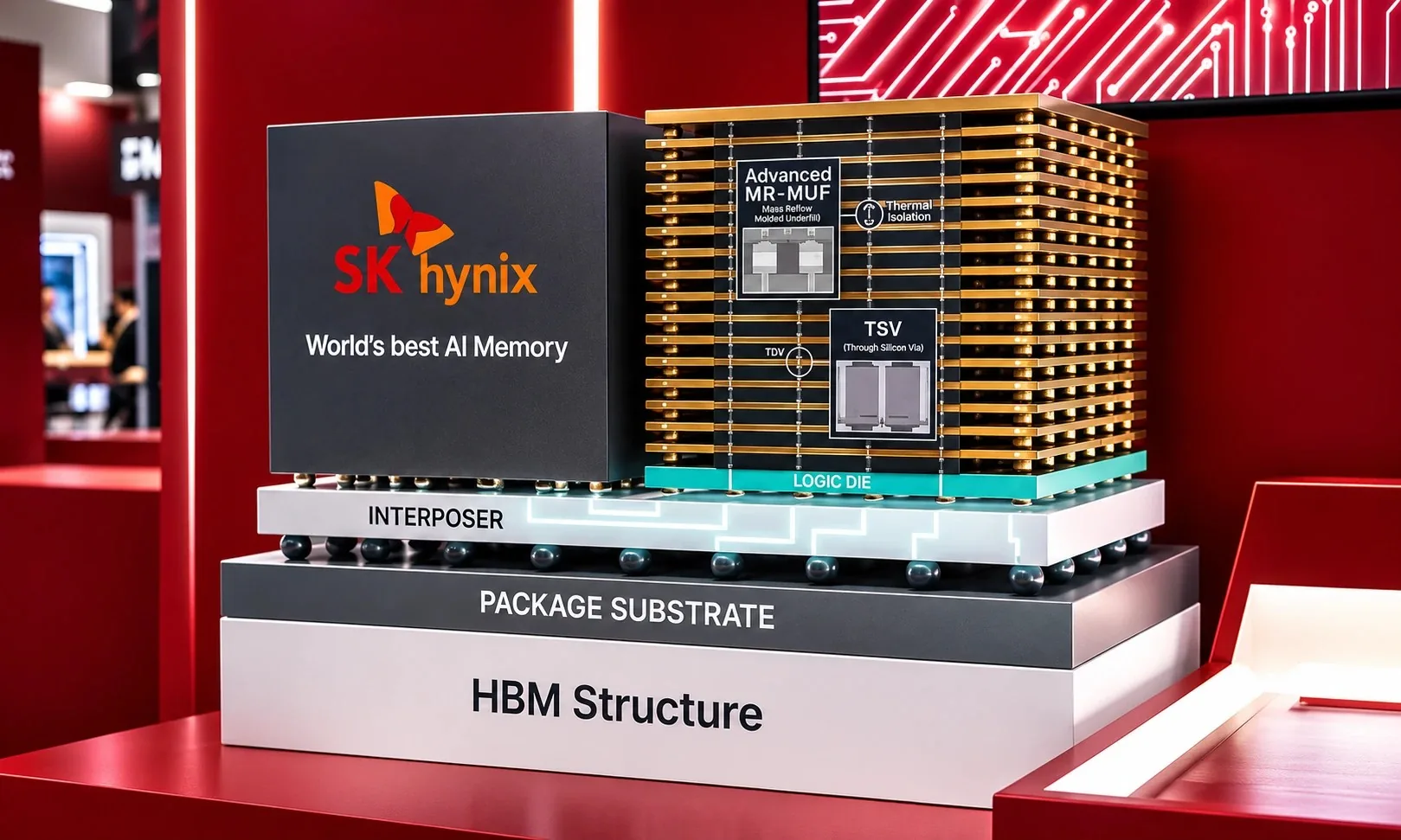
Samsung: the profit flip nobody predicted. Samsung’s Q2 operating profit of $58.4 billion topping NVIDIA is the single most surprising earnings result of the AI era, and it happened because the memory shortage let Samsung charge supercycle prices even while losing the premium HBM race to its domestic rival.
The company is now the cautionary tale and the comeback simultaneously: its foundry and HBM divisions trail, but its commodity memory printed money at a scale that briefly made it the world’s most profitable company. Never confuse a cycle with a comeback, and never count out a company with $58 billion quarters either.
NVIDIA: from chipmaker to central bank. The most revealing NVIDIA story of 2026 is not a product. It is the $45.3 billion the company committed to equity deals through May alone: $30 billion into OpenAI, $2 billion each into CoreWeave, Marvell, Lumentum, and Coherent, up to $10 billion into Anthropic, and the $20 billion Christmas Eve deal that absorbed Groq.
NVIDIA is no longer just selling the chips; it is financing the customers, suppliers, and rivals of the chips, a capital vortex that makes the entire industry’s health partly NVIDIA’s own balance sheet decision. The buildout economics we tracked in Blackstone’s $22 billion chip loan now run through Santa Clara too.
TSMC: the toll booth with a flag problem. Every leader above, and both the flops and the kings, buy wafers from one company. TSMC’s answer to geopolitics is concrete: a $165 billion, six fab buildout in Arizona, part of a US anchored supply chain with Amkor’s $7 billion packaging campus and Samsung’s Texas fab. The most important company in technology keeps getting more important, and its only real risk remains the strait it is named after.
The storage trio: SanDisk, Western Digital, Seagate. Up 633 percent, 139 percent, and 144 percent. Three companies the market had left for dead turned out to own the physical layer of the AI boom: somewhere to put the exabytes. SanDisk’s October, down 34 percent in a month, is the reminder that supercycles are still cycles.
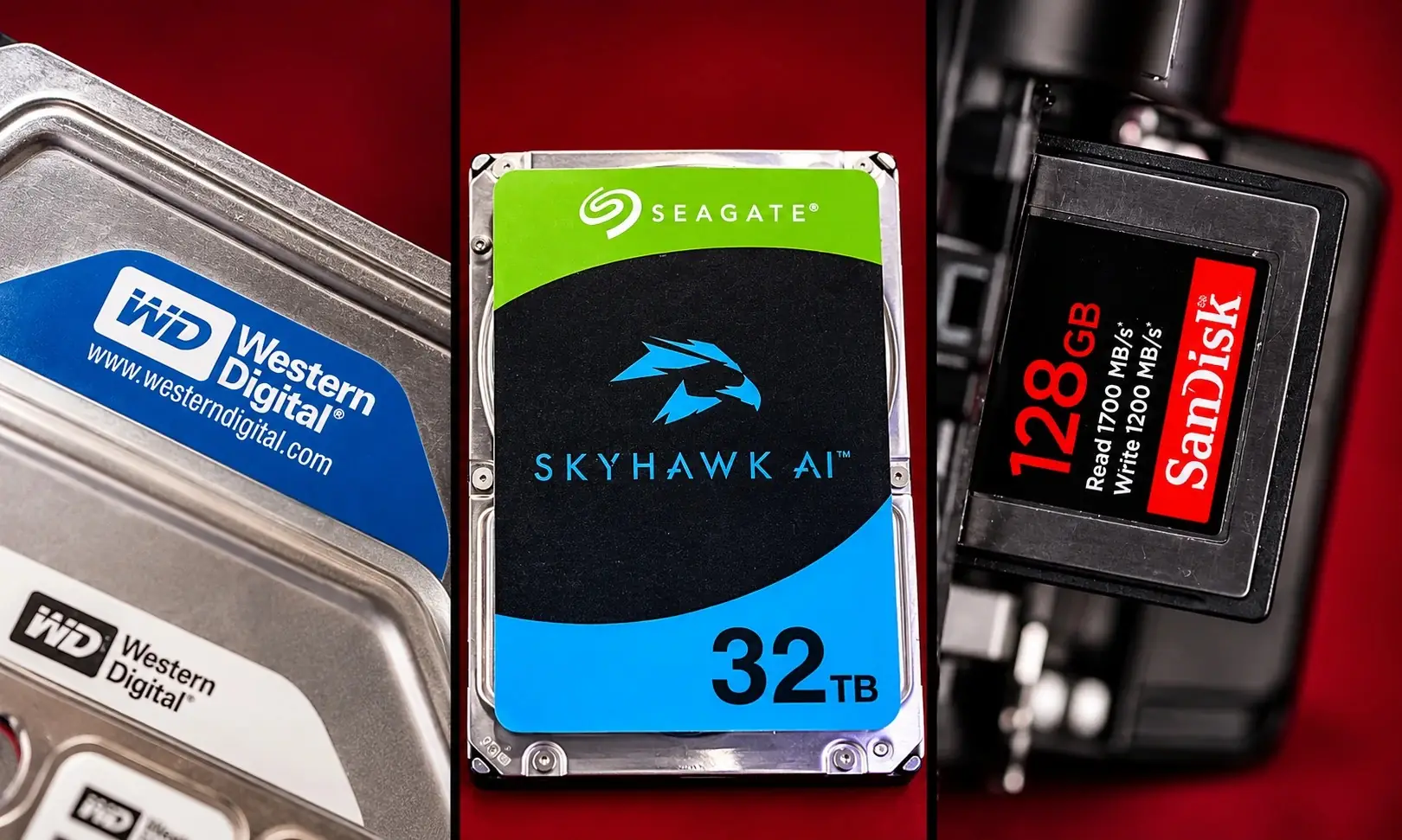
But the demand thesis, enterprise SSDs and nearline drives for AI data centers, is structural in a way previous storage booms were not.
The 10 Flops
| Rank | Company | What Was Lost |
| 1 | Intel | 45 percent of its market value in a single October |
| 2 | Cerebras | More than 40 percent below its $185 IPO price, hardware margins halved |
| 3 | Groq | Its independence, absorbed by NVIDIA for $20 billion |
| 4 | Samsung’s HBM division | The technology crown, lost to SK Hynix |
| 5 | SambaNova | Repriced at $2.2 billion, a fraction of its 2021 peak |
| 6 | CoreWeave | Down 59 percent over the past year, the neocloud hangover |
| 7 | Huawei HiSilicon | Still locked out of EUV, teasing 1.4 nanometer it cannot yet mass produce |
| 8 | The training cycle startups | Bridge rounds at compressed valuations as capital rotates to inference |
| 9 | Wolfspeed | A Chapter 11 restructuring, the silicon carbide dream deferred |
| 10 | The original CHIPS Act | Natcast shut down, grants converted to equity, the subsidy model rewritten |
The Four Flop Autopsies That Matter Most
Intel: the national champion that cannot find the floor. The year had everything: a new CEO in Lip Bu Tan, a 9.9 percent US government stake bought at $20.47 a share, 35,500 jobs eliminated on the way to a 75,000 person target, and even a rumor that Apple might use Intel Foundry for future Apple Silicon.
The stock rose 64 percent for the year, then collapsed 45 percent in October alone, 53.8 percent below its June high. Intel is simultaneously too strategic to fail and too broken to trust, which is why it trades like a referendum that gets retaken every month. The 2027 foundry milestones, and whether the Apple rumor is real, will finally grade the turnaround.

Cerebras: the IPO that proved revenue is not enough. The wafer scale chipmaker went public in May at $185, jumped 68 percent on day one, signed a $20 billion OpenAI deal for 750 megawatts of inference capacity, landed AWS and Microsoft, and grew cloud revenue 265 percent year over year.
The stock is still down more than 40 percent from the IPO price and over 70 percent from its highs, because the details told a harder story: hardware revenue fell 29 percent and hardware gross margins collapsed from 50.5 percent to 31 percent.
The market’s verdict on AI chip challengers in 2026 is brutal in its consistency: growth is necessary, profitable growth is required, and both must survive comparison to the incumbent.
Groq: the dream that sold for $20 billion. On December 24, 2025, NVIDIA announced a licensing and acquihire deal for Groq, the LPU startup that had raised at a $6.9 billion valuation three months earlier. Call it what it was: the most dangerous independent challenger to NVIDIA’s inference future, removed from the board, at roughly 2.9 times its last round.
For Groq’s investors it was a win. For the dream of an independent inference champion, it was the flop of the year, and the clearest sign yet that the chip wars’ endgame is consolidation around one company.
Wolfspeed: the other kind of chip story. While AI silicon feasted, the silicon carbide pioneer filed for Chapter 11 restructuring in 2025, crushed by the debt of building US fabs for an EV transition that arrived slower than its bondholders.
The lesson the industry keeps relearning: not every chip rides the same cycle, and capacity built for a demand curve that slips two years is a balance sheet event, not a timing issue.
The Five Lessons of the Year
One: memory is the protagonist. The cleanest signal in semiconductors: the company that won the HBM race produced the largest ADR in US history, and the company that merely sold commodity DRAM outearned NVIDIA for a quarter. KAIST’s professor was right. AI’s bottleneck is not compute; it is feeding the compute.
Two: the inference pivot is reallocating everything. PitchBook framed the new axis: training bets are episodic, inference bets run 24 hours a day, and capital is rotating accordingly. Inference specialists attracted the premium; training cycle startups raised bridge rounds at compressed valuations; and NVIDIA paid $20 billion to own the inference threat outright.
Three: consolidation is the endgame. Groq absorbed. SambaNova repriced and recapitalized. Cerebras public and punished. The independent challenger tier is being hollowed out between an incumbent with a $45 billion checkbook and a market that demands profitable growth from day one.
Four: geopolitics is now a capex line. TSMC’s $165 billion Arizona buildout, Intel’s government shareholder, Huawei teasing a 1.4 nanometer breakthrough it cannot yet manufacture at scale, and export rules that reshape roadmaps quarterly. We tracked the China side of this in our report on Moonshot AI’s banned chips allegations. In 2027, every chip company is also a foreign policy position.
Five: cycles still cycle. SanDisk gave back 34 percent in a month. HBM prices are forecast to face correction pressure after 2026 as capacity lands. The bulls say AI demand broke the cycle forever; the bears have a century of semiconductor history. Size positions accordingly, and keep our AI stock market tracker bookmarked for the earnings weeks.
The 2027 Watchlist
Does HBM4 hold its price? Supply is sold out through 2026, but new capacity arrives through 2027, and the post 2026 correction forecasts are already in the analyst notes. SK Hynix’s margin story depends on the answer.
Is Apple Silicon’s next fab Intel? The rumor that Apple might dual source with Intel Foundry is the single biggest validation available to any foundry. If it lands, Intel’s October looks like the bottom. If it dies, the floor is still undiscovered.
Can Cerebras rebuild the multiple? Cloud revenue growing 265 percent with a $20 billion OpenAI anchor says the business works. Hardware margins at 31 percent say the economics do not, yet. The path back to $185 runs through that margin line.
Who IPOs next? SambaNova, Lightmatter, MatX, and PsiQuantum are all circling 2027 filings per PitchBook’s calendar. The Cerebras aftermarket will decide whether they file or wait.
Does NVIDIA’s checkbook become the story? $45.3 billion of equity commitments in five months makes NVIDIA the industry’s largest venture investor as well as its largest vendor. Regulators have noticed smaller circles than this one, a thread we follow in our coverage of Jensen Huang’s argument that AI needs no new laws and our Top 25 AI Companies ranking.
FAQ
What is the best chip stock of 2026?
By performance, SanDisk, up 385 percent through October and 633 percent at its September peak. By strategic position, SK Hynix, which holds roughly 62 percent of the HBM market and is first to HBM4 mass production. By scale, NVIDIA, the first $4 trillion company in history.
What is HBM and why does it matter?
High Bandwidth Memory, the stacked memory that feeds AI accelerators. Memory operations dominate AI computing time, so HBM supply now constrains the entire AI buildout. The 2026 HBM market is estimated at $54.6 billion, up 58 percent year over year, and supply was sold out through 2026.
Who is winning the HBM race?
SK Hynix, with about 62 percent of shipments, the first HBM4 mass production line, a predicted 70 percent share of HBM4 for NVIDIA’s Rubin platform, and the first HBM3E supply slot for Google’s newest TPUs. Samsung profits enormously from the memory shortage but lost the premium technology crown.
What happened to Cerebras stock?
It went public in May 2026 at $185, rose 68 percent on day one, then fell more than 40 percent below the IPO price and over 70 percent from its highs. Cloud revenue grew 265 percent, but hardware revenue fell 29 percent and hardware margins dropped from 50.5 to 31 percent, and the market priced the economics over the growth.
Did NVIDIA buy Groq?
Effectively, yes. On December 24, 2025, NVIDIA announced a $20 billion licensing and acquihire deal for Groq, the LPU inference startup, repricing its $6.9 billion Series E valuation at roughly 2.9 times and ending its run as an independent challenger.
Is Intel fixed?
Not yet. The company has a new CEO, a 9.9 percent US government stake, 35,500 fewer jobs, and a foundry strategy with real milestones in 2027. The stock rose 64 percent for the year, then fell 45 percent in October alone. The turnaround is possible and unproven, which is exactly what the volatility is pricing.