Imagine spending months building one of the world’s fastest-growing AI models, only to wake up and find your company at the center of an international controversy. Overnight, the conversation shifts from innovation to investigations, export controls, and accusations of using restricted technology.
That’s exactly where Chinese AI startup Moonshot AI finds itself.
The Moonshot AI banned chips accusation has quickly become one of the biggest stories in artificial intelligence. A senior U.S. official has accused the company of using restricted Nvidia AI chips and improperly distilling technology from Anthropic’s AI models.
If those claims are ever proven, they could reshape how governments enforce AI export controls and how companies develop advanced AI systems.
For now, however, it’s important to separate verified facts from public allegations. While U.S. officials have made the accusations publicly, no court ruling or independently verified technical evidence has been released to confirm them.
This article explains what happened, why Nvidia chips are central to the controversy, what is currently known, and why the case matters far beyond a single AI company.
AI Overview
Moonshot AI is facing allegations from a senior U.S. official that it used restricted Nvidia AI chips and relied on unauthorized AI model distillation while developing its latest large language model, Kimi K3.
The accusations have intensified concerns over AI intellectual property and U.S. export controls.
At this stage, the allegations remain unproven publicly. Although the claims have received widespread media attention, no independent technical evidence or legal finding has confirmed that Moonshot AI violated export rules or misused another company’s AI models.
Key Takeaways
- A senior U.S. official has accused Moonshot AI of using restricted Nvidia AI chips.
- The accusations also involve alleged unauthorized distillation of Anthropic’s AI technology.
- Moonshot AI’s Kimi K3 model is at the center of the controversy.
- No publicly released evidence has confirmed the allegations.
- The case highlights growing tensions in the U.S.–China AI race and the enforcement of advanced AI chip export controls
What Is the Moonshot AI Banned Chips Accusation?
The Moonshot AI banned chips accusation refers to claims made by a senior U.S. official that the Chinese AI company may have trained or developed its Kimi K3 model using Nvidia chips that are restricted under U.S. export controls. The allegations also suggest that Moonshot AI may have improperly distilled technology from Anthropic’s AI systems.
While these accusations have sparked global discussion, they remain allegations. As of now, no public technical evidence or court decision has verified the claims.
Moonshot AI Banned Chips Accusation Explained
What Happened?
The controversy became public on Wednesday, July 22, 2026, when Michael Kratsios, Director of the White House Office of Science and Technology Policy, posted the accusation directly on X.
Kratsios said the administration has information that Moonshot AI distilled Anthropic’s Fable model to produce Kimi K3, describing this as a technique used to transfer the knowledge of a larger, more capable model to a smaller one.
He wrote that Moonshot developed an internal platform built specifically to run large-scale distillation against U.S. models, with the ability to switch between multiple access methods to avoid detection.
On the hardware side, Kratsios alleged that Moonshot acquired servers equipped with Nvidia’s GB300 system and accessed similar systems in Thailand, which he suggested were likely used to train the company’s models. The GB300 belongs to Nvidia’s Blackwell chip line, which cannot legally be sold to China.
The accusation didn’t arrive in isolation. Anthropic itself had already accused Moonshot of distillation back in February 2026, though the company has not said it holds direct evidence tying Kimi K3 specifically to that practice.
As of Wednesday evening, neither Moonshot nor Nvidia had issued a public response.
Who Made the Accusation?
The claim came from a named, on-the-record official: Michael Kratsios, who leads the White House Office of Science and Technology Policy. This wasn’t an anonymous leak or a background briefing;
Kratsios posted the allegation publicly under his own name on X.
The timing lines up with a broader administration push on this issue. The day before Kratsios’s post, Treasury Secretary Scott Bessent raised similar concerns about Chinese AI companies engaging in what he called intellectual property theft to build rival models, though his comments weren’t specific to Moonshot at the time.
Bessent separately told Fox Business that the administration has the ability to sanction overseas AI models found to be stealing from American companies.
What Has Been Publicly Confirmed?
Several facts are already established.
- Moonshot AI released its Kimi K3 model.
- The United States maintains export restrictions on certain advanced Nvidia AI chips.
- Senior U.S. officials publicly accused Moonshot AI of violating those restrictions and of improperly using Anthropic’s AI technology.
However, several important questions remain unanswered.
No publicly released forensic analysis, legal judgment, or independently verified technical evidence has confirmed that Moonshot AI used restricted Nvidia hardware or unlawfully distilled another company’s AI model.
That distinction is critical, especially in a rapidly evolving story where official allegations can precede formal investigations.
Why Is Moonshot AI Under Scrutiny?
Moonshot AI has emerged as one of China’s fastest-growing AI companies, drawing attention for developing competitive large language models capable of challenging leading global AI systems.
Its latest model, Kimi K3, gained significant interest because of its reported capabilities in reasoning, coding, and multilingual tasks.
As its influence grew, so did scrutiny over how the model was trained, what computing resources were used, and whether its development complied with international technology restrictions.
The current controversy goes beyond one company. It reflects broader concerns over AI competition, access to advanced computing hardware, and the protection of intellectual property in an increasingly competitive global AI industry.
Why Is Moonshot AI Under Scrutiny?
The Allegation Involving Nvidia Chips
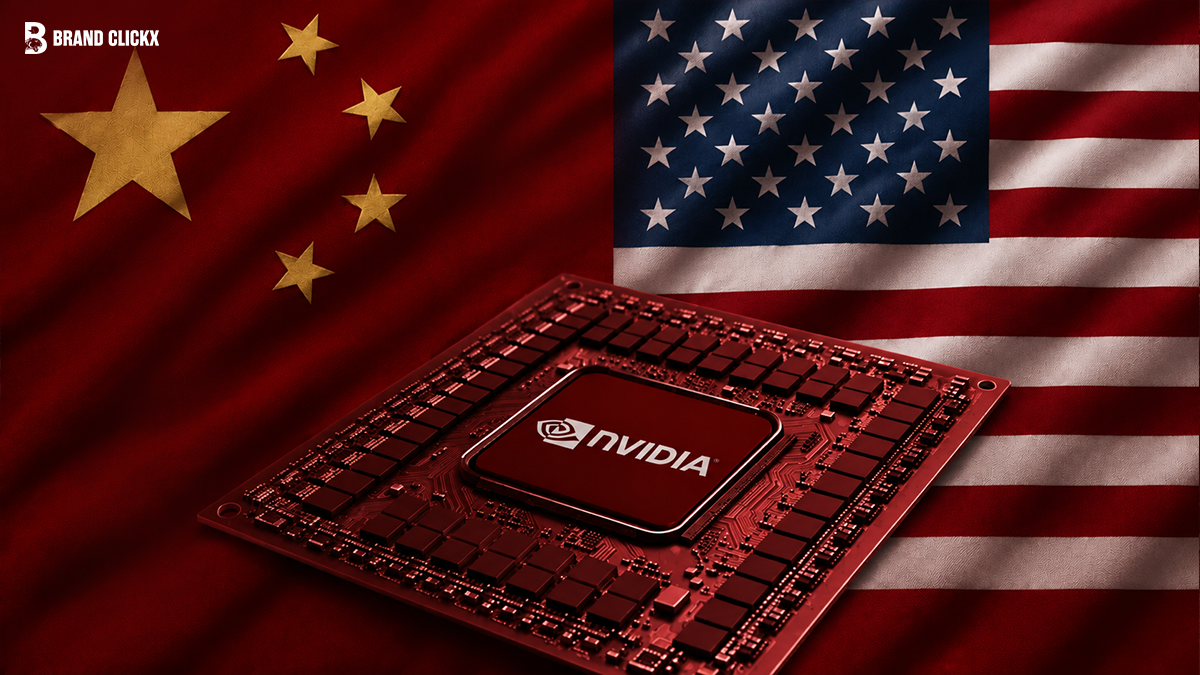
At the center of the hardware allegation is the GB300, part of Nvidia’s Blackwell-generation lineup and among its most advanced AI hardware, which is barred from sale to China under U.S. export rules.
Kratsios alleged Moonshot obtained GB300-equipped servers and accessed similar systems through Thailand, likely as an intermediary route to reach hardware otherwise restricted from Chinese buyers.
As with the distillation claim, this remains an allegation. No forensic or technical evidence has been made public confirming how or where Moonshot obtained the hardware.
The Allegation Involving Anthropic
The distillation allegation specifically names Anthropic’s Fable model as the source.
This builds on a complaint Anthropic already made in February 2026, when the company accused Moonshot, along with DeepSeek and MiniMax, of running roughly 16 million exchanges through about 24,000 fraudulent accounts to extract knowledge from Claude models.
OpenAI has raised similar complaints about its own models, and the White House now appears to be treating these allegations as a national security matter rather than a private commercial dispute between competitors.
Why Kimi K3 Became the Center of Attention
Moonshot released Kimi K3 on July 16, 2026, as a roughly 2.8-trillion-parameter open-weight model, one of the largest openly released systems to date.
The company claimed it trails only Anthropic’s Claude Fable 5 and OpenAI’s GPT-5.6 in overall capability. Within 24 hours of launch, K3 reportedly topped a leading coding-focused leaderboard, placing ahead of flagship offerings from both Anthropic and OpenAI.
Moonshot is also pricing K3 well below what U.S. labs typically charge, adding to concerns about rapid commoditization at the model layer.
That combination, frontier-level performance from an open-weight model released at a fraction of U.S. pricing, is what pushed the story beyond a routine product launch and into a national security and IP conversation.
Because the model is open-weight, its release also can’t be undone: once weights are downloaded and mirrored, export controls have no way to claw the capability back.
What Are “Banned” Nvidia Chips?
The phrase “banned Nvidia chips” can be misleading.
The chips themselves are not illegal. Instead, they are restricted under U.S. export control regulations, which limit the sale of certain advanced AI processors to specific countries and organizations.
These restrictions are designed to prevent cutting-edge computing hardware from being used in applications that U.S. policymakers believe could pose national security risks.
For AI companies, these chips are among the most valuable resources available because they dramatically reduce the time needed to train sophisticated language models.
Understanding U.S. Export Controls
Over the past few years, the United States has expanded export controls covering advanced semiconductor technology.
These rules affect some of Nvidia’s highest-performance AI GPUs, including models designed for large-scale AI training.
Companies wishing to export these products to restricted destinations typically need government approval. In some cases, exports may be prohibited entirely depending on the customer, destination, and intended use.
The objective is to slow access to the most advanced computing capabilities while protecting sensitive technologies.
Why Advanced Nvidia GPUs Matter
Modern AI models require enormous computing power.
Training a large language model involves processing vast amounts of data across thousands of GPUs over weeks or even months. The faster the hardware, the more efficiently developers can build and improve AI systems.
That is why Nvidia’s advanced AI chips have become one of the most strategically important technologies in the global AI industry.
If a company gains access to restricted hardware, it could significantly accelerate research and model development—one of the reasons allegations involving these chips receive such close attention from governments worldwide.
What Is AI Model Distillation?
The second major allegation against Moonshot AI involves a technique known as AI model distillation.
Although the term sounds complex, it is a well-established practice in artificial intelligence. The controversy is not about the technology itself, but about how it is allegedly used.
How Does AI Distillation Work?
Model distillation is a training method where a smaller or newer AI model learns by analyzing the responses of a larger, more capable model.
Instead of training entirely from raw datasets, developers can use another model’s outputs to improve accuracy, reasoning, or efficiency.
Many AI companies and researchers use distillation as a legitimate optimization technique. When done with permission and within licensing rules, it is considered a normal part of AI development.
When Does Distillation Become Controversial?
Distillation becomes controversial when it is allegedly used without authorization.
Some AI companies prohibit others from using their models to train competing systems through their terms of service. If another organization ignores those restrictions, it could face claims involving intellectual property, contract violations, or unfair competition.
In the Moonshot AI case, U.S. officials allege that the company relied on Anthropic’s technology during the development of Kimi K3.
However, it is important to distinguish between the allegation and a proven violation.
At the time of writing, no public technical report, court decision, or official investigation has confirmed that unauthorized distillation occurred.
Why Is Anthropic Involved?
Anthropic is one of the leading AI companies developing advanced large language models.
The allegations suggest that Moonshot AI may have used outputs from Anthropic’s technology to improve its own AI system.
Anthropic has previously spoken publicly about the broader challenge of protecting AI models from unauthorized distillation, making the company a central part of this discussion.
Even so, the current accusations involving Moonshot AI remain under public scrutiny, and additional evidence has not been released.
Allegations vs. Verified Facts
One of the biggest mistakes readers can make during a breaking news story is treating every claim as an established fact.
The table below separates what is currently confirmed from what remains unverified.
| Topic | Current Status |
| Moonshot AI released Kimi K3 | Confirmed |
| The U.S. restricts exports of certain advanced Nvidia AI chips | Confirmed |
| A senior U.S. official publicly accused Moonshot AI | Confirmed |
| Moonshot AI used restricted Nvidia chips | Alleged – Not publicly proven |
| Moonshot AI improperly distilled Anthropic’s AI model | Alleged – Not publicly proven |
| Public technical evidence has been released | No |
| A court has ruled against Moonshot AI | No |
| Sanctions have been imposed on Moonshot AI | No |
This distinction is important because official accusations do not automatically establish legal or technical responsibility. As with any developing story, additional evidence, official findings, or responses from the companies involved could change the picture over time.
Why This Story Matters Beyond Moonshot AI
The allegations are about more than one AI company.
They highlight growing competition between the United States and China over artificial intelligence, advanced semiconductors, and technological leadership.
AI models are becoming increasingly powerful, but they also require enormous computing resources. That has turned advanced AI chips into strategic assets, with governments paying close attention to who can access them.
The controversy also raises broader questions about intellectual property, responsible AI development, and whether existing export controls are effective in an industry that evolves faster than regulations.
Regardless of how the Moonshot AI case develops, it is likely to influence future discussions around AI governance, semiconductor policy, and international technology cooperation.
Timeline of the Case
Understanding the sequence of events helps explain why the allegations against Moonshot AI have attracted global attention.
| Date | Event |
| February 2026 | Anthropic publicly accuses Moonshot AI (along with DeepSeek and MiniMax) of running large-scale unauthorized distillation against Claude models |
| April 2026 | The U.S. State Department reportedly directs embassies to raise concerns about IP theft by Chinese AI companies, naming Moonshot among them |
| July 16, 2026 | Moonshot releases Kimi K3, a ~2.8-trillion-parameter open-weight model |
| July 21, 2026 | Treasury Secretary Scott Bessent raises sanctions concerns over Chinese AI IP theft in a Fox Business interview |
| July 22, 2026 | Michael Kratsios publicly accuses Moonshot of distilling Anthropic’s Fable model and acquiring restricted Nvidia GB300 hardware via Thailand |
| Current status | Allegations remain publicly unproven; Moonshot and Nvidia have not issued a public response |
What Happens Next?
The story is still developing, and several important questions remain unanswered.
One key question is whether U.S. authorities will release additional evidence supporting the allegations. Technical findings or official investigation results could significantly affect how the case is viewed.
Another point to watch is whether Moonshot AI issues a more detailed public response. Statements from the company could clarify its position regarding both the Nvidia chip allegations and the claims involving AI model distillation.
Regulators may also review whether existing export controls are being enforced effectively. If authorities believe current measures are insufficient, new restrictions or enforcement actions could follow.
At the same time, AI companies around the world are likely to pay close attention to the outcome. The case could influence future discussions about AI training practices, intellectual property protection, and access to advanced computing hardware.
Until more information becomes available, many of these developments remain possibilities rather than confirmed outcomes.
What to Watch Next
The accusations against Moonshot AI have placed one of China’s fastest-growing AI companies under intense international scrutiny. While the allegations involving restricted Nvidia chips and AI model distillation are significant, they remain unproven publicly at the time of writing.
As investigations, official statements, and possible regulatory actions unfold, the case could shape future AI policy, export controls, and industry standards.
Until then, the most reliable approach is to distinguish confirmed facts from allegations and follow updates from official sources rather than drawing conclusions before the evidence is fully established.
Frequently Asked Questions
What is the Moonshot AI banned chips accusation?
The Moonshot AI banned chips accusation refers to claims by a senior U.S. official that the Chinese AI company used Nvidia AI chips restricted under U.S. export controls while developing its Kimi K3 model. The allegations have not been publicly proven.
Has Moonshot AI been proven to use restricted Nvidia chips?
No. As of now, no publicly released technical evidence, court ruling, or official investigation has confirmed that Moonshot AI used restricted Nvidia chips.
What is Kimi K3?
Kimi K3 is a large language model developed by Moonshot AI. It gained attention for its performance in reasoning, coding, and multilingual tasks, making it one of China’s most closely watched AI models.
What is AI model distillation?
AI model distillation is a technique where one AI model learns from another model’s outputs to improve performance or efficiency. The method itself is widely used, but disputes can arise if it is allegedly carried out without authorization.
Why are Nvidia AI chips restricted?
The United States restricts exports of certain advanced Nvidia AI chips to limit access to high-performance computing technologies that could have national security implications.
Could Moonshot AI face sanctions?
It is possible if future investigations conclude that export control laws or other regulations were violated. However, no sanctions have been announced against Moonshot AI based on the current allegations.
Has Anthropic provided evidence publicly?
Public reports have discussed the allegations, but no independently verified technical evidence has been released confirming that Moonshot AI improperly used Anthropic’s technology.
Why does this story matter?
The case goes beyond a single company. It highlights growing concerns over AI intellectual property, semiconductor export controls, and the intensifying competition between the United States and China in artificial intelligence.