Best Email Marketing Software 2027: There is a number in marketing that refuses to die, no matter how many new channels arrive: email returns about $36 for every $1 spent, the highest verified ROI of any channel Litmus has ever measured. In 2026, roughly 4.5 billion people used email, and automated flows, the messages triggered by what customers actually do, generated 41 percent of email revenue from just 5.3 percent of sends. A flow recipient is worth nearly 18 times a campaign recipient.
Which means the software you pick is not a tooling decision. It is a revenue decision. The platform determines whether your flows fire on real behavior, whether your messages land in the inbox or the 16.5 percent of global email that never arrives, and whether your bill stays sane when your list grows from 1,000 contacts to 50,000, the moment most buyers discover that the $13 plan they chose is actually a $400 plan.
So we ranked the ten platforms that matter in 2027, with real pricing at three list sizes, the honest weakness of each, and the specific reason each one wins. Prices are as of November 2026. Vendors change plans often, so confirm numbers on the vendor’s own pricing page before you buy.
Methodology. We scored platforms on five factors: automation depth (can it act on behavior, not just schedules), deliverability infrastructure (authentication, reputation tooling, inbox placement support), data and integrations (how well it knows your customers), pricing at scale (published prices at 1,000, 10,000, and 50,000 contacts), and AI capability that is real rather than relabeled. Rankings reflect the platform’s fit for its core audience, not a claim that one tool serves everyone. Figures from vendor pricing pages, company filings, and industry benchmarks, as of November 2026.
Best Email Marketing Software 2027: The Quick Verdict
| Rank | Platform | Best For | Starts At | The One Line Why |
| 1 | Klaviyo | Ecommerce | $20/mo | Turns store data into attributed revenue better than anyone |
| 2 | ActiveCampaign | Automation depth | $15/mo | The deepest workflow builder in the mid market |
| 3 | HubSpot | All in one B2B | Free, then $20/seat | Email wired directly into the CRM your sales team lives in |
| 4 | Mailchimp | Beginners | $13/mo | The fastest path from zero to a professional send |
| 5 | Brevo | Big lists on a budget | $9/mo | Bills per email sent, not per contact stored |
| 6 | Omnisend | Ecommerce multichannel | $16/mo | Klaviyo style flows at up to 35 percent lower cost |
| 7 | MailerLite | Small teams | $12/mo | The simplest tool that still automates properly |
| 8 | Kit | Creators | Free to 10K subs | Built for people who sell their audience, not products |
| 9 | Customer.io | SaaS | $100/mo | Behavioral messaging triggered by your product’s own events |
| 10 | beehiiv | Newsletter businesses | Free to 2.5K subs | The newsletter as a business: ads, referrals, paid tiers |
1. Klaviyo: Best Overall for Ecommerce
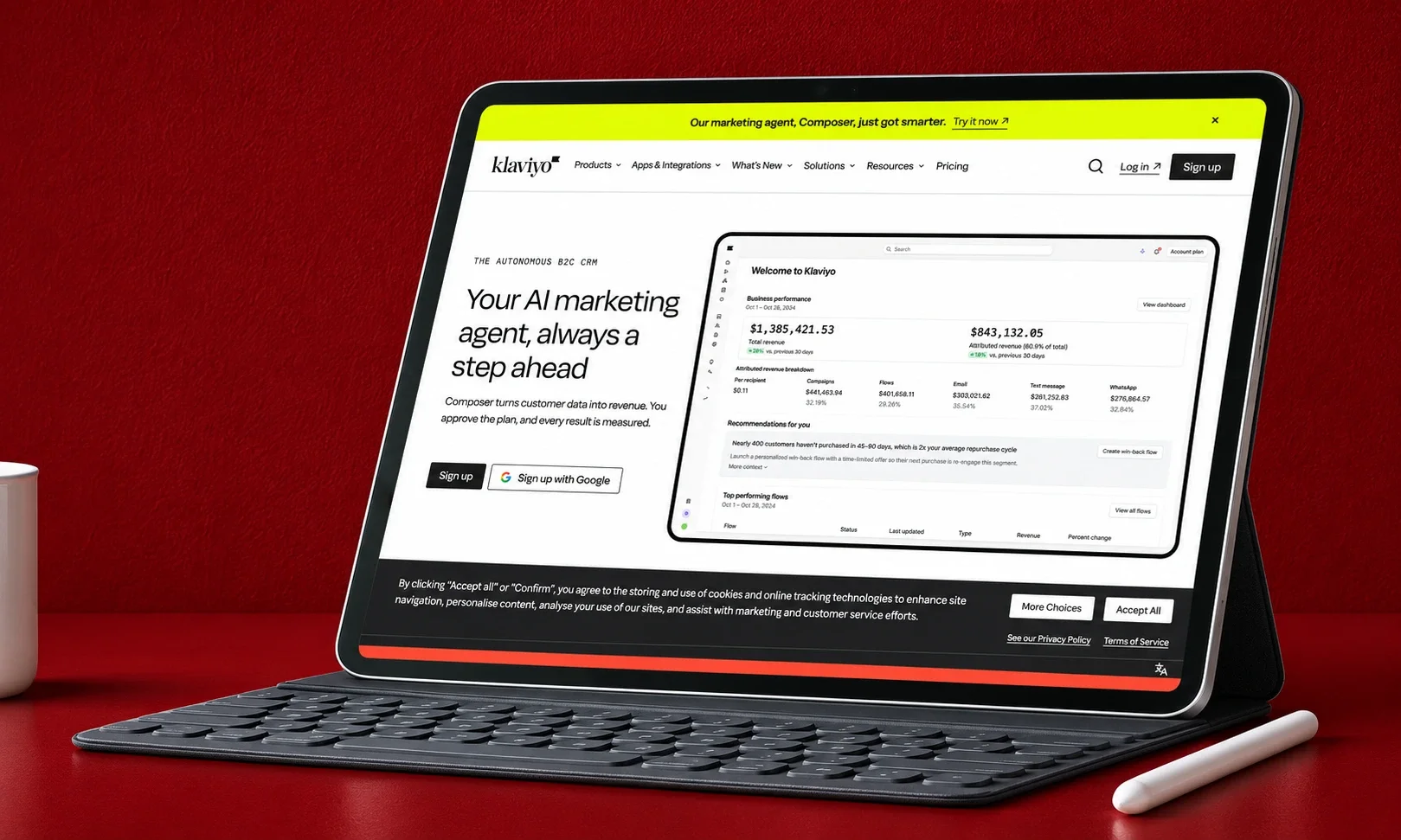
Why it wins: Klaviyo built the category’s deepest pipeline between store data and message. Every browse, cart, purchase, and predicted behavior becomes a segment, and every email and flow gets revenue attribution, so you can see what each message earned, not just what it opened. The market has voted: Klaviyo crossed 205,000 customers and $1.2 billion in 2025 revenue, up 32 percent year over year, with Q2 2026 revenue of $370.6 million, still growing 26 percent. Its own benchmark data shows why customers stay: flows on the platform earn nearly 18 times more per recipient than campaigns.
Where it falls short: Price. Klaviyo bills on total active profiles, whether you emailed them or not, a change that raised costs for brands with big, sleepy lists. Expect roughly $45 a month at 1,000 profiles, $150 at 10,000, and $720 at 50,000. It is also ecommerce native, so B2B teams will find its best features irrelevant.
Pricing: Free to 250 profiles. Email from $20/mo. Email plus SMS from $35/mo.
2. ActiveCampaign: Best Automation Depth
Why it wins: If Klaviyo wins on data, ActiveCampaign wins on logic. Its visual builder handles branching, goals, lead scoring, predictive sending, and a built in CRM at a price the mid market can actually pay, and its Active Intelligence AI features now ship on every plan. For B2B and hybrid businesses that need nurture sequences more sophisticated than a welcome series, this is the default answer, and independent reviewers have said so for years.
Where it falls short: No free plan, only a 14 day trial. Pricing escalates as contacts and features stack: about $15 a month at 1,000 contacts on annual billing, but $149 at 10,000 and $609 at 50,000. List management feels dated, and reporting trails HubSpot.
Pricing: From $15/mo for 1,000 contacts, billed annually.
3. HubSpot: Best All in One for B2B
Why it wins: Nobody integrates email with a CRM like the company that sells both. Every open, click, and reply lands on the contact record your sales team already uses, so segmentation runs on deal stage, lifecycle stage, and lead score, not just email behavior. For companies consolidating a scattered stack into one database with real attribution, HubSpot is the industry standard, with over 1,000 integrations around it.
Where it falls short: The Professional tier, around $890 a month, is where the serious automation lives, and it carries a mandatory onboarding fee reported at $3,000 or more plus an annual commitment. At 50,000 marketing contacts you are paying roughly $1,493 a month. Three year total cost of ownership for enterprise deployments runs near six figures annually.
Pricing: Free tools with 2,000 emails a month. Starter from about $20 per seat.
4. Mailchimp: Best for Beginners
Why it wins: The most recognizable brand in the category earned that position by making the first send easy. Setup is fast, the builder is polished, the template library is huge, and the integration ecosystem is the largest in email, which matters when your newsletter has to talk to everything else a small business runs. It is also the easiest platform to hire for, because nearly every junior marketer has used it.
Where it falls short: The generalist tax. Automation depth trails ActiveCampaign, ecommerce intelligence trails Klaviyo, and pricing climbs steeply: about $26.50 at 1,000 contacts, $110 at 10,000, $385 at 50,000. Advanced features hide behind higher tiers, and longtime users complain the platform’s best days of innovation are behind it.
Pricing: Free to 250 contacts. Paid from $13/mo.
5. Brevo: Best Value for Big Lists
Why it wins: Brevo’s pricing model is the quiet revolution in this list: it bills per email sent, not per contact stored. A 50,000 contact list that costs $385 to $720 a month on per contact platforms can sit on Brevo for around $45 a month at moderate send volumes. For businesses with large databases and moderate frequency, nonprofits, communities, seasonal retailers, the savings are structural, not promotional. It also bundles SMS, chat, and transactional email without nickel and diming.
Where it falls short: Automation and analytics are solid, not elite. Design tools feel a generation behind MailerLite, and power users eventually hit the ceiling on segmentation sophistication.
Pricing: Free plan with 300 emails a day. Paid from $9/mo.
6. Omnisend: Best Ecommerce Multichannel on a Budget
Why it wins: Omnisend is the pragmatic Klaviyo alternative: email, SMS, and push notifications in one workflow builder, pre built automations for cart recovery, browse abandonment, and post purchase, deep Shopify and WooCommerce integrations, at prices that run up to 35 percent below Klaviyo at comparable list sizes. For a store doing under seven figures that wants revenue generating flows on day one, the value case is hard to beat, and its open rate benchmarks, 30.7 percent, sit within a point of the category leader’s.
Where it falls short: Segmentation and predictive analytics are a clear step below Klaviyo, the Standard plan caps sends at 12 times your contact count, and outside ecommerce the platform has little to offer.
Pricing: Free to 250 contacts. Paid from $16/mo.
7. MailerLite: Best for Small Teams
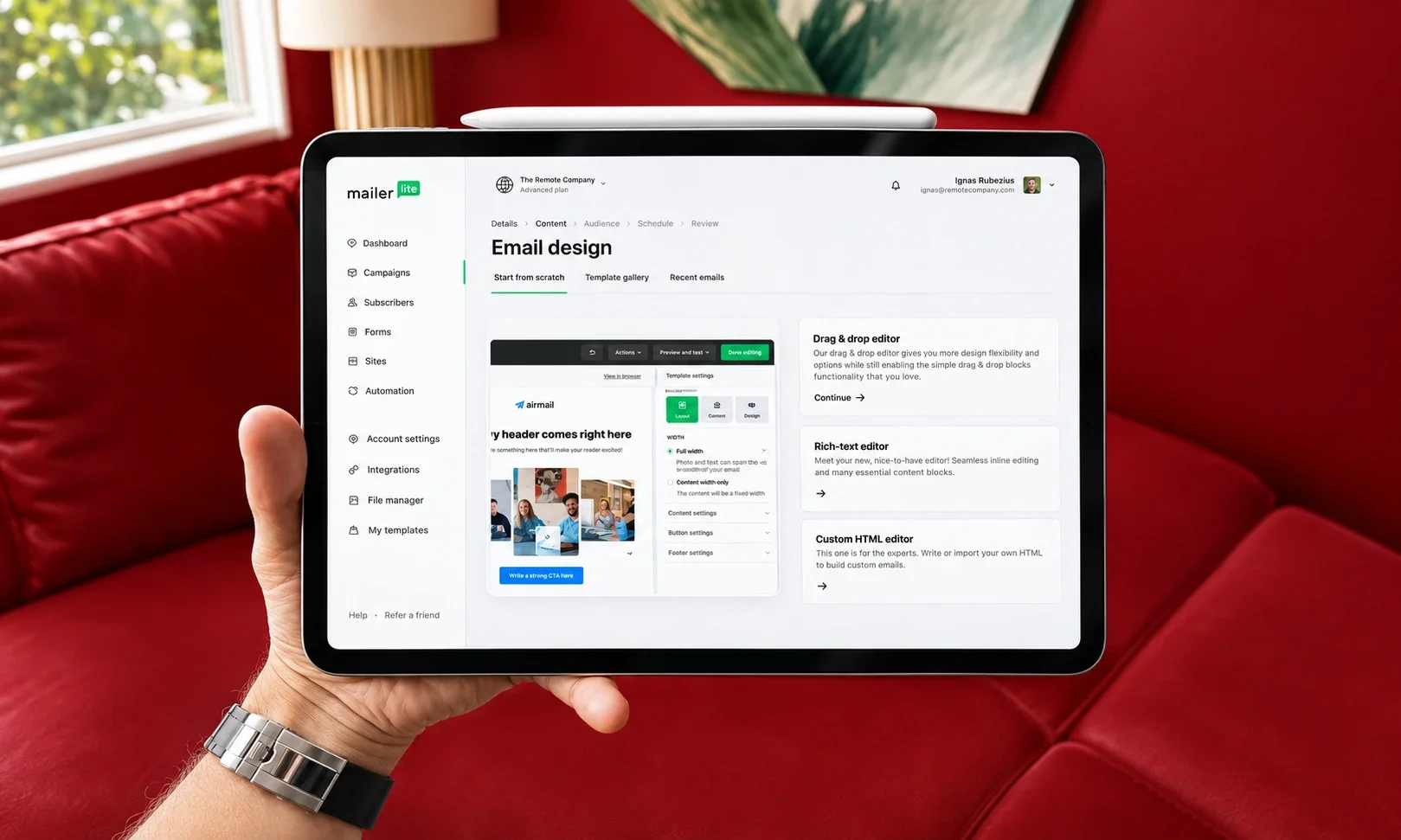
Why it wins: The highest user rating on this list, 4.7 on G2, belongs to the simplest tool here. MailerLite strips email marketing to what a lean team actually uses: a clean builder, landing pages on every plan, a straightforward automation builder, and an AI writing assistant from the Comfort tier up. It does email only, deliberately, and the focus shows in the learning curve: hours, not weeks.
Where it falls short: No SMS, and automation depth does not match the dedicated platforms. When your flows need branching logic and behavioral triggers, you have outgrown it.
Pricing: Free to 250 subscribers. Paid from $12/mo.
8. Kit: Best for Creators
Why it wins: Kit, formerly ConvertKit, is built around a different customer: the person whose business is the audience itself. Paid newsletters, tip jars, digital product sales, subscriber scoring, and a recommendation network that grows your list while you sleep. The free tier is the most generous in the industry at 10,000 subscribers, which is why a generation of newsletter writers started here.
Where it falls short: Templates are intentionally text forward, reporting is basic, and the moment you need ecommerce attribution or B2B workflows, you are shopping elsewhere. Paid plans jump to $39 a month and reach $439 at 50,000 subscribers.
Pricing: Free to 10,000 subscribers. Paid from $39/mo.
9. Customer.io: Best for SaaS
Why it wins: Product companies do not need store data. They need event data: who activated, who stalled, who is about to churn. Customer.io’s behavioral messaging fires off your product’s own events in real time, with a workflow engine flexible enough for genuine lifecycle marketing. For product led SaaS teams, three year total cost of ownership runs well below the enterprise platforms, roughly $28,000 in year one against six figures for the big suites.
Where it falls short: The starting price, $100 a month, with no free plan, filters out casual buyers. The flexibility assumes someone technical owns the setup.
Pricing: From $100/mo.
10. beehiiv: Best for Newsletter Businesses
Why it wins: The newest model on this list treats a newsletter as a media company: built in ad network, referral program, paid subscription tiers, and boosts that let newsletters pay each other for growth. If your email list is the product rather than the channel, beehiiv monetizes it natively in ways the legacy platforms bolt on awkwardly, if at all.
Where it falls short: It is a newsletter platform, full stop. No ecommerce flows, no CRM, no multichannel. Businesses selling products should look at ranks 1 through 7.
Pricing: Free to 2,500 subscribers. Paid from $49/mo.
The Pricing Reality Table
The starting price is marketing. The scaled price is the product. Here is what 11 major platforms actually cost as your list grows, based on published November 2026 pricing:
| Platform | 1,000 Contacts | 10,000 Contacts | 50,000 Contacts |
| Mailchimp | $26.50/mo | $110/mo | $385/mo |
| ActiveCampaign | $15/mo | $149/mo | $609/mo |
| HubSpot | Free tier | $292.50/mo | $1,492.50/mo |
| Klaviyo | $45/mo | $150/mo | $720/mo |
| Constant Contact | $30/mo | $120/mo | $430/mo |
| MailerLite | $15/mo | $73/mo | $289/mo |
| Brevo | $14/mo | $14/mo | $45/mo |
| GetResponse | $19/mo | $79/mo | $299/mo |
| Kit | Free tier | Free tier | $439/mo |
| Omnisend | $20/mo | $132/mo | $413/mo |
| Drip | $39/mo | $154/mo | $699/mo |
Three patterns worth memorizing. Brevo’s send based pricing makes it the outlier for large, quiet lists. HubSpot’s per contact model punishes scale hardest. And the mid pack clusters around $110 to $150 a month at 10,000 contacts, which is why the decision should be made on automation and data fit, not price.
How to Choose in 60 Seconds
Running a Shopify or WooCommerce store: Klaviyo if you can afford the best, Omnisend if you want 80 percent of it for less. B2B with a sales team: ActiveCampaign, or HubSpot if you want one database for everything. Just starting out: Mailchimp or MailerLite. Sitting on a huge list you email monthly: Brevo, and bank the savings. Selling subscriptions or content: Kit or beehiiv. Building a SaaS product: Customer.io.
Whatever you choose, the campaign is only half the equation. Our guides to automation in email marketing, content for email marketing, and crafting effective email campaigns cover the other half, and our look at the state of email design tools shows how the build process itself is changing. If deliverability is your bottleneck, start with our best bulk email services ranking. Teams adding SMS should read the data on email and SMS revenue share first, and anyone weighing a broader platform should see our marketing automation platforms comparison and the latest AI marketing tools before signing an annual contract.
FAQ
What is the best email marketing software in 2027?
For ecommerce, Klaviyo, because its store data integration and revenue attribution are the deepest in the category. For B2B automation, ActiveCampaign. For an all in one CRM platform, HubSpot. For most beginners, Mailchimp or MailerLite. The best platform is the one matched to your business model, which is why this ranking names a winner per use case.
How much does email marketing software cost?
Free tiers exist at HubSpot, Kit, Brevo, MailerLite, Mailchimp, Klaviyo, and beehiiv. Paid plans start between $9 and $20 a month for small lists, but the median cost at 10,000 contacts is about $120 a month, and $430 a month at 50,000 contacts. Always compare prices at your expected list size in two years, not today’s.
Is Mailchimp still worth it in 2027?
Yes, for beginners and general small business marketing, where its ease of use and integration library are unmatched. Growing ecommerce brands and automation heavy teams will outgrow it and should compare Klaviyo and ActiveCampaign first.
Klaviyo or Mailchimp?
Klaviyo for ecommerce: deeper segmentation, predictive analytics, and revenue attribution, starting at $20 a month. Mailchimp for general purpose sending: cheaper entry, simpler, weaker store intelligence. If you sell products online, Klaviyo. If you send newsletters and announcements, Mailchimp.
What ROI should email marketing generate?
The most cited industry figure is about $36 for every $1 spent, rising to 45 to 1 in retail and ecommerce. Automated flows dramatically outperform campaigns: 41 percent of email revenue from 5.3 percent of sends, and nearly 18 times more revenue per recipient. Whatever platform you pick, build the flows first.
When should I switch platforms?
When your automation needs exceed your builder’s logic, when your bill at your next list size jumps a tier, or when you cannot attribute revenue to sends. Migrate before renewal season, and expect the move to take two to six weeks with list hygiene included.