Every website builder now makes the same pitch: describe your business, and AI will generate your site in sixty seconds. Wix bought the AI startup Base44 for $80 million to sharpen its generator. Webflow shipped an AI Site Builder.
Squarespace’s Blueprint AI landed on TIME’s Best Inventions list. And here is the number that tells you what all of it is actually worth: 91 percent of Wix users edit the AI generated text before publishing. AI can draft your website in 2027. It cannot finish it.
Which means the real question has not changed: what happens after the first draft? That is where these platforms are genuinely different, in the editor you will fight with every week, the page speed your visitors will feel, the transaction fees that scale with your success, and the exit door, because some of these platforms will not let you take your site with you when you leave.
The stakes are bigger than they look. WordPress still powers about 40 percent of the entire internet. Wix, Shopify, and Squarespace together collect more than half of all website builder revenue in a market worth $3.57 billion in 2026 and heading toward $7.67 billion by 2031. We tested, priced, and ranked the nine that matter. Prices are as of November 2026, verified on vendor pricing pages.
Methodology. We scored builders on six factors: ease of use for a non technical owner, design quality, ecommerce capability, SEO control, real pricing (entry plan versus the plan you will actually need, including domains, apps, and transaction fees), and page speed, using Core Web Vitals data that tracks millions of live websites per platform.
Market share figures from W3Techs, November 2026. Ranked for small business buyers, with each builder’s ideal customer named explicitly. Re-scored quarterly.
The Quick Verdict
| Rank | Builder | Best For | Real Starting Price | The One Line Why |
| 1 | Wix | Most small businesses | $17/mo (Light) | Easiest path from nothing to professional, 282 million users |
| 2 | Squarespace | Design led brands | $16/mo (Basic) | The best looking templates in the industry, everything bundled |
| 3 | Shopify | Online stores | $29/mo (Basic) | The ecommerce default, 8,000 plus apps, no debate at scale |
| 4 | WordPress.com | Content sites and blogs | $4/mo (Personal) | The cheapest real entry, and the skills transfer to 40 percent of the web |
| 5 | Webflow | Designers and agencies | $14/mo (Basic) | Clean code, pixel control, Lighthouse scores above 90 |
| 6 | Framer | Startups and landing pages | $10/mo (Mini) | The best looking output per hour of effort |
| 7 | Hostinger | Tight budgets | 3/mopromo,then 3/mo promo, then ~11/mo | AI builder plus hosting at a fraction of the leaders’ price |
| 8 | GoDaddy | Local businesses | $16.99/mo (Basic) | Fastest launch, and the best mobile speed scores we tracked |
| 9 | Carrd | One page sites | From $9/yr | A full website for the price of two coffees a year |
1. Wix: Best Overall for Most Small Businesses
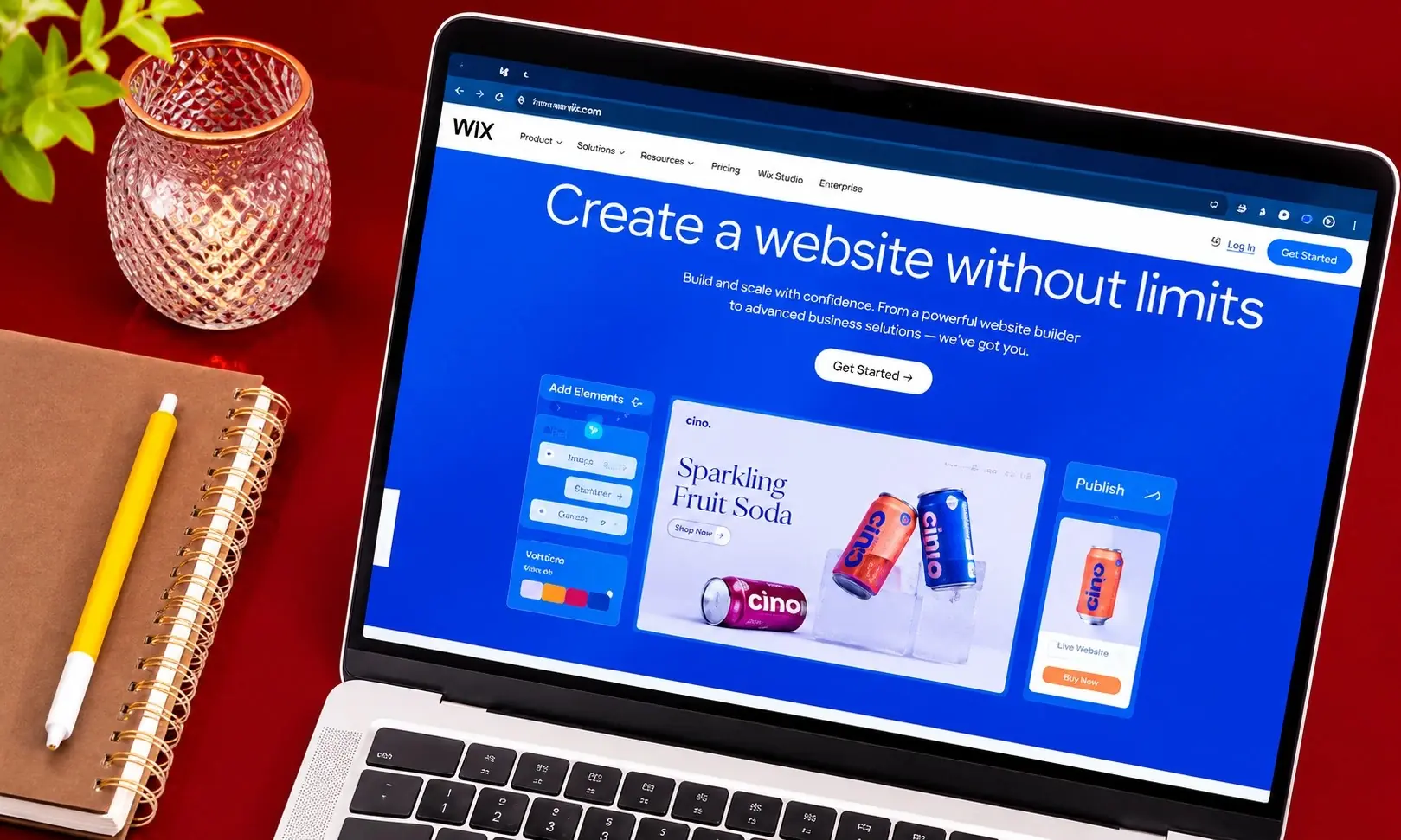
Why it wins: Wix is the fastest growing major platform on the web, up 32.6 percent in CMS market share year over year, with more than 282 million registered users and roughly $2 billion in 2025 revenue. The reason is simple: nothing else gets a non technical owner from zero to a credible, functioning site faster.
The drag and drop editor is genuinely freeform, the template library runs to 900 plus, the app market is the largest among builders, and the AI generator produces a usable draft in under a minute. Bookings, payments, email marketing, and basic SEO tools are built in rather than bolted on.
Where it falls short: Two traps. First, you cannot switch templates after publishing without rebuilding. Second, there is no exit: Wix sites do not export, so leaving means starting over. Media heavy Wix sites also load slower on mobile than the leaders, and the app market nickel and dimes add up.
Pricing: Free plan (with Wix ads). Light $17/mo. Core, the ecommerce entry, $29/mo. Business $39/mo.
2. Squarespace: Best for Design Led Brands
Why it wins: Squarespace templates make everyone look like they hired a designer. The Fluid Engine editor keeps layouts polished without effort, blogging is the most sophisticated of any builder (comments, multiple authors, podcast hosting), and everything from scheduling to subscriptions is bundled.
Acquired by Permira for $7.2 billion in 2024, it last reported public revenue above $1 billion, growing 17 percent, and its mobile editing apps are the best here.
Where it falls short: No free plan, only a 14 day trial. No backup and restore feature, which in 2027 is hard to excuse. The Core plan takes a 3 percent commission on ecommerce sales on top of card fees, page speed in independent testing trails its looks, and there is no app ecosystem to speak of.
Pricing: Basic $16/mo. Core $23/mo. Plus $39/mo. Advanced $99/mo, annual billing.
3. Shopify: Best for Online Stores, Full Stop
Why it wins: For ecommerce past a handful of products, the debate is over. Shopify powers about 5.3 percent of all websites on Earth, its app store runs 8,000 deep, its checkout converts better than anything a general builder offers, and multichannel selling, POS, and abandoned cart recovery are native.
It is also fast: 68 percent of Shopify sites pass Core Web Vitals on desktop, 62 percent on mobile, the best combined scores of the big three builders. At roughly $7 billion in annual revenue, the platform’s scale funds feature velocity nobody matches.
Where it falls short: It is a store engine, not a website engine. Blogging is clunky, non commerce pages feel bolted on, costs climb with apps ($50 to $200 a month is common), and if you do not use Shopify Payments, an extra transaction fee of up to 2 percent applies depending on plan.
Pricing: Basic 29/moannual(29/mo annual (1/mo for the first 3 months trial offer). Grow and Advanced tiers above.
4. WordPress.com: Best for Content Sites and Long Term Ownership
Why it wins: The cheapest credible entry in the category, 4amonth,andtheonlyonewhoseskillscompound:theWordPressecosystempowersabout40percentoftheinternet,soeveryhourspentlearningitisaninvestmentintheweb′sdominantplatform.OntheBusinessplan(4 a month, and the only one whose skills compound: the WordPress ecosystem powers about 40 percent of the internet, so every hour spent learning it is an investment in the web’s dominant platform.
On the Business plan (25/mo) you unlock the 50,000 plus plugin library, which means WordPress.com can become almost anything, a publication, a directory, a membership site.
Where it falls short: The learning curve is the steepest here, the low tiers are deliberately limited (plugins, the entire point, require Business), and for simple business sites it is more machinery than needed. The open source sibling, self hosted WordPress, scores worst in class on mobile speed, 35 percent passing Core Web Vitals, which is a hosting and discipline problem as much as a platform one.
Pricing: Personal $4/mo. Premium $8/mo. Business $25/mo, annual billing.
5. Webflow: Best for Designers and Agencies
Why it wins: Webflow generates clean, production grade HTML, CSS, and JavaScript, which is why agencies and design led startups build on it: Lighthouse performance scores regularly exceed 90, SEO control is total, and the CMS handles blogs, catalogs, and case studies visually.
It is still small, about 0.9 percent of all websites, but up from near zero in 2020, and the client handoff editor is the best client management feature in the category.
Where it falls short: It is a design tool wearing a website builder’s clothes. You need to understand the box model and flexbox, ecommerce cannot touch Shopify, localization costs $9 a month per language, and each site needs its own plan, so agency costs multiply with client count.
Pricing: Free Starter (2 pages). Basic $14/mo. CMS $23 to $29/mo. Business $39 to $49/mo.
6. Framer: Best for Startups and Landing Pages
Why it wins: The best looking output per hour of effort in the entire category. A Figma like canvas, buttery animations, and AI generation make it the default for product launches, portfolios, and marketing pages where motion sells the product. If your site exists to make a startup look fundable, Framer is the shortcut.
Where it falls short: The CMS is thin, ecommerce is an afterthought, and the Mini plan at $10 a month is landing page only. It is a marketing site tool, not a business platform.
Pricing: Mini $10/mo. Basic $20/mo. Pro from $30/mo.
7. Hostinger AI Builder: Best for Tight Budgets
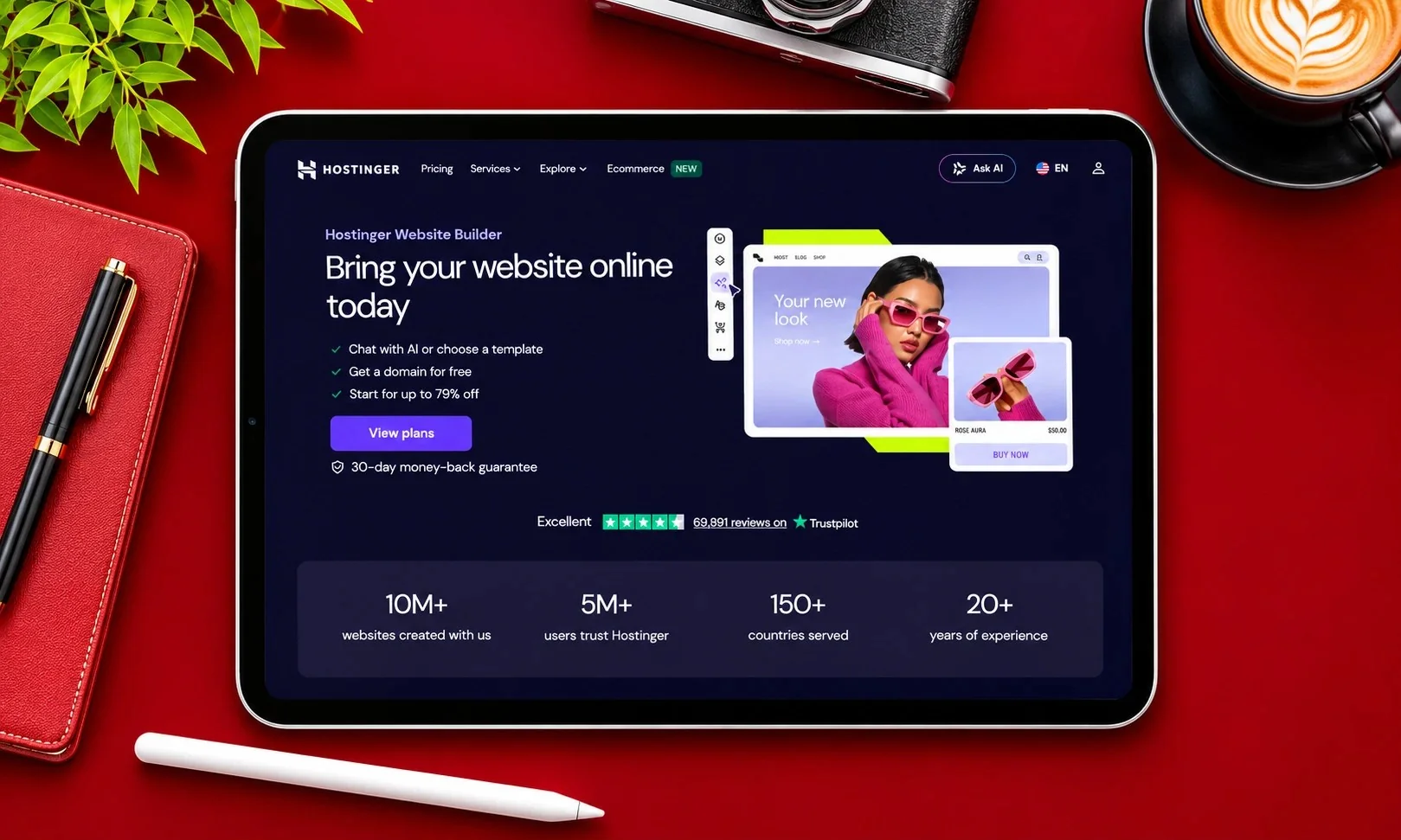
Why it wins: The price disruptor. Promotional pricing starts around $3 a month with hosting included, renewing near $11, with an AI builder, multilingual support, and live chat bundled. Independent speed data puts Hostinger first in class on desktop Core Web Vitals at 82 percent passing. For a first business site on a real budget, the value is unmatched.
Where it falls short: The blog is basic, there is no app store, renewal pricing doubles or triples the promo rate, and it lacks the depth you will want by year two. Buy it knowing you may graduate.
Pricing: Premium Website Builder from $10.99/mo regular, deep first term discounts.
8. GoDaddy: Best for Local Businesses That Need to Be Live Today
Why it wins: The fastest path to published that we have tested, with responsive layouts, built in marketing tools, and a surprise: the best mobile speed scores of any major builder, 75 to 76 percent of GoDaddy built sites pass Core Web Vitals on mobile against a 41 percent web average. For a plumber, dentist, or restaurant that needs a credible site this afternoon, it delivers.
Where it falls short: SEO control is limited, there is no app store, and design flexibility is minimal. It is a brochure machine, not a platform.
Pricing: Free tier available. Basic $16.99/mo. Ecommerce $34.99/mo.
9. Carrd: Best for One Page Sites
Why it wins: Sometimes the right website is one page: a link in bio, a coming soon, a personal profile, a campaign landing page. Carrd does exactly that for from $9 a year, ad free, with custom domains on higher tiers. It is the most efficient $9 in web publishing.
Where it falls short: One page means one page. No blog, no store, no CMS, no growth path. It is a scalpel, and the moment you need a kitchen you need something else.
Pricing: Pro from $9/yr.
The Pricing Reality Table
The entry price is marketing. This is what the plan you will actually need costs, per year on annual billing, from independent price trackers and vendor pages, November 2026:
| Builder | Cheapest Plan | The Plan Most People Need | Why |
| WordPress.com | Personal $48/yr | Business $300/yr | Plugins require Business |
| Carrd | Pro $9/yr | Pro Plus $49/yr | Custom domains and forms |
| Framer | Mini $120/yr | Basic $240/yr | Mini is landing pages only |
| Hostinger | ~$36 first year | ~$264/yr renewal | Promo pricing expires |
| Wix | Light $204/yr | Core $348/yr | Light cannot sell |
| Squarespace | Basic $192/yr | Plus $468/yr | Core takes 3 percent of sales |
| Webflow | Basic $168/yr | CMS $276 to $348/yr | Content sites need the CMS |
| Shopify | Basic $348/yr | Grow ~$708/yr | Plus apps, $50 to $200/mo common |
Add a domain at roughly $15 a year after any free first year, and on Shopify, budget for apps. The cheapest correct builder beats the cheapest builder every time.
The Speed Table Nobody Else Publishes
Page speed is a ranking factor and a conversion factor, and builders differ wildly. Share of each platform’s live sites passing Google’s Core Web Vitals, from real world measurement of millions of sites:
| Builder | Desktop Passing | Mobile Passing |
| Duda | 81% | 68% |
| Shopify | 68% | 62% |
| GoDaddy | 75% | 76% |
| Webflow | 71% | 53% |
| WordPress.com | 66% | 53% |
| Squarespace | 63% | 53% |
| Wix | 58% | 52% |
| Self hosted WordPress | 43% | 35% |
| Web average | 53% | 41% |
How to Choose in 60 Seconds
Selling more than a handful of products: Shopify. A local service business that needs to look legitimate this week: Wix or GoDaddy. A brand where the site itself is the pitch: Squarespace, or Webflow if you have design skills. A publication or content heavy site: WordPress.com. A startup launch page: Framer.
The absolute minimum budget: Hostinger or Carrd. And if you are weighing the classic three way decision, our guide to choosing between WordPress, Shopify, and Wix goes deeper, while build a website from scratch covers the full process and custom vs CMS websites helps you decide whether a builder is even the right approach.
Small businesses should also read our web design tips for small business, and once you are live, high converting landing pages, the e-commerce launch strategy, and the best e-commerce platforms for SEO turn the site into revenue.
FAQ
What is the best website builder in 2027?
For most small businesses, Wix: the fastest path from nothing to a professional site, the largest template and app ecosystem, and a real free tier to start. For online stores, Shopify. For design led brands, Squarespace. For content sites, WordPress.com. The best builder is the one matched to what the site must do.
How much does a website builder cost in 2027?
Credible plans run $4 to $39 a month on annual billing. WordPress.com Personal at $4 a month is the cheapest real option; the plan most businesses actually need runs $16 to $29 a month. Add roughly $15 a year for a domain, and on Shopify, $50 to $200 a month in apps is common.
What is the cheapest good website builder?
Carrd from $9 a year for one page sites, WordPress.com Personal at $48 a year for blogs and simple sites, and Hostinger from about $3 a month promotional with hosting included. Wix’s free plan is the best $0 option if you accept ads and a Wix subdomain.
Is Wix or Squarespace better?
Wix for flexibility and ease: more templates, a bigger app market, built in bookings, and a free tier. Squarespace for polish: better looking templates, stronger blogging, and better bundled features for creatives. Wix sites cannot export, so decide like it is permanent, because it is.
Can AI just build my website now?
AI can draft it. Every major builder now generates a multi page site from a text prompt, and more than half of new Wix users start that way. But 91 percent of users edit the AI’s text before publishing, and layout, speed, SEO settings, and brand voice still need a human. Treat AI builders as a fast first draft, not a finished site.
Should I use a website builder or hire a developer?
A builder for a standard business site, store, or portfolio: $200 to $700 a year all in. A developer or agency when the site itself is a product, needs custom functionality, or when credibility is on the line: typically $4,000 to $25,000 and up for a professional Webflow or custom build.