Fashion brands can reduce avoidable returns by making product pages answer the fit, appearance, and material questions shoppers cannot resolve from a screen alone. Match sizing, visuals, and product details to what shoppers receive, then use return reasons to decide what to fix first.
Returns will not disappear, and accurate information may help a customer decide against an unsuitable item. That can prevent a disappointing order, even when it does not lead to a sale. Start with the page information shoppers need to make a confident, accurate choice.
Bracketing means ordering multiple sizes or variants of the same item with the intention of keeping one and returning the others. Your product pages can address some of the uncertainty that leads shoppers to do this.
Key Takeaways
- Use item-specific measurements and fit notes to guide size choices.
- Show clothing clearly from different angles and on different bodies.
- Describe fabric, construction, and care in concrete terms.
- Use customer feedback to spot repeated fit concerns.
- Track return rate alongside conversion and customer experience.
- Fix the page problems that match your leading return reasons.
Why Are Fashion Return Rates So High?
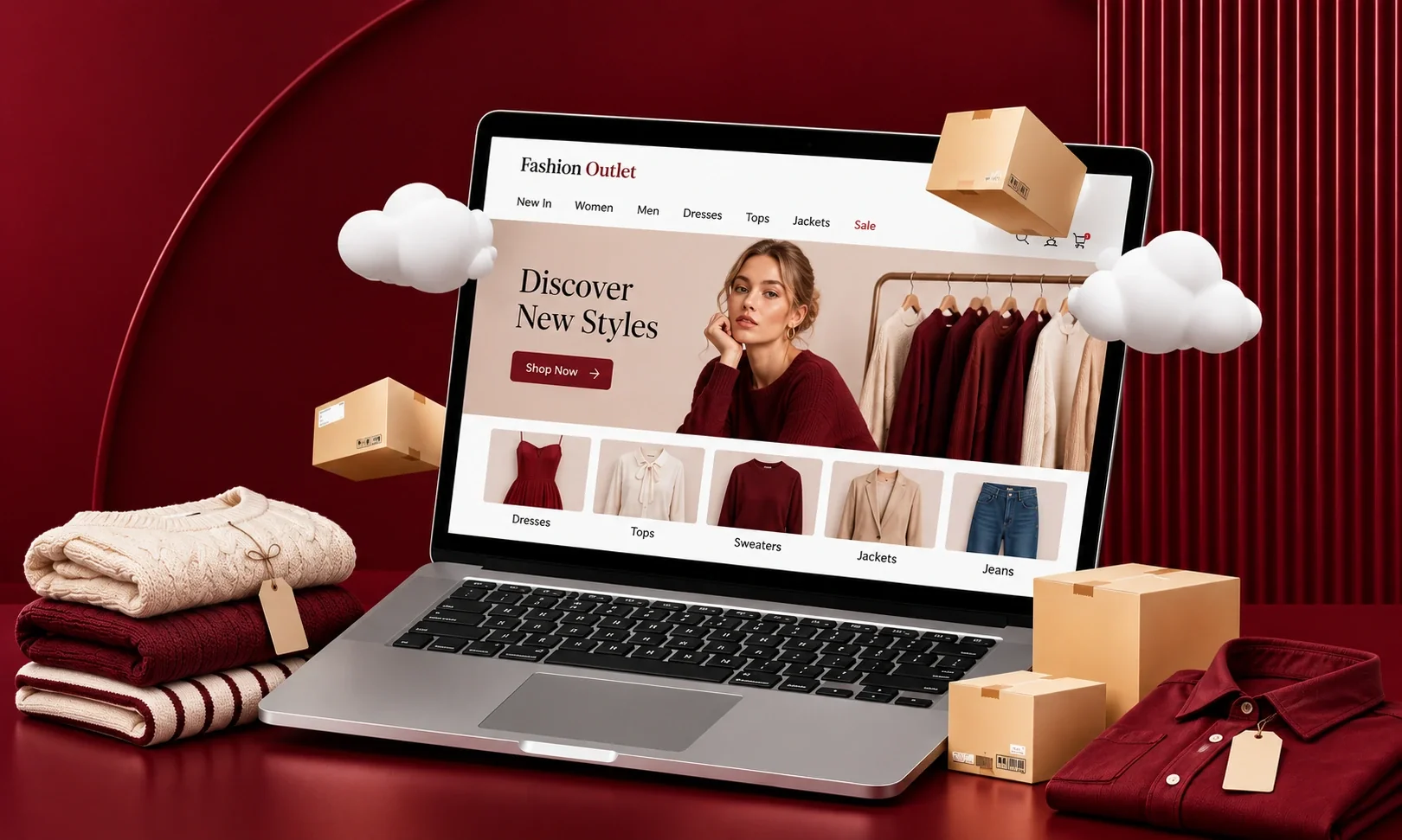
Clothing is difficult to assess online because a shopper has to judge fit and feel without trying the garment on. That gap between a screen and a fitting room makes apparel returns hard to avoid.
Brand sizing can differ, and one shopper’s usual size may fit differently across brands or items. Fit, color, fabric, cut, and expectations can all shape whether a customer keeps an order. Product pages can reduce some expectation gaps, but they cannot remove every reason for a return.
In 2025, U.S. ecommerce returns were 19.3% of online sales. The 19.3% online-sales figure describes returned sales, not the share of apparel orders with a return.
Separately, U.S. shoppers returned 31.18% of apparel orders. That figure counts apparel orders, so it cannot be compared directly with a share of online sales. The apparel-order return figure uses a different denominator.
Use national figures for context, not as a target for your brand. Compare your return rate only with a benchmark that uses a similar category and denominator.
U.S. retail returns totaled $849.9 billion in 2025. The broad total includes retail returns across categories, while the online and apparel figures describe narrower parts of that activity.
The National Retail Federation reported that retailers expected 15.8% of annual sales and 19.3% of online sales to be returned in 2025. Those estimates reflect the wider retail market, not a promise about any one store.
Your own return rates may differ by product, price, customer, and channel. Use each figure with its stated basis, then judge your results against a comparable group.
Compare your own return rate only with a benchmark that uses a similar category and denominator.
Which Return Reasons Should You Fix First?
Before changing a page, identify whether customers are returning the item because of fit, expectations, bracketing, a changed mind, or an order problem. The reason matters because each pattern points to a different first check.
Require customers or support staff to select a return reason, then review coded return reasons monthly. Start with the causes that appear most often and that your team can actually change.
A return code gives you a starting clue, not a full diagnosis. Pair the selected reason with customer comments and item-level results so broad labels do not hide a specific problem.
| Return reason | Clue in customer feedback | First area to investigate |
|---|---|---|
| Size or fit | “Too tight at the waist” | Item measurements and fit notes |
| Expectation mismatch | “Color looked different” | Product images and description |
| Bracketing | “Kept the other size” | Fit guidance and size confidence |
| Changed mind | “No longer wanted it” | Customer comments and order context |
| Fulfillment error | “Wrong item arrived” | Picking, packing, and order checks |
Bracketing is ordering multiple sizes or variants of the same item with the intention of keeping one and returning the others. A shopper may do this when fit feels uncertain, though an order error can also lead to unwanted extra items.
Use the 80/20 principle as a way to set priorities: around 80% of consequences may come from 20% of causes. The 80/20 principle describes a pattern, not a guaranteed ratio for your catalog.
Some items may account for many returns, while a few return causes may recur across many items. The ratio need not be exact, so do not force the data to fit a fixed split.
Review the reasons each month and note the item, the reason, and the first area to investigate. Use the reason pattern for each item to choose its first investigation.
How to Reduce Fashion Returns Through Better Product Pages With Clear Sizing
A useful size chart gives shoppers measurements they can compare with their own body or a garment they already own. Specific numbers help a shopper judge an item more clearly than a size label alone.
For fashion brands, the chart should reflect the item shown on its product page, not a general range copied across a whole category. Give shoppers both body measurements and garment measurements when you have them.
Put Body and Garment Measurements on the Page
Body measurements describe the person the size is meant to fit. Garment measurements describe the finished item itself, so the two sets answer different questions.
For a shirt, body measurements may include chest, waist, and shoulder range. Garment measurements can show chest width, shoulder width, sleeve length, and total garment length.
A shopper can compare body measurements with their own, or compare garment measurements with a shirt that fits well. That second option helps when people know which clothes feel right but do not know their body measurements.
Explain what each number measures and where the measurement begins and ends. A sleeve length can mean different things if one chart measures from the shoulder and another from the neck.
Explain Size Conversions and Fit Differences
Show inches and centimeters, along with US, UK, EU, and JP equivalents when you sell to shoppers who use those systems. Make the conversion easy to find beside the size selection.
A generic S/M/L grid is not a substitute for measurements. The same size can fit differently across cuts, fabrics, and item types, even within one brand.
Add item-specific notes such as “runs small,” “runs large,” or “relaxed through the body.” A note should describe the item, not make a broad claim about every size in the brand.
Give shoppers between sizes a clear choice based on the intended fit. For example, say whether to size up for a roomier feel or stay with the smaller size for a closer fit.
Keep the advice consistent with the garment’s cut and fabric. A fitted skirt and a loose knit top should not rely on the same vague recommendation.
Review size charts when an item changes, including when a new version has a different cut or fabric. Check that every size chart matches the specific item and version shown on its product page.
How Can a Size Recommender Help Shoppers Choose?
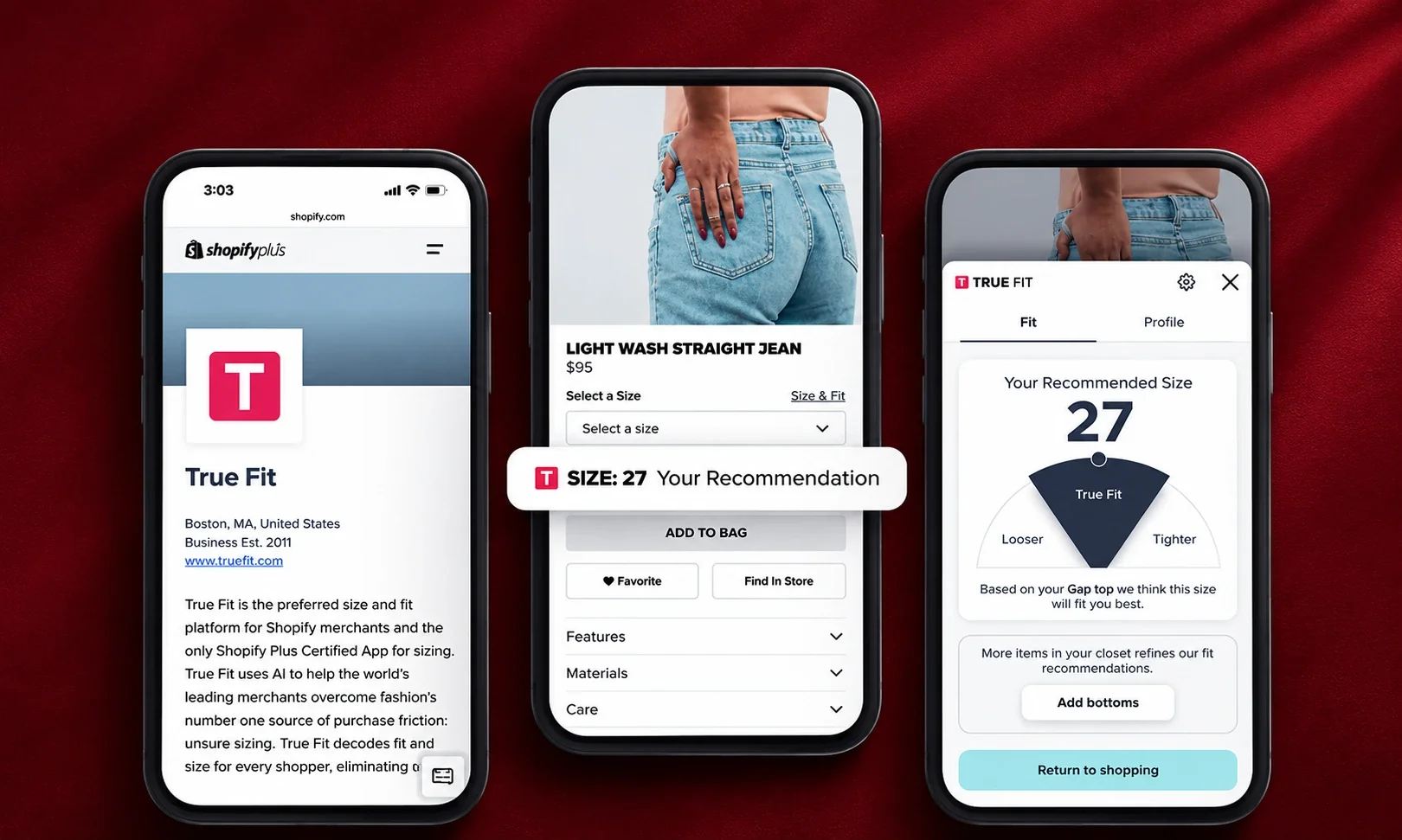
A size recommender is most useful when it turns reliable item measurements into a clear, item-specific suggestion. It should guide a choice, not hide the information behind a tool.
An interactive size guide can use customer measurements or the fit of comparable garments. Tie every recommendation to the item’s own sizing information, not a generic size label.
Ask only for details that can help with the choice, such as height, body measurements, or how a comparable garment fits. Keep the questionnaire short and optional so shoppers can use it without feeling blocked.
For returning customers, fit feedback on a comparable garment may help the tool make a more useful suggestion. That works best when the items share a relevant cut or fit, rather than just a product category.
- Confirm that the item’s measurements and fit notes are current.
- Collect only shopper inputs that can change the recommendation.
- Explain why the tool suggests a particular size.
- Keep the full size chart easy to access beside the tool.
A recommendation should not sound more certain than its inputs allow. If a shopper prefers an oversized look, a tool based on standard fit may not match that personal style.
Tools cannot correct inconsistent product measurements or subjective style preferences. A clean interface will not make unreliable sizing data more accurate.
Track whether shoppers follow the suggestion and compare that choice with later fit feedback. Review recommendations against actual customer feedback before relying on them across a category.
What Photos Help Shoppers Judge Fit and Appearance?
A single polished hero image cannot show how a garment looks from every angle or on every body. A fuller image set helps shoppers picture the item before trying it on.
Clear product photos help people assess fit, shape, and details that may be hard to describe in words. Show the item honestly, rather than relying on one flattering pose.
Show the Garment From Multiple Angles and on Different Bodies
Use front, back, and side photographs so shoppers can see the garment’s shape from more than one view. A front-only image can hide a long back hem, a narrow sleeve, or a cut that changes at the side.
List the model’s height and measurements, plus the exact size worn. That context gives the pictured fit a useful reference, rather than leaving shoppers to guess why the garment sits as shown.
Include models with different body types and sizes when possible. A 2022 qualitative study by Bozzi, Neves, and Mont’Alvão examined fashion product-page design and shopping through interviews and user storytelling sessions.
Research on fit appraisal has also found that images of diverse body shapes improved fit evaluations in a study of 400 UK female responses. The study did not show higher purchase intentions, so use it as a reason to support fit judgment, not as proof of fewer returns.
Make Texture, Construction, and Scale Visible
Use close-ups to show texture, seams, closures, buttons, and other construction details. A full-body image can make a fine knit look smooth or a small clasp disappear.
Pair on-model photographs with flat-lay images. The model helps show how the garment sits on a body, while a flat lay can reveal scale and construction.
Arrange images to answer a shopper’s likely questions in a useful order. A clear product photography approach can help your team plan angles and detail shots.
Show the item in lighting that keeps its color as true as possible. Styling can give a sense of use, but it should not conceal length, shape, or how the garment hangs.
Strong presentation lets a shopper build a more accurate mental picture from the page. Check that the image set answers the questions a shopper would have before trying the item on.
What Product Details Belong in an Accurate Description?
Specific material and care details give shoppers a clearer expectation than broad claims about how a garment feels. Concrete facts can help customers judge whether an item suits their needs.
Product descriptions should match the item’s actual materials and construction. Use details a shopper can check, not praise that could describe almost any garment.
- Fiber content, such as 100% cotton or 60% polyester / 40% viscose.
- Fabric weight, including whether the fabric feels light or heavy.
- Stretch, such as no stretch, slight stretch, or a stretch knit.
- Opacity where it matters, such as a light-colored skirt.
- Construction details, such as lining, pockets, closures, or seams.
- Care instructions, including special handling or possible shrinkage.
Terms like “soft” or “comfortable” are subjective, so do not rely on them as the main material description. Add useful specifics about the fabric and its behavior instead.
Fabric weight can help shoppers understand whether a shirt is light enough for warm weather or a sweater suits cooler days. Stretch notes can set expectations for movement and how closely a garment may sit.
Care details matter before checkout, too. If an item may shrink, wrinkle, or need special handling, say so clearly so a shopper can decide whether that upkeep works for them.
Keep the details in a clear, scannable format on the product page. Structured product information can also help systems match items to shopper needs; learn more about how AI shopping agents use product data.
Review the description whenever suppliers, materials, or care guidance change. Match every description to the actual item and its care requirements.
How Can Customer Reviews Improve Fit Confidence?
A review that says whether a garment runs small or large can answer a sizing question a brand’s own copy may miss. Useful feedback reflects how the item worked for someone who bought it.
Customer reviews can help shoppers judge sizing, quality, and style before ordering. Keep the feedback close to the choice it can help them make.
Surface Structured Fit Feedback
Offer simple fit choices such as “runs small,” “true to size,” and “runs large.” These labels help shoppers compare a pattern across comments without reading every review.
Place relevant fit feedback near the size selection, where it can inform the decision. A general star rating may say that shoppers like an item, but not whether its sleeves run short.
Allow written comments to add context to a fit label. A shopper might explain that a jacket fits well at the shoulders but feels tight when worn over a sweater.
Use Customer Photos and Item-Level Feedback
Customer photos show how an item looks beyond the brand’s studio styling. With the shopper’s consent and clear image standards, those photos can give future customers another view of fit and appearance.
Specific comments about fit, quality, and style are more useful than praise alone. Details such as “the waist sits high on me” give shoppers a point they can compare with their own preferences.
Look for repeated feedback tied to one item, then check whether the comments point to a consistent issue. If several customers mention a tight shoulder, update that item’s fit note rather than changing the brand’s whole sizing message.
A recent fit-appraisal study found that fit reviews increased perceived ability to judge fit, though they did not significantly change fit concerns or purchase intentions. That result supports using reviews as information, not promising a change in buying behavior.
Keep the listing tied to the item’s own pattern of comments. A clear review layout can make useful feedback easier to find.
Recheck the note as new feedback arrives, especially after a product update. Keep product-page fit guidance aligned with the pattern in recent, item-specific feedback.
When Should You Add Video, 3D, or Virtual Try-On?
Add an interactive format only when it reveals something shoppers cannot reliably judge from the existing page. Choose for a reason, not just because a format is available.
Video, 3D views, and virtual try-on each answer a different visual question. Match the tool to the item’s main uncertainty, and do not treat simulated fit as a substitute for size data.
Use Video to Show Drape and Movement
A short product video can show how fabric moves and hangs on a body. A 15-second clip of someone walking in the item can show how a skirt or wide-leg pant shifts in motion.
Video can add useful context for shoppers who want to see movement, not just a posed view. It should show the garment clearly, rather than use edits that hide its shape.
Use 3D Views for Inspection
A 3D view lets shoppers rotate an item and inspect angles that still photos may not cover. It can help with products where seams, hardware, or shape matter from several sides.
Use 3D only when the extra view helps answer a real question. A simple top may not need a rotating view if clear photos already show its key details.
Consider Virtual Try-On for Fit-Dependent Items
Virtual try-on can place a garment on a simulated body to help shoppers picture its look. It may support visual judgment, but a simulated body cannot guarantee how the real garment will fit.
Keep the item’s size information easy to find alongside any try-on feature. A display can help with appearance while leaving uncertainty about measurements and personal fit.
| Format | What it helps shoppers see | Best use | Practical limit |
|---|---|---|---|
| Video | Movement and drape | Flowing skirts and loose pants | Lighting can change how color appears |
| 3D view | Angles and product details | Items with visible construction features | Extra production work may not help simple items |
| Virtual try-on | Appearance on a simulated body | Fit-dependent styles shoppers want to picture | Simulation cannot confirm real fit |
A short product video or 360-degree spin can show movement or views that a still image cannot. Add it when that extra view addresses a known question.
Choose the simplest format that answers the item’s biggest unresolved visual question.
How Can Return Policies Affect Bracketing?
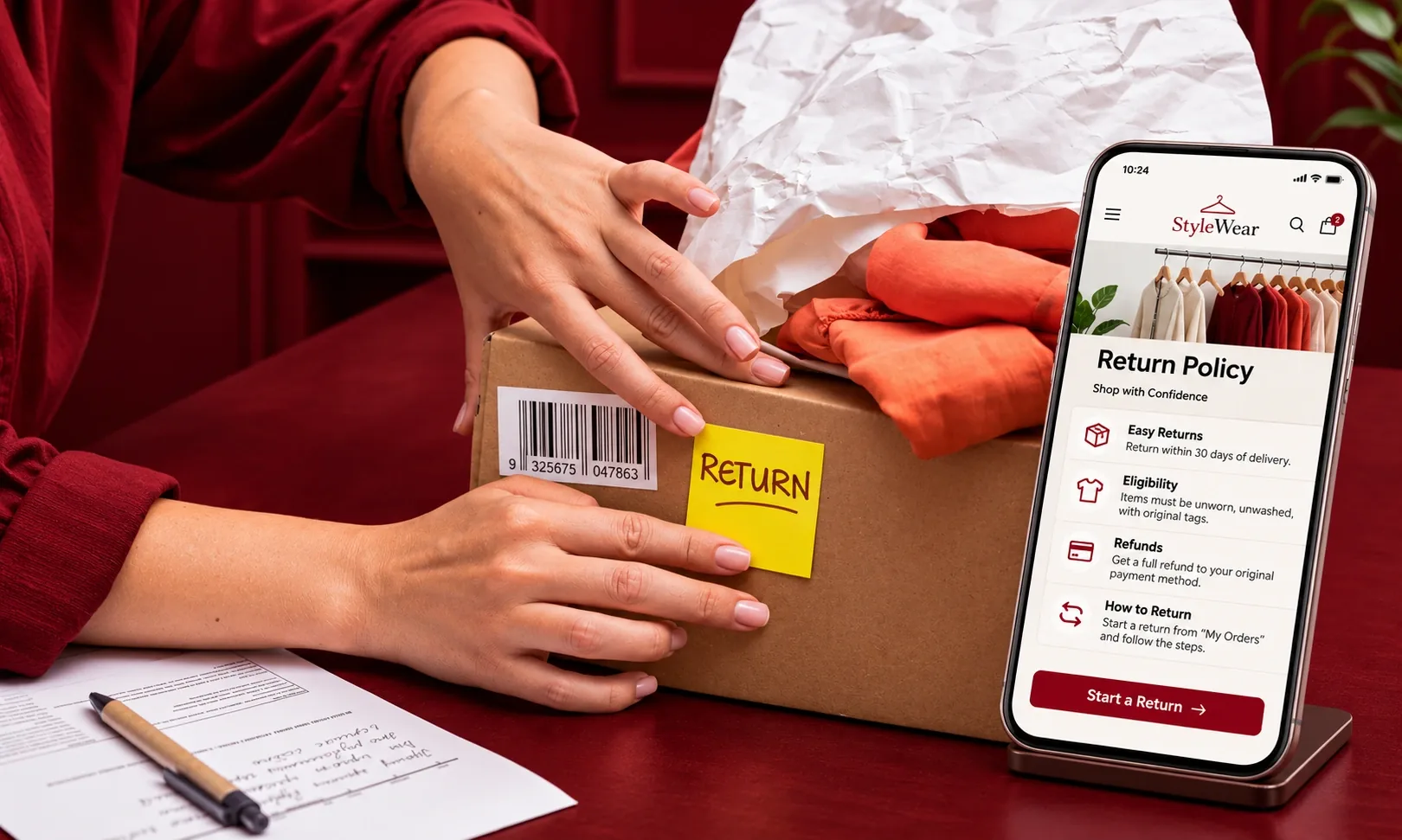
Return terms can influence both a shopper’s willingness to buy and the ease of ordering multiple sizes. Policy choices can build confidence, yet they can also change how customers shop.
Free returns may make it feel easier to order more than one size and keep the best fit. More restrictive terms may add friction for shoppers unsure of fit, even when they want the item.
In 2025, 82% of consumers said free returns were a key purchase factor. In the same year, 71% said a negative return experience would discourage future purchases.
Those figures show why a policy change involves a trade-off, not a single goal. Weigh return costs against customer confidence and the chance of repeat business.
- Offer free exchanges while charging for refunds, if that suits your costs.
- Give store credit as an alternative to a cash refund.
- Keep a straightforward refund option for shoppers who need one.
U.S. retailers set their own general retail return policies, and no federal law governs general retail returns. State the terms clearly before purchase, including any limits that could affect a customer’s choice.
Return research on bracketing compares full refunds with purchase limits and partial refunds. Its model suggests that stricter terms are not always more profitable when customers order several versions.
Some retailers set different rules by store, channel, or item type. For example, Michael Kors Outlet return conditions vary by purchase channel, and clearance items are final sale under its stated U.S. policy.
Review how a policy affects exchanges, refunds, repeat orders, and support contacts. Test policy changes against both returns and customer response, not return volume alone.
How Do You Measure Whether Page Changes Work?
A product-page change is useful only if you can connect it to a measurable result. Track the right measures so a lower return rate does not hide a worse shopping experience.
Calculate order return rate by dividing orders with a return by completed orders in the same period. State whether each measure counts orders or units, then keep that choice consistent.
| Metric | What it helps diagnose | How to read it |
|---|---|---|
| Return rate | Share of orders or units returned | Name the denominator and period |
| Conversion | Share of visits that become orders | Compare similar traffic and time periods |
| Exchange share | How often customers choose another item or size | Read beside refund activity |
| Customer-service contacts | Questions that page details may not answer | Group contacts by item and topic |
Review return reasons by SKU each month. An overall rate can hide a problem in one product, especially when a best seller makes up much of the order volume.
- Record a baseline for the item and measure you plan to change.
- Change one page element so you can judge its effect.
- Compare the same measure after the change.
- Review the return-reason mix for the affected items.
Use matching time periods and note any major change in traffic or stock. A seasonal shift or a new promotion can affect results even when the page stays the same.
A lower return rate alone does not prove the page change worked if conversion or customer experience also worsens. Compare the measures together before keeping the change.
Use store analytics and page tests to track the same results over time. Keep the denominator and comparison period consistent whenever you review performance.
What Are the Environmental Costs of Clothing Returns?
A return can create another shipment and another handling step, while textile disposal raises a separate environmental concern. Each return adds activity, but its final impact depends on what happens to the item.
Returned clothing may be resold, marked down, or discarded. Shipping and handling add transport and work, while disposal can add to the larger problem of textile waste.
In 2018, 66% of discarded textiles ended up in landfills. A 2024 federal report found that about 60% of textiles contain microplastics.
Those figures describe textiles broadly, not the specific impact of any single returned item. A garment’s path after return depends on its condition and whether it can be sold again.
Clothing production also uses materials and energy, while shipping moves goods through the supply chain. Disposal is only one part of the environmental cost of making and moving garments.
More accurate product information can help shoppers make informed choices and avoid some preventable returns. It cannot erase the effects of producing clothing or transporting it.
Brands can treat each avoidable return as a practical issue with both operating and environmental costs. Treat accurate product information as one practical way to avoid preventable returns, not a complete solution to fashion’s environmental footprint.
Which Product Pages Should You Fix First?
Start with the items where return patterns point to a page-information problem you can actually correct. Focus your effort on a small number of pages instead of trying to rewrite the whole catalog.
As a practical starting point, review the three to five items with the highest return rates. Match each item’s most common return reason to one targeted fix.
Jeans often need clear waist and inseam guidance because shoppers may know one measurement but not the other. Outerwear may need layering and sleeve-length context, while dresses can benefit from more realistic drape and length views.
Choose fixes that fit the item and the feedback. A repeated note about a tight waist calls for a different page change than comments about a color that looks unlike the photos.
The item with the highest return rate is not always the first page to edit. If the main cause is a fulfillment error or product-quality issue, changing the listing will not solve it.
For pages with missing or outdated details, make sure product data stays clear across the catalog. Accurate structured product information can also help shopping systems match items to customer requests.
Fix page information when the return reason points to information. Send fulfillment and product-quality problems to the teams that can correct them.
Pick pages your team can improve with the time and data available. Prioritize a small set of fixable pages and verify that each change addresses its specific return reason.
Conclusion
Better product pages begin with an honest match between what shoppers see online and what arrives. Accurate, item-specific information helps customers make a better-informed choice and can prevent some avoidable returns.
Start by pulling the latest return reasons by item. Choose one high-return item, identify its most common reason for return, and update the page to address it.