


If you have ever wondered what is a content audit and how it can improve your content strategy, you are not alone. In a world where content has become the foundation of digital marketing, understanding the value and health of your content is critical. A content audit is not just a report. It is a deep evaluation of every piece of content you have so you can make better decisions, improve performance, and align your content with your business goals. Strong content performance also depends on proper keyword targeting, which is why understanding keyword research for SEO is essential before evaluating existing content.
In this article, we will take a close look at what is a content audit, why businesses of all sizes are investing in it, how to perform a content audit step by step, the best tools to use, what research says about its impact, real data showing its value, and the benefits you can expect when you do it right. We will also walk through examples from real companies and answer common questions.
Let us begin with the basics.
What Is a Content Audit
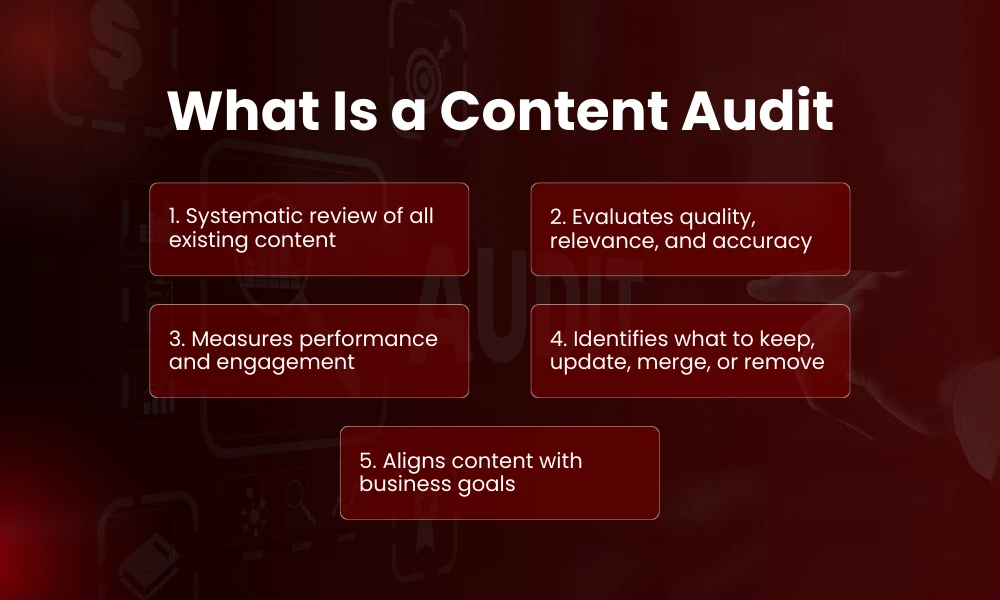
When someone asks what is a content audit, the simplest answer is this. A content audit is the process of reviewing all the content on a website or digital platform in order to evaluate its quality, relevance, performance, and alignment with strategic goals. It is a detailed review to identify what content is working, what content needs improvement, and what content should be removed.
A content audit does not only look at blog posts. It evaluates pages, landing pages, product descriptions, guides, videos, podcasts, and even downloadable materials. The goal is to understand what each piece of content is doing and what it should do next. Many organizations combine this process with a deeper technical SEO audit to identify structural issues that affect content performance.
Why Content Audits Matter
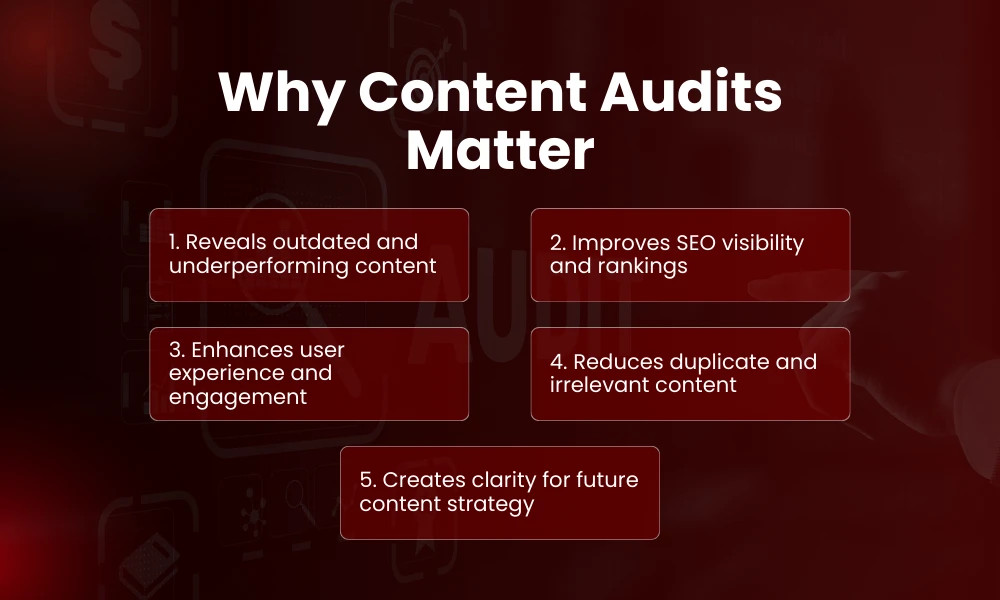
Before we get into the process, let’s look at why a content audit is so important. According to research from the Content Marketing Institute, 78 percent of marketing leaders say that auditing existing content is essential to improving content performance. That means professionals are recognizing that strategy alone is not enough. You need a clear picture of what you already have.
Another study by SEMrush found that 61 percent of websites contain content that is outdated or irrelevant to current goals. This data shows that without a systematic review, most organizations are sitting on content that is not helping them grow.
The digital landscape changes fast. Search engines update their algorithms. Audience interests shift. Competitors publish new insights. A content audit brings clarity and direction. It also helps marketers better understand human search intent, which is critical for creating content that truly answers user questions.
When Should You Do a Content Audit
One question people have is when to perform a content audit. The answer depends on your goals, but here are common triggers:
- You are redesigning or relaunching a website
- You want to improve organic traffic
- You suspect your content is outdated
- You need to align content with business goals
- You are losing visibility in search rankings
If any of these apply, it likely means it is time to ask what is a content audit and begin.
Types of Content Audits
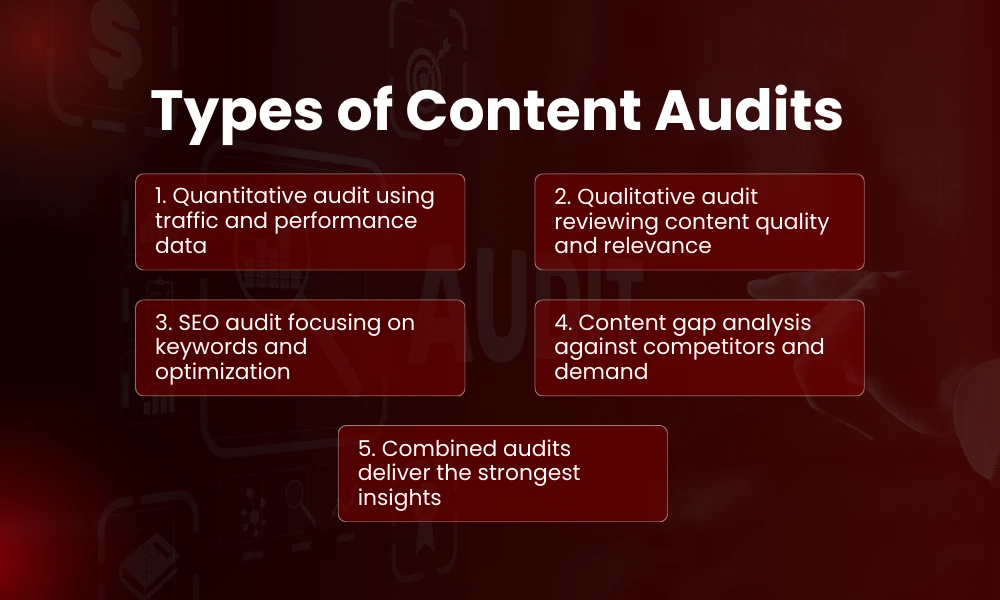
An important part of understanding what is a content audit is knowing that not all audits are the same. Here are the main types:
1. Quantitative Content Audit
A quantitative audit looks at measurable data. This includes page views, bounce rate, average time on page, keyword rankings, organic traffic, and conversions. The focus here is numbers.
2. Qualitative Content Audit
A qualitative audit evaluates the quality, relevance, accuracy, and consistency of content. It may involve editorial review and scorecards that reviewers fill out.
3. SEO Content Audit
An SEO content audit focuses on search engine optimization. It looks at keyword use, meta tags, backlinks, internal linking, and other factors that influence search rankings.
4. Content Gap Analysis
A content gap analysis compares your content to competitors or to search demand to find opportunities where you are missing content that users want. If you want to explore the process in detail, this guide explains how to perform an effective content gap analysis.
Each of these tells us something different, and most robust content audits include more than one type.
The Content Audit Process
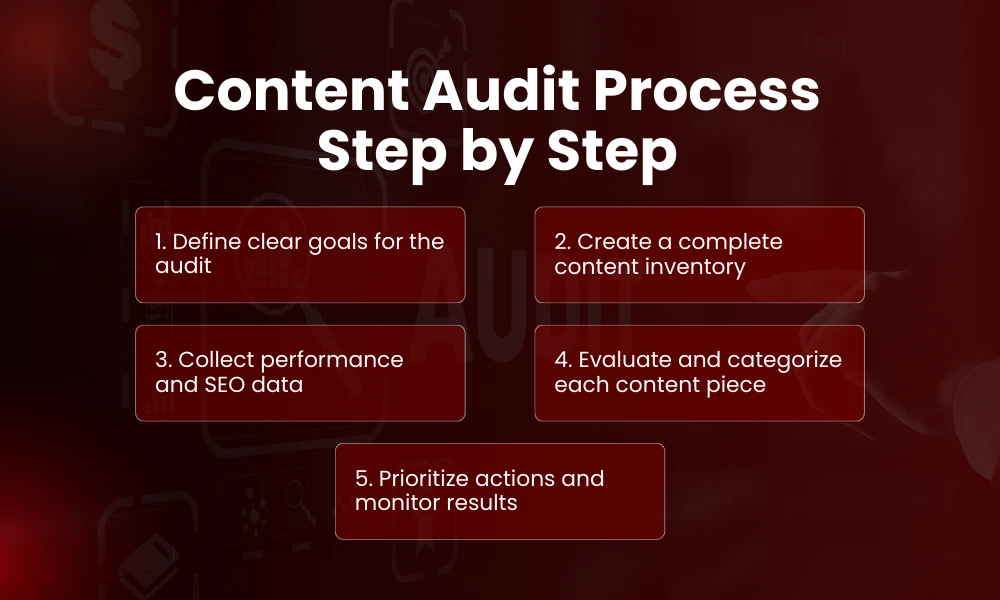
Now that we have covered what is a content audit, let us break down the process into actionable steps. This is the framework that digital marketers and teams follow.
Step 1. Set Clear Goals
Before collecting data, you need to decide why you are doing the audit. Are you trying to improve SEO? Increase leads? Restructure content? Setting goals helps you measure success.
For example, an ecommerce site may audit content to improve product page conversions, while a blog may be audited to increase organic traffic.
Step 2. Create a Content Inventory
A content inventory is a list of everything on your site. You can do this manually for small sites, but most professionals use automated tools to crawl pages and export URLs into spreadsheets.
This list becomes your master file.
Step 3. Gather Data
Once you have your inventory, collect data for each page. This includes:
- URL and title
- Content type
- Publish date
- Page views
- Bounce rate
- Time on page
- Keywords
- Backlinks
- Conversion metrics
This data gives you a holistic view of performance. Many marketers rely on advanced SEO analytics tools to analyze this data and uncover actionable insights.
Step 4. Evaluate
With data in hand, it is time to assess. In a content audit, you ask questions like:
- Is this content still accurate?
- Does it align with our goals?
- Is it generating traffic or leads?
- Is it well optimized for SEO?
- Is it redundant with other pages?
Assign ratings or categories such as keep, update, merge, or remove.
Step 5. Prioritize Actions
After evaluation, decide what to do with each piece of content. Some content should be updated and kept, others merged, and some removed entirely. Prioritization helps allocate time and resources.
Step 6. Execute Changes
This is where work gets done. Update pages, improve SEO, rewrite content, or remove what is not needed. Make sure to redirect URLs if you delete pages so you do not lose search value.
Step 7. Monitor the Impact
Your audit is not complete until you monitor results. Track the changes in performance over time to see if your improvements are paying off.
Tools for Content Audit
When people ask what is a content audit and how to do it efficiently, the answer nearly always involves tools. Manual audits are possible, but tools save time and provide better insights.
Here are some of the most recommended tools.
Google Analytics
Google Analytics remains the backbone of content auditing. It provides traffic, engagement, and conversion data. You can filter by page and see which content is performing well.
Google Search Console
Search Console shows your search performance. You can see clicks, impressions, and keyword positions. This is vital for SEO audits.
Screaming Frog
Screaming Frog crawls your entire site and exports data. It helps identify broken links, missing meta information, duplicate pages, and more.
SEMrush
SEMrush provides robust auditing features. It can show content gaps, SEO problems, and competitive benchmarks.
Ahrefs
Ahrefs helps with backlink analysis, search performance, and content opportunities. It is especially useful for evaluating link equity.
ContentSquare or Hotjar
These tools show user behavior such as scroll depth and click patterns. They help evaluate if content is engaging readers.
Spreadsheet Platforms
Tools like Microsoft Excel or Google Sheets are essential for organizing and tracking audit data.
Using these tools makes the process structured and efficient. Some teams also integrate SEO automation tools to speed up repetitive tasks such as data collection and reporting.
Data and Trends Supporting Content Audits
Understanding what is a content audit becomes clearer when you look at the results it drives. Here are some important findings from industry research.
Content Redundancy Is Common
Content Marketing Institute reported that up to 50 percent of content published on enterprise websites is duplicates or near duplicates. This dilutes search value and confuses readers.
Quality Matters More Than Quantity
HubSpot research shows that businesses that focus on improving existing content saw 74 percent more leads than those who focused on publishing new content alone.
Search Performance Improves After Audits
Case studies show that updating old content often leads to significant increases in organic traffic. One site reported a 106 percent increase in search traffic after auditing and refreshing old posts.
These data points prove that answering what is a content audit is more than theory. It translates into measurable business impact.
Benefits of a Content Audit
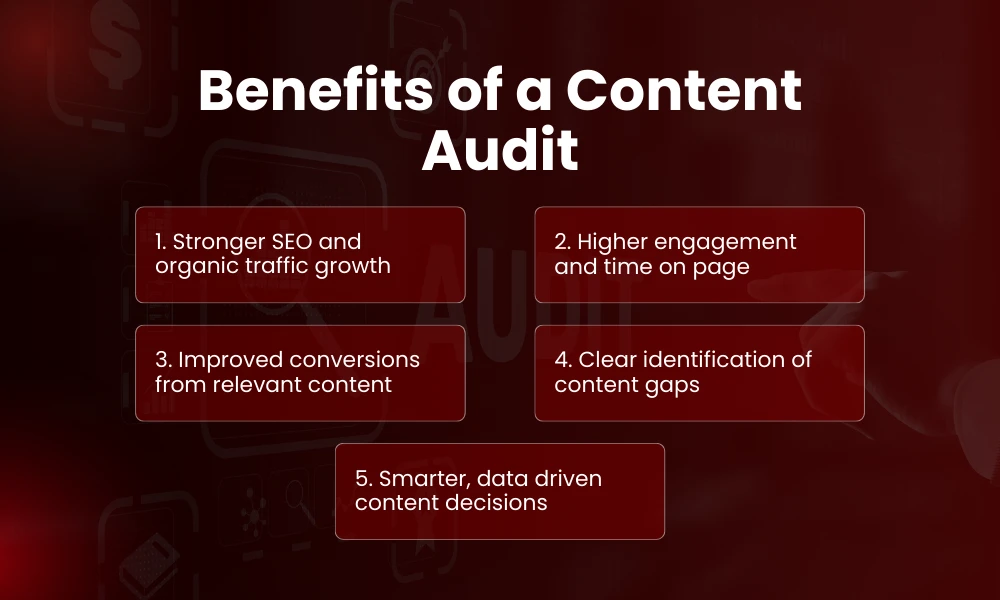
If you are still thinking about what is a content audit, you may be wondering what benefits it delivers. Here are real advantages organizations experience.
1. Better SEO Performance
Content audits help identify underperforming pages, content with weak keyword relevance, and opportunities to optimize meta tags and headings. Improved SEO means better visibility. Following a well-planned SEO content strategy ensures that your updates continue delivering results over time.
2. Higher Engagement
Outdated or irrelevant content drives readers away. Auditing helps refine messaging so visitors stay longer, explore more, and engage deeper.
3. Improved Conversion
A McKinsey report shows that personalized and relevant content increases conversions by up to 30 percent. Audits ensure content is aligned with user needs.
4. Reduced Redundancy
By eliminating duplication and outdated content, you reduce confusion and improve clarity. This also improves workflow for content teams.
5. Clarity for Future Strategy
A content audit creates a clear picture of what you have, what works, and what does not. This becomes a foundation for future content decisions.
How Long Does a Content Audit Take
Time varies based on site size. For small sites, a content audit may take a few days. For large enterprise sites with thousands of pages, it can take weeks. A good rule is to allocate at least one hour per 100 pieces of content.
Best Practices for a Successful Content Audit
Now that you know what is a content audit, here are some best practices professionals swear by:
- Define clear goals before you start
- Use automated tools for inventory and data collection
- Involve multiple reviewers for qualitative insights
- Score content with consistent criteria
- Document decisions and changes
- Schedule regular audits annually or biannually
Consistency makes audits more powerful over time.
Example: A Content Audit in Action
Let us look at a real example. Imagine a company that runs a blog with 500 posts. After performing a content audit, they found:
- 35 percent of content was outdated
- 20 percent ranked on page two of search results
- 10 percent had duplicate content issues
The company updated the outdated posts with fresh information, added relevant keywords, and improved internal links. Six months later, they saw a 45 percent increase in organic traffic and a 24 percent increase in conversions, all without publishing new posts.
This shows how powerful it can be when you understand what is a content audit and apply it correctly.
Conclusion
A content audit may sound like a technical task, but it is one of the most important things you can do to improve your digital presence. It gives you clarity, reveals hidden opportunities, and drives measurable results. By understanding what is a content audit, how the process works, what tools to use, and what benefits you can expect, you are better equipped to make strategic content decisions. If you want to take the next step, learning how to improve website SEO will help you maximize the results of your content audit.
Whether you are an individual blogger, a marketer, or part of a large company, a content audit will help you make smarter, more impactful content decisions.
Frequently Asked Questions About Content Audits
What is a content audit?
A content audit is a systematic review of all the content on a digital platform in order to evaluate quality, relevance, performance, and alignment with business goals.
How often should I do a content audit?
Most experts recommend performing a content audit at least once a year. Some organizations do it every six months, especially if they publish a lot of content.
What metrics are most important in a content audit?
Common metrics include traffic, bounce rate, time on page, conversion rate, keyword rankings, and backlinks.
Can I do a content audit on a small website?
Yes. Content audits can be scaled to fit any website size. For small sites, the process is simpler and can often be done manually.
Do content audits help SEO?
Yes. One of the main benefits is improved search engine visibility by identifying optimization opportunities and removing low quality content.
What tools do I need for a content audit?
Tools like Google Analytics, Google Search Console, Screaming Frog, SEMrush, and Ahrefs are commonly used.
Is a content audit the same as a content strategy?
No. A content audit helps inform your content strategy by providing insights into what you have and how it performs. Content strategy defines what you will do next.