If you are running a small local business, you might often ask how to get more customers without spending big on ads. The answer for millions of small owners is seo marketing for small business. Search engine optimization is the backbone of discoverability online. It connects your business with people actively searching for products and services just like yours.
In this guide I will walk you through why SEO matters, how it works, what data says about its effectiveness, and practical steps you can take right now to grow your small business.
In simple words, SEO helps your website appear when people search on platforms like Google. More rankings lead to more visibility and more visibility leads to more potential customers. But SEO is often misunderstood, seen as technical and overwhelming. I want to change that by explaining SEO in a clear way and showing you how small business owners like you can benefit from it.
This comprehensive guide will cover data backed insights, real use cases, and actionable tactics you can use to make your SEO efforts work. If you are completely new to search engine optimization, you may also want to explore our detailed Beginner Guide to SEO 2025 to understand the fundamentals before diving deeper.
Why SEO Marketing Matters for Small Business
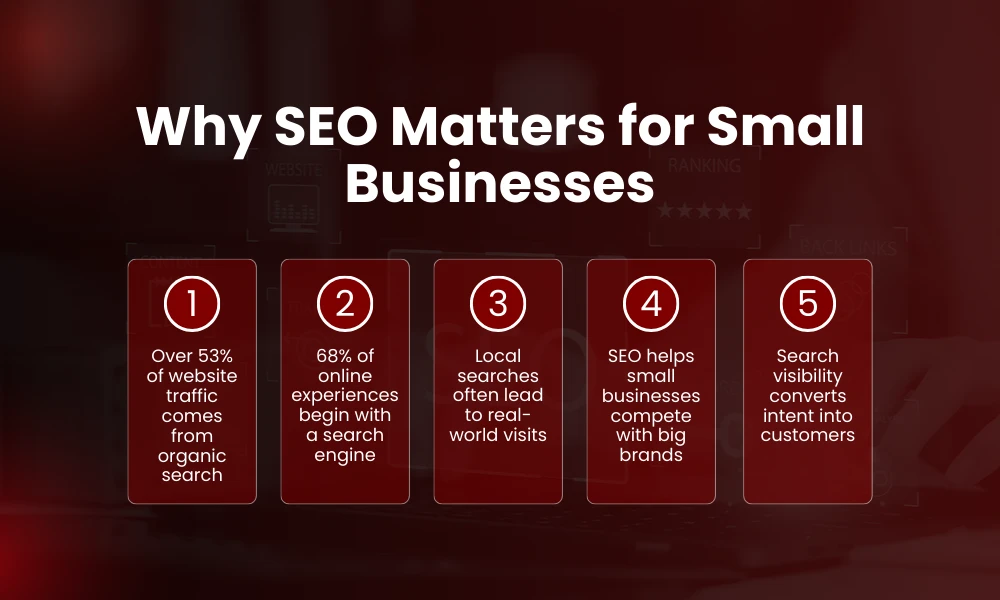
When you think about a small business vs a big brand, you might think the big brand always wins. But with SEO that is not completely true. The internet levels the playing field by allowing local businesses to compete with major players if they optimize their online presence right.
Data That Shows SEO Works
In one industry study by HubSpot, organic search was responsible for 53 percent of all website traffic for companies across industries. When combined with paid search this number goes even higher, but organic search alone makes up more traffic than social media and email combined. Another survey by BrightEdge found that 68 percent of online experiences begin with a search engine.
These stats show that users are not randomly browsing. They search with intent, and you want to be present when they do.
For local businesses, the impact is even stronger. Google itself reports that nearby search interest has grown more than 100% over the last two years. Additionally, 76 percent of people who perform a local search on their smartphone visit a business within one day. This means if your business shows up in search results, you have a real chance to turn online interest into foot traffic.
In a local context, SEO helps customers find you when they are ready to take action. That is why seo marketing for small business is not a luxury, it is a necessity.
How SEO Works in Plain Language
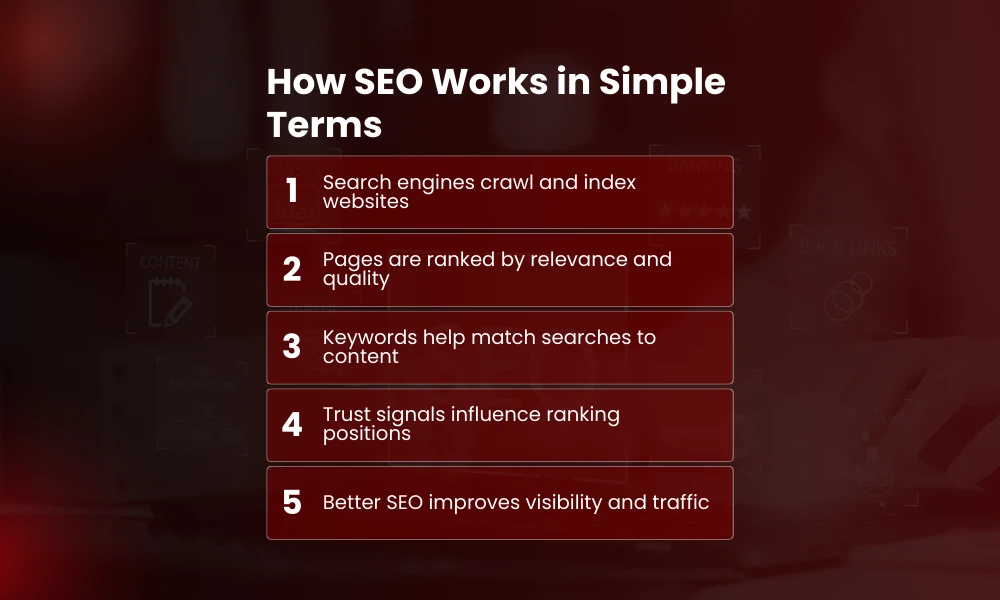
At its core, SEO is about helping search engines understand what your website is about so they show it to the right people. Search engines like Google crawl and index web pages. Then they rank them based on relevance and quality compared to the search query.
In simple terms, SEO involves:
- Understanding what your potential customers are searching for
- Optimizing your website and content to match those searches
- Earning signals that tell search engines your content is trustworthy
When done right, SEO increases your visibility and brings in qualified traffic to your website.
SEO Starts with Keyword Research
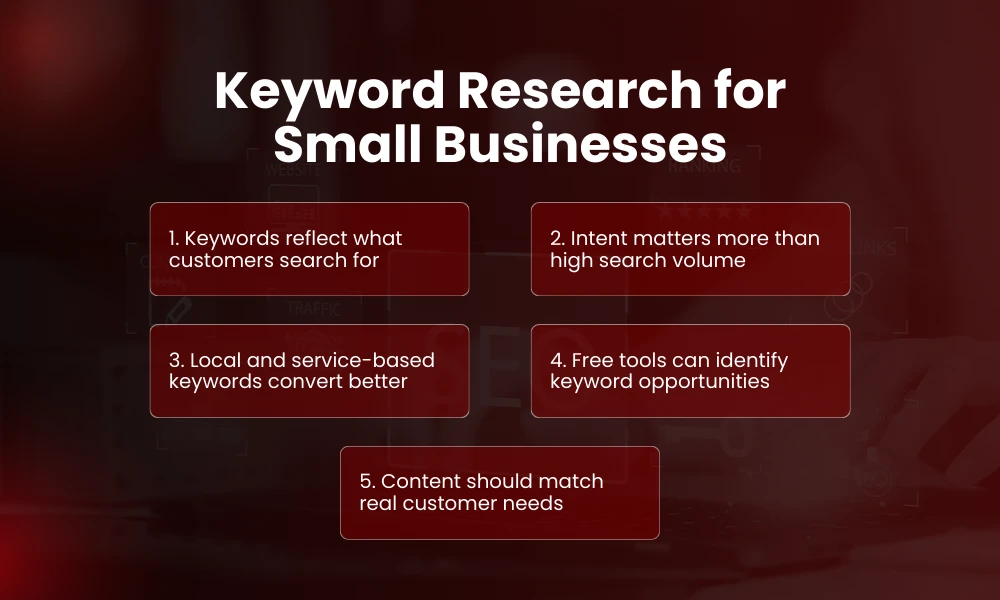
Keywords are the foundation of SEO. If you want a structured framework for discovering high-intent terms, here is a complete guide on how to create an SEO strategy that walks you through keyword planning step by step. A keyword is simply the phrase someone types into a search engine.
When someone searches for “best hair salon near me” they are using a keyword phrase. To leverage SEO, you want to understand what phrases your audience uses when they search for products or services you offer.
There are many keyword research tools, but you do not need expensive software to start. You can also explore some of the best free tools for keyword research that are ideal for small business owners working with limited budgets. Many small business owners use tools like Google’s Keyword Planner or even free tools such as Answer The Public to find phrases related to their services.
When doing keyword research for your business, you should:
- Look for keywords with decent search volume
- Understand the intent behind the search (are they looking for information or ready to buy?)
- Choose keywords that match your business offerings
For example, if you run a bakery you might find searches for “custom birthday cakes,” “cupcake order online,” or “wedding cakes near me.” These are opportunities to create content that matches exactly what customers are searching for.
Every piece of content you create should be structured around terms that match user intent. That is how seo marketing for small business becomes strategic rather than random.
On-Page SEO That Every Small Business Should Do
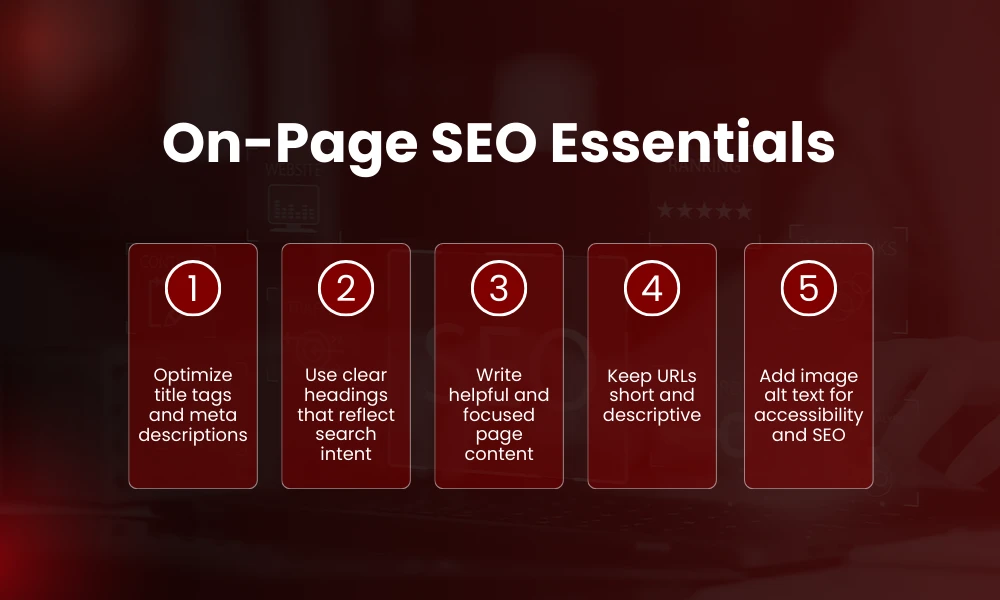
On-page SEO refers to all the things you can do on your website to help it rank better. To go deeper into optimization techniques, review these practical on-page SEO best practices insights that can immediately improve your page performance.
Here are the core on-page tasks and how to approach them:
Title Tags and Meta Descriptions
Your title tag and meta description are what show up on the search engine results page. They tell both users and search engines what the page is about.
Optimizing title tags means:
- Including primary keywords
- Keeping it clear and descriptive
- Writing compelling language that invites clicks
For example, if you are a plumber in Rawalpindi you might use the title:
“Top Plumber in Rawalpindi | Reliable Plumbing Services”
Your meta description should also include your keywords and a brief summary of what the user will get from the page.
Optimized Page Content
Search engines like content that answers user questions and provides value. Avoid thin content that has only a few sentences. Instead focus on providing real insight that users will find useful.
Here are some tips for great content:
- Keep paragraphs readable and focused
- Use keywords naturally rather than stuffing them
- Break content into sections with clear headings
When writing pages on your website, always think about what your customer is searching for and how you can answer that need.
URLs
Keep your URLs simple and descriptive. A good URL helps users and search engines understand what the page contains.
For example:
yourbusiness.com/bakery-custom-cakes
is better than
yourbusiness.com/page?id=123
Images and Alt Text
Images make your site more engaging. But search engines do not see images the same way humans do. They rely on alt text to understand what an image represents.
Always add descriptive alt text to images with relevant keywords. For example:
“freshly baked birthday cake with strawberries”
This small step helps your visibility in image search results.
Local SEO for Small Business
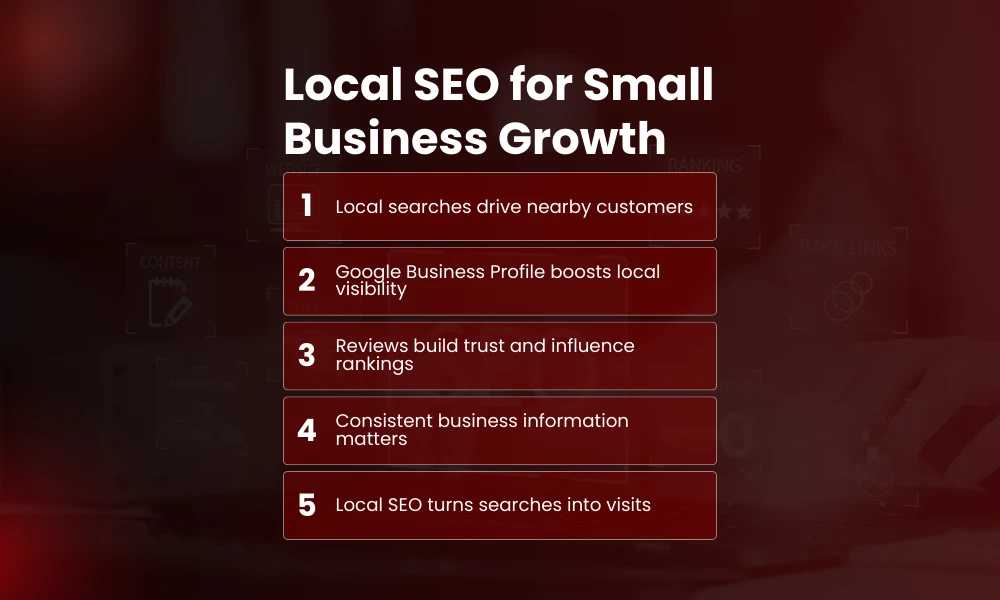
One of the biggest opportunities for small business owners is local SEO. For a complete breakdown of strategies tailored specifically to location-based businesses, explore our guide on local SEO strategies. When someone searches with local intent, like “best pizza near me,” you want your business to appear in the map pack and local results.
Here are the key steps for better local SEO:
Google Business Profile
Google Business Profile (formerly Google My Business) is one of the most important tools for local businesses.
Optimizing your profile involves:
- Ensuring your business name, address, and phone number are correct
- Choosing the right business categories
- Adding high quality photos
- Asking customers for reviews
Studies show that businesses with positive reviews and fully completed Google Business Profiles are more likely to rank higher in local search results.
Consistent NAP
Your business name, address, and phone should be consistent across all online listings. Inconsistent information creates confusion for users and search engines, which can negatively impact rankings.
Local Citations and Directories
Listing your business in local directories helps boost your credibility online. You want to be present in places where customers might be searching for your services, including local review sites and business directories.
Reviews
Customer reviews are a proxy for trust. They show search engines that people are engaging with your business and finding it valuable.
Encourage satisfied customers to leave reviews. Respond to all reviews professionally and promptly. Positive reviews can improve click through rates and influence conversions.
Technical Aspects of SEO For Small Business
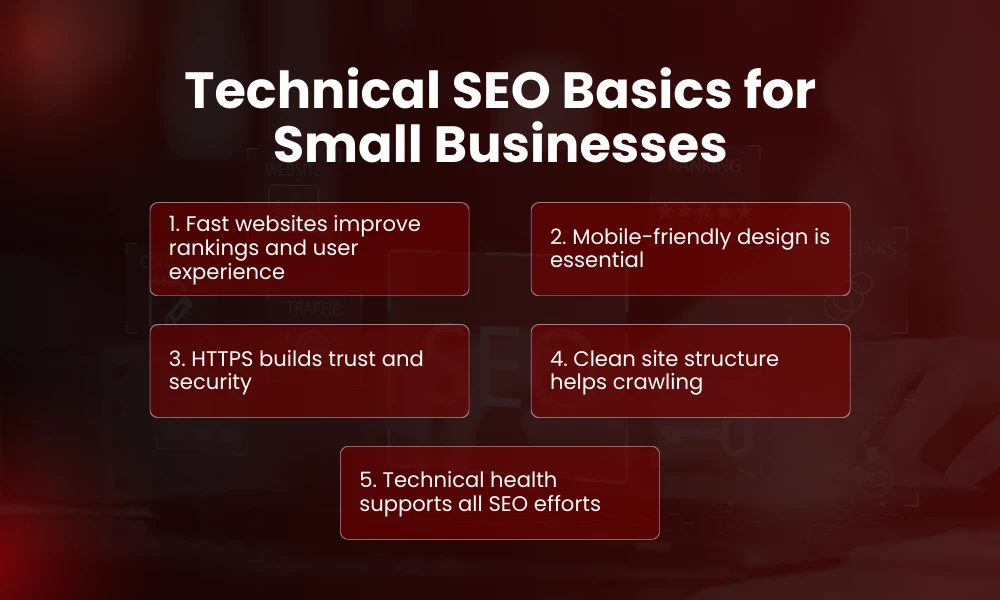
Technical seo marketing for small business refers to the backend issues that influence how your site is crawled and indexed. If you want a structured checklist to evaluate your website’s backend health, this detailed guide on technical SEO can help you identify and fix critical issues.
Here are the basics every small business needs:
Site Speed
According to Google, 53 percent of visits are abandoned if a mobile site takes longer than three seconds to load. Slow websites frustrate users and ranking algorithms alike.
Tools like Google PageSpeed Insights can show you where your site can improve. Typical fixes include compressing images, reducing unnecessary code, and using a reliable hosting provider.
Mobile-First
More than half of internet traffic globally now comes from mobile devices. This means your website must be easy to use on phones and tablets. A responsive design isn’t optional anymore.
SSL Certificate
An SSL certificate ensures your site uses HTTPS. This protects user data and improves trust. Google also uses HTTPS as a ranking signal.
Site Architecture
Your site should be easy to navigate. A clear structure helps users find what they need and helps search engines crawl your pages more efficiently.
A typical structure might look like:
Home > Services > Specific Service Page
This simple navigation aids in both SEO and user experience.
Content Marketing as a Growth Engine
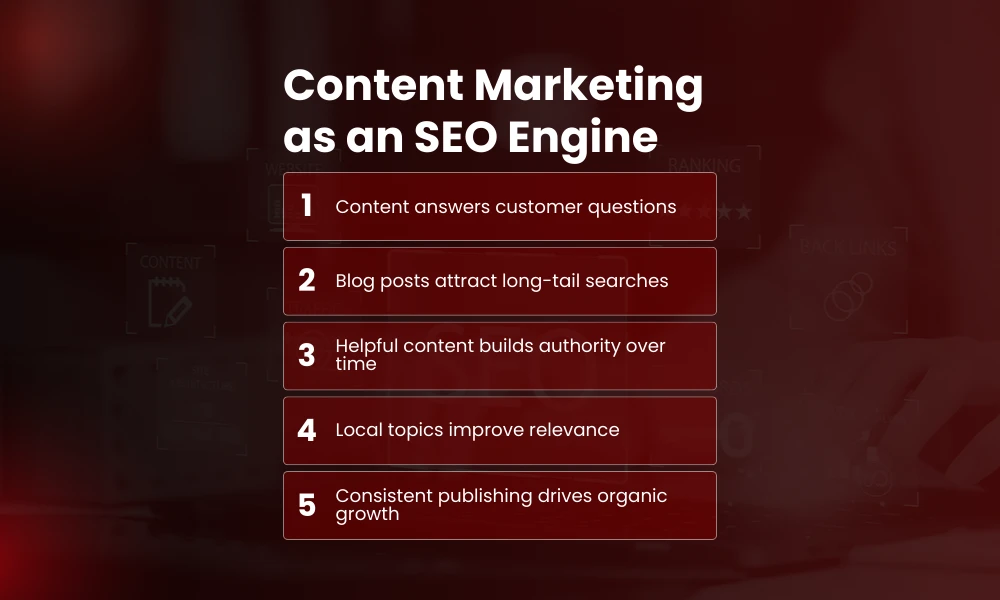
Seo marketing for small business and content marketing go hand in hand. If you want to structure your blog content for maximum ranking potential, understanding pillar content for SEO can significantly improve your topical authority. Creating well structured content that answers user questions can help you rank for long tail keywords and draw in traffic.
Here are some content ideas you can use:
- How to use your products
- Answer common customer questions
- Case studies of customer success
- Local trends and insights
For example a local florist could write:
“Top 10 Flower Arrangements for Eid” or “How to Choose the Perfect Bouquet for a Wedding”.
When creating content:
- Think about search intent
- Address the need fully
- Structure with headings and good formatting
Blog content is one of the best ways to attract traffic organically. It also gives you material to share on social media and in email newsletters.
Measuring Your SEO Success
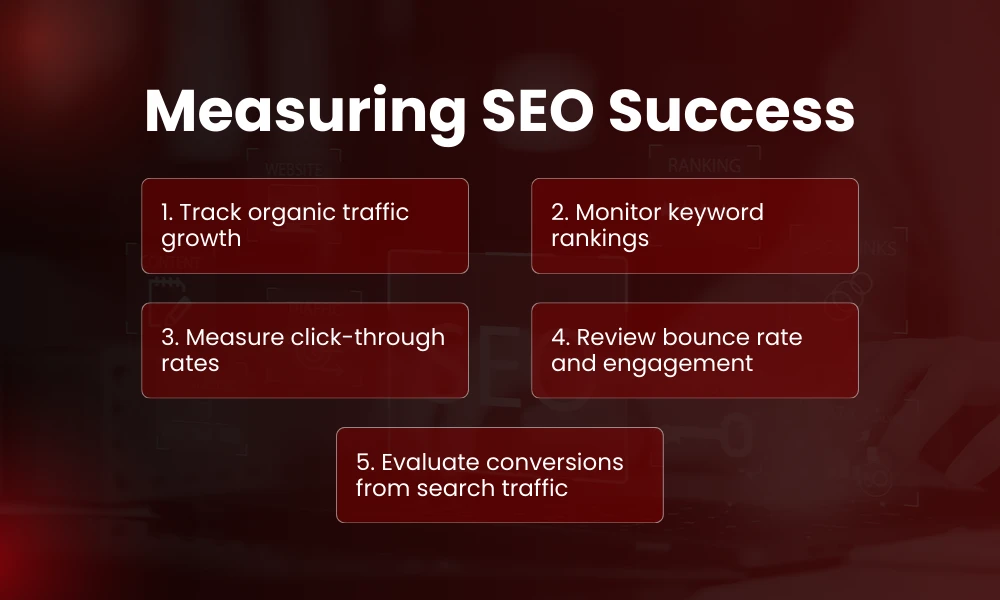
Without measurement you cannot know what is working or not. The two most common tools for tracking SEO performance are:
- Google Analytics
- Google Search Console
What To Track
- Organic traffic
- Page rankings for target keywords
- Click through rates
- Bounce rates
- Conversions
These metrics help you understand how visitors behave and how effective your SEO efforts are.
You should set goals for your business and then use data to evaluate success. Small improvements every month compound into big results over time.
SEO Is a Long Term Strategy
Search engine optimization is not a quick fix. Many business owners expect instant results. But seo marketing for small business usually takes time.
Studies show that most content takes 3 to 6 months to start ranking consistently. This is normal and expected. Be patient and focus on quality.
Revisit your strategy every few months. Update content, optimize pages that are underperforming, and build new content based on search trends.
The key is consistency. Small improvements consistently made lead to sustainable growth.
Common Mistakes Small Businesses Should Avoid
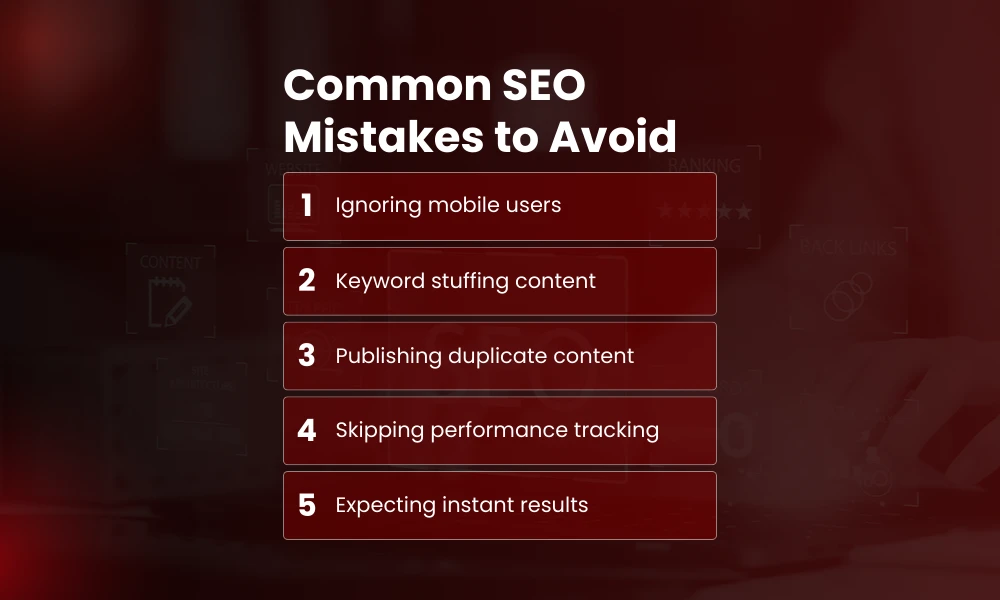
Here are pitfalls that many small business owners make in their SEO journey. Avoiding these errors becomes easier when you understand the most common SEO mistakes small businesses make and how to correct them properly.
Ignoring Mobile Users
Failing to optimize for mobile traffic means missing out on half of your potential visitors.
Keyword Stuffing
Overusing keywords without context hurts readability and seo marketing for small business. Your focus should be natural language and relevance.
Duplicate Content
Copying content from other sites or even within your own website confuses search engines and dilutes ranking ability.
Not Tracking Results
Without data you are guessing. Always use analytics to measure performance and guide decisions.
FAQs on SEO Marketing for Small Business
How long does SEO take to show results for a small business?
A. Most businesses start seeing measurable improvements in traffic and rankings within three to six months. However tangible leads and conversions often take consistent effort over time.
Can a small business do SEO on its own?
A. Yes. With the right guidance, small business owners can implement many SEO best practices themselves. There are also affordable tools and resources to support this process.
Is SEO better than paid advertising for a small business?
A. They serve different purposes. Paid ads can drive immediate traffic while SEO builds long term organic visibility. Many businesses benefit from using both together.
How much should a small business spend on SEO?
A. It varies. Some invest time and budget internally. Others work with agencies or freelancers. What matters more is consistency and quality rather than a fixed figure.
Does Google Business Profile really affect seo marketing for small business?
A. Yes. A complete and optimized profile improves local rankings, provides visibility in map results, and encourages engagement through reviews.
How often should seo marketing for small business be updated?
A. seo marketing for small business is ongoing. Reviewing performance monthly and updating content quarterly is a reasonable schedule for most small businesses.
Conclusion
SEO is one of the most effective strategies for long term growth. seo marketing for small business helps you attract targeted traffic, build credibility, and grow sustainably. With consistent effort you can compete with larger brands and unlock new opportunities.
Remember, SEO is not just about ranking higher. It is about connecting your business with people who are actively searching for what you offer. Prioritize relevance, quality, and user experience. Use data to guide your decisions and iterate over time.
If you focus on meaningful content, ethical optimization, and genuine engagement you will see your small business thrive online.