
New York City thrives on trends, attention, and buzz. Businesses spend millions yearly on advertising, but few channels match the organic power of influencer marketing NY brands use to reach local audiences.
Yet not all influencer marketing NY creates real impact. Many brands chase celebrity influencers with huge followings only to find weak engagement and high costs. That is where micro-influencers change the game. But should your business use them? This blog answers that question with research, examples, practical tips, and strategic insights that go beyond surface level comparisons.
Why Influencer Marketing NY Still Matters in 2026
Influencer marketing started as a way for brands to reach new faces. Over time, it shifted into a major channel for discovery, engagement, and conversion. Social platforms reward authentic engagement more than follower counts. Influencer content no longer feels like ads. It feels like genuine recommendations. That is why brands invest in it.
In New York City specifically, the audience expects relevance and cultural resonance. National campaigns often feel out of touch locally. Influencer marketing NY gives brands access to voices that understand borough-specific trends, neighborhood culture, and local lifestyle behaviors. These influencers communicate with real New Yorkers who trust them more than traditional advertisements.
As influencer ecosystems evolve, brands must stay aligned with emerging creator behaviors and audience expectations. Understanding how micro-influencer marketing trends are reshaping engagement helps NYC businesses adapt faster, stay culturally relevant, and avoid outdated campaign models that no longer convert.
Yet many competitor guides mistreat micro-influencers as cheaper alternatives. They overlook their strategic depth and long-term value. A smart strategy goes beyond pricing and follower counts. It accounts for audience intent, niche relevance, creative quality, and measurable ROI.
What Are Micro-Influencers and Why They Matter
Micro-influencers make content for audiences typically between 5,000 and 100,000 followers. They differ from macro-influencers or celebrities in several ways:
- Their followers often belong to niche communities
- Engagement rates are higher on average
- They can feel more relatable and trustworthy
- Content tends to receive more meaningful interactions
Because they work within specific niches whether fashion, fitness, food, wellness, local travel, or community events, micro-influencers attract audiences that feel personally connected. Users see them not as advertisers, but as peers or friends sharing useful information.
In NYC, niches can even be narrower: Lower East Side foodies, Brooklyn beauty reviewers, Harlem fitness coaches, Upper East Side family bloggers, and so on. That specificity gives brands a targeted advantage.
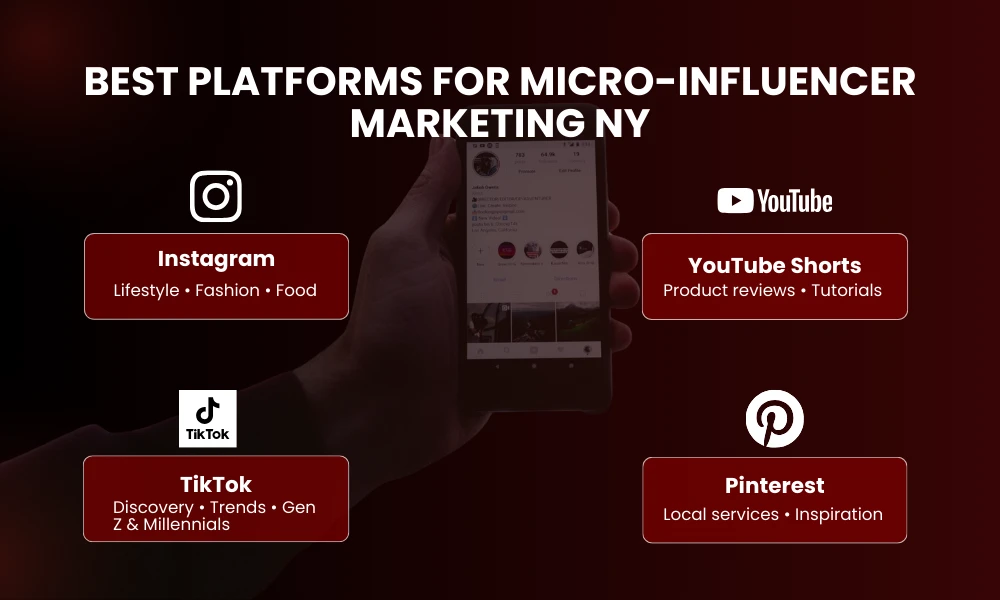
Platforms like Instagram continue to dominate influencer-driven discovery, especially for lifestyle, food, and fashion niches. Brands that align micro-creators with proven Instagram influencer marketing strategies often see higher saves, profile visits, and direct inquiries from NYC-based audiences.
Common Weak Points in Competitor Guides
Many existing competitor blogs about influencer marketing NY share tips that lack depth. They often:
- Focus only on macro influencers with large followings
- Treat micro-influencers as inferior options
- Assume all influencer collaborations are the same
- Offer no data on cost or ROI expectations
- Fail to connect marketing goals with measurable outcomes
This leaves brands confused about where to start, how to budget, and what success even looks like.
This guide eliminates those weaknesses by combining strategic thinking, real NYC context, and performance-driven tactics.
What Makes Micro-Influencers Valuable for NYC Brands
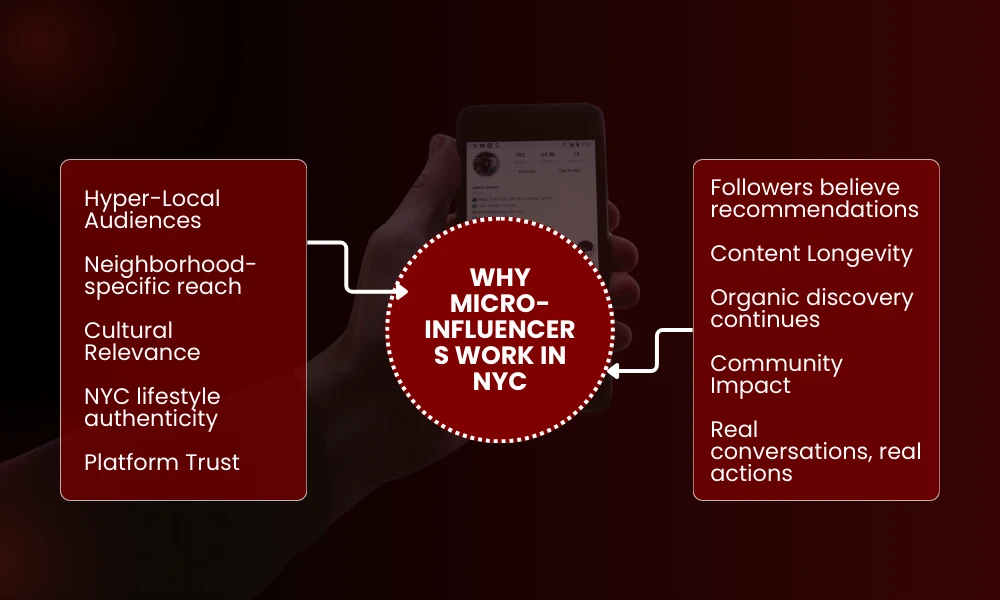
There are certain important points which makes micro-influencers valuable for NYC brands:
1. Higher Engagement Rates
Micro-influencers tend to receive comments, direct messages, and saves at higher percentages compared to larger influencers. Their audiences feel personally invested.
2. Strong Local Relevance
A reviewer from Queens reviewing local restaurants carries more influence than a generic lifestyle influencer for local dining brands. This creates relevance that national campaigns cannot replicate.
3. Lower Cost and Better ROI
Micro-influencers often agree to product samples, tiered compensation, or hybrid deals that pair payment with performance incentives. ROI becomes more measurable and affordable.
4. Authenticity and Trust
Followers often comment with questions, seek advice, and engage in two-way conversations. This offers depth that passive ads rarely achieve.
This trust is deeply rooted in how audiences psychologically perceive brand voices. When messaging aligns with human behavior and emotion, it reinforces credibility. This is why understanding the psychology behind effective branding enhances influencer partnerships and long-term brand recall.
5. Creative Storytelling
Micro-influencers know how to tell stories that resonate with real people. Their content can be repurposed for other marketing channels, adding more value.
When Should NYC Businesses Use Micro-Influencers?
Not all situations call for influencer marketing NY, but most local campaigns benefit from them. Here are scenarios where they perform best:
Local product launches
New restaurants, salons, studios, and retail shops often need quick awareness and foot traffic.
Hyper-targeted audience segments
When your services appeal to a specific niche within NYC, such as vegan eateries, luxury wellness, or start-up networking events micro-influencers hit the mark.
Seasonal and event-based promotions
Holiday menus, fashion weeks, concerts, and limited-time offers benefit from fast, authentic spread.
Brand credibility and social proof
Newer brands often need trusted voices to validate offerings.
Ongoing brand storytelling
Influencers can become recurring storytellers, weaving the brand’s narrative over time.
How to Find the Right Micro-Influencers in NYC
Finding micro-influencers is not about follower counts alone. It begins with identifying your ideal customer.
Step 1: Define Your Audience
Know the demographics, interests, values, and platforms your audience uses. Are they fitness enthusiasts in Manhattan? Parents seeking activities in Brooklyn? Food lovers exploring Harlem?
Step 2: Search Locally and Thematically
Use hashtags like #BrooklynEats, #NYCFitness, #QueensMoms, #LESArtScene, #UptownStyle. Look at where engagement is active, not only where follower counts are high.
Step 3: Evaluate Engagement Quality
A smaller influencer with 10,000 loyal followers who comment thoughtfully often drives more value than one with 100,000 passive followers.
Step 4: Review Content Quality
Look for clear visuals, coherent messaging, consistent posting, and brand fit. Their voice should align with your brand identity, not contradict it.
Step 5: Check Long-Term Potential
Micro-influencers who post regularly and interact with followers create ongoing value. They can become brand advocates, not one-off promoters.
How Much Does Micro Influencer Marketing NY Cost?
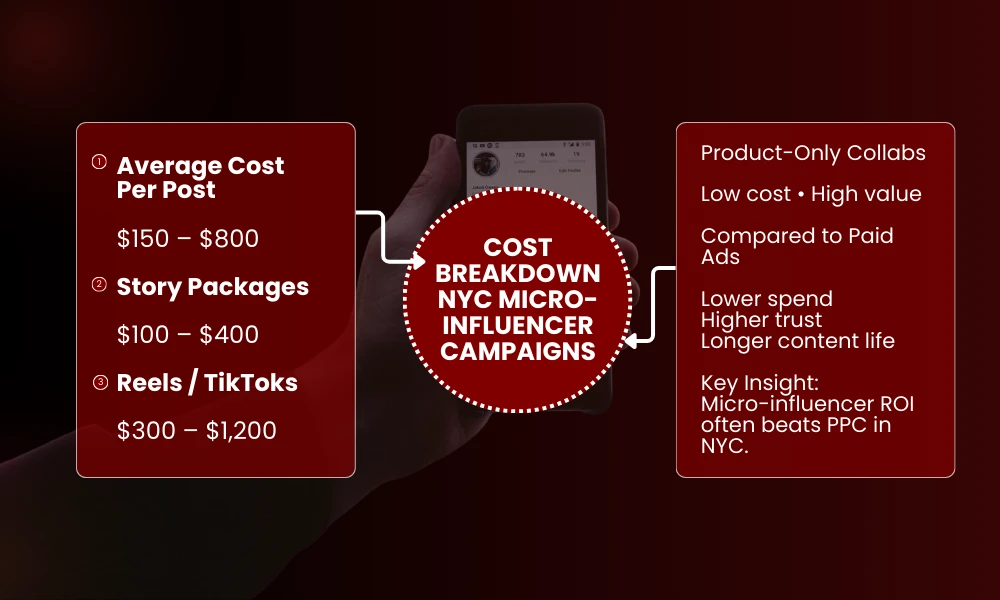
Pricing varies widely, but micro-influencers are generally more affordable than macro creators. Costs depend on niche, engagement, and deliverables:
- Nano influencers (1,000–10,000 followers)
Often collaborate for product gifts, modest fees, or performance incentives. - Micro influencers (10,000–100,000)
Expect fees that range from $150 to $1,500 per post depending on engagement, platform, and content requirements.
Some creators charge per reel, per story, or per post. Others bundle a series with negotiated rates. Make sure to clarify deliverables and rights usage in agreements.
The real advantage is that brands can work with multiple micro-influencers simultaneously within the same budget that one macro influencer would command. This spreads risk and diversifies visibility.
How to Create High-Performing Campaigns With Micro-Influencers
Some of these aspects should be taken care while creating high-performance campaigns with micro-influencers:
Set Clear Goals
Define what success means before collaborating. Are you seeking traffic? Leads? Foot traffic? Sales? Brand awareness?
Share Your Brand Story
Influencers need context. Provide them with your mission, tone, and key messages. Do not just hand over the product and hope for results.
Co-Create Content
Let micro-influencers have creative input. Their audience trusts their voice. Collaboration produces content that feels natural, not forced.
Provide Clear Guidelines
Outline key points but allow freedom. Too much control kills authenticity.
Track Performance
Monitor reach, engagement, saves, direct inquiries, website clicks, and conversions. Avoid focusing only on vanity metrics like likes.
Successful influencer campaigns rely on more than surface-level metrics. Applying a data-driven content approach allows brands to analyze which creators, formats, and narratives actually influence decision-making, not just visibility.
Tools and Platforms for Finding NYC Micro-Influencers
Several tools help locate niche creators:
Influencer discovery platforms
These allow filtering based on location, niche, and engagement.
Social listening tools
Track trending local topics and identify who frequently contributes valuable insights.
Hashtag exploration
Manually scan location-tagged posts using NYC neighborhood hashtags.
Combining tools with manual review helps find influencers that algorithms alone might miss.
Common Mistakes Brands Make With Influencer Marketing NY
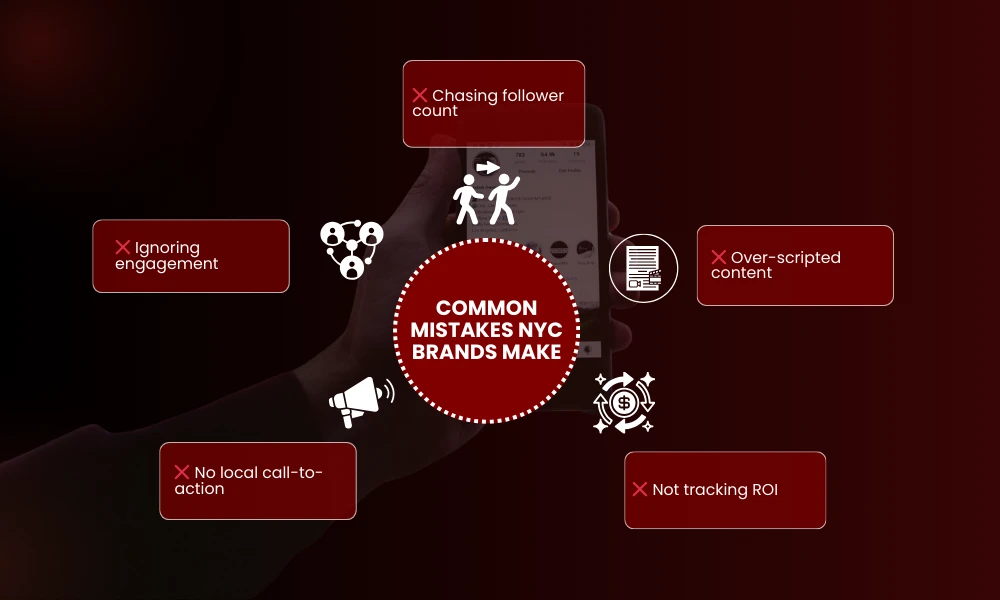
Always pay attention to these mistakes while doing the correct influencer marketing NY:
Hiring Based on Followers Alone
Follower count often overshadows engagement quality. A smaller, highly engaged audience often drives better results than a large passive one.
Ignoring Performance Tracking
Without tracking clicks and conversions, brands cannot measure real ROI or refine campaigns.
Micromanaging Creators
Too many instructions limit creativity. Influencers know how their audience responds best.
Focusing on One Platform Only
In NYC, audiences fragment across Instagram, TikTok, and occasionally YouTube. Diversifying improves reach.
How to Integrate Influencer Marketing NY With Other Channels
Influencers should not operate in isolation. They work best when integrated with other marketing channels:
Paid ads
Amplify influencer content through paid campaigns for extended reach.
User-generated content
Share influencer posts across brand platforms.
Email campaigns
Showcase influencer testimonials to subscribers.
When influencer efforts are aligned with broader social media marketing strategies, brands create consistent messaging across platforms. This integration strengthens brand recognition while improving attribution and performance tracking.
Events and partnerships
Invite influencers to live events to create real-time content.
This synergy boosts visibility and creates a cohesive brand narrative.
Measuring ROI for Micro-Influencer Campaigns
Success metrics depend on goals. Here’s how to measure:
- Brand Awareness
Reach. Impressions. Share of voice. - Engagement
Comments, saves, shares, mentions, direct messages. - Conversions
Website traffic, coupon uses, signups, bookings. - Sales
Use trackable links and promo codes tied to each influencer.
Brands that focus on measurable outcomes outperform those chasing vanity metrics. Applying conversion-driven SEO tactics alongside influencer campaigns improves attribution clarity and connects content performance directly to revenue impact.
Avoid overemphasis on vanity metrics. Engagement quality and conversion impact matter more.
Case Studies: NYC Micro-Influencers Driving Real Results
Local Fitness Studio
A boutique fitness brand partnered with 12 local micro-influencers. Each shared authentic experiences of attending classes. The result: a 30 percent increase in first-time class bookings and a consistent stream of user reviews.
Neighborhood Bistro
A small restaurant collaborated with food micro-influencers NY to showcase seasonal dishes. They co-created reels exploring kitchen processes and chef interviews. The campaign boosted reservations by 40 percent within six weeks.
These results show how niche partnerships, genuine storytelling, and strategic planning outperform superficial influencer posts.
Future Trends in Influencer Marketing NY
- Micro-narrative storytelling
Longer form experiences will replace quick product posts. - Niche community focus
Smaller, more engaged tribes make stronger buying decisions. - Creator-brand collaboration evolution
Creators will co-design products with brands, not just promote them. - Performance-based partnerships
Brands and creators will partner with incentives tied to real outcomes.
NYC businesses that anticipate these trends will stay ahead.
Should Your Business Use Micro-Influencers?
Yes. But only with strategy.
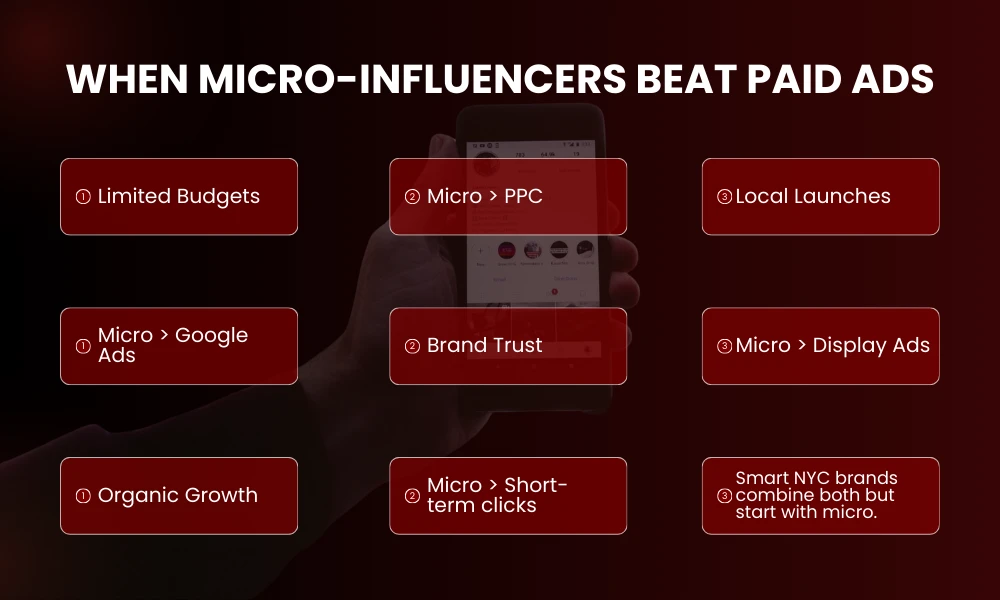
Micro-influencers bring authenticity, local relevance, and cost efficiency. When matched with clear goals and integrated campaigns, they outperform generic ads in most NYC contexts.
Paired with the right metrics and long-term relationships, micro-influencers help brands grow visibility, trust, and conversions in a competitive market.
Frequently Asked Questions
What makes micro-influencers effective for NYC businesses?
Micro-influencers often have smaller but highly engaged audiences who trust their recommendations. That trust drives stronger outcomes for local service brands and niche offerings.
How do I find the right micro-influencers in New York?
Search using local hashtags, social listening tools, influencer platforms, and manual exploration. Focus on engagement quality, not follower count.
How much should I budget for micro-influencer campaigns?
The budget varies. Many micro-influencers charge between $150 and $1,500 per collaboration. Costs depend on deliverables, audience size, and niche relevance.
How do I measure success in influencer marketing NY?
Track reach, engagement, website traffic, lead generation, and conversions. Use trackable links and promo codes to attribute performance accurately.
Should micro-influencers replace traditional ads?
No. They work best when paired with paid amplification and integrated marketing channels.
Final Thoughts
Influencer marketing NY requires nuance. Micro-influencers do not replace your entire strategy, but they can elevate it. When approached with purpose, clarity, and measurable goals, they offer authentic connections that often outperform traditional paid ads.
This is not about cheap tactics. It is about delivering relevant stories to the audiences that matter most. In New York’s fast-paced media environment, that distinction makes all the difference.