

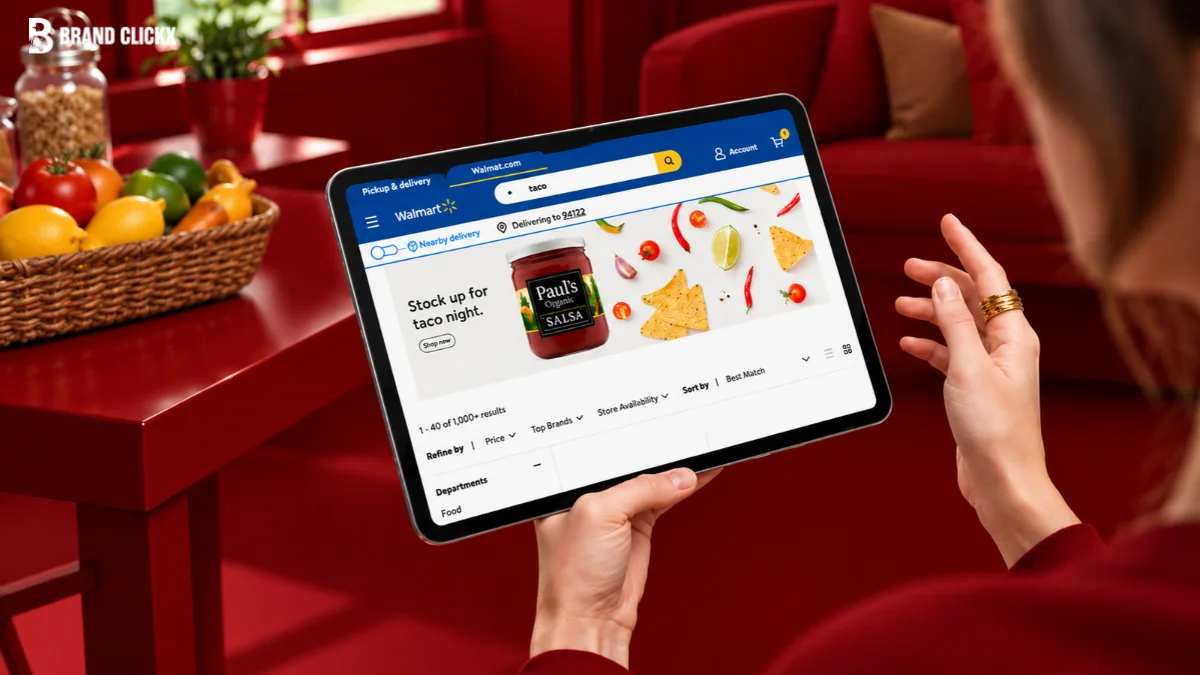
Walmart Connect advertising gives brands something most digital ad platforms can’t fully offer: access to shoppers before, during and after a Walmart purchase. Its media can reach people on Walmart’s website and app, inside stores and through offsite channels, while its retail data can connect advertising activity with shopping behavior.
Walmart Connect is Walmart’s retail media network. It lets brands advertise across Walmart’s digital properties, physical stores and selected offsite channels while using Walmart’s first-party shopping data for targeting and measurement.
That combination sounds straightforward, but the value depends on how the network’s products, data and measurement actually work. This guide explains the structure first, then looks at what advertisers report about the experience, including where the platform performs well and where buyers still have concerns.
What Walmart Connect actually is
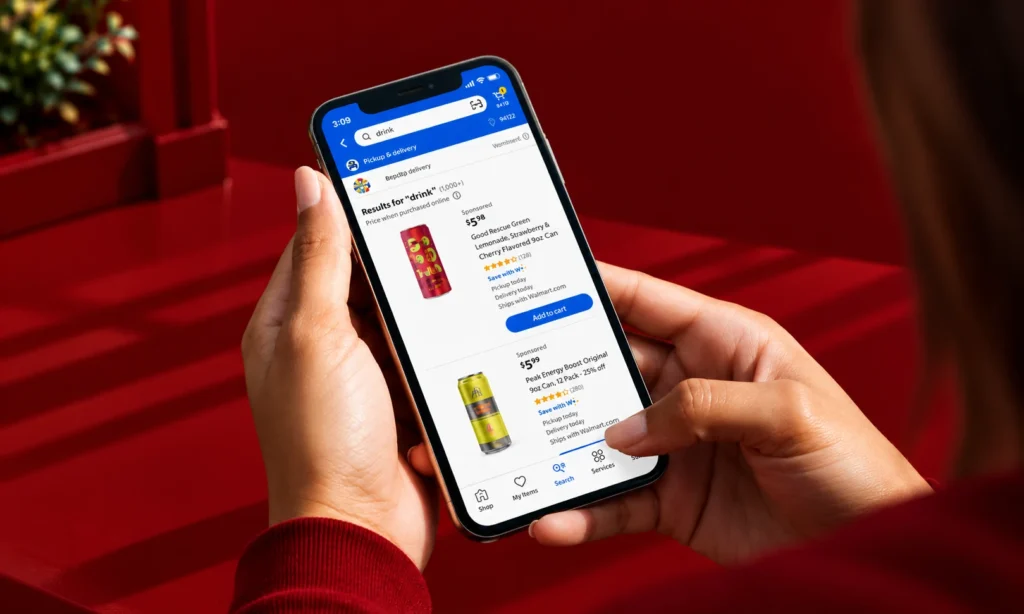
Walmart Connect is the advertising operation built around Walmart’s retail ecosystem. Instead of treating advertising as a separate media business, Walmart connects its ad products with the places where customers research products, visit stores and complete purchases. The network covers several types of inventory:
- Onsite: Ads appearing across Walmart’s website and app.
- Offsite: Media bought beyond Walmart’s own properties using Walmart audiences.
- In-store: Screens, audio and other advertising experiences inside Walmart locations.
- Brand experiences: Larger branded placements tied to products, categories or shopping occasions.
Advertisers can manage some campaigns themselves through Walmart’s self-service tools. Larger suppliers and more complex campaigns can also involve managed support or advertising partners.
The main audience is made up of suppliers, brands and eligible Marketplace sellers that have products connected to Walmart’s retail business. Walmart has also expanded its offsite advertising business so companies that don’t sell products through Walmart can use its audiences in areas such as CTV and other media.
By U.S. retail media spending, Walmart Connect sits well behind Amazon but clearly ahead of most other retail networks. Its estimated share was about 8% in 2025, compared with roughly 80% for Amazon. That makes Walmart the second major player in U.S. retail media rather than a small challenger.
The ad products
The easiest way to understand Walmart Connect’s products is to look at where they meet the shopper.
Onsite search and display
Sponsored Products are designed for shoppers already showing product interest. They can appear when someone searches Walmart, browses a category or visits a product page. That makes them particularly useful when the goal is to turn existing shopping intent into a purchase.
Walmart’s broader Sponsored Search offering also includes Sponsored Brands and Sponsored Videos. These give brands more space to build recognition or communicate a product message instead of relying only on an individual product listing.
Onsite Display serves a wider role. Rather than waiting for a shopper to search for a specific product, display campaigns can be used to build awareness and consideration across Walmart’s digital environment. So the basic split is: Search works closer to the purchase. Display gives advertisers more room to influence the shopper before that final decision.
Offsite through demand side platform
The Walmart DSP takes Walmart’s retail audience beyond Walmart.com and the Walmart app. Advertisers can use Walmart shopping signals to reach relevant audiences across external media. The offering now includes channels such as CTV, video and other digital inventory.
CTV has become particularly important as Walmart has expanded its television and streaming capabilities. The acquisition of VIZIO also gives Walmart a larger connected-TV footprint and creates another route for linking advertising exposure with Walmart shopping outcomes.
Walmart has also been making its retail audiences available through additional buying platforms. That matters because advertisers don’t necessarily want every campaign to operate inside one closed buying environment.
Non-endemic advertisers are part of this expansion too. Companies in areas such as automotive, financial services and quick-service restaurants have become users of Walmart’s offsite advertising capabilities even though their products aren’t typical Walmart shelf items.
In-store
Store advertising is where Walmart has its clearest structural advantage. Its network covers more than 4,600 U.S. stores with formats that include digital screens, audio and experiential activity. These placements put advertising into the same environment where shoppers can make a purchase shortly afterward.
That makes in-store media particularly relevant for products where physical visibility can affect the decision, such as food, household goods, personal care and other everyday categories. The benefit isn’t simply additional impressions. It’s the possibility of connecting an advertising exposure with a real store transaction.
Sponsorships
Walmart also offers larger branded opportunities around categories, events and seasonal shopping periods. These formats are useful when a brand wants more than a product listing. They can give advertisers a larger presence around a specific retail moment while supporting broader awareness and consideration. The right product therefore depends on the job:
| Goal | Better fit |
| Capture active product searches | Sponsored Products |
| Build branded visibility in search | Sponsored Brands |
| Use video to influence shoppers | Sponsored Videos |
| Reach shoppers earlier in the journey | Onsite Display |
| Extend Walmart audiences into external media | Walmart DSP |
| Influence shoppers inside stores | Store Ads |
| Own a larger shopping moment | Sponsorships |
What the Data Actually Is
Walmart’s audience data is valuable because it connects advertising signals with real shopping activity across its digital properties and physical stores. Advertisers can build audiences around signals such as previous purchases or interest in a product category.
Those audiences can then be used to reach similar or relevant shoppers in future campaigns. The bigger advantage comes after the ad is shown. Walmart can compare advertising activity with purchases made through its retail system, giving brands a closer link between media exposure and commerce.
But that connection isn’t perfect. Some impressions can’t be matched to a Walmart household and some purchases can’t be tied directly to an identifiable shopper. Walmart’s incrementality methodology uses estimates when direct matching isn’t possible. So measurement has two layers: directly observed activity and modeled estimates. That distinction matters when judging performance.
How Measurement Works
Walmart Connect uses several measurement layers rather than one universal attribution number. Standard reporting can include impressions, clicks, spending, attributed sales and ROAS, with reporting available across dimensions such as campaigns, products, categories and platforms.
The standard post-click attribution window is 14 days, while three- and 30-day windows can also be available depending on the campaign. Attribution shows which sales received advertising credit. It doesn’t prove that advertising caused those sales. That’s where incrementality comes in.
Walmart compares shoppers exposed to advertising with a control group and uses the difference in outcomes to estimate additional purchases caused by the campaign. Its Display incrementality methodology also uses statistical testing at a 95% confidence level.
There is an important eligibility constraint. The documented requirements for Display incrementality include a campaign spending more than $125,000 and running for six to 12 weeks, subject to eligibility and feasibility. That isn’t a $125,000 minimum to advertise on Walmart Connect. It’s a requirement for a particular incrementality measurement approach.
What Advertisers Value
The advertiser picture is mixed, but three strengths stand out. Retail shopper data: Walmart can use shopping signals for audience creation and optimization, giving brands already selling through Walmart a strong connection between media and commerce.
Store connection: When the available data supports the match, digital advertising can be evaluated against later Walmart store purchases. High-intent search: Sponsored Products and other search formats reach shoppers while they’re actively browsing or looking for products.
Walmart is also expanding beyond search into CTV, social, offsite media, in-store advertising and broader measurement products. Advertiser case studies show the platform being used for product launches, category expansion and full-funnel campaigns.
What Advertisers Complain About
The biggest concerns aren’t about whether Walmart has useful data. They’re about how confidently advertisers can use that data to justify more spending. Some buyers question whether larger Walmart advertising commitments generate enough incremental sales to justify the investment.
Attribution can show which purchases received credit, but advertisers increasingly want causal evidence. Incrementality helps, although it isn’t available in the same way for every campaign.
The platform is also evolving quickly. Walmart continues to add reporting tools, measurement options, audience integrations and AI-assisted features, while some advertisers report frustration with workflows, reporting or operational complexity.
That mixed experience is important. Walmart Connect’s strongest selling point is also where advertisers demand the most proof: its ability to connect advertising with real retail outcomes.
How does it compare with Amazon advertising?
Amazon is much larger in digital retail advertising. Its enormous online marketplace gives advertisers more digital scale, a huge product catalog and extremely strong signals around online product discovery and purchase intent. Walmart’s advantage comes from a different shopping environment.
More than 4,600 stores give Walmart an enormous physical retail presence. Its advertising system can therefore connect digital exposure with purchases that happen inside stores as well as online. That difference matters most for categories where shoppers regularly move between digital research and physical shopping. The comparison can be reduced to four points:
| Area | Walmart Connect | Amazon advertising |
| Digital scale | Large but much smaller | Much larger |
| Physical retail | Major advantage | Less central to the ad proposition |
| Shopping data | Online + store activity | Primarily digital commerce signals |
| Strongest use case | Omnichannel retail | Digital commerce at massive scale |
The takeaway: Amazon has the bigger digital advertising machine. Walmart’s distinctive advantage is tying media to an enormous physical retail network.
Who should be here?
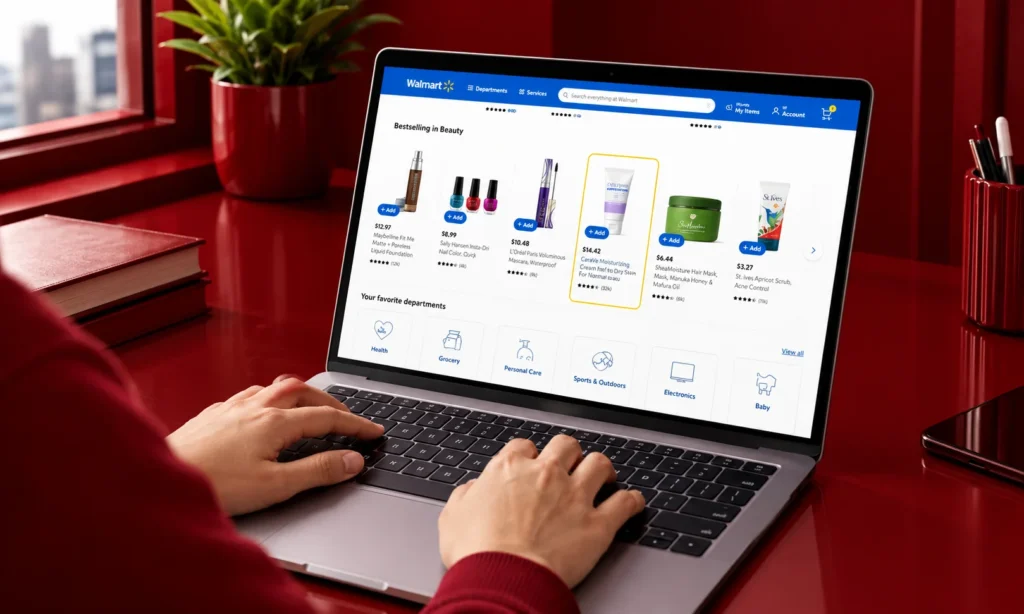
Walmart Connect is strongest for brands that already have meaningful Walmart distribution or want Walmart to become a larger sales channel.
Everyday categories can benefit particularly well because their purchases often happen inside stores. Grocery, household products, health and beauty, food and beverage and other frequently purchased goods are natural candidates.
The opportunity is smaller when Walmart represents little of a brand’s actual business. A brand shouldn’t advertise simply because Walmart has a large audience. The audience needs to overlap with the people the brand is trying to reach and the products need enough availability to turn that exposure into sales.
Non-endemic brands have a different route. Companies that don’t sell directly through Walmart can still use Walmart audiences through offsite media and CTV. There also isn’t one universal Walmart Connect spending threshold that tells every advertiser when to start. Instead, brands should enter with three things already clear:
- Where their products are available.
- Which business outcome the campaign is expected to influence.
- How attributed sales will be separated from incremental sales.
That third point is especially important. A campaign showing a strong ROAS can look successful while still leaving the advertiser unsure about how much new demand the advertising actually created.
Final Verdict
Walmart’s physical retail footprint is a genuine advantage and not just another feature in a retail media pitch. The combination of stores, shopping data and advertising creates a measurement opportunity that Amazon can’t reproduce in the same way. Before the first campaign, ask one question:
Which reported sales are directly observed, which are estimated and what evidence will show that the advertising created incremental sales? That answer is more valuable than a promised ROAS because it tells you what the platform can actually prove.