Search engine optimization and search engine marketing are two terms many business owners hear all the time. If you have ever asked yourself which one you should use for your business you are not alone. Many marketers and business leaders struggle with understanding the difference between SEO and SEM, and more importantly how to choose the right strategy for their goals. Learning effective content marketing strategies can help you align SEO and SEM with your business objectives.
In this article we will break down both concepts in simple language. We will reference real studies data and include helpful links throughout. We will also explain how seo and sem fits into the bigger picture of digital marketing.
What is SEO
Let us start with search engine optimization. SEO is the process of improving your website so that it shows up higher in the unpaid search results on search engines like Google and Bing. These are often called organic results. When someone types a query such as buying shoes in Google the listing that appears without the label “ad” is an organic result.
SEO is all about relevance, authority and user experience. Google’s own guidance highlights that relevance and helpful content are at the core of how pages rank. You can read Google’s explanation here
SEO includes on page techniques such as choosing the right keywords, writing quality content and optimizing metadata. Businesses often use professional SEO content writing services to ensure their pages rank effectively. It also includes technical improvements to speed performance and mobile friendliness. Finally it includes off page factors like links from other websites which suggest authority.
Why SEO Matters Today
SEO matters because search remains one of the biggest drivers of web traffic. According to a study by BrightEdge organic search drives more than half of all site traffic. The study found that organic search made up 53 percent of all tracked website traffic.
Traffic from SEO is considered “free” in the sense that you do not pay per click like you do with ads. Understanding the importance of keywords in digital marketing is key to driving organic traffic effectively
What is SEM
Search engine marketing refers to tactics that promote your website by increasing visibility in search engine results pages. Most of the time SEM is used to describe paid search advertising where companies bid on keywords so that their ads appear at the top of search results.
When someone searches for the word “running shoes” a paid ad might appear above the organic listings. These ads are marked with the term “Ad” so that users know they are sponsored.
SEM can also include other paid tactics such as shopping ads, display ads, and remarketing through search platforms. Running paid social ads alongside SEM can amplify your reach across multiple channels. The main idea behind SEM is to pay for visibility.
Why SEM Matters Today
Paid search gives immediate visibility. If you open a new store or launch a new product SEM can put you on the first page of search results right away. Organic SEO usually takes time weeks or months before significant results appear.
According to data from eMarketer Google Search ads remain the largest segment of digital advertising and continue to grow year over year.
Many companies use SEM to generate leads sales and awareness especially when they need results fast or when they want to target specific buyer intent keywords.
Key Differences Between SEO and SEM
Now that you understand what each term means let us compare them in a friendly format that makes it easy to follow.
Cost Model
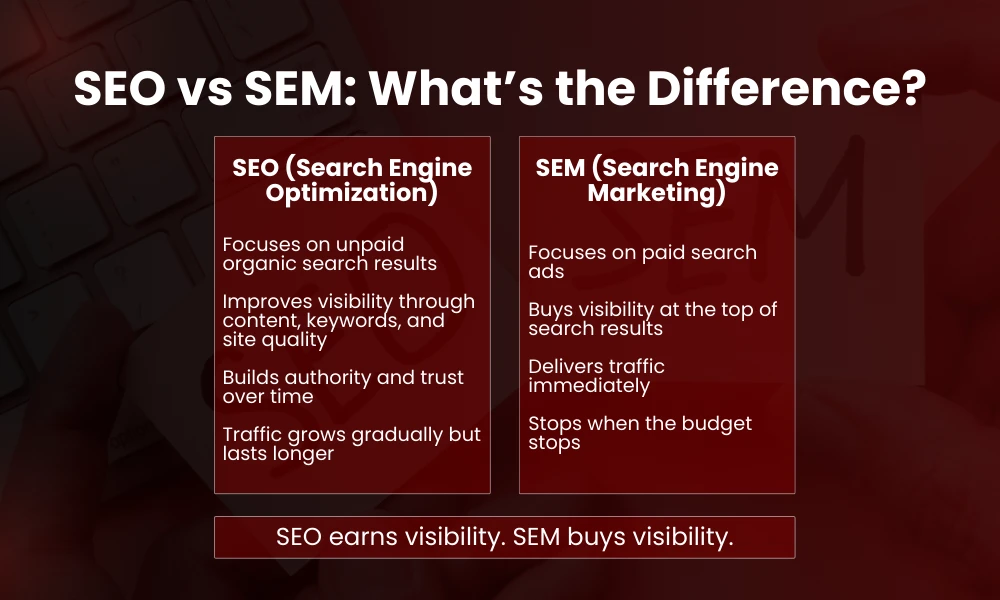
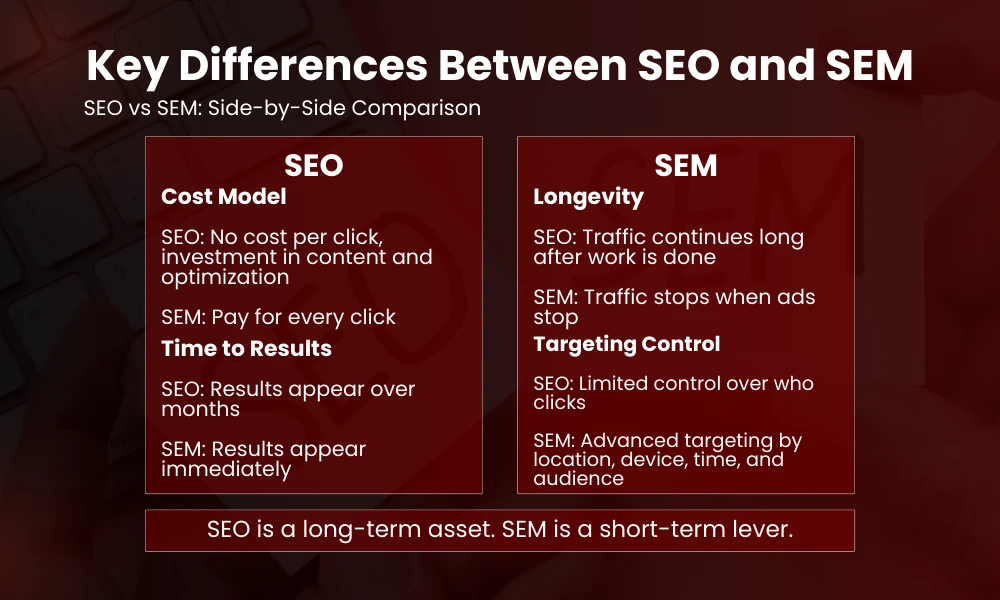
SEO does not require payment to the search engine when someone clicks on your result. You do invest in creating content and optimizing your site but you do not pay per click.
SEM involves paying every time a user clicks on your ad. This is often called cost per click or CPC.
Time to See Results
SEO is slow and steady. You build value over time. Many businesses start seeing meaningful organic traffic in 3 to 6 months but sometimes faster if competition is low.
SEM is immediate. Once your campaign goes live you can start getting clicks right away even for competitive terms.
Longevity
SEO provides long term benefits. Content you create today can continue to bring traffic for years. A good technical foundation and strong content can pay off long into the future.
SEM stops delivering traffic when you stop funding your campaigns.
Targeting
With SEO you optimize for keywords people search for but you cannot control exactly who sees your results. Implementing local SEO strategies can help target specific geographic audiences more effectively. You can influence ranking but you do not choose demographics directly.
SEM allows advanced targeting. You can control audience location, time of day device type and many other factors inside the advertising platforms.
Data Driven Comparison
To make things more concrete let us look at some real data.
Organic vs Paid Clicks
A study by Advanced Web Ranking found that the top organic result on Google gets around 28 percent of all clicks for a search query.
Paid ads get click through too but that varies by industry and keyword. For high intent commercial keywords paid ads can occupy up to 40 percent of the above the fold space which drives significant visibility.
ROI
HubSpot reports that inbound marketing tactics such as SEO deliver a better ROI than many outbound paid methods over time .
While SEM can produce results faster the cost per lead can be higher depending on competition.
A study by WordStream found that the average conversion rate for Google Ads across all industries was around 3.75 percent on the search network.
Conversion rates for organic traffic vary widely depending on the type of business the quality of content and user intent.
Long Term vs Short Term Value
SEO builds assets that can pay off over time. When you invest in a quality blog post that ranks well it can bring new visitors for months or years.
SEM buys visibility but once you turn off the budget the traffic stops.
This difference makes SEO a long term investment and SEM a short to medium term growth lever.
How SEO and SEM Work Together
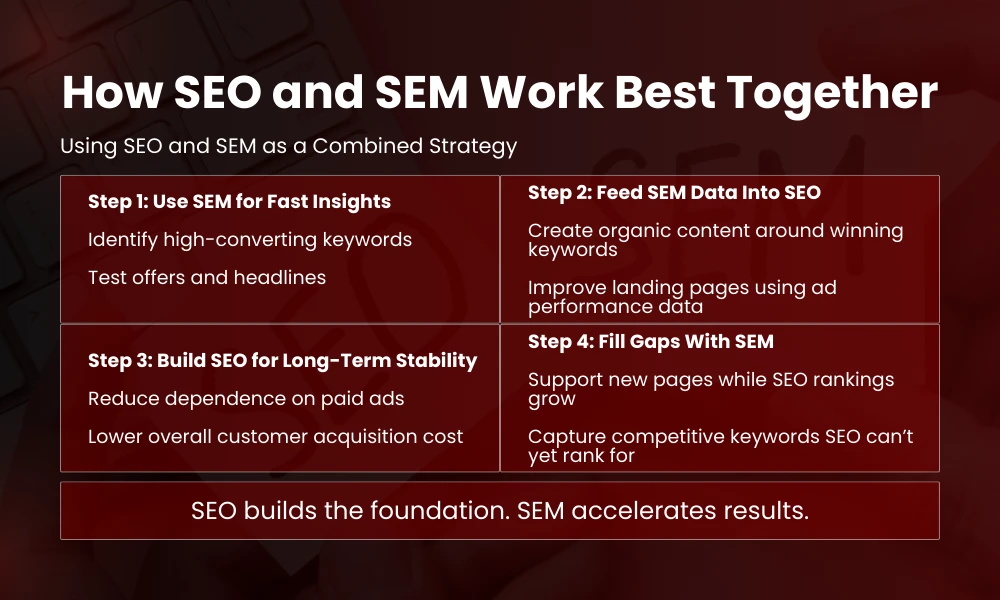
This is where many businesses get confused. Most business owners think they must choose one or the other. The truth is that SEO and SEM work best when they are used together.
Data from SEM Helps SEO
When you run SEM campaigns you learn which keywords convert which messages resonate and what offers perform best. This data can help shape your SEO strategy. For example if your SEM campaign finds that a specific keyword leads to many sales you can invest in an organic landing page around that topic.
SEO Reduces Cost of SEM
As your SEO improves you begin to capture more organic clicks which can lower your reliance on paid ads. This can decrease your customer acquisition cost over time.
SEM Fills Gaps in SEO
If you launch a new offering and SEO ranking is low you can use SEM to drive traffic and test messaging while your organic visibility grows.
Combined strategies tend to outperform either tactic alone.
When SEO is Right for You
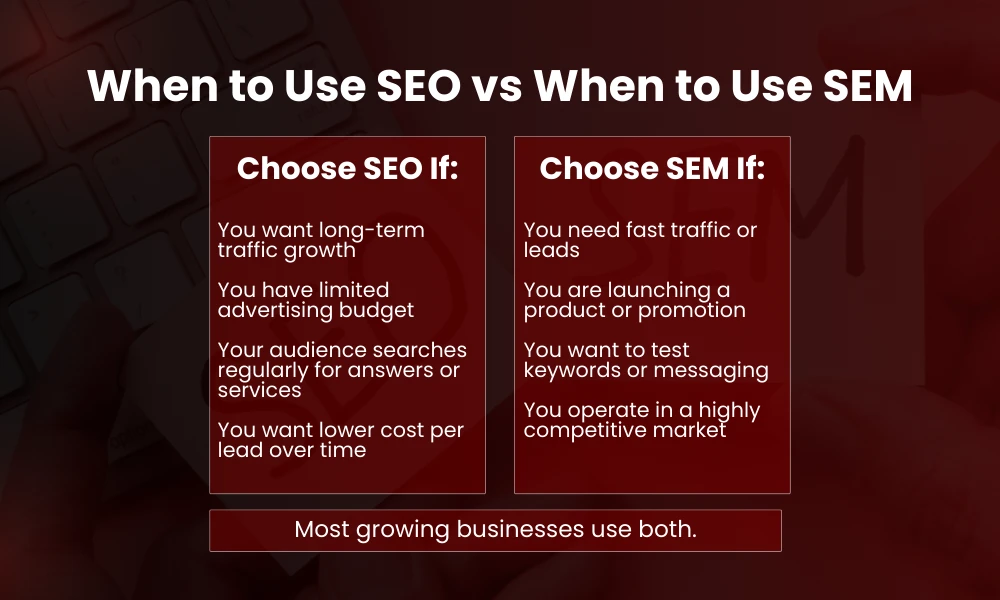
Let us cover scenarios where SEO should be your focus.
You Want Long Term Growth
If your business can wait months for results, SEO is a strong choice. Businesses with evergreen content and repeat visitors benefit greatly from organic search.
You Want Lower Cost Per Lead Over Time
SEO requires investment upfront but often leads to a lower cost per lead as your site authority grows.
Your Audience Uses Search Often
If your customers find products or answers by using search engines regularly, SEO will help you capture that demand.
Limited Advertising Budget
If your budget for paid ads is small SEO helps you grow visibility without relying solely on paid clicks.
Example
A small local landscaping company might benefit from SEO by creating pages optimized for terms like “gardening services in CityName” and building local citations. Over time this attracts clients without high monthly ad spend.
When SEM is Right for You
Now let us consider where SEM shines.
You Need Fast Results
If you are launching a product event or promotion that needs immediate traffic SEM is the tool that delivers results quickly.
You Have Strong Offers
Promotions with strong calls to action and clear conversion paths tend to perform well in SEM.
You Are Testing Messaging or Keywords
If you want to know which headlines or offers work best, using SEM allows rapid testing that can inform other channels like email and SEO content. These insights can guide conversion-driven SEO tactics to improve your overall results.
Competitive Keywords
For keywords that are hard to rank for organically due to high competition SEM lets you buy visibility.
Example
An ecommerce business launching a seasonal sale might use SEM to ensure visibility at the top of search for high value terms such as “discount winter jackets” while also building organic content.
How to Choose Between SEO and SEM
Here are practical steps to help you decide.
Step 1 Understand Your Goals
Ask yourself what you want to achieve in the next 1 month, 3 months and year. Short term awareness and lead generation may lean toward SEM while long term growth leans toward SEO.
Step 2 Audit Your Website and Content
If you already have content and a website that needs improvements then SEO might be a priority. Tools like Google Analytics and Google Search Console provide insights into current performance.
Step 3 Analyze Keyword Competition
SEM keyword tools like Google Keyword Planner show cost per click and competition level. If costs are low and budget is available SEM can be effective.
For SEO you can use tools like Ahrefs or SEMrush to see organic keyword difficulty and opportunities.
Step 4 Budget Analysis
Determine how much you can spend on paid clicks versus investing in content creation and technical SEO improvements. SEO often requires time and creative investment while SEM requires a paid budget for ads.
Step 5 Test and Measure
You do not have to choose only one. Many successful businesses start with SEM campaigns to get early results while building SEO gradually.
Real World Examples
Let us look at how companies have used SEO and SEM effectively.
Case Study SEO
A travel website optimized its content with keyword research and structured data. As a result the site saw a 40 percent increase in organic search traffic over 12 months.
This example shows how organic search can scale traffic when content addresses user needs and search intent.
Case Study SEM
A SaaS company ran paid search campaigns targeting high value commercial keywords. In three months the campaign generated a 30 percent increase in trial sign ups at a profitable cost per acquisition.
Paid search helped the company reach new prospects while the SEO strategy was still developing.
Common SEO and SEM Mistakes
It helps to know what not to do.
SEO Mistakes
Keyword stuffing where content tries to use the same keyword repeatedly without context.
Ignoring mobile site performance which impacts rankings. Google uses mobile first indexing.
Not tracking performance with analytics which makes it hard to improve.
SEM Mistakes
Not setting conversion goals. If you only pay for clicks without tracking conversions you cannot measure ROI.
Targeting broad keywords that are too generic leading to wasted spend.
Neglecting negative keywords which help filter irrelevant traffic.
Tools to Help You
Here are some tools that make SEO and SEM easier.
SEO Tools
Google Search Console for performance insights
Google Analytics for traffic analysis l
Ahrefs for keyword and backlink research
SEM Tools
Google Ads Platform for bidding and campaign management
Google Keyword Planner for keyword costs
Bing Ads for advertising on Microsoft network
These tools help you plan, execute and measure your strategies.
Measurement and KPIs
How do you know if your SEO or SEM is working?
SEO Metrics
- Organic traffic growth
- Keyword rankings
- Bounce rate and time on page
- Backlinks acquired
- Click through rate on results page
SEM Metrics
- Cost per click
- Conversion rate
- Cost per acquisition
- Return on ad spend
- Quality score in platforms like Google Ads
- Setting clear KPIs helps you focus on what matters.
Final Thoughts SEO vs SEM
Here is a simple summary to help you decide.
SEO is best for long term visibility building trust and reducing cost per lead over time.
SEM is best for immediate visibility testing messaging and capturing demand quickly.
The best strategy is often a combination of both. Many companies use SEM to get fast results while building SEO to reduce reliance on paid ads over time.
The choice depends on your goals, timeline , budget , audience and competitive landscape. Use data and tests to refine your approach.
Both SEO and SEM remain essential parts of digital marketing. By understanding the strengths and limitations of each you can make smarter decisions that help you reach your business goals
FAQs About SEO and SEM
What is the main difference between SEO and SEM?
The main difference between seo and sem is how traffic is earned. SEO focuses on getting organic traffic through unpaid search results by improving content and website quality. SEM focuses on paid traffic by running search ads where businesses pay for clicks. SEO builds long term visibility while SEM delivers faster results.
Is SEO better than SEM?
SEO is not better or worse than SEM. It depends on your business goals. SEO is better for long term growth and consistent traffic without paying for every click. SEM is better when you need quick visibility leads or sales. Many businesses use both seo and sem together for best results.
How long does SEO take to show results
SEO usually takes between three to six months to show noticeable results. In competitive industries it may take longer. The timeline depends on website quality competition content strategy and consistency. Unlike SEM SEO does not provide instant traffic but the results last longer.
Does SEM stop working if I stop paying?
Yes SEM traffic stops almost immediately when you pause or stop your ad budget. This is one of the biggest differences between seo and sem. SEO continues to drive traffic as long as your content remains relevant and ranks well.
Can small businesses use SEO and SEM
Yes small businesses can benefit from both seo and sem. SEO is ideal for small businesses with limited ad budgets who want steady long term growth. SEM works well for local services, seasonal offers or quick lead generation. A balanced approach often works best.