
Key Takeaways
- How to tell if avocado is ripe: A ripe avocado feels slightly soft but not mushy when gently squeezed. It should have healthy skin, and the stem cap should reveal green flesh underneath, showing it’s ready to eat.
- Use several checks instead of relying on color alone.
- The stem test is one of the easiest ways to check ripeness.
- Ripen hard avocados at room temperature or in a paper bag.
- Refrigerate ripe avocados to extend freshness.
- Avoid avocados with mold, a sour smell, or extensive black flesh.
- Proper storage helps reduce waste and keeps avocados fresh longer.
Quick Answer
A ripe avocado should feel slightly soft when you gently squeeze it in the palm of your hand. The skin should look healthy without large dents or cracks. If the small stem cap comes off easily and the flesh underneath is green, the avocado is usually ready to eat. If it feels very hard, it needs more time to ripen. If it feels mushy or the stem area is brown, it is likely overripe.
Why Avocado Ripeness Matters
A perfectly ripe avocado offers the best flavor and texture. It is creamy, smooth, and easy to mash or slice. This makes it ideal for everything from breakfast toast to homemade dips.
An unripe avocado, however, is firm and difficult to cut. It also lacks the rich, buttery taste that makes avocados so popular. On the other hand, an overripe avocado may have brown spots, stringy flesh, or an unpleasant flavor.
Learning to recognize the right stage of ripeness helps you enjoy better meals while saving money by avoiding fruit that goes to waste.
What Happens as an Avocado Ripens?
Unlike many fruits, avocados continue to ripen after they are picked. During this process, natural changes take place inside the fruit.
The flesh gradually softens as the starches convert into healthy fats, creating the creamy texture that people love. At the same time, the flavor becomes richer and more balanced.
This is why an avocado that feels rock hard at the grocery store may become perfectly ripe after sitting on your kitchen counter for a few days.
Five Easy Ways to Tell If an Avocado Is Ripe
Check the Color
Color is usually the first clue people notice, but it should never be your only test.
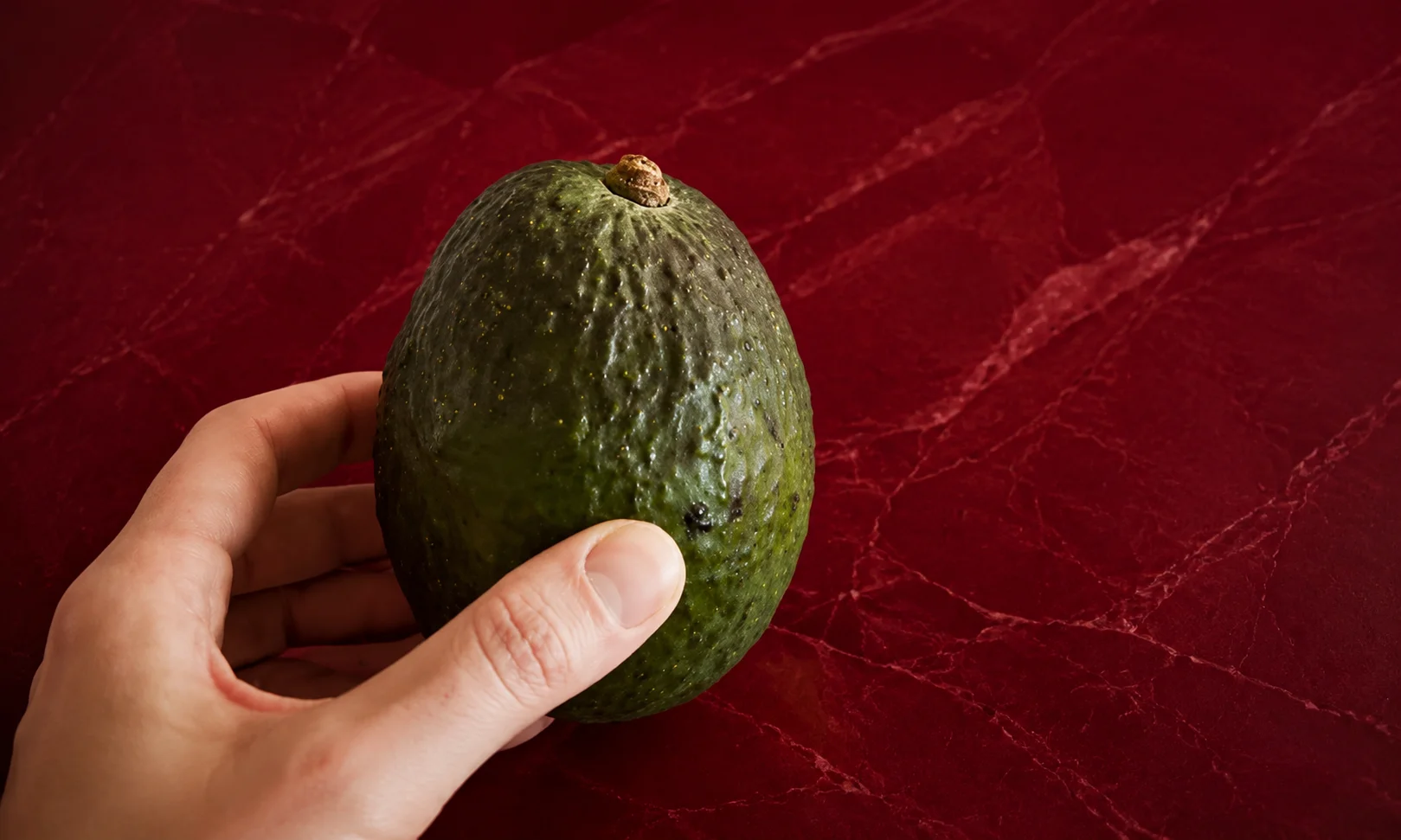
Most Hass avocados, the variety commonly found in supermarkets, become darker as they ripen. They often change from bright green to deep green or nearly black. However, not every avocado variety follows this pattern. Some stay green even when fully ripe.
For that reason, always combine the color check with the methods below instead of relying on appearance alone.
| Skin Color | What It Usually Means |
|---|---|
| Bright green | Usually unripe |
| Dark green | Nearly ripe |
| Deep green or almost black with slight softness | Usually ripe |
| Very dark, wrinkled skin | May be overripe |
Gently Squeeze the Avocado
The squeeze test is one of the quickest and most reliable ways to judge ripeness.
Hold the avocado in the palm of your hand instead of pressing it with your fingertips. This helps prevent bruising.
Apply gentle pressure. If the fruit gives slightly without feeling soft or collapsing, it is likely ready to eat. A hard avocado still needs time to ripen, while one that feels very soft may already be past its best.
Many shoppers accidentally damage avocados by pressing too hard with their fingers. Even if you don’t buy the fruit, those pressure marks can turn into bruises later.
Look Under the Stem Cap
The small stem cap at the top of the avocado provides another useful clue.
If it comes off easily and reveals bright green flesh underneath, the avocado is usually ripe. If the area looks brown, the fruit may already be overripe.
If the stem cap refuses to come off without force, the avocado probably needs a little more time before it is ready to eat.
This quick check is especially helpful when you’re choosing between several avocados that all look similar.
Inspect the Skin
Healthy skin often indicates healthy fruit inside.
Look for an avocado with skin free of large cracks, mold, leaking juice, or deep cuts. Small bumps are perfectly normal, especially on Hass avocados.
Minor surface marks usually don’t affect quality, but deep dents may indicate that the flesh underneath has already been damaged.
Feel the Weight
Weight is another simple detail that many people overlook.
When comparing two avocados of the same size, the slightly heavier one often contains more moisture and fresher flesh.
Weight alone cannot confirm ripeness, but when combined with the squeeze test and stem check, it gives you a much clearer picture.
Ripe vs Unripe vs Overripe Avocado
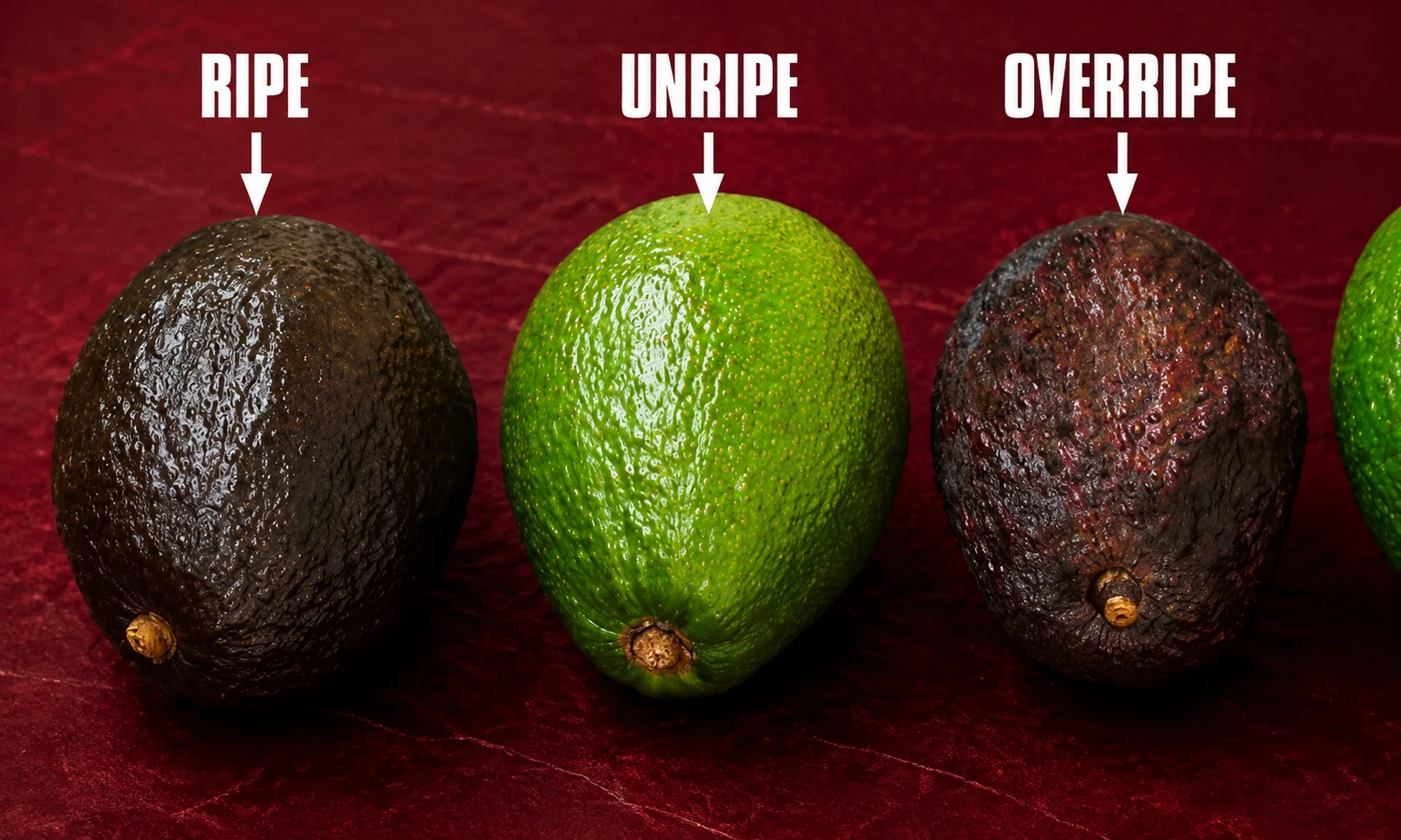
Choosing the right avocado becomes much easier when you know the differences.
| Feature | Unripe | Ripe | Overripe |
|---|---|---|---|
| Feel | Hard | Slightly soft | Very soft or mushy |
| Skin | Bright green | Dark green to black (Hass) | Wrinkled or damaged |
| Stem Test | Hard to remove | Green underneath | Brown underneath |
| Taste | Mild and firm | Creamy and buttery | Bitter or sour |
| Best Use | Ripen at home | Eat within a day or two | Inspect carefully before using |
Not every dark avocado is ripe, and not every green avocado is unripe. Different varieties naturally have different skin colors, which is why using several checks together gives the most accurate result.
Why You Should Never Judge an Avocado by Color Alone
Many people assume a black avocado is ready to eat, but that isn’t always true.
Some avocados darken before the inside becomes soft, while others remain green even when fully ripe. Depending only on color can lead to disappointing results.
The best approach is to combine the color, squeeze, stem, and skin checks. Together, these methods provide a much more reliable way to choose a perfectly ripe avocado.