Biggest AI Acquisitions of 2026: On a Friday in June, roughly four days after SpaceX completed the largest IPO in history at a $1.77 trillion valuation, it spent some of that new currency on a company most of its rocket engineers had never used: Cursor, the AI coding tool, for $60 billion in stock. Somewhere in San Francisco, a few hundred employees of a startup founded in 2022 woke up working for a space company. The deal was twice Cursor’s November valuation and 23 times its annualized business revenue, and almost nobody in tech called it crazy. By the standards of 2026, it was merely the biggest entry in a ledger that had gone strange.
PwC’s midyear deals outlook frames the moment precisely: the four largest hyperscalers guided a combined $670 billion in 2026 capital expenditure, and that money is now flowing downstream into acquisitions at every layer of the stack. Strip out the $250 billion SpaceX and xAI merger and the year’s major software deals still total roughly $260 billion, with the five biggest accounting for more than half. The twelve below are the deals that matter most, ranked by size, with the signal each one sends about where the AI economy is actually heading.
The 12 Biggest AI Acquisitions of 2026 at a glance
| Deal | Value | The signal |
| SpaceX acquires Cursor | $60 billion | Distribution beats models |
| Palo Alto Networks closes CyberArk | ~$25 billion | Security is the toll booth |
| Nvidia acquires Hugging Face | $12.9 billion | Owning the open-source supply line |
| IBM acquires Confluent | $11 billion | Data plumbing is strategic again |
| AMD acquires World Labs | $8.2 billion | Chipmakers buying frontier talent |
| ServiceNow acquires Armis | $7.75 billion | Enterprise platforms want security built in |
| Stripe acquires OpenRouter | $7.5 billion reported | Payments giants want AI’s toll revenue |
| Salesforce acquires Fin | $3.6 billion | The agent stack gets bought, not built |
| Salesforce signs for Cresta | ~$2.7 billion reported | Customer service consolidation accelerates |
| Visa acquires BioCatch | $2.4 billion | Trust becomes a payments feature |
| Salesforce acquires Listen Labs | ~$2 billion reported | Research joins the agent stack |
| Bending Spoons acquires Airtable | $1.285 billion | The cautionary counterweight |
The blockbuster tier: when price stops being the constraint
1. SpaceX buys Cursor for $60 billion: the year’s defining deal
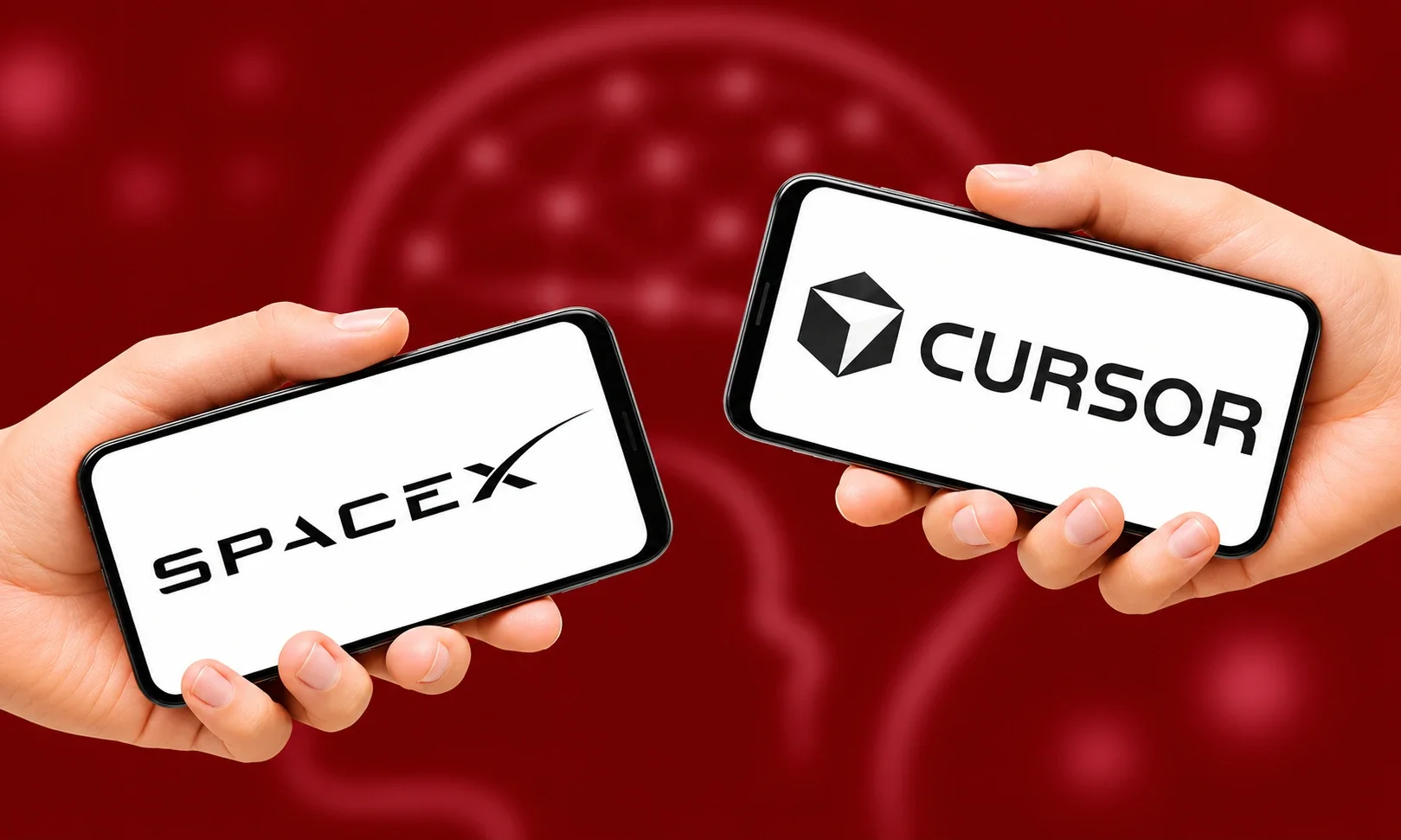
The mechanics were as remarkable as the number. SpaceX merged with xAI in February at $1.25 trillion, went public in June at $1.77 trillion, then exercised an option secured in April to buy Cursor for $60 billion or pay $10 billion for their joint work. It paid the full price in stock, with up to $10 billion in breakup protection, and closed August 14. Strip the spectacle away and the logic is cold: SpaceX and xAI needed developer distribution, the channel through which AI actually reaches working code, and Cursor’s 20-million-developer ecosystem was the best one money could buy. The signal for 2027: the model labs have concluded that owning the interface where developers work matters more than benchmark points.
2. Palo Alto Networks closes CyberArk: security as the AI toll booth
Biggest AI Acquisitions of 2026: Palo Alto’s acquisition of identity-security leader CyberArk, closed in February 2026, set the year’s second biggest theme. Every enterprise deploying AI agents is deploying thousands of new identities that access systems, move data, and take actions, and every one of them is an attack surface. The year’s security ledger tells the story in one direction: CyberArk, Armis, Wiz, CrowdStrike’s $740 million SGNL deal, Cisco buying Astrix for AI agent identity, and Workday acquiring C1.ai to govern access for people and agents. The signal: as AI adoption expands attack surfaces exponentially, security is not a category adjacent to the AI boom. It is the tax on it.
3. Nvidia buys Hugging Face for $12.9 billion: owning the supply line
Nvidia’s September agreement to acquire Hugging Face, the open-source model hub, is the year’s most quietly strategic deal. Hugging Face is where the world’s open models live, the distribution layer between research and deployment. For Nvidia, the logic extends the playbook that made it dominant: do not just sell the shovels, own the store where everyone compares shovels. The signal: the infrastructure layer is consolidating vertically, from chips up through the repositories where models are distributed.
The platform tier: incumbents buying their way into the stack
4. IBM buys Confluent for $11 billion: data plumbing is strategic again
IBM’s acquisition of Confluent, the Kafka data-streaming company, reads boring until you ask what AI agents actually need: continuous, governed, real-time data flows. PwC’s analysis of the year’s software M&A names the pattern directly: buyers are prioritizing platforms with embedded workflows, proprietary data, and high switching costs. Confluent is all three. The signal: in the agentic era, the pipes matter as much as the brains, and the market is repricing the pipes accordingly.
5. AMD buys World Labs for $8.2 billion: chipmakers hunting frontier talent
AMD’s late-September all-stock agreement for World Labs, Fei-Fei Li’s spatial intelligence startup, is the clearest talent-and-roadmap acquisition of the year. World Labs had no mass-market product; it had the world’s leading researchers in AI that understands three-dimensional space, the capability robotics and world models will be built on. The signal: chip companies are no longer content selling picks to the gold rush. They are buying claims.
6. ServiceNow buys Armis for $7.75 billion: the platform completeness race
ServiceNow’s April purchase of Armis, the cyber exposure management company, completes a pattern running through the whole list: enterprise platforms are buying the layers their AI story is missing. ServiceNow sells workflow automation to the Fortune 500, and AI agents expanding across those workflows create exactly the exposure Armis maps. The signal: expect every major enterprise platform to own a security story by the end of 2027, built or bought.
7. Stripe buys OpenRouter for a reported $7.5 billion: the toll on intelligence
OpenRouter, a model-routing startup founded in 2023, raised at a $1.3 billion valuation in May and agreed to sell to Stripe for a reported $7.5 billion in August. What does a payments company want with a service that routes requests across 400-plus models? The answer is the business model of the AI era: OpenRouter sits in the flow of every token its customers buy, and whoever sits in the flow can meter it, price it, and take a margin. The signal: the financial plumbing of AI usage, billing, routing, cost optimization, is emerging as a category, and the payments giants intend to own it.
The agent stack tier: Salesforce goes shopping
8. Salesforce buys Fin for $3.6 billion: the flagship deal of the agent wars
Salesforce’s acquisition of Fin, the company formerly known as Intercom, announced June 15 and closed September 10, is the deal that defined enterprise AI in 2026. Fin’s customer agent resolves 76% of support queries autonomously, powered by its purpose-built Apex model, and brings more than 30,000 customer companies into Salesforce’s orbit. The strategic shape matters more than the price: Agentforce serves configurable enterprise depth, Fin serves fast-deploy mid-market breadth, and together they cover the market. It was Salesforce’s fifth acquisition of the year, and its most expensive AI bet ever.
9. Salesforce signs for Cresta at a reported $2.7 billion: doubling down on the contact center
Four months after closing Fin, Salesforce signed a definitive agreement for Cresta, the contact-center AI company, at a reported $2.7 billion, with close expected between February and April 2027. Two nine-figure customer-service AI deals in one year from one buyer is not a strategy tweak. It is a land grab before the category consolidates around two or three owners, and rivals noticed: Five9 bought Level AI for $325 million in the same week, and Dialpad combined with Ada days later.
10. Visa buys BioCatch for $2.4 billion: trust as a payments feature
Visa’s acquisition of BioCatch, which detects fraud from behavioral signals, brings AI-driven trust infrastructure directly into the payments core. In a year when synthetic media and AI-powered fraud scaled faster than the defenses, the logic is pure self-interest: every fraudulent transaction is a cost Visa’s network absorbs. The signal: AI safety and fraud detection are graduating from compliance spend to core product, and the acquirers are the companies with the most to lose.
11. Salesforce buys Listen Labs for a reported $2 billion: the research layer joins the stack
Listen Labs had a term sheet for a $125 million Series C at a $1.5 billion valuation and walked away from it to sell to Salesforce instead. That decision, repeated across 2026 in smaller forms, is its own signal: for AI application startups, the strategic acquirers are outbidding the IPO path, and founders are taking the certainty. For Salesforce, Listen Labs adds AI customer research to an agent stack that already handles service, completing a loop from listening to acting.
The counterweight: what the discount deals signal
12. Bending Spoons buys Airtable for $1.285 billion: the other half of the market
Every story about record AI deal prices needs its counterweight, and 2026 supplied a brutal one. Airtable, valued at $11 billion in its 2021 Series F, sold to Bending Spoons at a $1.285 billion enterprise value, roughly 2.7 times its $480 million in annual recurring revenue. Domo sold its operating business for $400 million. LivePerson’s board contacted 66 potential buyers before accepting about $250 million from SoundHound. The signal is the market’s central tension: assets at the center of how AI gets built command any price, while general SaaS, repriced for a world where AI changes per-seat economics, sells at fractions of its peak. Both things happened in the same year, in the same market, sometimes in the same week.
What the twelve deals signal for 2027
Read the ledger whole and five signals emerge clearly. First, distribution beats models: the year’s biggest prices went to whoever owns the channel, developers for Cursor, open models for Hugging Face, tokens for OpenRouter. Second, security is the universal tax, with four of the twelve deals touching identity, exposure, or fraud. Third, the enterprise agent stack is being assembled by acquisition rather than built, and Salesforce’s five-deal year is the template rivals will copy. Fourth, the middle of SaaS is being hollowed out, and 2027 will bring more Airtable-shaped discounts as compressed valuations meet strategic buyers. Fifth, the IPO window is reopening selectively: SpaceX, with Anthropic, OpenAI, and Cerebras expected to test public markets within the year, which could reset every benchmark on this list.
For brands and operators, the practical reading is simpler. The tools you buy are being bought, so vendor stability belongs in every procurement decision now, and the pricing power is consolidating into a small number of stacks, which makes the negotiating leverage of early adoption, the same logic behind choosing a marketing AI copilot before the category hardens, more valuable than it has ever been. The consolidation of 2026 was not the end of the AI land grab. It was the survey before the construction.
Frequently asked questions
What was the biggest AI acquisition of 2026?
SpaceX’s 60billionall−stockacquisitionofCursormakerAnysphere,closedAugust14,2026,roughlytwiceCursor′sNovembervaluationandabout23timesitsannualizedbusinessrevenue.ItfollowedSpaceX′sFebruarymergerwithxAI(60 billion all-stock acquisition of Cursor maker Anysphere, closed August 14, 2026, roughly twice Cursor’s November valuation and about 23 times its annualized business revenue. It followed SpaceX’s February merger with xAI (1.25 trillion combined) and its record June IPO.
Why did Salesforce acquire Intercom (Fin)?
Salesforce bought Fin for $3.6 billion to pair its autonomous customer agent, which resolves 76% of queries and serves 30,000-plus companies, with Agentforce for enterprise depth. Fin became Salesforce’s flagship move in the agent wars, followed by reported deals for Cresta and Listen Labs.
How much was spent on tech M&A in 2026?
Excluding the $250 billion SpaceX and xAI merger, major software deals of $250 million or more totaled roughly $260 billion through September, with the five largest deals accounting for more than half. AI and security assets set the prices.
What is driving AI acquisition prices so high?
Buyers are paying for distribution (developers, open model hubs, token flows), security (identity, exposure management, fraud), and embedded workflows with proprietary data and high switching costs. Assets at the center of how AI is built or secured command extreme multiples while general SaaS sells at deep discounts to 2021 valuations.
Will AI M&A continue in 2027?
All indicators point up: hyperscalers guided $670 billion in combined 2026 capex flowing downstream, compressed SaaS valuations are creating buying opportunities, pending deals like Salesforce’s Cresta acquisition close in early 2027, and expected IPOs from Anthropic, OpenAI, and Cerebras could reset valuation benchmarks again.