Let us get straight into it. Enterprise seo is search engine optimization applied at scale. Most small businesses focus on a few pages, a handful of keywords, and improving rankings incrementally. But when you operate hundreds, thousands or tens of thousands of web pages, basic SEO steps will not work.
An enterprise website is complex. It may have multiple layers, many product or service pages, multiple authors, teams in different regions and legacy technical issues. Enterprise SEO brings strategy, structure and alignment across all of this so that the entire website performs better in organic search.
According to research from BrightEdge, organic search drives more than 53 percent of all website traffic for large brands. To stay ahead, enterprises must align with search engine positioning trends in 2026, integrating long-term strategy with scalable optimization frameworks. This means people are still using search engines to find what they need. And enterprises cannot ignore this. To lead in search results, they need a strategic approach that aligns content, technical excellence and measurement. That is the domain of enterprise SEO and this article will help you build and scale it in a practical way.
The Foundation of Enterprise SEO
Before we go into tactics, let us lay out what enterprise SEO really means in practice.
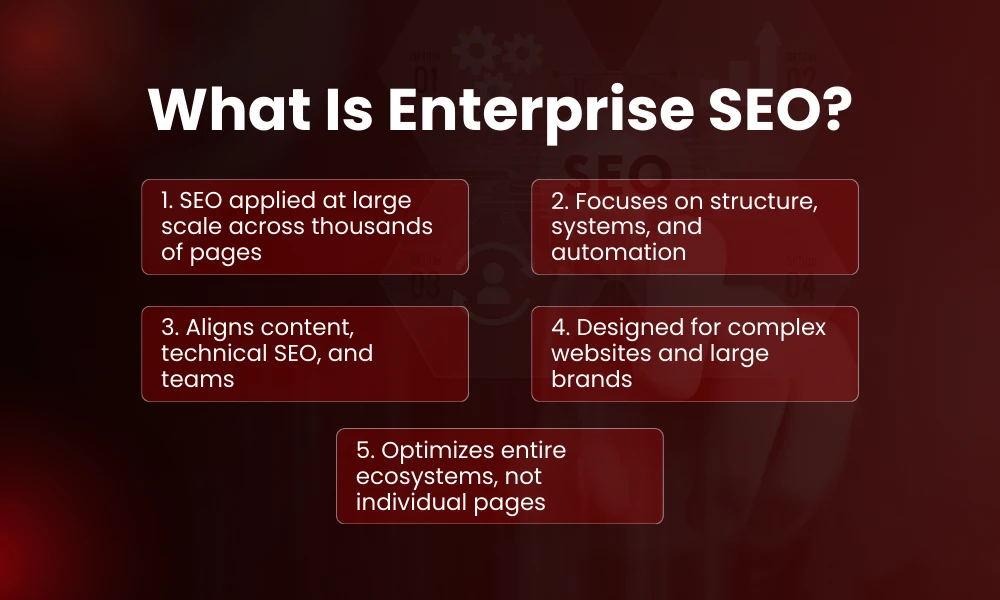
At its core enterprise SEO involves:
- Technical website health
- Keyword and topic strategy
- Content strategy and governance
- Internal processes and team alignment
- Measurement and reporting
In smaller SEO projects you may manage just a portion of these. But with enterprise SEO, all five must be coordinated so the site works as a whole unit rather than isolated pages.
Why Enterprise SEO Is Different from Regular SEO
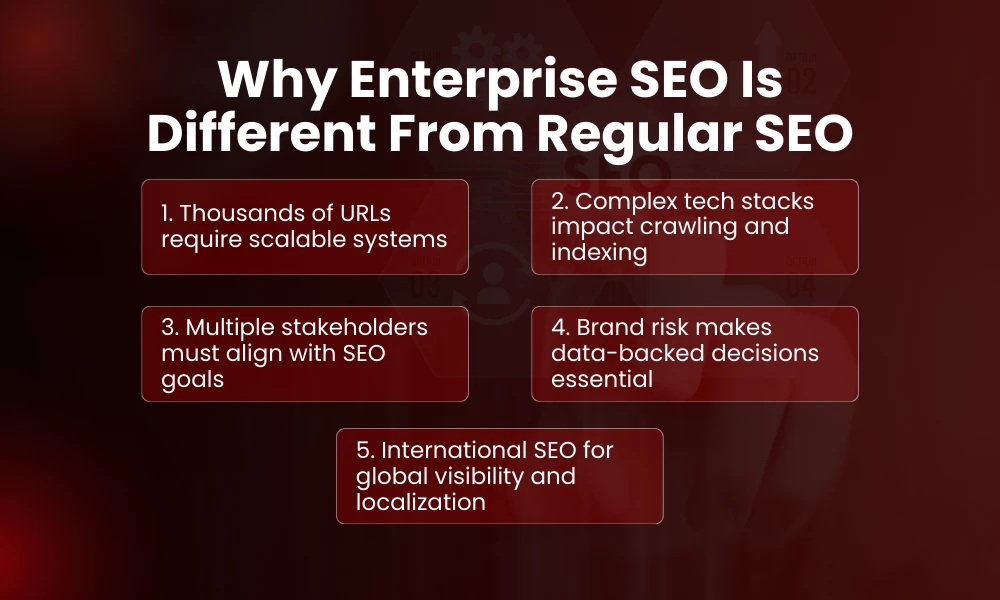
Enterprises face a set of problems that small business SEO does not typically deal with:
Volume
If you have thousands of pages it is no longer possible to manually optimize everything. You need systems, automation and tools. Many large organizations implement programmatic SEO strategies to systematically optimize thousands of pages without manual effort.
Complex Technology
Large sites often use multiple technologies, servers, content management systems, translations, APIs and integrations that affect SEO.
Multiple Stakeholders
Different teams may own content, products, campaigns, legal compliance or design. Getting all teams aligned with SEO goals is a serious management task.
Brand Risk
Big brands need to protect reputation. SEO changes must be vetted, approved and backed by data. Mistakes are expensive.
Because of this enterprise SEO requires frameworks and best practices that can scale and be repeated consistently.
Key Enterprise SEO Strategies That Work
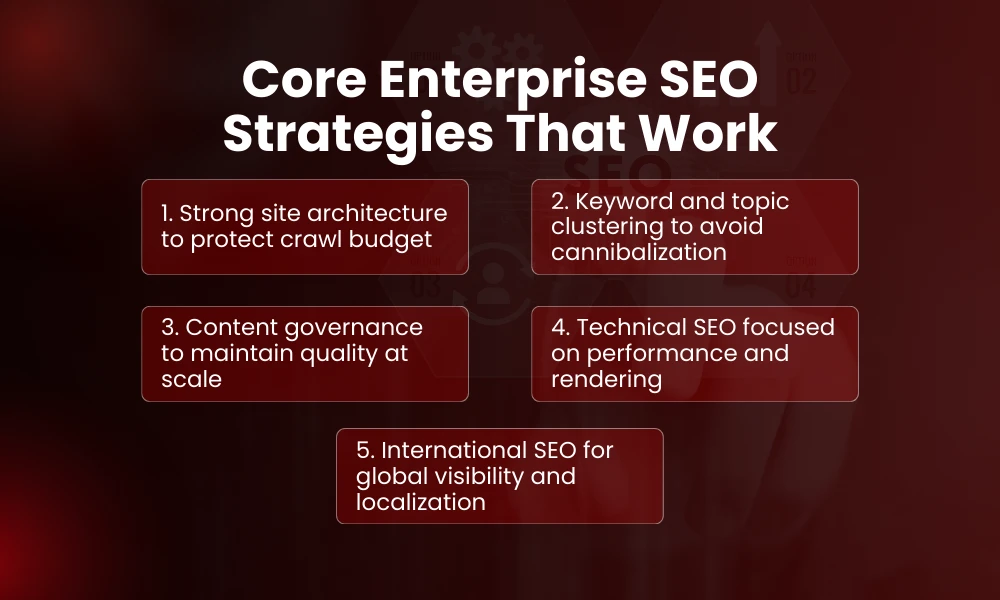
Let us go deeper into the exact strategies that work for enterprise SEO success.
1. Site Structure and Crawl Efficiency
Search engines like Google use crawlers to index pages. When a site has too many pages, deep hierarchies or old URLs that no longer serve value, crawlers waste time on unimportant areas.
SEO experts recommend creating a strong site architecture that prioritizes important pages closer to the home page and trims low value pages.
Study Insight
A Screaming Frog analysis of large enterprise sites found that a well structured site reduced crawl budget waste by up to 40 percent. This means Googlebot could spend more time on pages that matter for visibility and rankings.
Focus Areas for Enterprise SEO:
- Use XML sitemaps and keep them updated daily
- Fix redirect chains and remove orphan pages
- Consolidate thin content pages that add no value
The end goal is to make it easy for search engines to find and index your best content. A structured approach to crawl budget optimization ensures search engines focus on high-value pages instead of wasting resources.
2. Keyword and Topic Clustering
Enterprise websites often have thousands of keywords they want to rank for. Focusing on individual keywords one at a time is inefficient.
The better way is to organize keyword strategy around topics.
For example, instead of optimizing separately for:
- best running shoes for women
- womens running sneakers review
- cheap running shoes women
You cluster these into a topic like “running shoes for women” and then build content that covers all related subtopics. This boosts relevance and prevents cannibalization where multiple pages compete for the same keyword.
Data from Ahrefs shows that pages targeting broader topics with clustered subtopics rank for more keywords overall than single keyword pages. This is crucial for enterprise SEO where each page needs to serve multiple intents.
3. Content Governance at Scale
One of the biggest hurdles in enterprise SEO is managing content quality.
When dozens of writers are creating content, consistency drops. Enterprise brands counter this by implementing content governance frameworks. These include:
Editorial guidelines
Standard content templates that define word counts, required sections, formatting rules, tone of voice and internal linking protocols.
SEO checklists
Before any page goes live it must pass an SEO checklist that includes title tags, meta descriptions, schema markup, readability scores and mobile optimization.
Approval workstreams
Content editors, legal reviewers, SEO leads and technical editors must be in sync so that the content is optimized but also compliant with brand guidelines.
A HubSpot study found that enterprise organizations that implemented standardized workflows saw content publishing errors drop by 53 percent within three months.
4. Internal Search Data and User Signals
Enterprise SEO is not only about external search engines. It must also improve internal search performance.
For example, websites with large inventories or complex menus must make it easy for users to find what they want. If internal search data shows many queries returning no results, that is a clear SEO efficiency gap.
Enterprise brands often integrate analytics tools with their search data so they can:
- Track what users search for on the site
- See which pages have high bounce rates
- Understand search exit pages
- Identify keywords that need better landing pages
These signals help refine both internal search and external SEO strategy.
5. International SEO and Localization
Many enterprise websites operate in multiple regions, languages and currencies. Building a scalable international SEO strategy ensures consistent rankings across markets while avoiding duplicate content conflicts.This brings international SEO challenges.
To do enterprise SEO well at a global scale, brands use hreflang tags, country-specific sitemaps and local content localization teams. Content is not simply translated, it is localized for cultural context and search intent.
According to SEMrush, international enterprise sites that implemented proper hreflang setup saw up to 30 percent increase in regional organic traffic within six months.
6. Technical SEO at Scale
Enterprise SEO requires strong technical foundations because even small issues can cost visibility across thousands of pages. Many organizations partner with specialized technical SEO services teams to manage large-scale audits and implementation.
Some of the key technical tasks include:
Mobile performance
Google uses mobile-first indexing. If your mobile site is slow or broken, the whole enterprise site will suffer.
Core Web Vitals
These are user experience metrics like loading speed and visual stability. Proper Core Web Vitals optimization can significantly improve rankings and user engagement on large enterprise websites. Large enterprise pages often load slowly because of heavy media and scripts. Tweaking these improves search rankings.
Structured data markup
Schema helps search engines understand content and improves rich results. For product pages, local business listings, events and FAQs, structured data is essential.
JavaScript SEO
Many enterprise sites use JavaScript frameworks. Proper rendering must be ensured because search engines may not index content correctly if scripts are poorly implemented.
Tools Enterprise SEO Teams Should Know
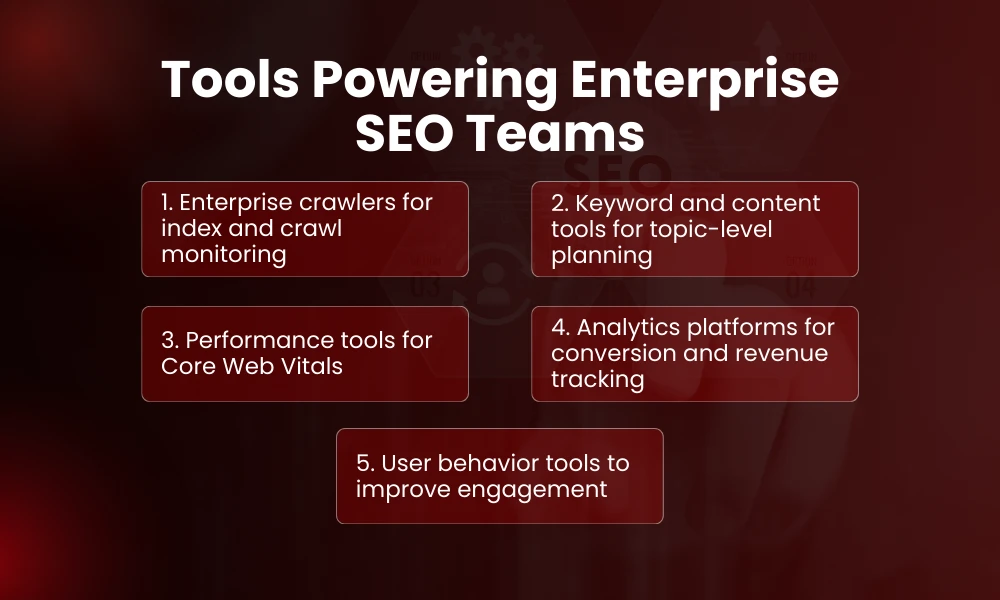
To manage all of this, enterprise teams rely on a stack of tools. Let us review the most important ones.
Site Crawling and Index Monitoring
- DeepCrawl
DeepCrawl is built for enterprise scale. It identifies crawl issues, duplicate content, index bloat and provides recommendations at scale. - Botify
Botify tracks how bots crawl and index your site. It shows what pages are being ignored, which helps prioritize fixes.
These tools give insight that manual crawling or smaller SEO tools cannot handle.
Keyword and Content Tools
- SEMrush or Ahrefs
Both provide large scale keyword tracking, competitive research and topic clustering recommendations.
Enterprises use these tools to plan content calendars, monitor millions of keywords and benchmark against competitors globally.
- Surfer SEO
Surfer helps optimize content based on data about what is already ranking. It scores pages and gives real time on-page improvement suggestions.
Site Performance and User Experience
- Google PageSpeed Insights
This gives performance scores and improvement suggestions for mobile and desktop. - Lighthouse
Lighthouse audits accessibility, performance and best practices. Enterprise teams use it as part of CI/CD pipelines to ensure quality.
Analytics Tools
- Google Analytics 4
GA4 is the primary analytics platform for most enterprise SEO teams. It tracks engagement, conversions and user flows. - Adobe Analytics
Large enterprises sometimes use Adobe because it integrates deeply with Adobe Experience Manager. - Hotjar or FullStory
These help analyze user behavior visually. When pages have high exits, these tools can show where users struggle.
Best Practices Every Enterprise Should Adopt
Now let us talk about best practices you can implement starting today.
1. Create an SEO Playbook
Document your approach so every team understands expectations, responsibilities and standards.
2. Get Leadership Buy-in
Without executive support, enterprise changes stall. Show data about lost opportunities and potential ROI.
3. Automate Routine Tasks
Use tools and scripts to generate reports, monitor errors and track indexing issues.
4. Prioritize by Impact
Not every page has equal value. Focus first on high traffic, high conversion and high revenue pages.
5. Run Regular SEO Audits
Monthly or quarterly audits ensure that new issues do not accumulate. Using a structured enterprise SEO audit checklist helps teams stay proactive instead of reactive.
According to Forrester research, enterprises that audit quarterly outperform competitors by 22 percent in organic revenue growth.
6. Align SEO With Other Channels
SEO should not operate in a silo. It must connect with content marketing, paid search, social and product teams.
Measurement and Reporting in Enterprise SEO
Without measurement there is no proof of success. Modern enterprise teams focus on conversion-driven SEO tactics to ensure traffic growth translates into measurable revenue.
Enterprise SEO teams focus on key performance indicators such as:
- Organic traffic growth
- New user acquisition from search
- Search visibility scores
- Conversion rates from organic pages
- Revenue from organic channels
- Index coverage trends
Using dashboards from tools like Data Studio or Tableau, teams create executive summaries that highlight wins and issues.
Some larger brands even build custom data warehouses where search metrics are combined with business data for deeper insights.
Common Enterprise SEO Challenges and How to Solve Them
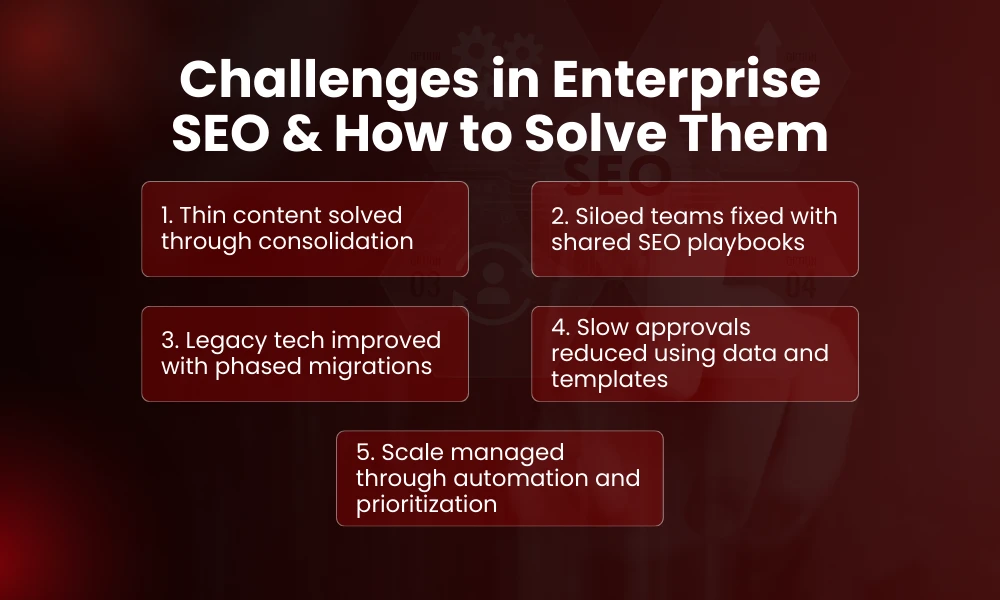
Despite the best planning, enterprise SEO has real challenges.
Too Many Pages With Thin Content
Solution: Consolidate or prune underperforming pages and merge them into comprehensive clusters.
Siloed Teams
Solution: Establish cross-functional meetings and shared objectives for SEO success.
Legacy Technology
Solution: Build a migration plan for outdated CMS or sites that are weak technically.
Slow Change Approval
Solution: Use data to justify changes and build templates that reduce the back and forth.
Many enterprise teams use internal champions to speed up approvals. This is someone who understands SEO and has influence in the product or marketing team.
The Role of AI and Machine Learning in Enterprise SEO in 2026
As of 2026, AI and machine learning are playing bigger roles in enterprise SEO. Automated content recommendations, predictive keyword trends and AI driven audits are now part of the toolkit.
But human strategy remains essential. Machines can analyze patterns, spot issues and scale data. What they cannot do is think creatively about audience needs, brand positioning and user intent. That is where SEO leaders must lead.
Real World Case Study
Let us look at a hypothetical example to make this clear.
Imagine a global ecommerce brand selling athletic wear. They had over 100,000 product pages but traffic was flat year over year. After an enterprise SEO overhaul they:
- Reorganized site categories to reduce depth from six levels to three.
- Created topic clusters for footwear based on intent.
- Implemented schema for product, reviews and FAQ.
- Reduced duplicate pages from multiple regions.
Within six months:
- Organic traffic increased by 48 percent
- Revenue from organic search increased by 62 percent
- Keyword rankings increased for over 25,000 terms
This brand did not get lucky. They applied strategy, data and best practices consistently.
Final Thoughts
Enterprise SEO is not a tactic you do once and forget. It is a discipline that requires ongoing commitment, alignment and measurement. When done well, it delivers sustainable growth, better visibility and stronger brand authority in search.
If your website has scale or complexity, enterprise SEO should be a core part of your digital strategy.
Frequently Asked Questions
What makes enterprise SEO different from local SEO?
Enterprise SEO focuses on large websites with many pages and stakeholders, while local SEO emphasizes local search visibility for businesses within geographic areas.
How long does it take to see results with enterprise SEO?
Results depend on the current health of your site, competition and resources. Most enterprise brands see noticeable improvements between 3 to 6 months of consistent optimization.
Should enterprise SEO teams use in house teams or agencies?
Many enterprises use a combination. Agencies bring expertise while internal teams ensure brand consistency and ownership of processes.
What is a crawl budget and why does it matter?
Crawl budget is how much time search engines spend crawling your site. When it is wasted on unimportant pages, your important pages may get missed. Managing it is crucial for enterprise SEO.
Does enterprise SEO require expensive tools?
Some tools can be expensive, but their value lies in automation, insights and scale. Smaller brands can start with more affordable tools however large enterprises benefit from enterprise level plans.