
Key Takeaways
- When setting up an electronic drum kit, go mesh over rubber if you can afford it. The rebound feels closer to a real head, your wrists thank you after long sessions, and it’s quieter to boot.
- Comfort isn’t an afterthought a decent throne, closed-back headphones, and a mat under everything will do more for your practice sessions than most people expect.
- Set your seat, snare, and pedals up so your limbs aren’t stretching or twisting to reach anything. Small adjustment, big difference over time.
- And actually use what’s built into the module. The metronome, the drills, the USB port most people ignore half of what’s already sitting there, and it’s usually the fastest way to get better.
How does this stuff actually work?
Strip it down, and an electric drum kit is just pads with sensors in them, called triggers, wired to a central brain the sound module. You hit a pad, the trigger picks up the vibration, sends that signal down a cable, and the module fires off a drum sound through your headphones or speakers. All of this happens fast enough that it feels instant, even though technically there’s a tiny bit of processing time involved.
That’s really it. No wood shells, no tuning, no mic placement. Just pads, a brain, and whatever sound library you feel like using that day.
The parts that make up a kit
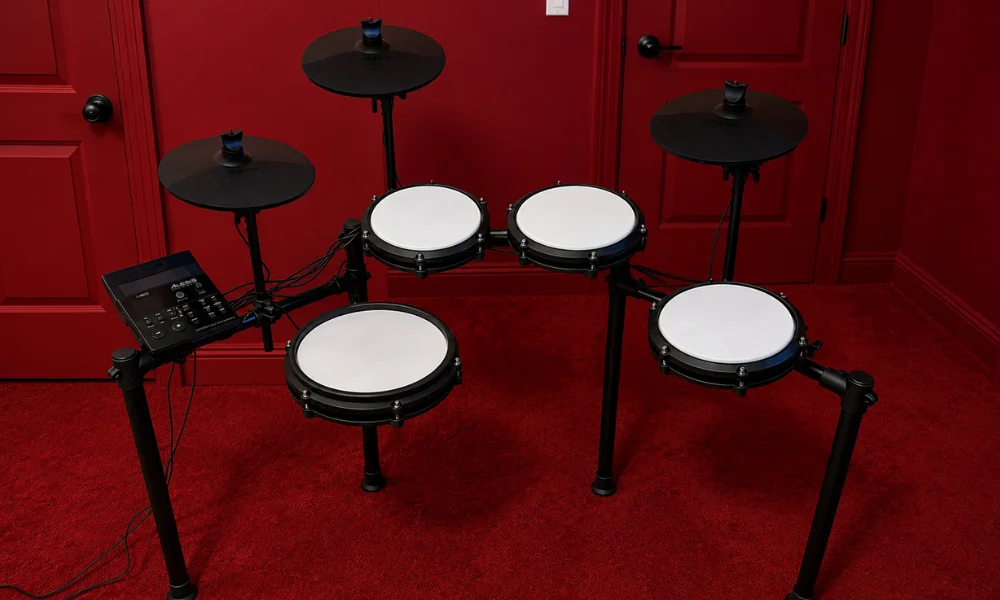
A few components you’ll run into no matter which kit you go with:
The module is the brain of the operation. All your presets live here, plus the metronome, recording functions, and the jacks for plugging into headphones or a computer.
Pads come in two main flavors. Rubber pads are what you’ll find on cheaper kits they work, but they’re stiff and don’t give much stick rebound. Mesh heads are the upgrade: woven fabric that you tension with a drum key, and they feel a lot closer to a real drumhead while also being quieter.
Cymbal pads mimic actual cymbals in shape. The basic versions only give you one sound no matter where you hit them. Better ones split into two or three zones, so hitting the edge sounds different from hitting the bell, and you can even grab the cymbal to choke it, just like you would on an acoustic kit.
The kick setup ranges wildly. Bottom-tier kits just have a foot switch, which honestly feels nothing like a real bass drum. Step up and you get an actual kick tower paired with a standard pedal much closer to the real thing.
And then there’s the rack, the frame that holds it all together. Not glamorous, but a wobbly rack will drive you insane during a session, so it matters more than people expect.
Electric or acoustic the honest comparison
| Electric | Acoustic | |
|---|---|---|
| Volume | You control it, silent with headphones | Loud, period |
| Sound options | Hundreds of kits built in | Whatever your physical drums sound like |
| Space | Small footprint, folds up | Needs a real room |
| Upkeep | Barely any | Tuning, head replacement, dampening |
| Recording | Plug in one USB cable | Mics, cables, room treatment |
| Feel | Mesh gets close but isn’t quite the same | Nothing beats real skins |
Why people actually make the switch
Practicing at 11 pm without waking anyone up is probably the number one reason people go electric. Throw on headphones and the only sound left in the room is stick hitting mesh, quiet enough that you could genuinely practice next to someone sleeping.
Most modules also come loaded with practice tools that acoustic drums just don’t have. Metronomes, timing feedback, built-in recording, play-along tracks stuff that speeds up learning in a way that practicing alone in a garage never really did for me.
Plugging into a laptop is almost stupidly simple too. One USB cable and your module works as a MIDI controller inside Ableton or Logic or GarageBand, which means you can trigger studio-grade virtual drums without owning studio-grade drums.
And the sound variety is honestly kind of addictive. Switch from a tight rock kit to jazz brushes to an 808 pattern with a couple of button presses. You’d need a garage full of different acoustic kits to get that kind of range otherwise.
Space savings shouldn’t be underestimated either; most racks fold down small enough to tuck into a closet, which matters a lot if you’re not working with a dedicated music room.
What nobody tells you before you buy
A few things worth knowing upfront so you’re not surprised later:
Cheap kits usually swap the real hi-hat stand for a stationary foot switch, and it feels noticeably off if you’ve ever played a real hi-hat or plan to eventually.
If you want to jam with other people out loud, headphones won’t cut it you’ll need a drum monitor or a PA system at that point.
And rubber cymbals just don’t move the way real bronze ones do. Doesn’t matter how many trigger zones they pack in, the physical feel is different.
Brands worth actually considering
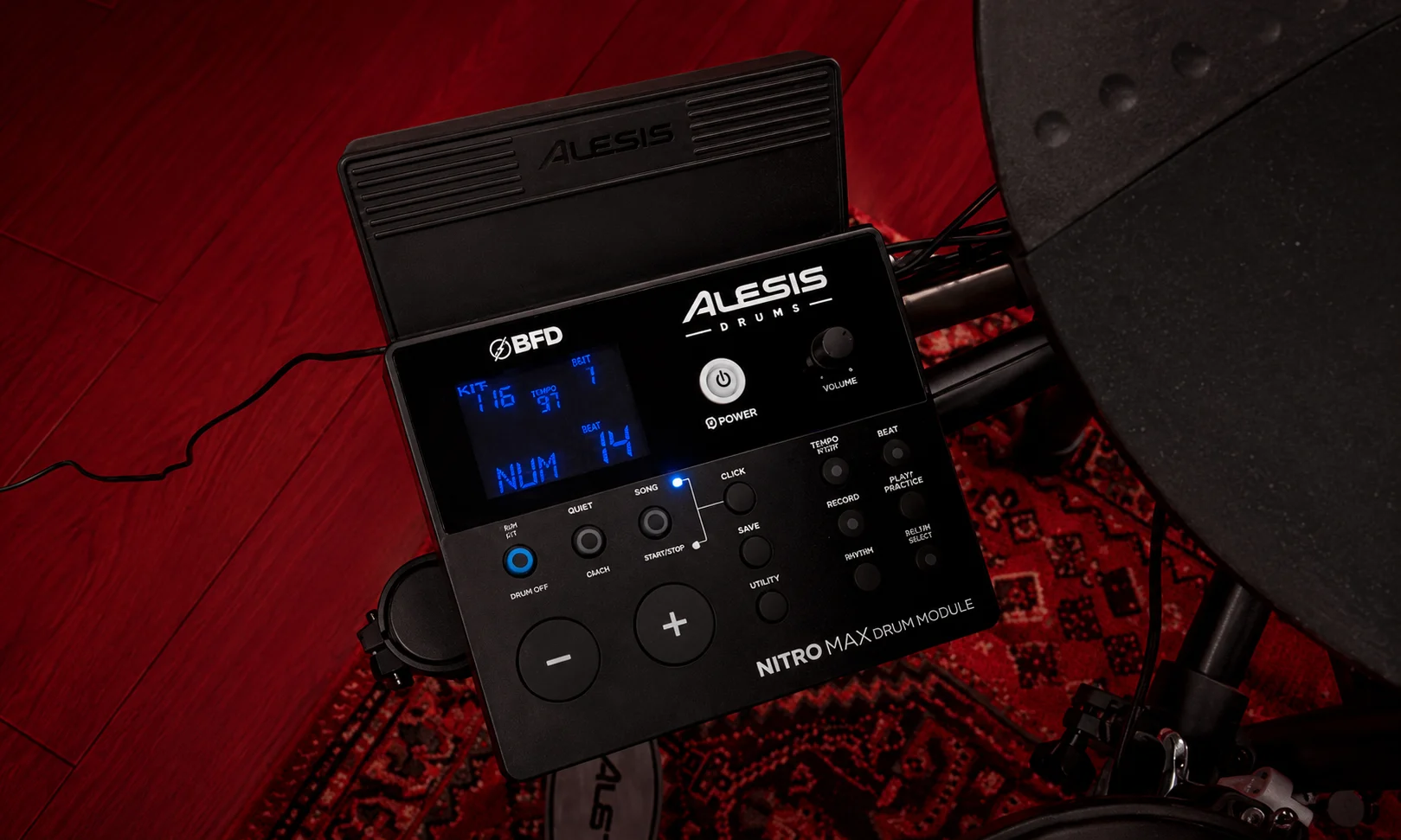
If you’re just starting, the Alesis Nitro Max is a good place to look mesh heads, a real kick tower, Bluetooth, and sounds pulled from BFD software that punch well above what you’d expect at that price. The Yamaha DTX402K is another solid beginner pick, mostly known for being nearly indestructible and having a practice app that people actually use.
Once you’re practicing seriously or setting up a home studio, Roland’s TD-07KV or TD-17KVX2 tend to come up a lot tough double-ply mesh heads and enough tweaking options to keep you busy for years. The Alesis Crimson II SE is worth a look too if you want bigger pads without spending Roland money.
For recording or live shows, Roland’s VAD series uses real wood shells with electronic sensors built in, so it looks like a normal acoustic kit from the audience while sounding electric. EFNOTE’s 5 and 7 models get a lot of praise for how clean and natural their samples sound compared to most electric kits.
Stuff you’ll need to buy separately
The kit itself usually doesn’t come with everything. Budget for:
- Closed-back headphones, since open-back ones let too much pad noise through
- A height-adjustable drum throne; cheap stools wreck your back over long sessions
- 5A or 7A wooden sticks, and toss them the second the tips chip since sharp edges tear mesh heads apart fast
- A rug or mat under the whole setup so the kick pedal stops sliding on hardwood
- A drum monitor speaker, eventually, once you want other people to actually hear you play
Setting Up Your Kit So Your Body Doesn’t Hate You Later
A lot of people just plop their kit down wherever it fits and start playing, then wonder why their wrists or back start acting up a few weeks in. A little setup time upfront saves you from that.
Start with your throne. Get the height where your knees sit just past a 90-degree angle, with your hips slightly higher than your knees. It feels like a small thing, but it changes everything about how your arms and back handle a long session.
Then figure out the snare. It should sit centered between your legs, roughly at belt height. If you’re reaching or pulling your shoulders back to hit it comfortably, it’s in the wrong spot move it until your arms can strike it without any awkward stretching.
Pedals go where your feet naturally land. Sit upright, let your feet fall where they want to, and that’s where the kick and hi-hat pedals should be. Don’t force your feet to reach for them.
Wipe your pads down now and then. A dry microfiber cloth does the job for both rubber and mesh. Skip the water and definitely skip any household cleaners they’ll mess with the material over time.
Deal with your cables before they become a tripping hazard. Run them along the frame and use a few Velcro ties to keep them out of your stick path. Takes two minutes and saves you from yanking a cable loose mid-session.
FAQS
Are electric drums actually silent?
Not completely, no. Headphones cut out the drum sound itself, but you’ll still hear the physical tap of stick on pad, and a hard kick pedal hit can send some vibration through the floor, especially with wood flooring. A thick drum mat helps a lot with both of those.
Can a beginner actually learn real technique on one of these?
Yeah, honestly. Mesh heads especially do a good job mimicking how a real drumhead bounces back. The coordination, timing, and foot control you build on an electric kit carries over to acoustic drums just fine you’re not learning some watered-down version of the skill.
Do I need a computer to even play these?
Nope. Everything you need is in the module. Plug in headphones, hit the power button, and you’re playing. A computer only comes into the picture if you want to record something or use plugins for extra sounds.
How do I hook it up to a computer for recording?
Most modules these days have a USB port built in that sends MIDI straight to your laptop. Plug the cable in, open whatever software you use GarageBand, Ableton, whatever set the module as your MIDI input, and you’re ready to record.