
Key Takeaways
- Celebrities with Turner syndrome is a genetic condition that affects females.
- Many celebrity lists online include unverified claims.
- Publicly confirmed diagnoses are rare.
- Trusted medical organizations provide the most accurate information.
- Early diagnosis and ongoing care can improve long-term health.
- People with Turner syndrome can achieve success in every area of life.
- Always verify health-related information before sharing it.
Quick Answer
There are very few widely recognized celebrities who have publicly confirmed having Turner syndrome. Many names shared across blogs and social media have never verified the diagnosis themselves. For that reason, reliable sources recommend focusing on confirmed public figures instead of repeating unsupported claims.
What Is Turner Syndrome?
Turner syndrome is a genetic condition that occurs when one of the two X chromosomes is completely or partially missing. It affects only females and is usually diagnosed during childhood or adolescence, although some people are diagnosed later in life.
Common characteristics may include:
| Feature | Description |
|---|---|
| Short stature | One of the most common signs |
| Delayed puberty | Ovaries may not develop normally |
| Fertility challenges | Many women need fertility treatment |
| Heart conditions | Regular medical monitoring is important |
| Learning differences | Usually related to spatial or math skills rather than intelligence |
It is important to remember that not every person experiences the same symptoms. Some have very mild features, while others require lifelong medical care.
Are There Any Celebrities With Turner Syndrome?
Yes, but not as many as the internet often claims.
Many articles promise lists of 10, 15, or even 25 celebrities with Turner syndrome. However, after checking reliable medical information and publicly available interviews, most of those names are based on speculation rather than confirmed diagnoses.
Some individuals have openly discussed living with Turner syndrome or have been connected to awareness campaigns. Others are simply included because of their height or facial features, which is not enough evidence to confirm a medical condition.
Confirmed Public Figures Associated With Turner Syndrome

Linda Hunt
Linda Hunt is one of the names most frequently linked to Turner syndrome in public discussions.
She is best known for her award-winning acting career, including her Academy Award-winning performance in The Year of Living Dangerously and her long-running role in NCIS: Los Angeles.
Many medical awareness articles mention Linda Hunt when discussing successful women with Turner syndrome. However, details about her diagnosis are limited in public records, which is why responsible reporting should avoid making claims beyond what has been publicly documented.
Why Confirmed Stories Matter
People living with Turner syndrome often look for role models who show that success is possible despite medical challenges.
Public figures who choose to share their experiences can help reduce stigma, encourage early diagnosis, and remind others that the condition does not define someone’s abilities.
Their stories also inspire parents, teenagers, and young women who may have recently received a diagnosis.
Celebrities Frequently Rumored to Have Turner Syndrome
Many websites include famous actresses, singers, and television personalities without reliable evidence.
Some of the most commonly mentioned names include:
| Celebrity | Publicly Confirmed? |
|---|---|
| Jessica Alba | No |
| Nicole Scherzinger | No |
| Sarah Chalke | No |
| Saoirse Ronan | No |
| Fran Drescher | No |
These celebrities have never publicly confirmed having Turner syndrome. Including them as confirmed cases can spread misinformation and reduce the credibility of an article.
People may notice similarities in appearance or height, but physical traits alone cannot confirm any medical diagnosis.
Why Do So Many Celebrity Rumors Spread Online?
Health-related rumors often spread because readers are curious about the lives of famous people. Once one website publishes an unverified claim, other sites may copy it without checking the original source.
In the case of Turner syndrome, many online lists rely on speculation based on a person’s height or appearance. However, physical characteristics alone cannot confirm a genetic condition. Only the individual or a reliable medical or biographical source can do that.
Before believing any celebrity health claim, it is worth checking whether the information comes from a trusted source or simply repeats another blog post.
Why Accurate Information Matters
Sharing incorrect information about someone’s medical history can affect both the individual and readers looking for trustworthy advice.
For people living with Turner syndrome, seeing accurate and respectful information is far more helpful than reading lists filled with unsupported claims. Reliable content also builds trust with readers and performs better over time in search results.
Turner Syndrome Myths vs Facts
| Myth | Fact |
|---|---|
| Every short woman has Turner syndrome. | Short stature is only one possible feature and has many different causes. |
| Turner syndrome affects intelligence. | Most girls and women have normal intelligence, although some may experience specific learning challenges. |
| Everyone with Turner syndrome has the same symptoms. | Symptoms vary greatly from one person to another. |
| Women with Turner syndrome cannot live normal lives. | With proper medical care, many complete their education, build careers, travel, and enjoy active lives. |
| Online celebrity lists are always accurate. | Many contain rumors that have never been publicly confirmed. |
Public Figures and Turner Syndrome Awareness
When people search for celebrities with Turner syndrome, they usually expect to find a long list of famous actresses, singers, or athletes. However, the reality is quite different. There are very few public figures whose diagnosis has been openly confirmed through reliable sources or by the individuals themselves.
Many websites publish lists containing 10, 20, or even 30 celebrities. In most cases, these articles do not provide credible evidence. Instead, they repeat information copied from other blogs, making it difficult for readers to know what is actually true.
For that reason, it is always better to rely on trusted medical organizations and verified public statements rather than social media posts or unreferenced websites.
Why Public Confirmation Matters
A medical diagnosis is personal information. Unless a public figure chooses to share it or it has been documented by trustworthy sources, it should not be presented as fact.
Responsible reporting respects privacy while ensuring readers receive accurate information. This approach also follows Google’s Helpful Content guidelines and improves the overall trustworthiness of an article.
Raising Awareness Without Relying on Celebrity Lists
Although confirmed celebrity examples are limited, awareness of Turner syndrome continues to grow through healthcare organizations, researchers, patient advocates, and families.
Awareness campaigns encourage early diagnosis, improve access to treatment, and help people understand that Turner syndrome affects every individual differently. These efforts have made it easier for families to find reliable information and connect with support communities.
Why So Many Celebrity Rumors Exist
One reason misinformation spreads so quickly is that many websites copy content from each other without checking reliable sources. Once an unsupported claim appears online, it may be repeated hundreds of times across blogs and social media.
Another reason is that people sometimes assume a person has Turner syndrome because of their height or facial features. However, appearance alone cannot diagnose any genetic condition.
A confirmed diagnosis requires medical evaluation, and only the individual or an authorized, reliable source can publicly verify it.
Turner Syndrome Myths vs. Facts
| Myth | Fact |
|---|---|
| Turner syndrome only affects height. | It can affect growth, puberty, heart health, fertility, hearing, and other aspects of health. |
| Every girl with Turner syndrome has the same symptoms. | Symptoms vary widely. Some people have noticeable features, while others have very mild signs. |
| Women with Turner syndrome cannot have successful careers. | Many women complete higher education, build successful careers, and live independent lives. |
| Turner syndrome affects intelligence. | Most individuals have normal intelligence, although some may experience specific learning challenges, especially with spatial or mathematical skills. |
| Every online celebrity list is accurate. | Many lists include unverified claims that have never been publicly confirmed. |
Common Signs and Symptoms
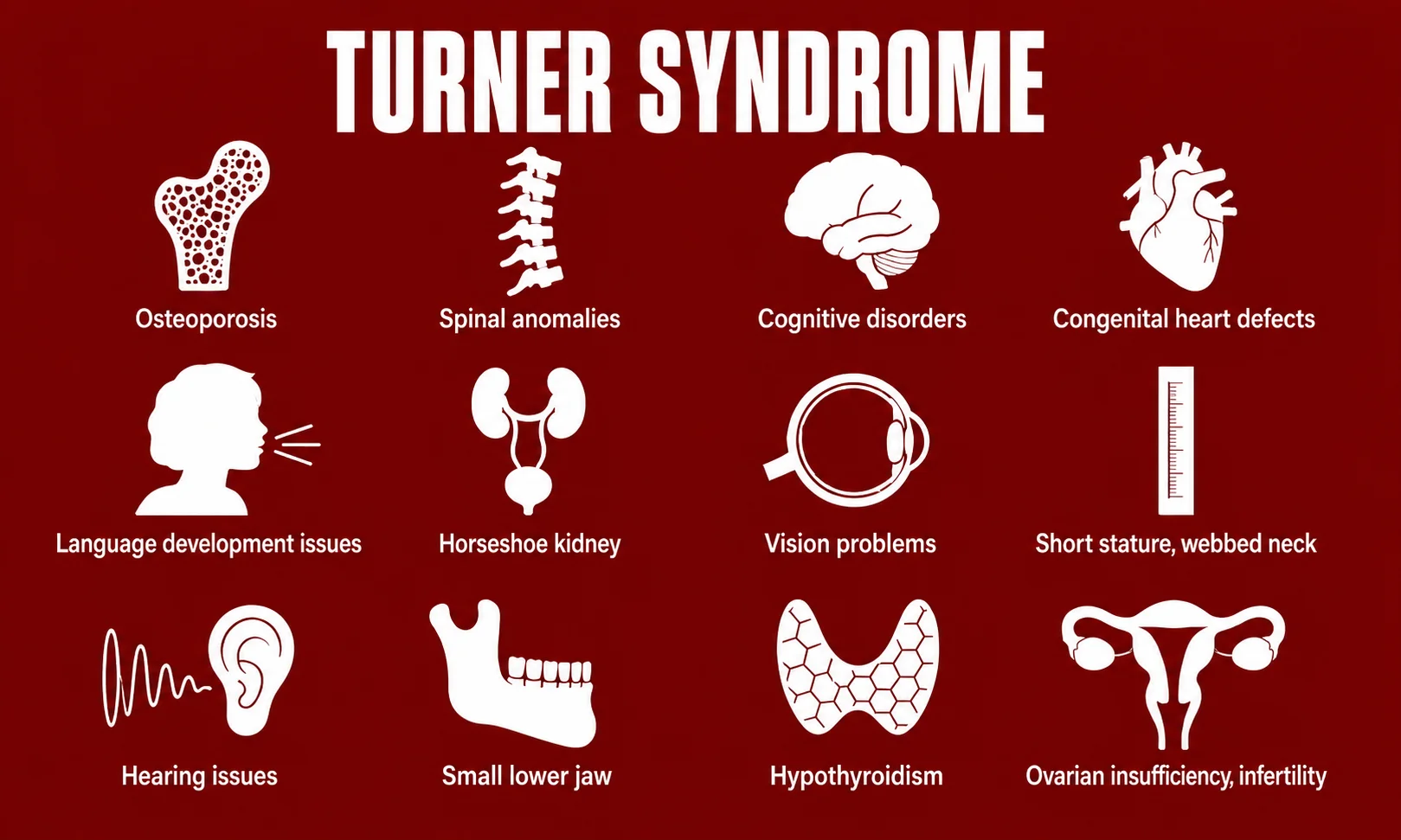
The symptoms of Turner syndrome can differ from one person to another. Some girls are diagnosed shortly after birth, while others may not receive a diagnosis until childhood, adolescence, or even adulthood.
Physical Features
Some common physical characteristics include:
- Short stature
- Webbed neck
- Broad chest with widely spaced nipples
- Low hairline at the back of the neck
- Swelling of the hands or feet, especially in infancy
- Curved fingernails or toenails
- Low-set ears
Not everyone has all of these features, and some may have only one or two.
Developmental Signs
As children grow, other signs may become more noticeable, such as:
- Slower growth compared with classmates
- Delayed puberty
- Little or no breast development without hormone treatment
- Absence of menstrual periods
- Difficulty becoming pregnant naturally
Health Conditions That May Occur
Some girls and women with Turner syndrome may also experience:
- Congenital heart conditions
- High blood pressure
- Hearing loss
- Thyroid disorders
- Kidney abnormalities
- Osteoporosis
- Scoliosis
- Type 2 diabetes
- Vision problems
Regular medical checkups help detect these conditions early and improve long-term health outcomes.
How Turner Syndrome Is Diagnosed
Doctors diagnose Turner syndrome through genetic testing known as a karyotype analysis. This test examines a person’s chromosomes to determine whether one X chromosome is missing or partially missing.
Diagnosis may happen at different stages of life depending on the symptoms.
Before Birth
Prenatal screening or diagnostic tests may suggest Turner syndrome before a baby is born. Further testing can confirm the diagnosis.
During Childhood
Many girls are diagnosed because they are significantly shorter than expected or show slower physical development.
During Adolescence
Some teenagers are diagnosed after experiencing delayed puberty or not starting menstruation at the expected age.
During Adulthood
In a smaller number of cases, the condition is discovered while investigating fertility concerns or other health issues.
Why Early Diagnosis Matters
Early diagnosis allows doctors to begin treatment sooner and monitor potential health concerns before complications develop.
With timely medical care, many girls benefit from growth hormone therapy, hormone replacement therapy, educational support when needed, and regular screening for heart, kidney, thyroid, and hearing conditions.
Receiving an early diagnosis also gives families access to support groups, educational resources, and healthcare specialists who understand the condition. This support can improve confidence, quality of life, and long-term health for both children and adults living with Turner syndrome.
Living Successfully With Turner Syndrome
A diagnosis of Turner syndrome does not define a person’s future. Advances in healthcare have helped many girls and women manage the condition successfully.
Depending on individual needs, treatment may include growth hormone therapy, hormone replacement therapy, regular heart evaluations, hearing tests, and ongoing medical follow-up. Early diagnosis often makes it easier to plan appropriate care.
Support from family, teachers, healthcare professionals, and Turner syndrome organizations can also make a meaningful difference throughout life.
Where to Find Reliable Information
Because misinformation is common, it is best to rely on trusted medical organizations for accurate guidance.
Some of the most reliable sources include:
- National Institutes of Health (NIH)
- MedlinePlus
- Cleveland Clinic
- Mayo Clinic
- Turner Syndrome Society of the United States
- NHS (United Kingdom)
These organizations regularly update their information based on current medical evidence.
Frequently Asked Questions
Are there many celebrities with Turner syndrome?
No. Only a very small number of public figures have been associated with Turner syndrome through reliable public information. Many names found online are based on rumors rather than confirmed diagnoses.
Can someone with Turner syndrome become successful?
Yes. Turner syndrome does not prevent someone from succeeding in education, sports, business, entertainment, or other careers. Success depends on many personal and social factors, not simply a medical diagnosis.
Is Turner syndrome inherited?
Most cases occur randomly during early fetal development. It is generally not inherited from a parent.
What is the average life expectancy?
With appropriate medical care and regular health monitoring, many people with Turner syndrome live long and productive lives. Individual health outcomes depend on associated medical conditions and ongoing treatment.
Can Turner syndrome be treated?
There is no cure, but several treatments can help manage symptoms, support growth and development, and reduce health risks.
Conclusion
Finding accurate information about celebrities with Turner syndrome can be challenging because many websites repeat unverified claims. Rather than relying on rumors, it is better to focus on publicly documented information and trusted medical sources.
More importantly, Turner syndrome should never be viewed as a limitation. With proper healthcare, education, and support, many girls and women lead fulfilling and successful lives.
At BrandClickX, we believe that responsible, well-researched content helps readers make informed decisions. That’s why verifying facts is always more valuable than repeating popular myths.