You’ve already measured the flour, cracked the eggs, and preheated the oven. Then you reach for the butter and realize it’s still cold from the refrigerator. The recipe says “softened,” but waiting two hours isn’t exactly helpful when you’re ready to bake now.
The tempting fix is to throw the butter in the microwave and hope for the best. That can work, but a few extra seconds can turn perfectly softened butter into greasy, partially melted butter, which behaves differently in recipes that rely on creaming.
That’s why how to soften butter quickly is less about simply making butter warmer and more about getting the right texture. You want butter that gives when you press it but still feels cool and holds its shape.
If you have less than a minute, a carefully controlled microwave method can do the job. If you have more time, slicing, grating, or flattening the butter gives you other ways to speed things up without relying on direct heat.
How to Soften Butter Quickly: The Short Answer
For the fastest result, remove the wrapper, stand the butter upright on a microwave-safe plate, and microwave it in short intervals. King Arthur Baking softened a cold stick in a 1,000-watt microwave using about 8 seconds on one end and another 7–8 seconds on the other. If you have more time, slicing the butter into thin pieces is slower but much harder to overdo.
Quick Takeaways
- A vertical microwave method can soften a cold stick in about 16 seconds in a 1,000-watt microwave tested by King Arthur Baking.
- Thinly sliced butter softened in about 30 minutes in the same King Arthur Baking test.
- A whole stick can take roughly 2–5 hours to soften at 73°F.
- Grating and flattening work by increasing the butter’s exposed surface area.
- Properly softened butter should indent when pressed but remain cool, opaque, and able to hold its shape.
- Melted butter is not automatically interchangeable with softened butter in recipes that depend on creaming.
- Microwave wattage and kitchen temperature can change the timing, so texture matters more than a rigid timer.
What Is the Fastest Way to Soften Butter?
The fastest tested way to soften butter is to remove its wrapper, place the stick vertically on a microwave-safe plate, and microwave it for about 8 seconds on one end and 7–8 seconds on the other. Check it immediately and stop when it is pliable but still cool and holds its shape. Use shorter intervals if your microwave is more powerful or the butter has already started softening.
Which Method Is Best for Softening Butter?
| Method | Approximate time | Risk of melting | Best use |
| Vertical microwave | About 16 seconds in a 1,000-watt microwave | Medium | When you need butter immediately |
| Thin slices | About 30 minutes | Very low | Reliable everyday baking |
| Grating | Minutes, depending on conditions | Low | Very cold butter |
| Flattening | Varies | Low | No-microwave situations |
| Warm bowl | About 5–12 minutes reported | Medium | When no microwave is available |
| Warm-water bath | About 10–15 minutes suggested | Higher | Last resort |
| Room-temperature whole stick | About 2–5 hours at 73°F | Very low | When you have plenty of time |
The timings are not universal. Butter temperature, room temperature, piece size, and microwave wattage all affect the result.
7 Ways to Soften Butter Quickly
1. Microwave the Butter Vertically
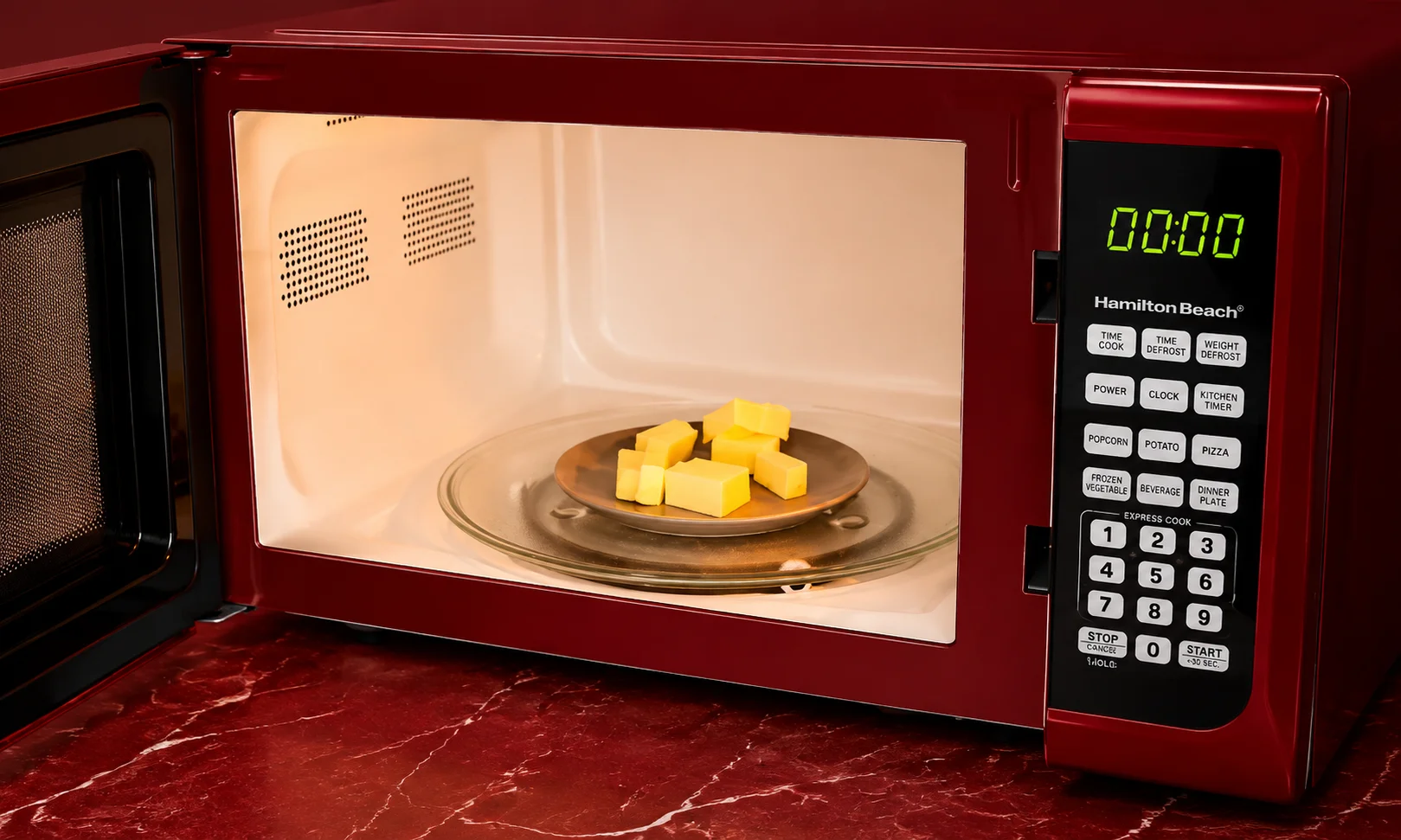
When you need softened butter right now, this is the most useful method to try.
Remove the wrapper and place the stick upright on one end on a microwave-safe plate. Microwave for about 8 seconds, turn it onto the opposite end, and microwave for another 7–8 seconds.
King Arthur Baking tested this approach in a 1,000-watt microwave and found that approximately 16 seconds total produced evenly softened butter. The same testing found that placing the stick horizontally created greasy hot spots and firmer areas.
Press the butter gently after heating. You want an indentation from your finger, not a stick that collapses or looks oily.
If your microwave is powerful, or the butter is already partly soft, start with 5-second intervals instead. Microwave power varies, so copying someone else’s exact timing can easily leave you with melted edges.
Who Should Use This Method?
Use the vertical microwave method when you have less than a minute and need the butter for a recipe immediately.
Who Should Avoid It?
Avoid relying on a long microwave cycle when precision matters and you cannot monitor the butter closely. The biggest problem is not softening too slowly; it is accidentally crossing the line into melting.
Never microwave foil or a wrapper containing foil. Remove the wrapper first and use a microwave-safe plate.
2. Cut the Butter into Thin Pieces
If you want a safer method with very little chance of overheating, cut the cold butter into thin pats or small pieces.
Arrange the pieces in a single layer on a plate and leave them at room temperature. Cutting the butter exposes more surface area to warmer air, allowing it to soften considerably faster than a whole stick.
King Arthur Baking found that sliced butter softened in about 30 minutes, while a whole stick took roughly 2–5 hours in a 73°F kitchen.
This is arguably the easiest low-risk method for baking because you do not have to apply direct heat. You simply make the butter easier for the surrounding air to warm.
3. Grate Very Cold Butter
Grating is particularly useful when the butter is extremely cold but not frozen solid.
Use the large holes of a box grater to turn the butter into thin shavings. Spread those shavings on a plate or place them directly into your mixing bowl.
The advantage is simple: tiny pieces have much more exposed surface area than a solid stick. Several cooking publications, including The Pioneer Woman and PastryWiz, recommend this approach, although there is no standardized timing that works for every kitchen.
Because the exact timing varies, watch the texture rather than waiting for a specific number of minutes.
4. Flatten the Butter
Another way to increase surface area is to flatten the butter.
Place it between sheets of parchment or inside a sealed food-storage bag. Then gently flatten it with a rolling pin until it becomes thinner.
A thin piece warms more quickly than a thick block. It is also easier to mix by hand once softened.
The drawback is convenience. Flattening is less practical if you need perfectly clean, measured pieces of butter, so it works best when speed matters more than presentation.
5. Use a Warm Bowl
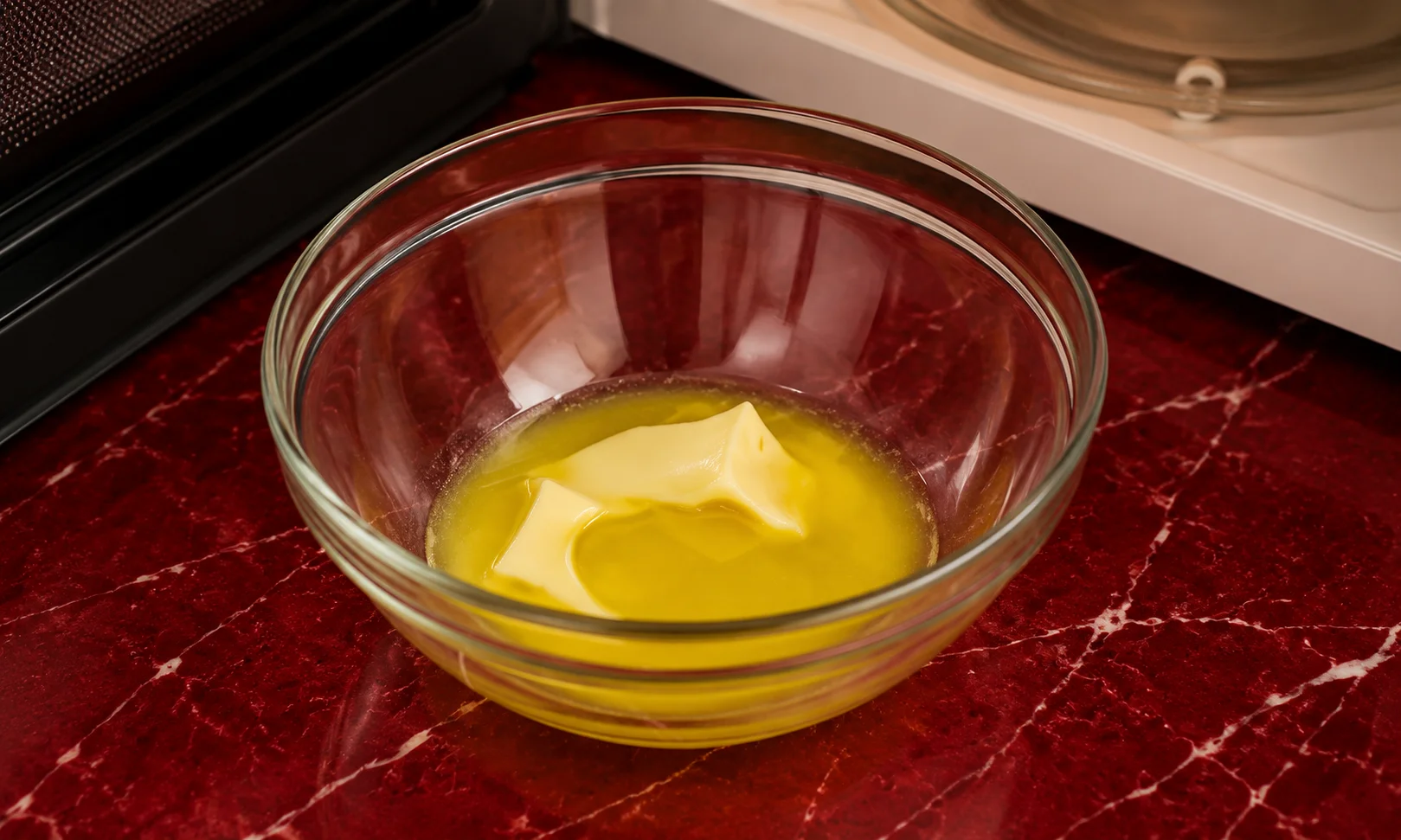
The warm-bowl method uses gentle surrounding heat rather than direct microwave energy.
Fill a heatproof bowl or glass with hot water and let it warm briefly. Empty the water, then place the warmed container upside down over the wrapped butter.
Cooking sources commonly suggest roughly 5–10 minutes. However, testing has shown that the method can be inconsistent: King Arthur Baking reported about 12 minutes in its test, with the center still hard.
That makes this more of a backup technique than the first method to reach for.
If you use it, check the butter rather than assuming the center has softened just because the outside feels warm.
6. Try a Warm-Water Bath Carefully
Some recipes suggest placing wrapped butter in barely warm water for about 10–15 minutes.
The problem is consistency. King Arthur Baking found that the outside could become very soft or greasy while the center remained firm. That uneven result makes the method less predictable than slicing, grating, or carefully microwaving the butter.
If you need reliable butter for a recipe that depends on a particular texture, this is not the method I would choose first.
7. Let the Butter Soften Naturally
When you have enough time, you do not need a special trick at all.
Leave the whole stick at room temperature and allow it to soften naturally. The drawback is speed: King Arthur Baking’s testing found that a whole stick could take approximately 2–5 hours in a 73°F kitchen.
That makes natural softening the slowest option here, but it also avoids the uneven heating that can happen with microwaves and warm-water methods.
If you know you will be baking later, taking the required butter out ahead of time is still the simplest approach.
How Do You Know When Butter Is Properly Softened?
Forget the idea that butter has to feel warm.
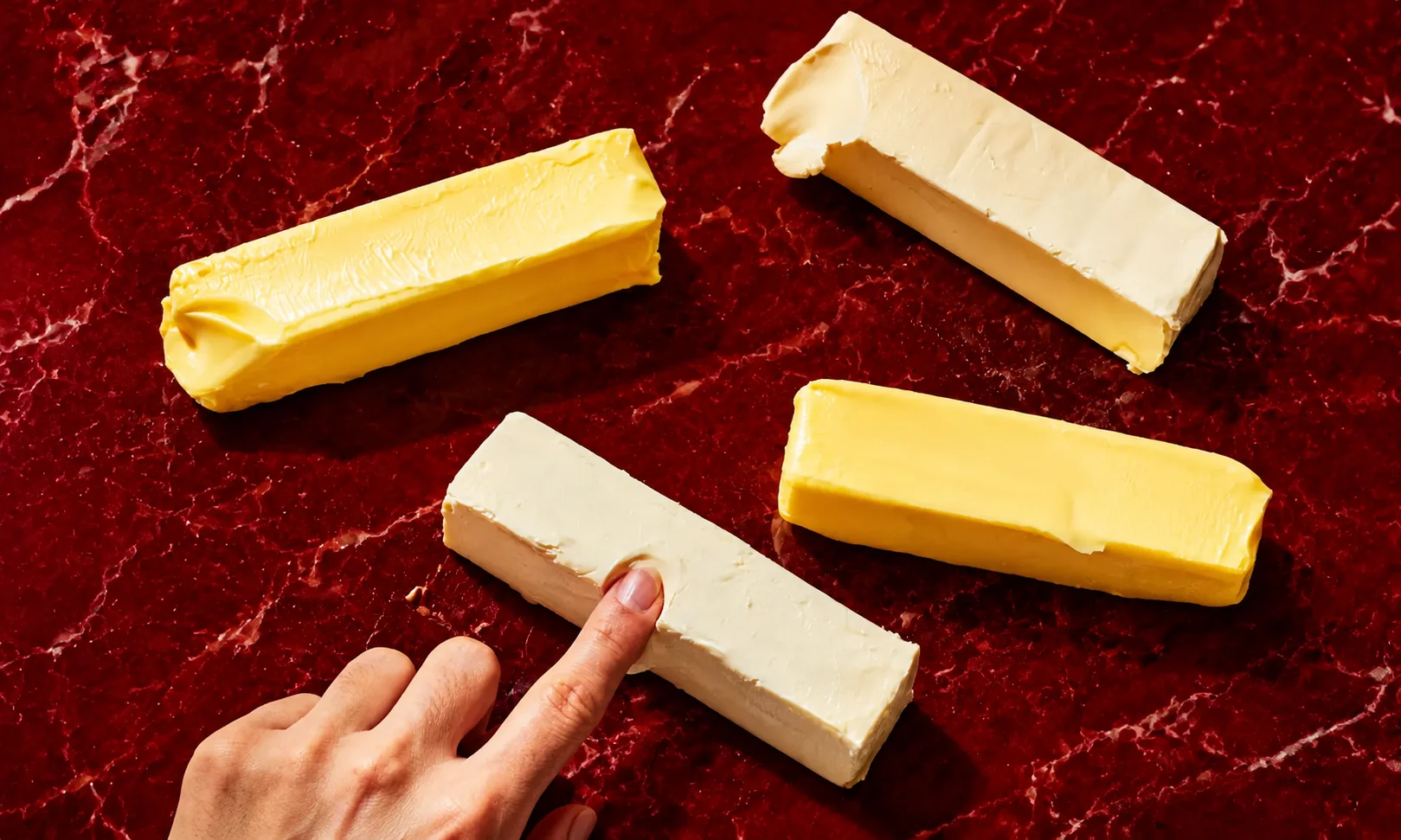
Properly softened butter should remain cool and pliable. When you press it with your finger, it should leave a clear indentation while the butter continues to hold its shape.
It should not look shiny or greasy, collapse immediately, or have liquid butter around it. Those signs suggest that you have gone beyond softening and are approaching melting.
Some baking references place softened butter around 60–67°F (16–19°C), but there is no single temperature that applies to every recipe. Texture is often the more useful test in a home kitchen.
Why Does Softened Butter Matter in Baking?
Softened butter is not simply cold butter that has become warmer.
In many recipes, its texture affects how the butter behaves when you mix it with sugar. Creaming the two ingredients together creates small air pockets that can contribute to the lighter texture of cakes and cookies.
Butter that is too cold may not cream effectively. Butter that is too warm may not maintain the structure needed during mixing.
That is why substituting melted butter for softened butter can change the finished result. The two forms of butter behave differently in recipes designed around the creaming process.
Softened Butter vs. Melted Butter: Don’t Confuse Them
This is one of the easiest mistakes to make when you’re trying to save time.
Softened butter should still be pliable, cool, opaque, and capable of holding its shape. Melted butter has lost that structure and behaves differently when combined with the other ingredients.
If a recipe specifically depends on creaming butter and sugar, melted butter is not automatically an acceptable replacement. It changes how the fat combines with the flour and cannot perform the same creaming function.
So if you use the microwave, your goal is not to make the butter warm. Your goal is simply to make it soft enough to press and mix.
Which Method Should You Choose?
Your available time should determine the method.
Need butter in under a minute? Use the vertical microwave method and monitor it closely.
Have around 30 minutes? Cut the butter into thin pats and leave them on the counter.
Working with extremely cold butter? Grating can turn a hard stick into thin pieces that warm much faster.
Don’t have a microwave? Slicing or flattening gives you a predictable way to speed up softening without direct heat.
Want the lowest-risk approach? Slicing and waiting is the safest choice for avoiding melted spots.
Considering a warm-water bath? It can work, but testing suggests it is less consistent because the outside may become greasy before the center softens.
What If You Accidentally Melt the Butter?
Don’t assume that melted butter can simply be cooled and treated as softened butter.
If your recipe depends on creaming, melted butter has already changed the physical state that the recipe expects. Cooling it again does not automatically restore the same texture and behavior.
The better approach is to stop heating before the butter becomes shiny or collapses. If you are using a microwave, short intervals and frequent checks give you much more control.
Common Mistakes When Softening Butter
Heating for Too Long
The microwave is fast, but that speed leaves little room for error. A long heating cycle can create melted edges or greasy patches before the center has softened.
Trusting the Timer Instead of the Butter
A timing that works in one kitchen may fail in another. Microwave wattage, starting temperature, butter size, and room temperature all affect the result.
Softening the Outside but Not the Center
This is especially relevant with warm-water and warm-bowl methods. The outside can become very soft while the middle remains firm.
Treating Melted Butter as Softened Butter
These are not interchangeable states when a recipe depends on creaming. Check the texture before adding the butter to your ingredients.
Practical Application: The Best Choice for Your Situation
If you’re standing in the kitchen with a cold stick of butter and a recipe already waiting, use this simple approach.
First, decide how much time you actually have. If the answer is seconds, remove the wrapper and use the vertical microwave method with short intervals.
If you have roughly half an hour, slice the butter into thin pieces and leave them on a plate. This gives you a much larger margin for error.
For extremely cold butter, grating is another practical option. If there is no microwave available, flattening or slicing lets you speed up the process without relying on direct heat.
Finally, test the butter with your finger. If it leaves an indentation but remains cool and holds its shape, you’re there. You do not need the butter to feel warm to know it is ready.
A Note About Food Safety
Softening butter does not mean leaving it out indefinitely.
FDA guidance says foods that require refrigeration should not remain in the temperature danger zone beyond the applicable two-hour rule, reduced to one hour when the ambient temperature is above 90°F. That guidance is general rather than butter-specific, so follow the product’s storage instructions as well.
A sensible approach is to soften only the amount your recipe requires, use it promptly, and return the remainder to refrigeration according to the package instructions.
Final Thoughts on How to Soften Butter Quickly
If you’re staring at a cold stick of butter while a recipe waits, you don’t necessarily need to postpone baking. How to soften butter quickly comes down to controlling either heat or surface area.
When time is critical, the vertical microwave method is the fastest tested option. When you want more control, slicing the butter is slower but far more forgiving, while grating and flattening offer useful alternatives when the butter is especially cold.
Most importantly, don’t judge softened butter by warmth alone. The ideal result is cool, pliable butter that gives under your finger while still holding its shape.
That small distinction can be the difference between simply warming butter and actually preparing it for the recipe you intended to make
Frequently Asked Questions
What is the fastest way to soften butter?
The fastest tested method is microwaving an unwrapped stick vertically for about 8 seconds on each end. Check it immediately because microwave power varies.
Can I microwave butter to soften it?
Yes. Use short intervals and stop as soon as the butter becomes pliable but still cool.
How long does butter take to soften on the counter?
A whole stick can take about 2–5 hours at 73°F. Thinly sliced butter took about 30 minutes in King Arthur Baking’s test.
Does cutting butter make it soften faster?
Yes. Smaller pieces expose more surface area to the air, helping the butter soften faster.
Does grating butter work?
Yes. Grated butter softens quickly because the thin shavings have more exposed surface area, although the exact timing varies.
Can I soften frozen butter quickly?
Grating or flattening can speed up the process. If the butter is too hard to grate safely, let it soften slightly before cutting it.
What temperature should softened butter be?
Sources commonly place it around 60–67°F (16–19°C), but texture is a better practical test. It should indent easily while remaining cool and non-greasy.
Can I use melted butter instead of softened butter?
Not always. Melted butter behaves differently and cannot provide the same creaming function in recipes that require softened butter.
Is a warm-water bath better than a microwave?
Usually not. Testing found that warm water could make the outside greasy while leaving the center firm.