Best AI SEO Tools: A store owner posted something on Reddit this year that should be pinned above every marketer’s desk. “We used to be on the first page of Google for many of our most important keywords,” he wrote. “Now we don’t show up there and we don’t show up in LLMs either. We will have to pay way more money to be seen or disappear.” He survived the first apocalypse — Google’s AI Overviews absorbing his clicks — only to discover the second: his brand was invisible inside the AI answers replacing those clicks entirely.
That double exposure defines search heading into 2027, and it explains why “AI SEO tools” now means two different product categories pretending to be one. The first optimizes content for the rankings that still exist: Semrush, Ahrefs, Surfer, and the editorial graders. The second answers a question that did not exist three years ago — does ChatGPT mention your brand when a buyer asks for a recommendation? — and it has spawned an entire market of AI visibility platforms with their own acronym, GEO. The eleven tools below survived the shakeout because each owns a real job in one of those two categories. The ones that died sold dashboards for a problem they could not help you fix.
We track the visibility half of this market closely — see our rankings of the top AI visibility tools and our framework for measuring AI search visibility. This list covers the full stack: the classics that adapted, the GEO insurgents, and the free foundation everything sits on.
The 11 AI SEO tools at a glance
| Tool | The job it owns | Starting price |
| Semrush | The full SEO suite plus AI visibility | From $199/month with AI toolkit |
| Ahrefs | Link authority plus Brand Radar | Brand Radar from $199/month |
| Surfer SEO | On-page content optimization | From ~$99/month |
| Clearscope | Editorial grading for content teams | From $129/month |
| SE Ranking | Affordable all-in-one with GEO | From ~$103/month (annual) |
| Profound | Enterprise AI visibility | Demo-gated; enterprise only |
| Peec AI | Mid-market GEO analytics | From $95/month |
| Otterly AI | Cheapest credible entry | From $29/month |
| Scrunch | High-volume prompt coverage | From $300/month |
| AthenaHQ | Automation-first GEO | From $295/month |
| Google Search Console | The free, non-negotiable baseline | Free |
The incumbents that adapted
1. Semrush — the suite that saw it coming
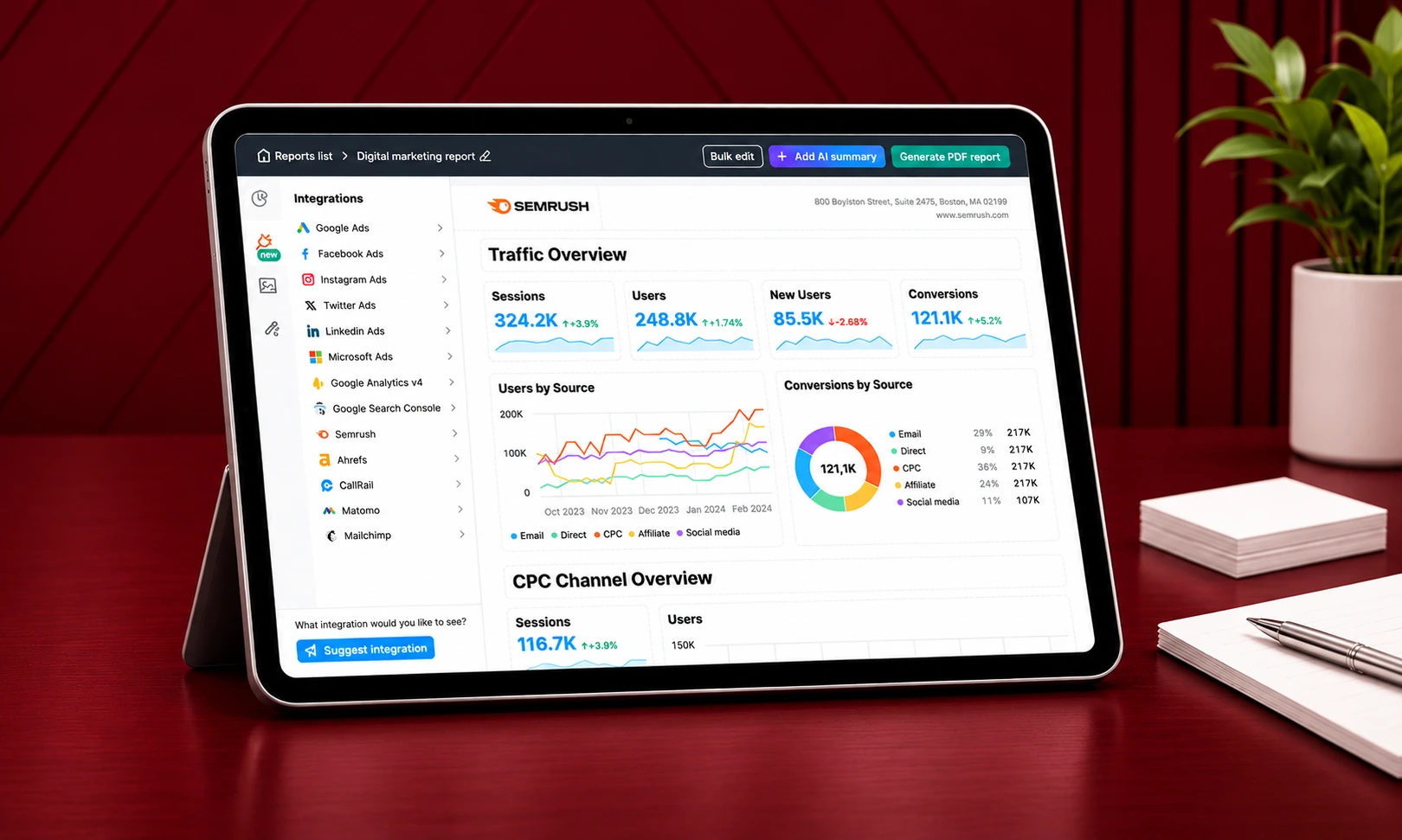
Semrush made the smartest incumbent move in the category: instead of pretending AI search was a fad, it built an AI Visibility Toolkit that now tracks brand presence across ChatGPT, Google AI Overviews, AI Mode, Gemini, Claude, Perplexity, Copilot, DeepSeek, and Grok — the broadest engine coverage of any established platform. Layer that on 55-plus traditional tools and a 0-to-100 visibility score with sentiment tracking, and you have the obvious answer for teams already paying for the suite. The catch is the floor: meaningful AI visibility through Semrush starts around $199 a month, roughly double the dedicated challengers.
Survived because: it turned an existential threat into an upsell.
2. Ahrefs — the authority index, extended into AI answers
Ahrefs built its moat on the best backlink index in the business, and Brand Radar extends that logic into AI search: how often your brand and your competitors appear across ChatGPT, AI Overviews, and Perplexity, overlaid on the link data that largely determines why. Standalone access starts around $199 a month, with prompt packages from roughly $50. It is a diagnostic instrument, not an execution engine — it tells you where you stand with unmatched context, then leaves the fixing to you.
Survived because: authority data explains AI citations better than anyone’s prompt tracking.
3. Surfer SEO — the page-level craftsman
Surfer remains the tool writers actually enjoy: score your draft against what already ranks, close the term and structure gaps, publish. Its real-time Content Score inside Google Docs and WordPress made it the default on-page optimizer for content teams, and it has since added AI visibility monitoring of its own. Its limits are architectural — it optimizes pages, not programs — and its AI tracking is shallower than the dedicated platforms. From around $99 a month.
Survived because: pages still have to rank before AI can cite them.
4. Clearscope — the editorial standard
Clearscope does one thing at a premium: semantic grading that tells an editorial team whether a piece covers its topic with the depth search engines and AI models reward. At $129 and up it is the expensive way to grade content, and enterprise editorial teams pay it anyway because the interface wastes nobody’s time. It now tracks prompts and brand visibility too, though traditional search remains its home ground.
Survived because: quality grading got more valuable as AI content flooded the index.
5. SE Ranking — the pragmatist’s suite
SE Ranking quietly assembled everything a small team needs — rank tracking, audits, competitor research, and GEO features tracking AI visibility — at roughly $103 a month on annual billing, half the price of the big suites. Nothing about it is best-in-class; everything about it is good enough, which is precisely why it survives budget reviews that kill flashier tools.
Survived because: “good enough at half the price” is a durable strategy.
The GEO insurgents
6. Profound — the enterprise answer, now behind a gate

Profound defined the enterprise GEO category: prompt-level intelligence across up to ten AI engines, SOC 2 compliance, a reported $155 million in funding, and an Agents layer that acts on gaps rather than just reporting them. The significant 2026 development is commercial, not technical: self-serve Starter and Growth plans were reportedly removed in September, and pricing is now demo-gated. The message to the market is clear — Profound is hunting Fortune 500 contracts, not $99 subscriptions.
Survived because: it went upmarket before the mid-market commoditized.
7. Peec AI — the analytics team’s pick
Peec AI delivers the cleanest competitive benchmarking in the category: share of voice, sentiment, position, and source analytics across the models you choose, tracked daily, from $95 a month for 50 prompts. Berlin-built and popular with European agencies, it does no content optimization and says so — it is a measurement product for teams who already know how to execute. The fourth model costs an extra $35 a month, so choose your three engines with care.
Survived because: it does one job with unusual polish.
8. Otterly AI — the cheapest credible entry point
Otterly’s Lite plan tracks 15 prompts across ChatGPT, Google AI Overviews, Perplexity, and Copilot for $29 a month — the lowest honest entry price in the market and the default answer for a business asking “are we visible in AI search?” for the first time. The constraints are real: Gemini and AI Mode cost $9 a month each, Claude $29, and 15 prompts is a tasting menu, not a monitoring program. Treat Lite as a diagnostic, then graduate.
Survived because: someone had to own the entry ramp.
9. Scrunch — the prompt-volume play
Scrunch covers the widest engine set in the mid-market — ChatGPT, Claude, Gemini, Perplexity, Google AI Mode and Overviews, and Meta — with 350 custom prompts, page audits, and three seats from $300 a month. It is built for the team that has moved past “are we visible” to “run the program”: weekly audits, gap reports, and enough prompt volume to cover a real product catalog. At that price it competes with a hire, and for funded teams it wins the comparison.
Survived because: volume and coverage beat elegance for operating teams.
10. AthenaHQ — the automation bet
Founded by former Google and DeepMind engineers, AthenaHQ pitches the category’s endgame: not just monitoring AI visibility but automating the response, with an Action Center and GA4 attribution tying AI mentions to revenue. From $295 a month it is priced for teams who believe the thesis. The risk is equally clear — it is a young company in a consolidating market — but its engineering pedigree and automation-first roadmap make it the insurgent most likely to matter in 2027.
Survived because: it sells the fix, not the dashboard.
The foundation
11. Google Search Console — the free layer nobody can skip
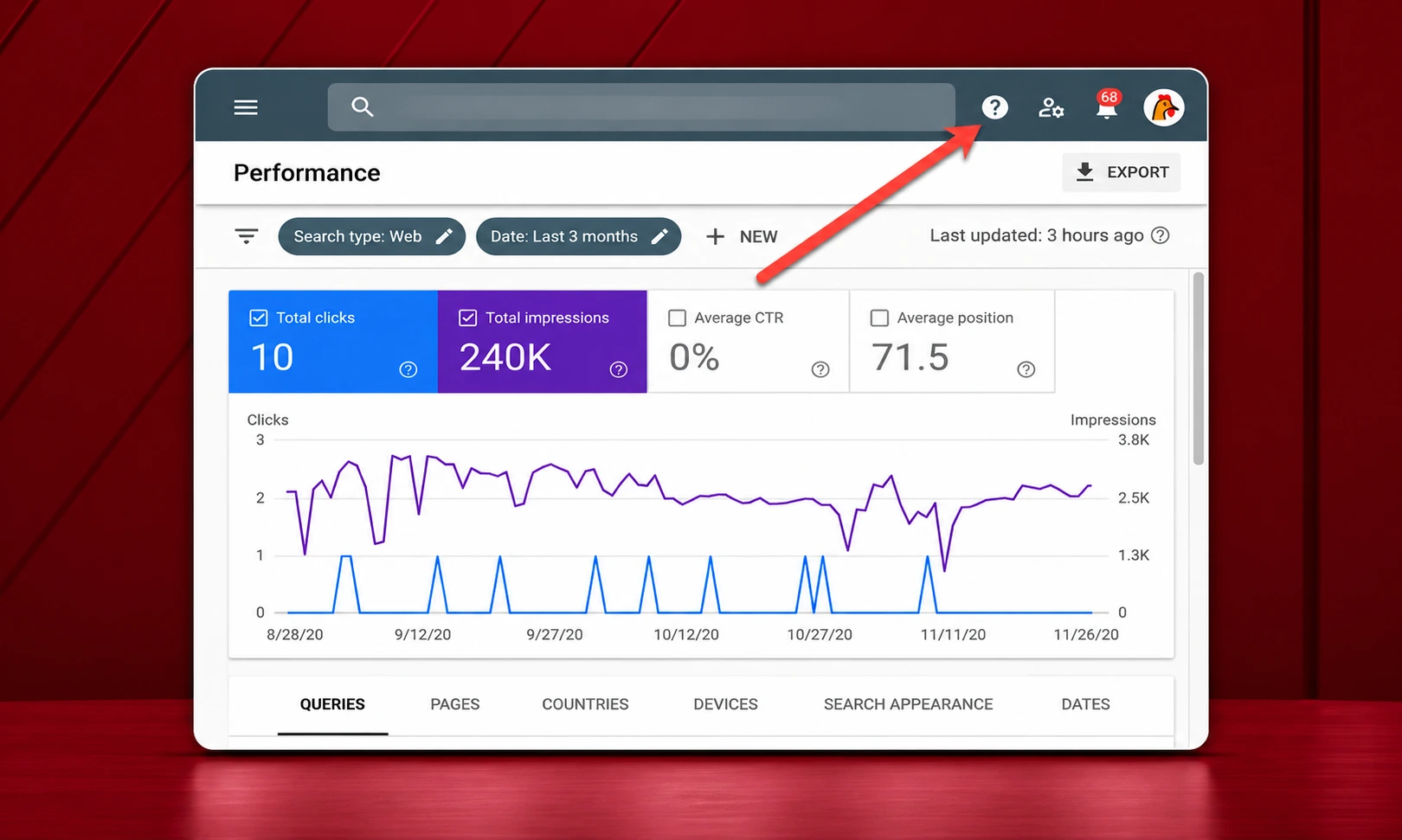
Every tool on this list ultimately decorates data that begins in Search Console: what Google indexed, what it ranked, what earned clicks, and increasingly, how AI surfaces touch your content. It is free, it is non-negotiable, and it remains the first audit step for any visibility problem — including the new kind. Teams spending $300 a month on GEO platforms while ignoring Search Console have built a penthouse without a foundation.
Survived because: it was never at risk. Everything else was.
The survival rule the shakeout revealed
The pattern behind who lived and who died is worth stating plainly, because it predicts the next shakeout. Survivors either execute (Surfer, Clearscope, AthenaHQ’s action layer), measure something nobody else measures (Profound’s prompt volumes, Peec’s share of voice, Ahrefs’ link context), or bundle measurement into a suite buyers already refuse to cancel (Semrush). The casualties sold generic dashboards showing the same “you are invisible” verdict three different ways — the expensive failure mode of 2026 was stacking trackers while nobody published the content that would change the answer.
One more discipline separates the teams winning AI visibility from those merely watching it: structure. AI engines cite pages they can parse, which is why schema markup for AI search has quietly become the highest-leverage technical work in the category — and why the referral traffic AI engines already send, which we tracked in our analysis of Perplexity’s referral patterns, rewards the sites that treat machines as an audience. The apocalypse was never the end of search. It was a change of readership.
Frequently asked questions
What are the best AI SEO tools in 2027?
For traditional SEO with AI visibility built in, Semrush leads the suites and Surfer leads on-page optimization. For AI search visibility (GEO), Profound owns the enterprise tier, Peec AI the mid-market, and Otterly AI the $29 entry point. Google Search Console remains the free foundation for all of it.
What is the difference between SEO tools and GEO tools?
SEO tools optimize content for traditional Google rankings — keywords, structure, links. GEO tools (generative engine optimization) track and improve how your brand appears inside AI answers from ChatGPT, Perplexity, and Google AI Overviews. Most organizations need one of each, since most AI citations come from pages that already rank.
How much do AI search visibility tools cost?
Entry plans range from $29 a month (Otterly AI, 15 prompts) to $95 (Peec AI) and $295–300 (AthenaHQ, Scrunch). Semrush’s AI toolkit requires roughly $199 a month total. Profound removed self-serve pricing in 2026 and is now enterprise-only.
Is SEO dead because of AI search?
No — it bifurcated. Rankings still drive the majority of discovery, and most AI citations are drawn from pages that rank well. What died is the assumption that ranking alone is sufficient; brands now need visibility inside the answer itself, which is the job GEO tools were built to measure.
What should a small business do first about AI search?
Three steps that cost nothing: confirm your Search Console data is clean, ask ChatGPT and Perplexity the ten questions your buyers ask and note who gets cited, then fix the structure of your most important pages. Buy a monitoring tool only after you know which prompts matter.