
Key Takeaways
- There is no single best AI image generator for every creative task.
- Midjourney excels at artistic quality, aesthetics, cinematic visuals, and creative direction.
- ChatGPT Images offers an easy all-rounder workflow for image generation and editing.
- Gemini stands out for complex visual instructions, multimodal reasoning, and editing.
- Adobe Firefly is built for professional design workflows, brand control, and Adobe integration.
- Ideogram is especially strong for text-heavy graphics and typography.
- FLUX and Recraft are valuable for advanced production workflows and brand-focused design assets.
When you created an image from a text prompt, it was not that much more of the experimental creative workflow than in fact. The best AI photo generators of today create realistic photos, illustrations, product ideas, marketing graphics, social media images and visuals, posters thumbnails and creative assets in a matter of seconds.
However, this progress opened another Pandora’s Box of an issue: which AI image generator should you use?
The answer is specific in that there is no simple answer, as there are different tools for different jobs. A designer might care about composition and creative control, a marketer may prioritize brand consistency and speed. A blogger may simply need some nice featured images and not want to devote an hour learning convoluted prompts. A commercial business might care less about artistic experimentation and more about commercial usage, workflow integration or how its content can be edited.
This is why, at BrandClickX, this guide does not consider the phrase best AI Image generator as an umbrella blanket title. Rather than be compared based on the potential of this technology. Let’s go!
Quick comparisons: The best AI image generators of 2026
No one platform is a clear winner for creator work across the board, however some platforms are better suited to specific types of creative work than others. Midjourney continues to deliver strong imagery that is more artistic and cinematic in nature, while ChatGPT Images wins with an ultra-convenient conversational workflow for generating and editing images.
Ideogram is especially helpful in cases where the textual content is important, while Adobe Firefly makes a compelling case for professional creative teams working within the Adobe ecosystem.
| AI Image Generator | Best For | Biggest Strength | Ideal User |
| Midjourney | Artistic visuals | Creative quality and aesthetics | Designers, creators |
| ChatGPT Images | General-purpose creation | Conversational generation and editing | Most users |
| Google Gemini | Complex instructions | Multimodal reasoning and editing | Marketers, creators |
| Adobe Firefly | Professional workflows | Adobe integration and creative control | Designers, businesses |
| Ideogram | Text-heavy graphics | Typography and prompt fidelity | Marketers, designers |
| FLUX | Advanced workflows | Control and production flexibility | Developers, creators |
| Recraft | Brand assets | Design-focused generation | Designers, businesses |
The key point is not to treat these tools as interchangeable. Your favorite cinematic image is not always what you want for the product advertisement from that platform. Similarly, a good AI image generator for typography may not be the best choice for creative concept art.
Midjourney: Best AI Image Generator For Creative Quality
Midjourney still one of the best images you can get when your main objective is to create unique and high-quality visual. Its latest V8. In July 2026, the more refined 2 model took over as the default, the improvements aiming at aesthetics, image quality and personalization. Midjourney has also been further developing its editing capabilities, turning it into more than just a prompt-to-image generator.
The thing that differentiates Midjourney is the visual nature of its output. More complex prompts that yield these strong image characteristics all remain in short supply, even those with a non-generic strength of composition / light / atmosphere / color relationship / visual personality. The problem with this, of course, is that although producing a technically correct image is now relatively easy, you are unlikely to get something that looks intentionally designed until very recently.
Suppose you are an author working on a paper about the future of work. A holographic touch, with the interpretation en masse are new on the street office, where you can put to civilization needs; think an solid office like glass architecture / natural lighting / AI assistants and employees collaborating around a workstation digital. What you’re fed into Midjourney will turn that conceptual description into something between an editorial illustration or advertising image and a granny-in-a-weather-beaten-sweater photo.
And its personalisation / reference capabilities could be very helpful for creative types seeking a signature look. In place of considering each generation as an entirely fresh experiment, you can try to maintain a consistent aesthetics throughout a project.
Where Midjourney Performs Best
Midjourney is particularly strong for:
- Editorial illustrations
- Concept art
- Cinematic scenes
- Fashion imagery
- Creative campaigns
- Fantasy and science-fiction visuals
- Mood-driven brand imagery
- High-impact social media graphics
It then offers controls over stylization, weirdness, variety, personalization, aspect ratio and rendering types. These controls offer more room for creative touch by seasoned creators, rather than a model’s basic interpretation of what things should look like.
The Downside
What happens: The magic of Midjourney also causes the greatest limitation. The platform is great focus on visual aesthetics but often not much of a practical option for business graphics or data-driven visuals, typography-based designs.
If you want a specific layout with many bits of readable content, you could spend much less time with another tool.
Verdict: If the visual quality or the artistic direction of the image is more important than having an easy workflow then go with Midjourney
ChatGPT Images: The Best AI Image Generator for the Most Users
ChatGPT Images is one of the simplest solutions for people needing to create and edit images without learning an entire interface dedicated to image generation. OpenAI has two systems; an existing ChatGPT Images experience capable of both creating and editing new images (October 2023) in addition to Images 2.0, which will provide a newer generation system for the year 2026.
The primary benefit is from the conversational workflow.
You dont have to write a perfect engineered prompt right off the bat. You describe what you want, and then you get the output results which you can review and then mark feedback on what needs to change. Probably the subject gets shifted to left as well. But wait, maybe the background should be a bit brighter. Perhaps, the product needs to be more; play around and make the image sound more professional, or think about how it could work vertically now for some social media post.
This takes the process from one that resembles running a technical image-generation machine to something closer to collaborating with an art partner.
Today, ChatGPT Images incorporates these prompts with text, snow and rain details, transparency backgrounds and editing for new image templates This makes it an effective tool to incorporate into daily creative work, where many rounds of refinement are often performed.
Business owners аку how ChatGPT generates images but marketers may need to understand why ChatGPT-generated images suit their preferences more.
This can be especially valuable for content marketers who opt for the conversational route.
Now imagine you post several articles a week. You need featured images, supporting graphics, social media visuals and promotional assets. By using built-in tools for each step of image creation, you can discuss a visual concept and render the picture in this conversation without switching to another tool.
It minimizes the friction from idea → draft → rework → final asset.
It also benefits content teams that are already using conversational AI for brainstorming, content planning or campaign development. The strategy discussion can side by side with the visual creation process, without turning it into a completely separate phase.
An Important 2026 Change
For those comparing tools now, one key note: OpenAI officially retired the DALL·E GPT from ChatGPT on Aug 30, 2026, and instead encouraged users to use ChatGPT Images.
In practical terms, it means we should disregard older articles that have DALL·E as the number-one ChatGPT image-generation experience of 2026.
Result: For a multi-use, easy-to-navigate generative AI images tool that you can create with every day and edit, ChatGPT Images ranks as one of the best starting points on offer.
Google Gemini: Best for Visual Instructions with Complex Data
Google Gemini is another big player in AI image generation, especially for people who want multimodal image creation plus reasoning and editing.
This is important because contemporary image-making hardly ever concerns itself with creating something from nothing. Usually, you already possess an image and are looking to transform it.
For example, you might upload a product image and request it in an alternate environment. You could give it a basic visual representation and ask it to redesign it nicely. In some instances, you may need to keep the subject as is but change the lighting or background out altogether. Or you might want to create an image of several objects, certain properties, human readable text, and junky spacing.
The capacity to interpret those relationships is emerging as one of the key differentiators in modern image models.
While testing various challenging text-to-image prompts with independent research, Gemini 3 Pro Image notorious ( Nano Banana Pro) performed especially well on complex prompts involving attributes/counts/numbers/text and spatial relationships of objects. On the researchers’ difficult prompt set, it scored 84.8/100 on the benchmark in August 2026, which was more than both FLUX and a few ahead of that timing. 2 at 82.3.
That doesn’t mean Gemini takes every visual comparison. Benchmarks are based on prompts, models, evaluation criteria and versions. However the result strikes upon a crucial point; following complicated instructions is now as much of an art form as creating a beautiful image.
Verdict: Definitely more than you need some of the time when your images need direction, editing, text, or any combination.
Adobe Firefly: Best AI Image Generator for Professional Design Workflows
Adobe Firefly is another standalone option, but it operates a little differently than most AI image generators. Instead of presenting generative AI as an independent creativity experiment, Adobe embeds it within a larger interconnected ecosystem of professional creative applications.
And that is what makes Firefly an especially attractive proposition for designers, marketers, agencies and businesses already using Adobe tools.
Firefly supports Generative Fill, Prompt to Edit, and Generative Recolor as well as other image editing workflows like background replacement. Adobe also makes partner models from other AI companies available in its extended creative ecosystem.
That distinction is important for commercial teams.
A freelancer who is testing a social media graphic, for example, might just want a cool looking picture. Then there are even more questions from a company making hundreds of campaign assets. Is the team able to maintain a cohesive visual language over time? Can they easily edit the generated asset themselves? Does it fit into the current production workflow? What are the licensing considerations?
Firefly builds around that professional reality.
Firefly’s Editing Direction
Adobe has kept pumping money into controlled AI editing rather than generating new images. And new capabilities like Precision Flow and AI Markup enable creators to make more selective adjustments without completely altering the original composition.
Adobe has also extended Firefly with custom models that enable users to build models based on their own visual styles and imagery.
That could be worth more to brands than creating a gorgeous one-off image.
Staying consistent is usually hard.
You definitely don’t want every campaign image to appear as if it was created by a different company. You want something visually recognizable no matter where product pages, advertising and social media channels are placed (or that will be on) or in presentations or promotional material
Verdict: Firefly is a best-in-class option for professional creative teams who need editing, brand control, Adobe integration and commercial workflows.
Ideogram: Best Ai Image Generator for Text in Images
For anyone that makes images with words, Ideogram is one worth taking seriously.
Previously, typography was a notoriously hard area for generative image models. For example, you could ask some AI tool to create a poster with that headline and the result would be an amazing block style of design with melted or random letters in surrounding areas.
That poses quite a problem when you are designing advertisements, posters, thumbnails, quote graphics, product labels, book covers or any type of promo design.
This is the very problem that Ideogram has made a name for itself handling.
Its latest Ideogram 4.0 platform focuses on prompt fidelity, readable typefaces in a word processing-like environment, editing, and visual workflows.
On June 2026, Ideogram 4.0 was also made available as an open-weight model in a commercial license, broadening its possible application scenarios beyond the standard hosted creative interface.
Why Typography Changes the Ranking
Let’s say you need a LinkedIn graphic with this headline:
‘5 AI Tools Every Marketer Must Use In 2026.’
The traditional image generator may internally output a beautiful graphic but reduce the headline to something that barely resembles English.
That creates additional work.
You have to replicate the typography again in Canva, or photoshop or any other design app.
If a generator is capable of generating both the image and the corresponding text, it can cut down an entire step in the pipeline.
And that is why the best AI image generator relies very much on what you are actually creating.
FLUX: Best for advanced image generation workflows
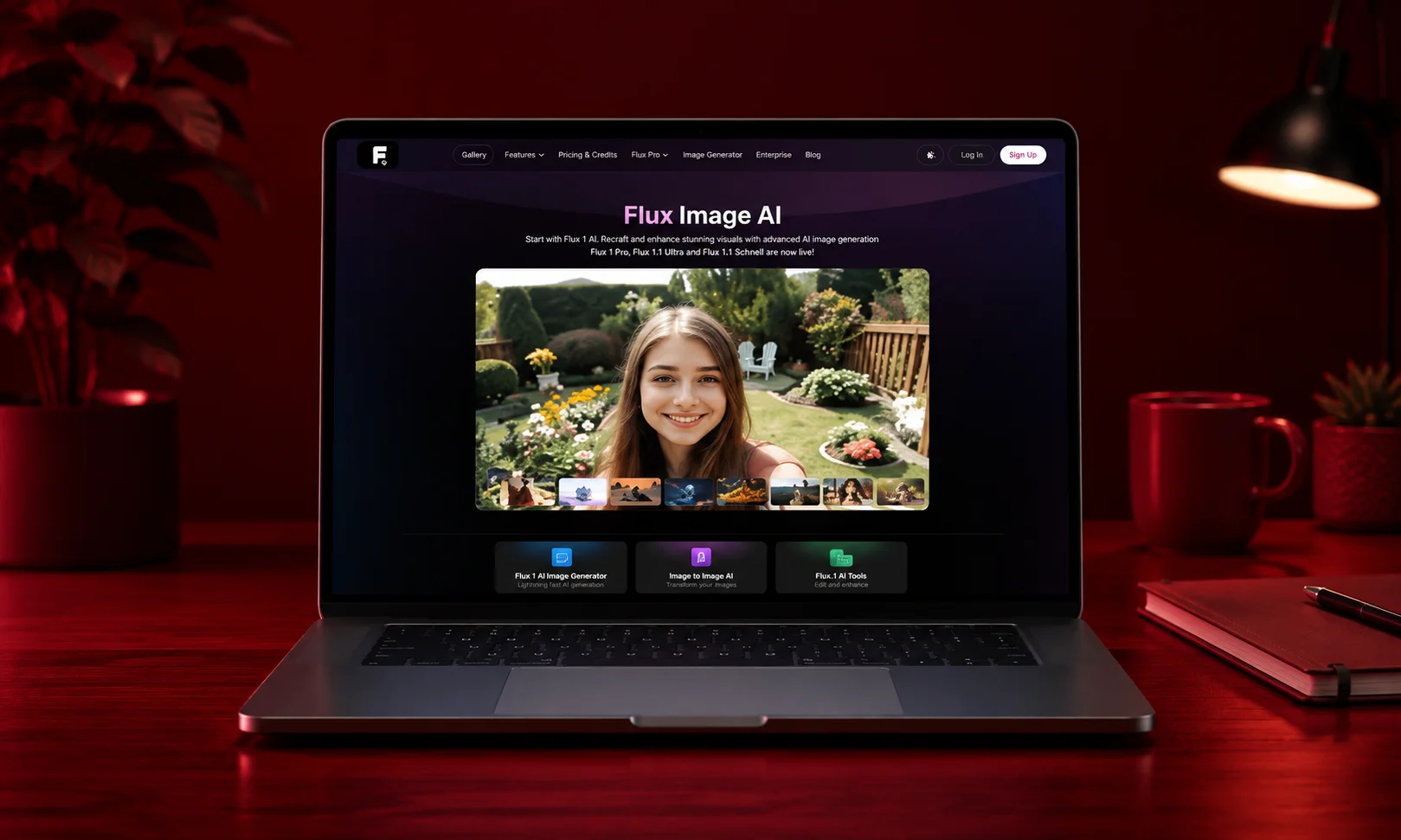
In contrast, FLUX will probably be more appealing to power users who prefer more control in the image-generation process than just opening a web page and typing in a prompt.
FLUX ECS has become an integral part of the ecosystem, as such comparisons put FLUX. # 2 of the top production-ready systems. FLUX recently placed in third from independent testing on difficult prompts. 2 seconds slower than Gemini 3 Pro Image single in one benchmark
The appeal for advanced users is flexibility.
Developers may want API access. Technical teams might want to add image generation capabilities to their own applications. Some creators might desire image-to-image workflows or more influence over the generation process. Researchers too may want a more model orientated experience as opposed to only an end user facing interface.
This is an audience that may not be the same someone who (say) just wants a featured image for a blog article.
As such, FLUX could become more interesting when image generation is incorporated into a production line..
Verdict: For creators, developers and teams that are technically able and in need of advanced workflows and flexibility.
Recraft: Best for brand and design assets
You may want to take a look at Recraft when your goal is not as simple as “give me an image that looks pretty”.
In design teams, you sometimes need assets that act like real-live design elements. Together with needing icons or illustrations, they will require logos, graphics, product ideas or ideas and large scale imagery that resonates within a bigger brand system.
This is why Recraft stands out as an important tool for branding and graphic design.
Another example of this could be a startup that requires a series of illustrations that all match each other. But generating each of these illustrations separately can create slight differences in line weight, proportions, colors, perspective and style all together.
The right way to go about this instead of that would be define a visual system first and then generate assets inside the visual system.
This is where design-centric AI tools become more and more useful.
Bottom Line: You can consider Recraft when you are creating assets for brands and not purely photographic or artistic visuals.
Explaining the Process Behind Ranking the Top 15 AI Image Generators
There is no definitive use case for the “best” so ranking AI image generators is more difficult than traditional software.
A photorealistic image is ideal for one user, and garbage for another. A designer might enjoy a design-based model that generates unpredictable results, but the marketer may hate that unpredictability because the image needs to adhere to particular brand pillars.
Accordingly, the ranking takes into account a number of real-life considerations.
Image Quality
The first test is quite obvious: Does generated image even looks good?
This extends to realism, lighting, texture, composition, anatomy, object cohesion and other visual polish. A tool can respond to a prompt but deliver an artificial or half-baked execution of the visual.
The generative model should return something that is similar to what you want your desired outcome that you want to actually use.
Prompt Accuracy
It should make sense so A GOOD GENERATOR understand what you asked for.
If you prompt for three objects, the red background, a person on the left and a product on the right, it’s ideal if those relations are elaborated by the model.
Recent works in benchmarking have been focused on challenging regions, e.g., object counting, attribute binding, spatial constraints and embedded text.
Thanks to this, adherence to the prompt is a significant factor when identifying the best AI image generator.
Text Rendering
The text is also one of the most crucial criteria for evaluation.
For a tinypic, the best AI image generator probably looks nothing like what an expert in the hiring process would give you as a concept artist.
When your job consists of posters, ads, thumbnails, infographics, book covers and quote graphics editing text can amount to literal hours wasted.
This is especially true for text-to-image generators like Ideogram here, and also seen by all big models experimenting to improve their text-generation.
Editing
Only half of the workflow is done during generation.
The actual productivity advantage comes when you are able to make targeted changes.
You may want everything but the background. However, you may want to change someone clothes keeping the pose. Say you want to shift a product just a touch to the right. Or you might have a horizontal image and need to turn it into a vertical social media asset.
Controlled changes that do not destroy the rest of the image are far more valuable than a generator that only makes new images.
Consistency
It only takes the littlest bit of selling and consistency for commercial work.
If you’re making 30 images for a campaign, you don’t want 30 sources of visual styles that are not related to one another.
You want the same objects and characters, products, colors, compositions and visual identity.
Which is partly why personalization with Midjourney and, say, custom models with Adobe Firefly are becoming so appropriate.
E-E-A-T: The Importance of Trust in Selecting an AI Image Generator
Image quality is only a piece of the puzzle when choosing from the best AI image generator choices. Comparison based on E-E-A-T (Experience, Expertise, Authoritativeness and Trustworthiness) should always involve practical usage of product, real life examples and open discussion about the limitations it possesses rather than just gilding marketing statements. As with many things, AI image tools can move quickly; therefore recommendations should be timely and explain clearly why one platform is more suited for performing a certain task than another. A resource like BrandClickX offers a reliable starting point for better decision-making by keeping AI tool comparisons current as models, features, pricing, and workflows evolve over time. Finally, none of the AI image generators is perfect so inevitably a solid recommendation has to list both advantages and disadvantages in order for users to select what they genuinely need.
FINAL WORDS Best AI Image Generator For Social Media Marketing.
Social media is a particularly challenging use case, as visual needs are always changing.
One day, you will need a realistic product image. Illustrated carousels that you may need for the next day. Then maybe you need a quote card, campaign graphic, educational visual or a meme.
In this type of work, breadth is more important than depth.
ChatGPT Images is handy for conversation-driven creation and editing, while Ideogram may be more advantageous with respect to text-heavy social graphics. This is when Midjourney starts to look appealing, as the aim is to create an eye-catching style that stands out in someone”s feed.
The largest efficiency gain so far is building reusable prompt templates.
Define a repeatable framework: Instead of prompting randomly every time
Brand → audience → topic → visual Tactile → composition → light → atmosphere→ title way movies ratio
Next, adjust that framework for each campaign.
The generator is no longer a fun experiment but rather an industrial you-scratch-my-back-I-scratch-yours situation.
This helps content teams establish an ever-reliable publishing workflow, meaning anyone who produces visuals needs to be able to keep up with articles, campaigns, newsletters and social content.
The Best AI Image Generator for Businesses
Companies need to have a different standard of evaluation for AI image generators than freelance creators.
A business is something that really takes into consideration:
- Commercial usage
- Brand consistency
- Editing
- Team workflows
- Licensing
- Integration
- Scalability
- Data and privacy requirements
- Existing design software
This is especially pertinent when considering Adobe Firefly, as Adobe launched it with professional creative workflows serving as the foundation and continually updates its editing, brand, and custom-model abilities.
That still doesn’t mean Firefly is the best option for every business.
For visual ideas, a creative agency may rely more on Midjourney. Maybe ChatGPT Images would want CHUHMA a marketing team that keeps things simple. A developer constructing an image-generation app might pick FLUX or comparable API-centric design.
What is important is that you should not just evaluate image quality but also fit into the workflow.
This distinction is particularly valuable for content & digital marketing workflows at BrandClickX because, often whether the AI tool demonstrated itself as most useful or not isn’t just based on the strongest demo. This is the one that allows a team to make value drivers while decreasing production burden.
Guide to Decide the Best AI Image Generator
To find a suitable AI image generator, you can answer these five questions.
What Images Are You Creating?
Look at Midjourney if you mainly create artwork.
Comparison of ChatGPT Images and Ideogram If you make marketing graphics.
If you design high-quality assets, go with Firefly or Recraft.
For technical workflows, look at FLUX and API-based options.
But Do You Need Text in Images?
If yes, make tools first that are known for great typography.
One of the main strengths of ideogram is readable text and thus it needs to be looked at in more detail.
Do You Need Editing?
If you often update already created images, inferring alone is insufficient.
Query for tools offering controlled editing, background replacement, object swaps and iterative improvement.
Is Commercial Usage Important?
Check the current terms before making commercial use of generated images before a big project.
AI licensing / usage policy is subject to change. Never depend on an outdated comparison article when you are making a decision for your business in real time.
How Often Will You Use It?
You only produce a picture every couple of weeks, so dropping money on an expensive creative platform does not look like sense.
Pretty much for anyone creating hundreds of assets every month, the efficiency of the workflow can be more important than a price of subscription.
A designer tool that saves the designer many hours of work each week is far more valuable than a cheaper tool that creates more manual labour.
Help Us Help You Get Better Results From Generative Art AI Image Generators
Indeed, if you fail to articulate clear instructions even the most sophisticated AI image generator will not be able to produce high-quality images for you.
And better prompting does not mean putting together a huge keyword laden paragraph.
An effective prompt provides enough information to the model that it understands what image is required.
For example, instead of:
AI office
Try something more specific:
Contemporary Technology Company AI Office, Two professionals collaborating around a transparent digital work station with natural morning light, Editorial Photography, Clean Simple Composition, Realistic Materials and an top notch Corporate Aesthetic in this wide horizontal composition.
The second prompt from the above tells you about:
Decide the subject +where this is going to happen +people involved in that scene+Type of lighting+ what style this image will be in+what composition and mood-What camera will be used/format for this.
That provides the generator with a significantly clearer angle on creativity.
That said, do not turn every prompt into a 500 module handbook.
This is not max prompt length.
The goal is maximum information that can be useful,
AI Art Generator: Are They Good Enough for Work
Yes, but professional does not mean perfect.
The most powerful generators as of late 2026 will offer a form of visual that is effectively useful for professional use-cases, advertising concepts, social media, editorial illustrations, presentations – including mockup websites which are a model of experimentation.
Quality control is the bigger problem.
The produced image may look believable on a preliminary look, but have nuanced issues — misaligned fingers, intermittent suggestions, freak firm geometry, misshapen letters, impossible shadow and also objects that physically do not behave.
For businesses, this is highly relevant.
Finally, If your product is represented by an AI generated image inspect closely before publishing. A little visual error that appears to be irrelevant in the context of an experiment will tarnish credibility once the image is used for a marketing campaign.
Because of this consideration, AI is not an automatic quality-control system — it should be treated more like a creative production tool.
Comparison between AI image generators and traditional design tools
Traditional Design Software is Not Obsolete Due to AI Image Generators
They have altered the locations of where parts of the work take place.
Instead of taking an hour to manually create an initial design direction, a designer can now quickly create multiple directions in just minutes. Then the designer selects one, refines it, edits typography, corrects details and prepares the final asset before production.
That is a major shift.
Exploration is something that AI excels at.
Conventional design tools are still very useful for exactness.
Both tend to be the strongest workflow.
- Generate with AI.
- Select with human judgment.
- Refine with design software.
- Publish only after quality control.
It’s a much more realistic combination than the notion AI is just going to take over every creative workflows.
Okay, What Is An AI Image Generator “Best”?
When we use the term best it appears objective but is in fact contextual.
The best ai image generator is the one that creates the result you require with minimal elbow grease.
As a filmmaker, it could be Midjourney for you.
For a blogger, it may be ChatGPT Images.
Arguably, it is Firefly for a designer working on Adobe.
For typography, Ideogram may win.
FLUX might be the better choice for advanced development workflows.
On the other hand, if we are talking about visuals that are more centered around branding, Recraft might be a better fit.
This is why rankings should be used as a structural framework for decision making, instead of being treated as an eternal leaderboard.
The ranking only published once simply will not hold as the scene of AI image models are changing so rapidly. New models get released, editing capabilities become available in tools, prices change or new workflows can quickly render one tool makes more sense than another.
Final Thoughts: So, Which Is the Best AI Image Generator in 2026?
One sentence answer: There is no one winner.
Overall natural quality + visual style, Midjourney still are one of the best contenders.
ChatGPT Images is a great starting point for everyday user looking to keep the conversational workflow simple.
Gemini should be taken seriously for complicated visual instructions and multimodal editing, especially after the results on benchmarks released in very early October.
Adobe Firefly is the best tool for professional design workflows because it marries generation, editing, creative controls, Adobe integration, and custom-model capabilities.
Of all the options available, I think for readable text in typography and graphics, Ideogram is perhaps one of the most exciting.
If you want to learn more about optimal workflows for production and developer-oriented efforts, want have a look at FLUX.
Recraft is a new possible addition to toolkit for visual assets based on own brand.
The larger lesson here is that you often do not have to pick one or the other.
For example, a contemporary creative workflow can take a single use generator to be used on one type of job and another for content development. The key is to know what each model is good at, and use the right tool for the job, not simply adopt whatever platform just so happened to be ranked #1.
BrandClickX can also be used as a helpful springboard to consider how AI integrates into content creation, SEO, marketing and digital workflows if you are exploring a more expansive AI driven content workflow.
The cleverest solution is telligently simple: test, compare, select based on you lookout.
FAQs
What is the best AI image generator in 2026?
Midjourney is our overall pick for creative image quality. ChatGPT Images is a strong all-round option, FLUX is especially good for realistic imagery, and Ideogram is one of the better choices when text is important.
Which AI image generator is best for beginners?
ChatGPT Images is one of the easiest places to start because you can describe the image and request changes in normal language. Gemini is also approachable, while Ideogram is a good choice for beginners creating posters or graphics with text.
Which AI image generator creates the most realistic images?
FLUX and Midjourney are both strong options for photorealistic results. FLUX is especially attractive for users who want flexibility, while Midjourney often combines realism with stronger artistic direction.
Which AI image generator is best for text?
Ideogram is one of the strongest choices for images containing readable text. It is particularly useful for posters, packaging, advertisements, signs, and book covers.
Is Midjourney still worth using in 2026?
Yes. Midjourney remains one of the strongest platforms for cinematic, creative, and visually polished imagery, particularly when art direction matters.