A plumbing company owner in Ohio told me he used to lose three jobs a week to voicemail. His customers called at 9pm, got no answer, and phoned the next name on Google. He now pays $49 a month for an AI receptionist that answers every call, books the appointment, and texts him the details before he finishes dinner. His “front desk” is a subscription. His competitors still think he hired someone.
That is the shift defining small business software heading into 2027. AI agents stopped being chatbots that answer questions and became workers that finish jobs — resolving support tickets, booking appointments, chasing leads, reconciling invoices — without a human supervising every step. The keyword is finish. The twelve agents below earned their place by completing a business function end to end, at prices a ten-person company can actually pay. They are organized by the department they run, because that is how owners think about the hole in their week.
The 12 AI agents at a glance
| Agent | Department it runs | Starting price |
| Fin by Intercom | Customer support | $0.99 per resolved outcome |
| Tidio Lyro | E-commerce support | Free; from $24.17/month |
| Rosie | Front desk and phones | $49/month |
| Lindy | Inbox, calendar, and operations | From $49.99/month |
| Apollo.io | Sales outreach | Free; from $49/user/month |
| HubSpot Breeze | Sales, service, and marketing on HubSpot | From $7/seat/month |
| Marblism | Multi-role solo operations | From $24/month (annual) |
| Podium | Customer messaging and reputation | From $399/month |
| Manus | Founder research and projects | Free; from $20/month |
| Gumloop | Operations and GTM workflows | Pro from $37/month |
| Intuit Assist | Finance and bookkeeping | Included with QuickBooks |
| Motion | Scheduling and task management | From $19/month |
Customer support: the department agents run best
1. Fin by Intercom — support that bills like a utility
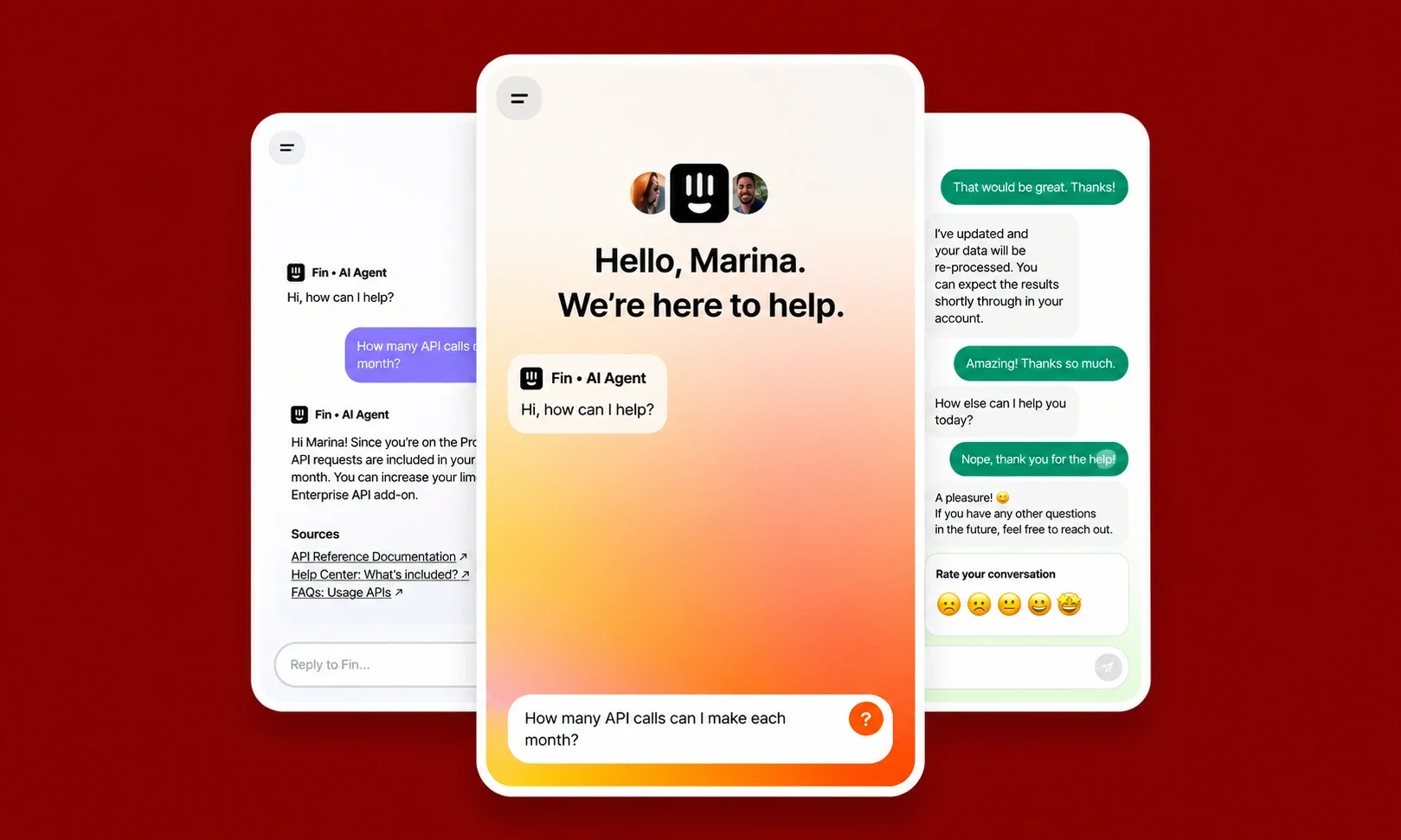
Fin charges $0.99 per resolved outcome, which means the bill rises and falls with results rather than seats. Across more than 12,000 businesses it averages a 76% resolution rate and improves roughly one percentage point a month as it learns a company’s help content. It works across chat, email, voice, social, and Slack, trains on your existing help center in hours, and hands off anything it cannot solve with full context. One caveat for the smallest teams: there is a 50-outcome monthly minimum, so check your volume first.
Best for: businesses with real support volume and unpredictable demand.
2. Tidio Lyro — the e-commerce specialist
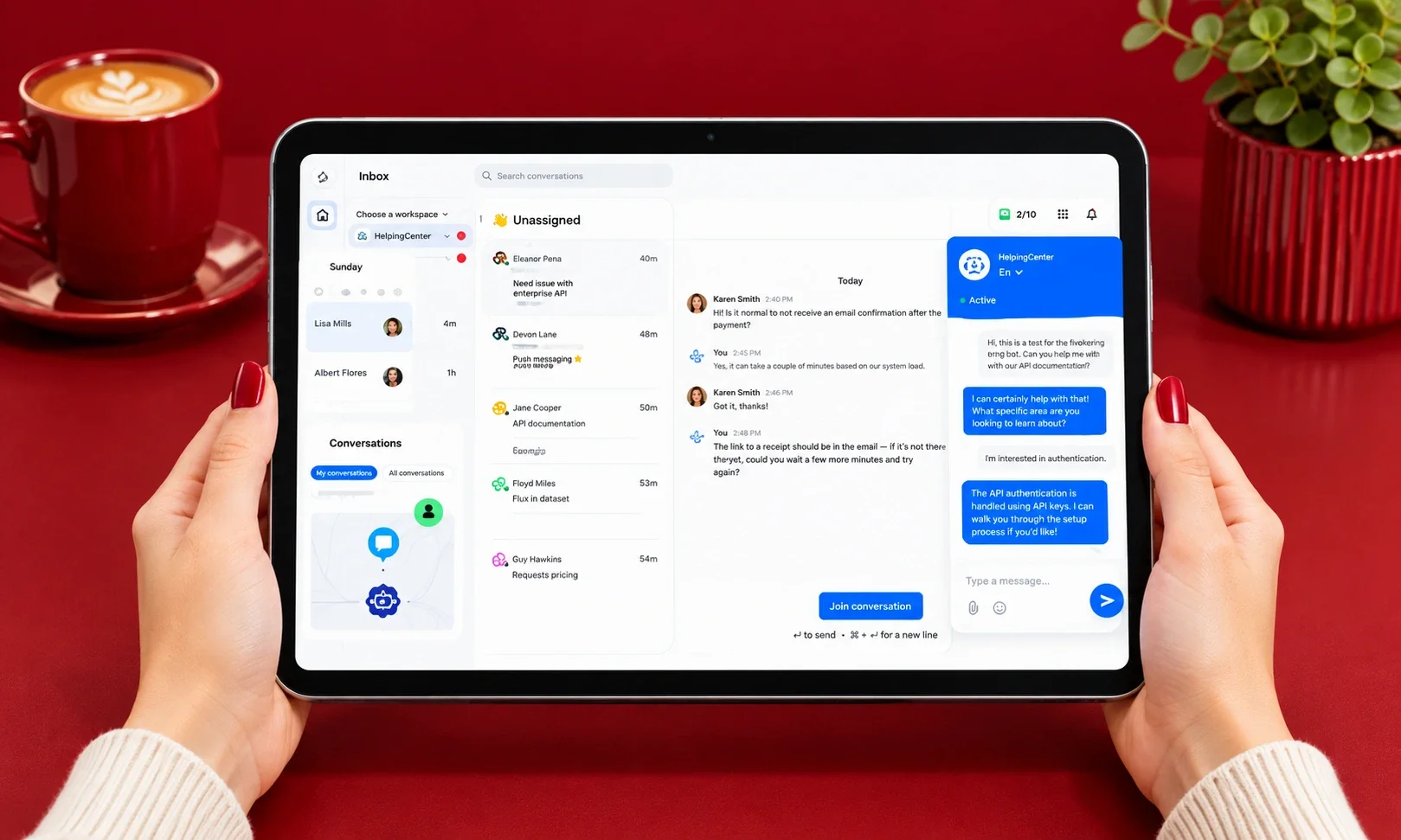
Lyro is the agent small online stores adopt first because it speaks their language: order tracking, product questions, and recommendations, across website chat, email, and social. Eyewear retailer eye-oo cut average wait times from five minutes to thirty seconds and credits it with a 25% sales lift — a case that captures why support agents pay for themselves faster than any other category. There is a free plan; paid tiers start at $24.17/month.
Best for: Shopify-era e-commerce brands answering the same fifty questions daily.
Front desk: the phones stop going to voicemail
3. Rosie — the receptionist for local service businesses
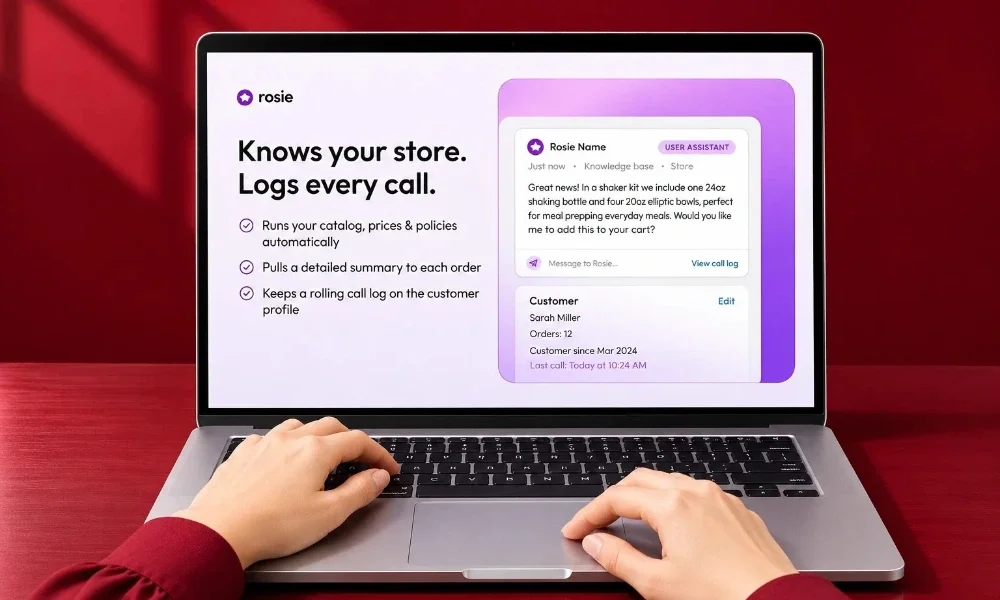
Rosie does one job and does it completely: it answers calls around the clock, books appointments, filters spam, and texts the owner a summary of every call. It trains itself from your website and Google Business Profile in about ten minutes, speaks English and Spanish, and requires no change to your existing number. Professional is $49/month for 250 minutes; direct calendar booking requires the $149 Scale plan. For trades, salons, clinics, and law offices, this is the fastest ROI in the entire agent market.
Best for: local service businesses losing work to unanswered calls.
Sales: outreach without the headcount
4. Apollo.io — the prospecting department
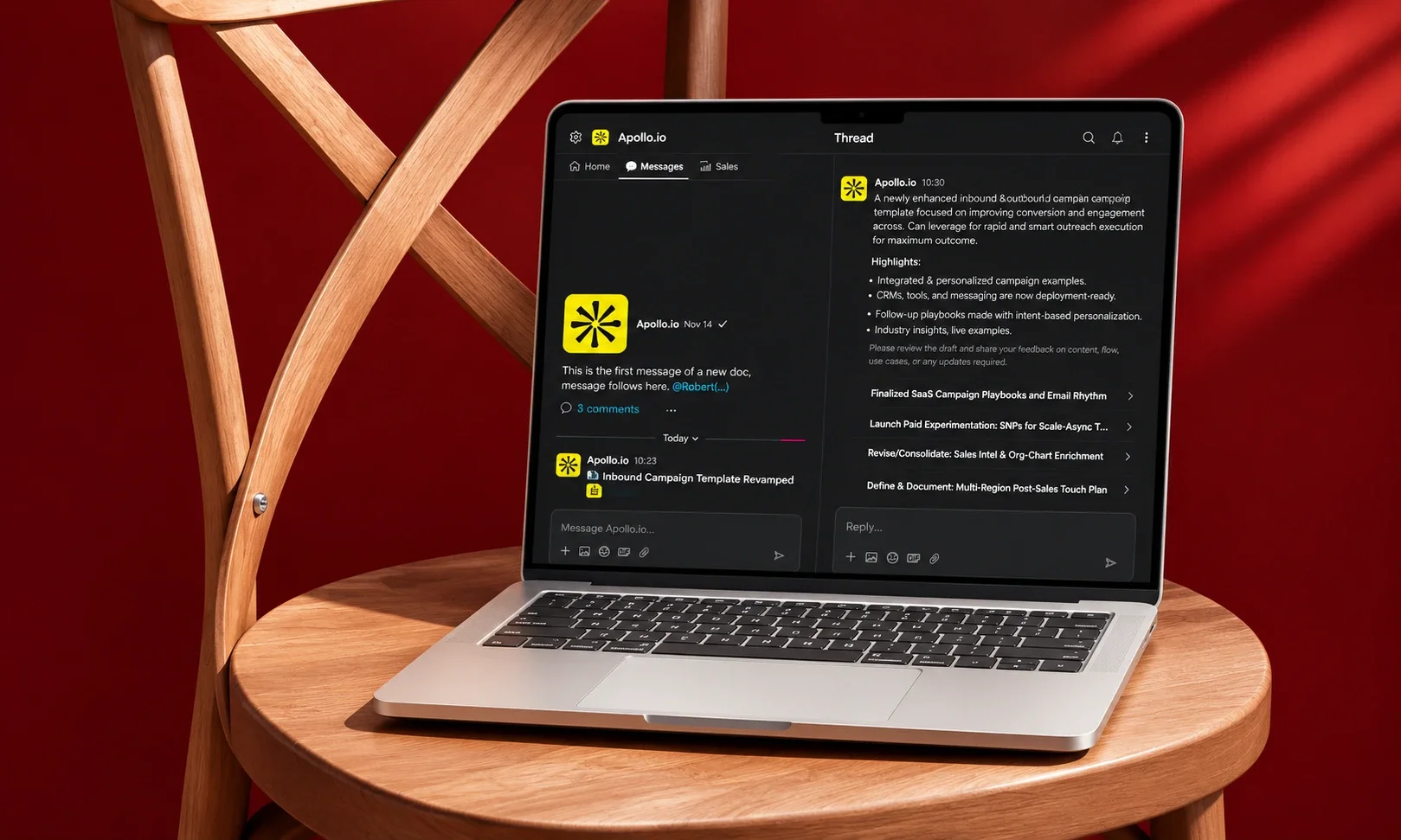
Apollo pairs a massive B2B contact database with AI that writes and sequences outreach, scores leads, and surfaces buying signals — effectively the first two years of an SDR hire compressed into a subscription from $49/user/month, with a real free tier. The honest caveat: deliverability discipline still matters, and teams that blast untargeted volume burn their domains. Used with a defined customer profile, it is the highest-leverage sales spend available to a small team.
Best for: B2B founders doing their own outbound.
5. HubSpot Breeze — agents where your CRM already lives
Breeze’s Customer Agent resolves support questions across chat, email, voice, and WhatsApp at a 70% average resolution rate, with top teams hitting 90%, and Agent Builder lets you create custom agents on top of your CRM data without code. The condition is the point: these agents are compelling only if HubSpot is already your CRM. Buying the $1,300/month Professional tier just for the agents inverts the decision. For existing customers, they are the obvious next step.
Best for: teams already running HubSpot Professional or Enterprise.
Marketing and reputation: the always-on voice
6. Marblism — seven roles for the solo operator
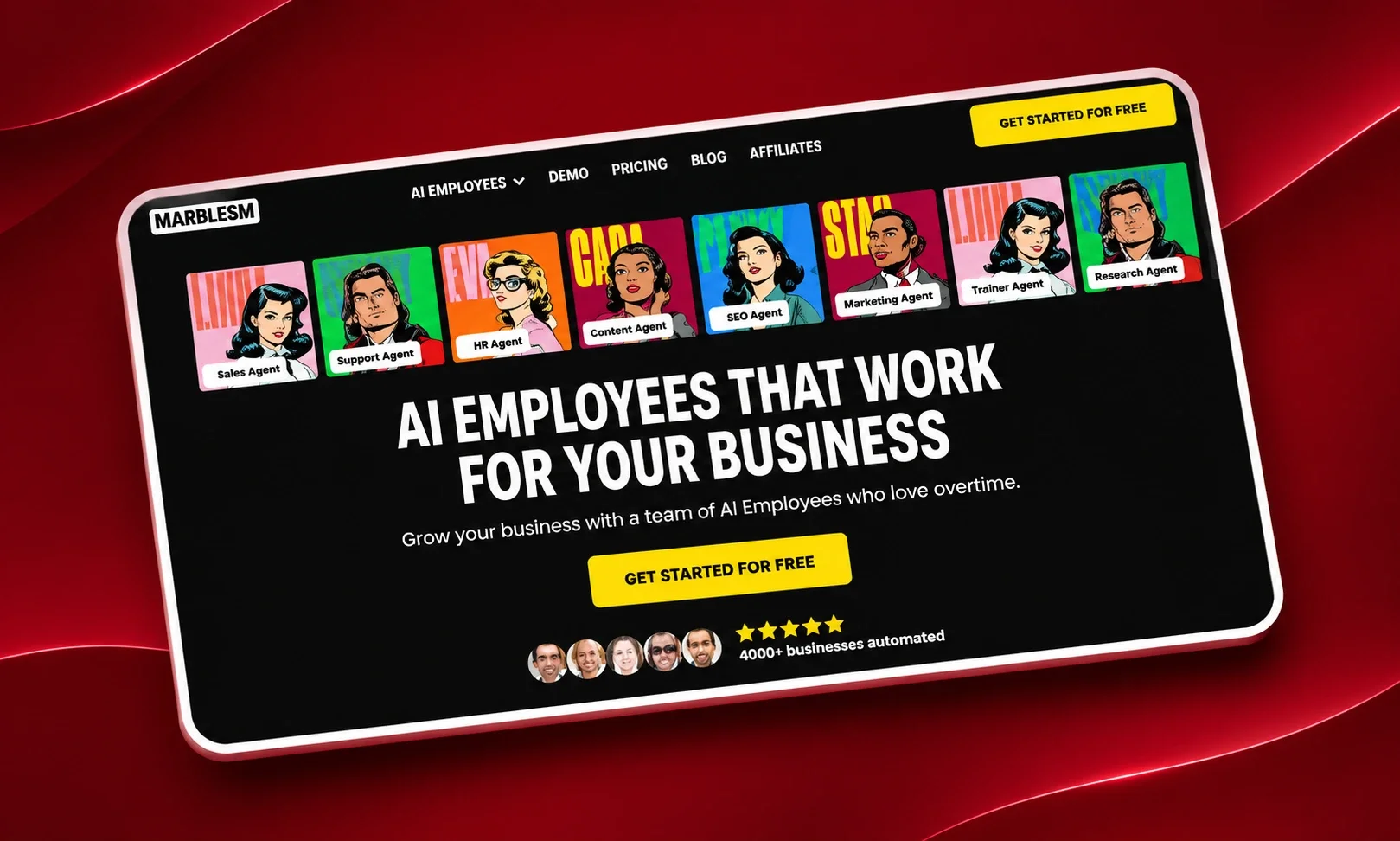
Marblism packages seven “AI employees” — inbox, calls, social media, SEO content, lead outreach, website, and contracts — into one plan starting at $24/month billed annually. No single role matches a specialist tool, but for the owner who is personally handling all seven jobs tonight, the bundle math is hard to argue with. It is the agent market’s honest answer to the solo operator’s real problem: there is no department to automate, there is just you.
Best for: one-person businesses drowning in context-switching.
7. Podium — the reputation engine for local business
Podium’s AI Employee runs customer messaging across calls, texts, email, and social from one inbox, books appointments directly on the calendar, and proactively re-engages past customers — with review generation that has influenced over $3 billion in sales across 10,000-plus businesses. The filter is price: Core starts at $399/month, which is a platform investment rather than a plugin. For automotive, home services, and aesthetics businesses where reviews drive walk-ins, the math routinely works.
Best for: service businesses where local reputation is the growth engine.
Operations and finance: the back office that runs itself
8. Lindy — the inbox and calendar chief of staff

Lindy’s prebuilt assistants triage email, schedule meetings, update CRMs, and run recurring routines across 1,500-plus integrations, with approval gates on anything that touches the outside world — it drafts and waits rather than sending on its own authority. Plus plans start around $49.99/month, with lighter entry tiers appearing as competition heats up. For an owner whose morning disappears into the inbox, Lindy returns the first hour of the day.
Best for: founders and executives drowning in email and scheduling.
9. Gumloop — the ops workflow builder
Gumloop gives operations-minded teams a visual canvas for multi-step agent workflows — lead enrichment, SEO monitoring, competitive tracking, reporting — with unlimited seats on Pro from $37/month and roughly 150 integrations exposed as MCP servers. Shopify runs it across more than 110 teams. The trade-off is credit math: costs vary by model tier and workflow complexity, so pilot a real workflow before standardizing. Its agents execute when triggered rather than persisting, which suits process work better than conversation.
Best for: ops and growth teams building repeatable workflows.
10. Intuit Assist — the finance agent you already pay for

Intuit Assist lives inside QuickBooks, which is exactly why it belongs on this list: no new vendor, no data migration, just an agent that drafts invoices, chases late payments, categorizes transactions, and answers “how is cash flow” in plain English against your actual books. For the millions of small businesses already on QuickBooks, the finance department agent is not a purchase — it is a feature activation.
Best for: any business already running its books on QuickBooks.
11. Motion — the scheduling department

Motion rebuilds your calendar every day around priorities: it schedules tasks into open slots, reshuffles when meetings land, and tells you honestly what will not fit. From $19/month, it replaces the daily triage ritual that eats the first hour of knowledge work. It will not manage a warehouse, but for service businesses and agencies running on billable hours, it is the closest thing to an operations manager in software form.
Best for: agencies and consultants whose product is time.
The founder’s bench: one agent for everything else
12. Manus — the research-and-deliverable agent
Manus is the generalist on this list: assign it competitor research, a market scan, or a first-draft pitch deck, and it browses, analyzes, and assembles a finished deliverable in its own cloud environment. From $20/month, it is the agent for the jobs that do not belong to any department — the work owners do at midnight because nobody else can. It will not run your support queue, but it will give you back the weekend before the investor meeting.
Best for: founders who need finished deliverables, not another dashboard.
What the early adopters get right
The owners succeeding with agents share a pattern, and it is the opposite of the hype. They start with one job — the one eating the most hours or losing the most revenue — and run it for a month before adding a second. The owner who hands off seven roles on day one and the owner who starts with the phones both end up automated; the second gets there faster and keeps customers along the way.
Two disciplines matter more than tool choice. First, clean data: agents perform exactly as well as the customer records, help articles, and calendars behind them, so the unglamorous cleanup work is what turns a demo into dependable output. Second, approval gates: the trustworthy setups keep humans on irreversible actions — refunds, sends, deletions — while letting agents run freely on reads, drafts, and scheduling. The same judgment applies here as to any marketing AI copilot: define the workflow first, then buy the tool. And when agents start touching brand voice at scale, the discipline from AI personalization at scale applies — consistency is a governance problem, not a model problem.
Frequently asked questions
What is the best AI agent for a small business in 2027?
The best agent is the one matched to a single high-volume job. For customer support, Fin by Intercom (from 0.99perresolvedoutcome)leads.Formissedphonecalls,Rosie(0.99 per resolved outcome) leads. For missed phone calls, Rosie (49/month). For solo operators needing several roles at once, Marblism’s bundle from $24/month is the practical pick.
How much do AI agents cost for a small business?
Single-job agents run $20 to $50 a month — Rosie for phones, Lindy for inbox, Motion for scheduling. Outcome-priced agents like Fin charge per resolution. Multi-role platforms range from Marblism’s $24/month to Podium’s $399/month for full customer messaging.
Can AI agents really replace employees?
They replace the recurring task layer — answering, booking, chasing, categorizing — not the judgment layer. Owners still set context, approve exceptions, and handle edge cases. The accurate framing: agents absorb the work that runs on repeat so small teams can punch above their headcount.
Are AI agents safe to use with customer data?
The serious platforms carry SOC 2 and ISO certifications, and leading vendors contractually prohibit training on customer data. Safety comes down to configuration: keep humans in the loop on irreversible actions and audit what the agent can access before connecting it.
What should I automate first?
The job that costs you the most — missed calls, slow support replies, or the inbox. Run one agent on it for a month. Businesses that automate a single painful workflow first expand faster and with fewer customer-facing mistakes than those that hand off everything at once.