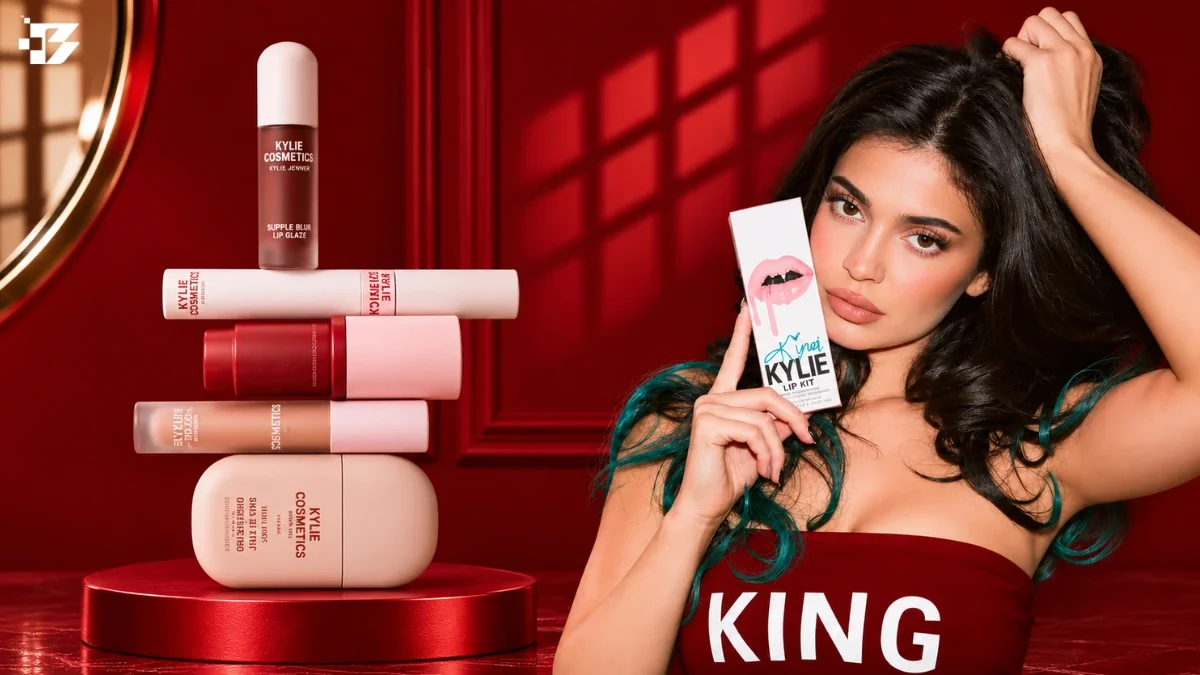
Kylie Cosmetics is the brand that started the modern celebrity beauty gold rush — and the brand that exposed its biggest lie. Built from a $250,000 investment and one $29 Lip Kit, it hit a $1.2 billion valuation in just four years, then became the most scrutinized beauty company on earth when Forbes alleged the numbers behind it had been inflated for years.
This is the complete financial story: the rise, the $600 million Coty deal, the fall, and the quiet rebuild happening right now.
Key Takeaways
- Kylie Jenner launched Kylie Cosmetics on November 30, 2015 with $250,000 of her own modeling money. The first 15,000 Lip Kits sold out in under one minute.
- Coty bought 51% of the company for $600 million in November 2019, valuing it at $1.2 billion — but the deal’s SEC filings exposed real trailing revenue of $177 million, roughly half what the Jenner team had claimed.
- Forbes stripped Kylie of her “youngest self-made billionaire” title in May 2020.
- Under Coty, the brand took a $31.4 million impairment in 2022, relaunched as clean and vegan in 2021, and now generates an estimated 351–496 million a year across 65+ countries.
- Kylie Jenner’s net worth sits around $700–750 million in 2025–2026 — wealthy, but no longer a billionaire.
The Rise: $250,000 and a One-Minute Sellout (2015–2018)
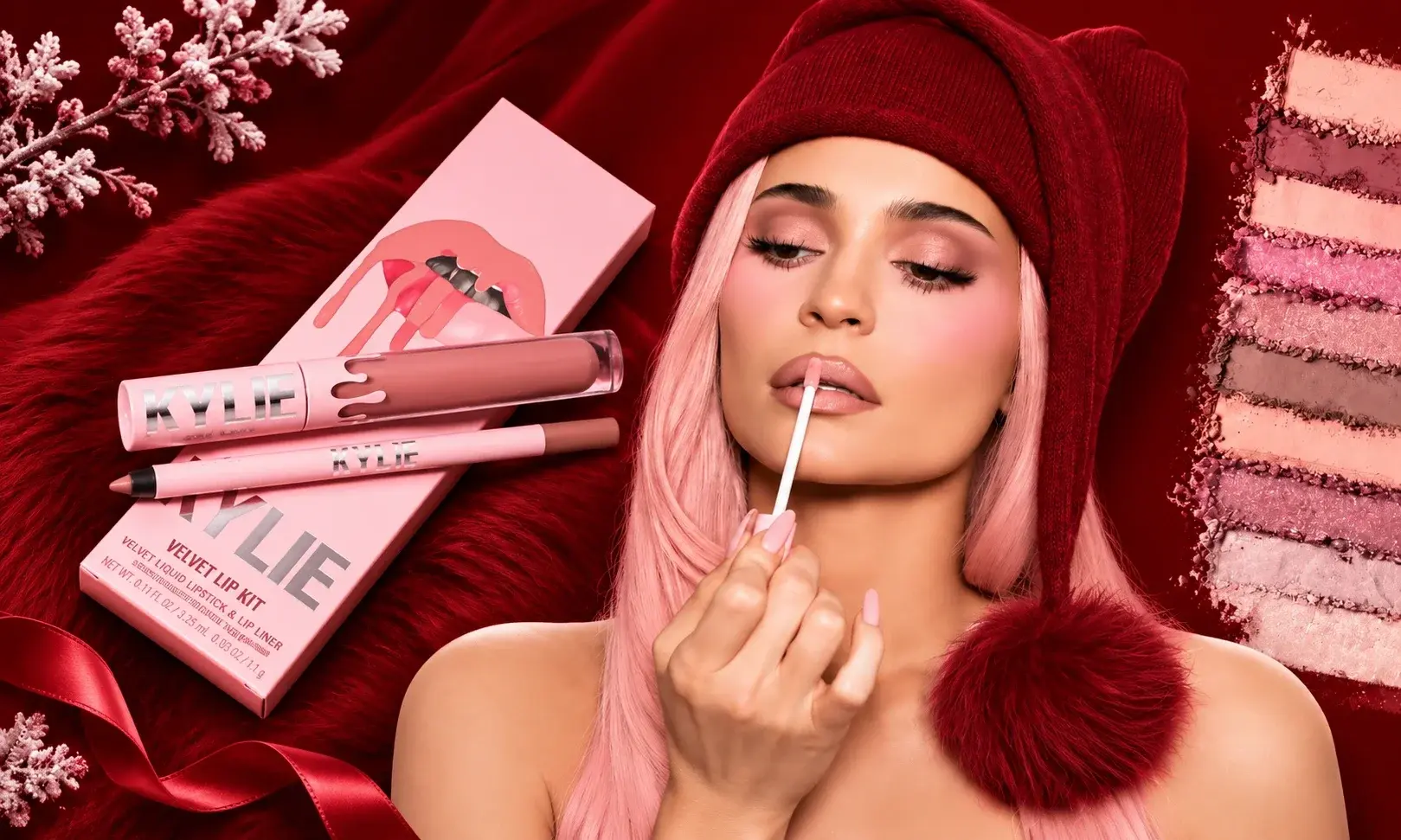
Kylie Jenner was 17 when she put $250,000 of her modeling earnings into a first production run with Seed Beauty, the private-label manufacturer in Oxnard, California, that also powered ColourPop. Her mother Kris Jenner handled finance and press (for her standard 10% management fee).
On November 30, 2015, the brand then called Lip Kit by Kylie launched three liquid lipstick and liner kits at $29 each. All 15,000 units sold out in under one minute and crashed the website. On resale sites, kits flipped for 500–1,000, up to 30x retail.
Three structural advantages made this growth possible:
- Zero-cost marketing. Kylie’s Instagram audience (40M+ followers at launch, 270M+ across platforms by 2019) replaced an advertising budget entirely — an earned-media engine worth an estimated $50M+ a year.
- Direct-to-consumer economics. Selling exclusively through KylieCosmetics.com for the first three years meant 60–70% gross margins, versus the 40–50% a brand keeps selling wholesale through department stores. Every $29 Lip Kit threw off roughly $17–20 in gross profit.
- Scarcity drops. Limited runs and “sold out” cycles manufactured urgency no legacy brand could replicate.
The headline revenue figures from this era $307M in 2016, $330M in 2017, $360M in 2018 made Forbes put Kylie on its cover in 2018 with an $800 million valuation, then declare her the youngest self-made billionaire ever in March 2019 at $900 million. Keep those numbers in mind. They matter later.
In November 2018, the brand made its first move into physical retail: an exclusive Ulta Beauty launch across 1,100+ US stores that generated $54.5 million in its first six weeks, with Ulta executives noting they spent “not a dime on traditional marketing.”
For a parallel story of a celebrity brand built on authenticity instead of hype, see our breakdown of Fenty Beauty and Rihanna’s beauty empire.
The $600 Million Coty Deal — and the Numbers It Exposed (2019–2020)
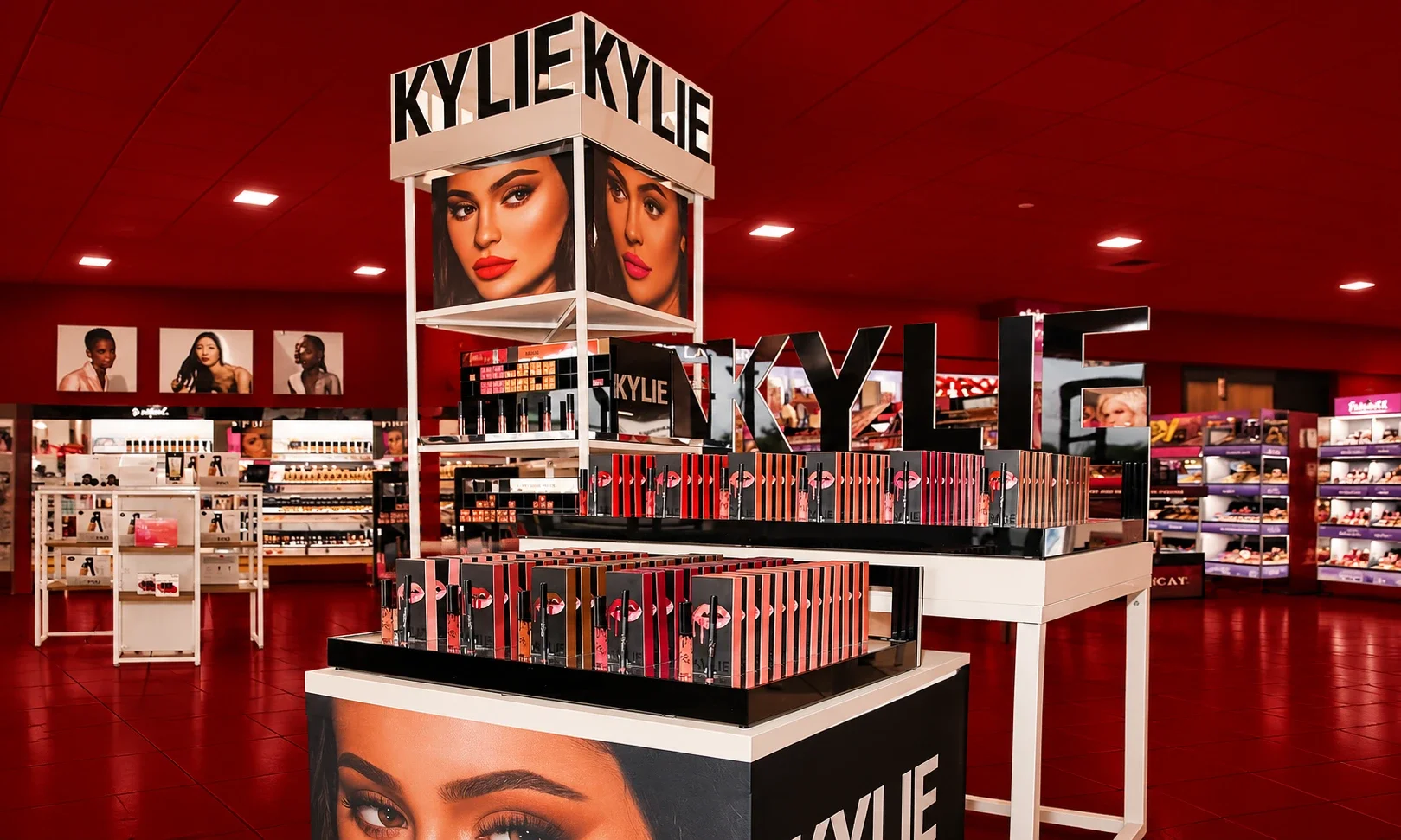
On November 18, 2019, Coty Inc., the struggling beauty conglomerate behind CoverGirl and OPI, agreed to pay $600 million in cash for a 51% controlling stake in Kylie Cosmetics. The math implied a $1.2 billion valuation.
The deal made strategic sense for both sides:
| Coty got | Kylie got |
|---|---|
| A Gen-Z growth brand with 270M+ followers of free reach | ~$340M in cash after taxes |
| $177M in verified trailing-twelve-month revenue | Kept ~44% ownership (worth ~$528M on paper) |
| DTC capabilities it lacked | Global manufacturing, R&D, and distribution |
| A prestige portfolio anchor | Freedom to stay creative lead while Coty ran operations |
At 6.8x revenue, Coty paid a full celebrity premium and then the filings came out.
The SEC documents behind the deal told a different story than the Jenner press machine had. Verified trailing revenue was $177 million, not the $360 million claimed for 2018 alone. Coty’s own diligence suggested 2018’s real number was closer to $125 million a gap of roughly 188% between claim and reality.
In May 2020, Forbes published “Inside Kylie Jenner’s Web of Lies,” accusing the family of inflating the size and success of the business for years, and revoked her billionaire status, recalculating her net worth to just under $900 million. Fourteen months between crowning and revocation.
To be fair to the underlying business: even the verified numbers described a genuinely strong company. EBITDA margins above 25% and 60–70% gross margins on a $29 lip kit are elite economics for any beauty brand, celebrity or not. The scandal was never that Kylie Cosmetics was fake it was that a very good $177M business had been sold to the public as a $360M one.
The Fall: Impairments, a Backfiring Rebrand, and a Stalled Buyback (2020–2023)
The post-deal years were hard on almost every front.
The valuation deflated. In 2022, Coty recorded $31.4 million in impairment charges related to Kylie Cosmetics, an accounting admission that the brand was worth less than what Coty paid for it. Coty’s stock, meanwhile, went on a years-long slide.
The 2021 rebrand landed flat. In July 2021, Coty relaunched the entire line as clean, vegan, and cruelty-free 37 lip kits, 30 glosses, reformulated everything — while moving manufacturing from Seed Beauty in-house. Strategically sound for Gen Z ingredient expectations; commercially underwhelming. The new formulas never recreated the frenzy of the original drops, and CEO Sue Nabi acknowledged on an earnings call that the manufacturing transition itself had limited sales.
The founder got restless. By August 2023, Kylie was exploring buying back Coty’s 51% stake out of frustration with how the brand was being managed. The talks stalled over price. No deal happened. She remains a 44% minority owner of a brand someone else controls.
The competitive picture darkened at the same time. Rare Beauty, Selena Gomez’s brand, went from $75.7 million to a projected $400 million on Sephora sell-through. Hailey Bieber’s Rhode sold to e.l.f. Beauty in a deal worth up to $1 billion. The category Kylie created was now crowded with founders executing her playbook — often better. We track the full landscape in our 20 celebrity makeup brands ranking.
The Rebuild: What Kylie Cosmetics Looks Like in 2026
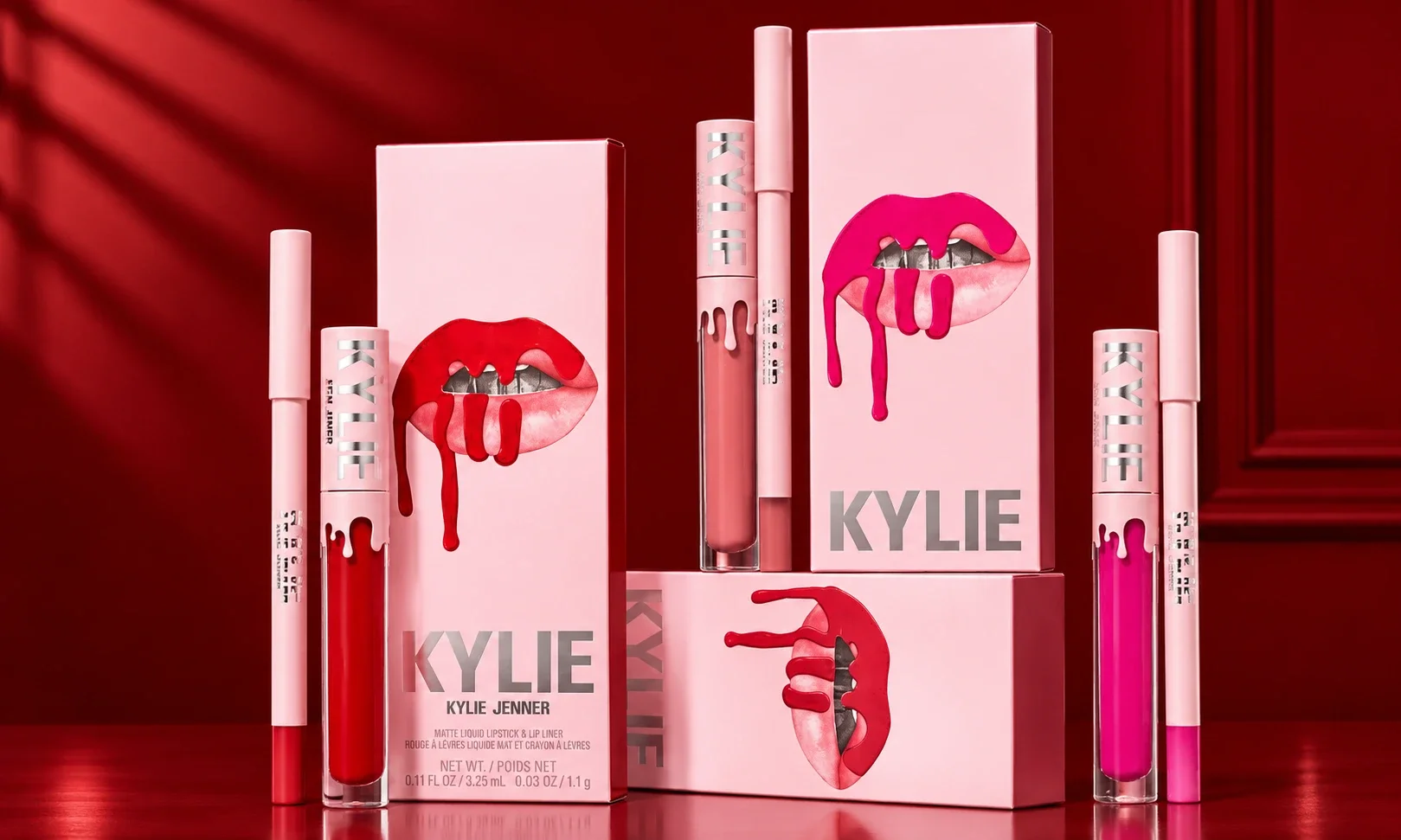
Here is the part most “Kylie is over” takes miss: the business stabilized.
- Revenue: Estimates for 2025 online sales range from ~351millionto~496 million GMV depending on the tracker and methodology, with growth projected at a flat-to-modest 0–5% for 2026. Down from the hype era but roughly double the verified 2019 figure.
- Distribution: 65+ countries through Ulta, Sephora, Harrods, Selfridges, Douglas, and Mecca, plus travel retail infrastructure the standalone DTC brand could never have built.
- Category expansion: The Cosmic fragrance line (the $64 Cosmic 2.0 Eau de Parfum is a top seller), hair and body mists launched in late 2025, plus Kylie Skin and Kylie Baby under the same corporate roof. Fragrance alone generated $3.1M in media value in a single week in February 2025.
- Portfolio context: The brand sits in Coty’s Prestige division, which grew 13% in FY2024.
Kylie Jenner’s personal net worth is estimated at 700–750millionin2025–2026 builtfromthe~340M after-tax Coty payout, her remaining 44% stake, an $80M+ real estate portfolio, and endorsements. Not a billionaire. Not remotely broke.
For the product side of the story, see our Kylie Cosmetics Lip Kit guide.
Claimed vs. Verified: The Full Revenue Timeline
This table is the single most-cited element of this article — every figure has a named source behind it.
| Year | Claimed Revenue | Verified Revenue | Source of Truth |
|---|---|---|---|
| 2015 | ~$420K (launch day) | ~$420K | 15,000 kits × $29 |
| 2016 | $307M | Disputed | Forbes later alleged fabrication |
| 2017 | $330M | $68.7M (e-commerce only) | Oppenheimer/e-commerce estimates |
| 2018 | $360M | ~$125M | Coty due-diligence documents |
| 2019 | $200M+ (Coty guidance) | $177M (TTM) | Coty SEC filing |
| 2022 | — | ~$222M | Retail channel estimates |
| 2024 | — | ~$339M | eCommerceDB estimate |
| 2025 | — | $351M–$496M | ECDB/web-revenue trackers |
5 Lessons Every Brand Founder Should Steal From Kylie Cosmetics
- Audience is a balance-sheet asset. Kylie’s following replaced a nine-figure ad budget. Build distribution before product. Related: Instagram influencer marketing strategies.
- DTC margins buy you options. 60–70% gross margins gave her the cash flow to stay independent for four years and negotiate from strength.
- Scarcity is a strategy, not an accident. Drop culture turned a $29 lipstick into a $1,000 resale item.
- Your numbers will eventually be audited. The Coty deal forced the truth out. Inflated metrics don’t just risk embarrassment they poison the multiple a real acquirer will pay.
- Sell at peak narrative, not peak revenue. Kylie sold 51% at the absolute top of her hype cycle, weeks before a pandemic and months before the Forbes exposé. Timing is a skill.
Frequently Asked Questions
Is Kylie Jenner still a billionaire?
No. Forbes named her the youngest self-made billionaire in March 2019, then revoked the title in May 2020 after Coty’s SEC filings revealed Kylie Cosmetics’ real revenue was roughly half of what had been claimed. Her net worth is estimated at $700–750 million in 2025–2026.
How much did Kylie Jenner make from selling Kylie Cosmetics?
Coty paid $600 million in cash for 51% in November 2019. After estimated capital gains taxes, Kylie netted roughly 340million,andsheretainedabout44%ofthecompany paperwealthof~528 million at the deal valuation.
Who owns Kylie Cosmetics now?
Coty Inc. owns 51%. Kylie Jenner holds approximately 44%, and Kris Jenner holds an estimated 5–10% as manager. Kylie explored buying back Coty’s stake in 2023, but talks stalled over price.
How much revenue does Kylie Cosmetics make today?
Trackers estimate 2025 online revenue between $351 million and $496 million, with 0–5% growth projected for 2026 roughly double the $177 million verified at the time of the Coty sale.
Why did Forbes revoke Kylie Jenner’s billionaire status?
Coty’s acquisition filings showed trailing twelve-month revenue of $177 million — versus the $360 million the Jenner team had claimed for 2018 alone. Forbes concluded the family had “inflated the size and success of her business for years.”
What happened to the Kylie Lip Kit?
It still exists, reformulated. In July 2021 Coty relaunched the full line with clean, vegan, cruelty-free formulas and 8-hour wear, sold through KylieCosmetics.com, Ulta, Sephora, and international retailers.
The Bottom Line
Kylie Cosmetics is two stories at once. It’s the greatest proof-of-concept in celebrity brand history — $250,000 to $1.2 billion in four years — and it’s the category’s defining cautionary tale about inflated numbers. The rebuild under Coty is real but modest: a profitable, globally distributed, mid-hundreds-of-millions business that no longer needs to pretend it’s a rocket ship.
That’s exactly what makes it worth studying. Hype built the brand. Substance — margins, distribution, verified revenue is what’s keeping it alive.
Want the data behind more celebrity empires? Read our teardowns of Fenty Beauty, Rare Beauty, Cristiano Ronaldo’s CR7 brand, and the biggest celebrity fortunes.