A luxury retail location is worth pursuing only when its customers, setting, store experience, and economics all fit the brand. Evaluate those parts together, then check whether the site can support the store’s role and sales plan.
A prestigious address may draw attention, but it does not prove that local customers will shop there or that costs will work. The right choice could be a compact boutique, a mall unit, or an experience-led flagship. The format depends on the brand’s goals and the people it wants to reach.
For site selection, use data to sharpen your judgment, not to replace a visit to the property. Your team should check the customer fit, nearby activity, physical setting, and financial case before making decisions. Treat the address as one part of the investment case, not as proof that the store will succeed.
Key Takeaways
- Define the store’s role before comparing locations.
- Test customer demand, not just population or foot traffic.
- Choose a format and size that support the planned experience.
- Check visibility, access, and accessibility at the property.
- Model full occupancy cost and build-out risk.
- Compare finalists with one weighted scorecard.
How to Evaluate Luxury Retail Locations: Start With the Brand
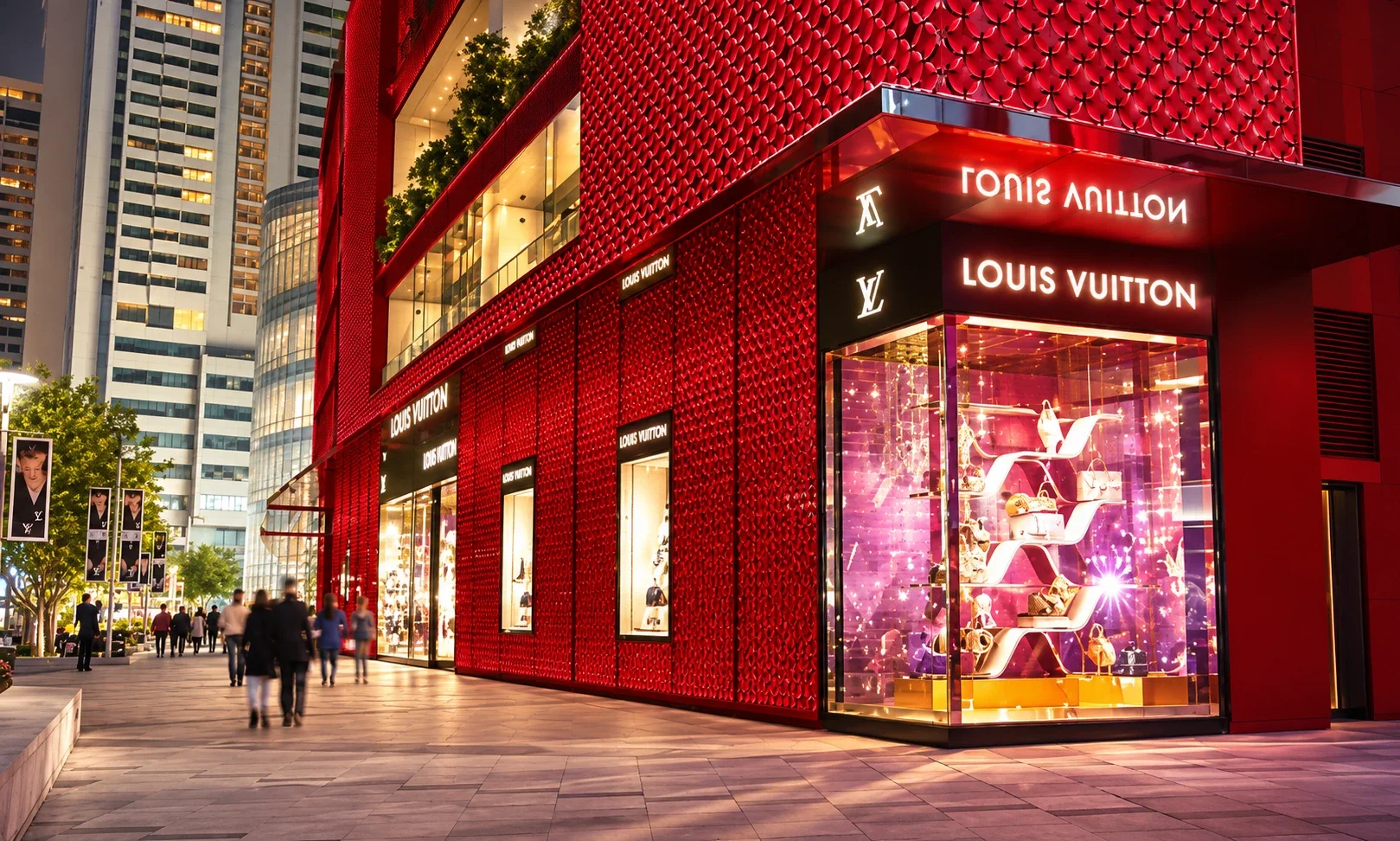
Start by deciding whether the proposed store is meant to drive local sales, deepen client relationships, raise brand visibility, or combine those jobs. That role gives your retail site selection team a clear test for each location.
Luxury openings point to a more selective approach, not a blanket retreat from physical stores. U.S. luxury store openings totaled 123,334 square feet in the first half of 2026, down 46% from 227,000 square feet a year earlier. In the first half of 2026, 39.3% of luxury executives were actively planning network optimization, with fewer, higher-quality locations as a priority.
Define the store’s job in the market
A flagship often builds brand presence and gives clients room for events, private service, or special displays. A boutique or mall unit may focus more on local clients, repeat visits, and direct sales. Ask what the new store adds to the network, rather than judging it as a standalone address.
U.S. luxury leasing activity totaled 475,210 square feet in 2023, 407,396 square feet in 2024, and more than 510,000 square feet in 2025. Luxury monobrand openings were 15%-20% below 2022 levels, while average flagship size had grown more than 30%. These patterns support selective investment in stores with a defined job.
Do not compare addresses until you can explain what the new store adds to the brand’s existing network.
That job may include serving clients who already shop online, bringing new customers into the brand, or offering a place to see products in person. A channel plan can help your team judge whether a new store adds demand or shifts sales from another channel.
Turn the customer profile into site criteria
Translate price point, service needs, product mix, and shopping habits into site criteria. A brand with appointment-led service may need private rooms and calm access. A label known for limited products may need display space and a strong street presence.
Your analysis should link the customer profile to real choices: street or mall, visibility, nearby co-tenancy, store layout, and the service the location can support. For broader brand context, review how leading names such as Hermès, Rolex, and Patek Philippe position their stores in this luxury brand ranking.
Price and channel also shape expectations. Outlet merchandise may be made for outlet distribution, so it may differ from a full-price store’s current assortment. That distinction matters when you compare store roles, as this Michael Kors outlet guide explains.
Write the store’s purpose and target client into a short site brief before reviewing addresses.
Which Customers and Trade Area Can Sustain the Store?
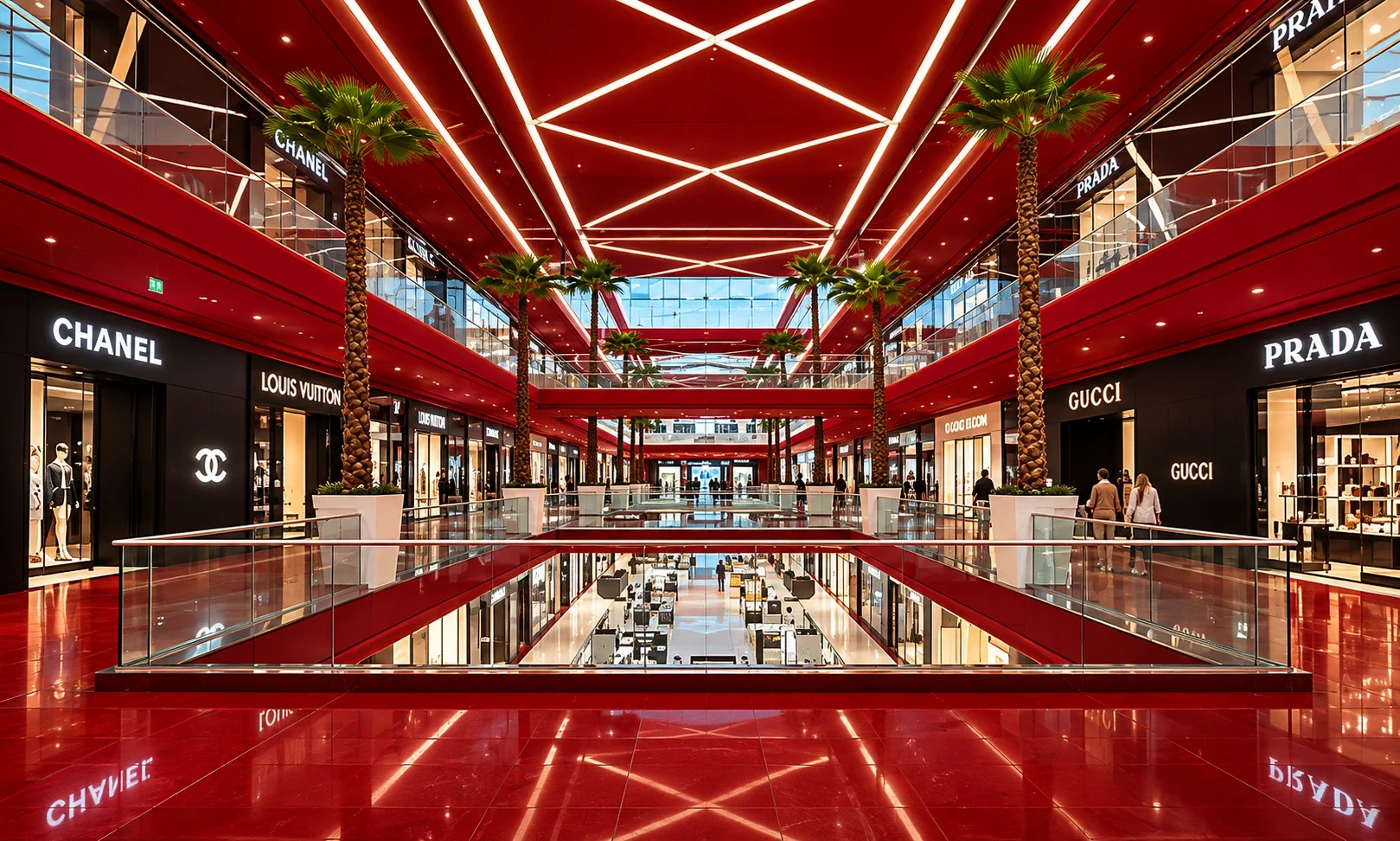
A luxury site needs a reachable pool of likely clients, not simply a large population or a busy sidewalk. Likely clients are people whose spending, habits, and reasons for visiting match the brand.
A trade area is the geographic area, defined by radius or drive time, that supplies most of a property’s customers. A 10-15 minute travel radius is a useful first screen, then test 10- and 20-minute walk or transit areas. These boundaries are starting points, not proof that everyone inside them shops at the site.
- Resident and daytime population
- Income and age profile
- Pedestrian and vehicle activity by time of day
- Tourism or visitor exposure
- Nearby shopping destinations
Census data can describe residents, household income, and age. Real-world movement or visit measures add clues about when people arrive and where they shop. Retail site analysis can also use vehicle counts, nearby retailers, competition, market gaps, visibility, access, parking, and building size. Mobile location data is not required.
High household income or busy sidewalks alone do not prove luxury demand. Check whether visitors match the brand’s customer profile, and note whether they come to shop, work, dine, or sightsee. A crowded street at lunch may be quiet during the hours when clients expect appointments.
The global luxury customer base fell from roughly 400 million people in 2022 to 330 million in 2025. Around 20 million mostly aspirational shoppers exited, while customers spending more than €20,000 a year made up 46% of luxury sales, compared with 30% in 2019.
Those global shifts give context, not a forecast for a U.S. property. A local area can differ in its visitor mix, shopping habits, and client base. Vogue Business discusses U.S. luxury markets and retail districts in its overview of American luxury.
Compare the candidate’s visitors with the customer profile of the brand’s strongest existing stores.
What Store Format and Size Fits the Market?
A larger space is justified when its role and experience need the area, not simply because a flagship sounds more prestigious. Start with the job the store must do, then choose a format and footprint that can do it well.
From July 2025 through July 2026, luxury openings were split among malls, street retail, and hospitality settings. Nearly half of the openings were under 2,500 square feet, so a large flagship is not the default model.
Choose between a mall unit and street retail
Malls offer a controlled setting, shared services, and nearby stores that can draw shoppers. Street retail can give a brand a visible storefront and more control over its own entrance and presence. Each format supports different goals, and neither guarantees the right customer mix.
| Property type | Share of openings | Average store size |
|---|---|---|
| Malls | 51.6% | 3,144 square feet |
| Street retail | 46.3% | 5,850 square feet |
| Hospitality | 2.1% | 2,637 square feet |
The averages show how recent openings differed by property type, not what your store must be. A mall unit may work for a focused assortment and repeat local visits. A street location may suit a brand that needs a distinct entrance, strong visibility, or space for a larger presentation.
Match the footprint to the store experience
Under 2,500 square feet accounted for 48.4% of openings. Another 29.5% measured 2,500 to 5,000 square feet, while 16.8% measured 5,000 to 10,000 square feet. Only 5.3% were over 10,000 square feet.
Larger spaces can make room for dining, events, galleries, client suites, and other experiences. Luxury experiences grew about 3% in 2025 while luxury products declined about 1%. That shift can support a larger format when the store has a clear plan for those activities.
Still, three of the five U.S. luxury openings larger than 10,000 square feet landed on streets in New York and Los Angeles. Those large sites reflect particular brand goals and markets, not a template for every store. Teams planning a connected physical and online customer experience can also review this guide to building an ecommerce store.
Match the proposed square footage to the activities the store must accommodate.
Which Corridors and Competitors Strengthen the Brand?
A strong luxury corridor earns consideration through the customers and brand neighbors it brings together, not through its name alone. Look at the mix of stores, visitors, and direct competitors that shape the local shopping experience.
From July 2025 through July 2026, Miami’s Design District had eight luxury openings, the highest count of any U.S. prime corridor. Rolex, Bvlgari, and Vacheron were among them. Madison Avenue led in total opening square footage, driven largely by Dior’s 52,000-square-foot flagship.
The two corridors tell different stories. Miami led by opening count, while one very large store drove much of Madison Avenue’s new space. The Beverly Hills Triangle had three luxury openings averaging roughly 19,700 square feet each, pointing to its flagship-oriented role.
Prime corridors captured 30 of the 45 tracked street-retail openings. That concentration makes established districts useful places to assess, but the number of openings alone cannot show whether a particular site will work.
Co-tenancy can help a corridor attract relevant shoppers and reinforce a sense of place. Complementary businesses may draw the same customer for different reasons. Several strong direct competitors can also divide demand, especially when the trade area has limited depth.
Research on flagship locations found that proximity among luxury stores can help create a shared luxury identity. The study covered six fashion retailers in six world capitals, so it offers context rather than a current U.S. forecast. Read the flagship-location study for its account of that effect.
Brand reputation also shapes how customers read a corridor. A neighbor known for craftsmanship or scarcity may strengthen the setting, while a similar product offer can make two stores feel interchangeable. A ranking of luxury brands can help your team frame those differences.
A corridor’s reputation does not replace current checks on customer movement and local competition. Check whether nearby brands attract the same client without making the proposed store interchangeable.
How Do California and Texas Markets Differ for Luxury Retail?
California and Texas call for market-by-market comparisons, even when their regional construction benchmarks differ. Local conditions matter more than a state label when your team assesses a retail location.
In July 2026, mid-tier retail tenant-improvement benchmarks were $155 to $245 per square foot in coastal California and $92 to $150 per square foot in the Texas Triangle. These ranges help frame early analysis, but they do not price a specific luxury store.
Evaluate luxury retail near California
To evaluate luxury retail near California, compare the coastal California fit-out benchmark with the specific market’s customer base, luxury districts, visitor patterns, and competition. The regional figure covers mid-tier improvements, not a luxury flagship quote.
A coastal market may have a different visitor mix and retail pattern from another California market. Your site selection team should examine the store’s likely clients and the way they reach the property. Use local data to compare the site with the brand’s strongest existing locations.
The coastal California benchmark is a planning reference, not a luxury-store budget. Finish level, building condition, and project scope can change the cost of an actual build-out. Keep those details in the property review instead of treating a regional average as a bid.
Evaluate luxury retail near Texas
To evaluate luxury retail near Texas, compare the Texas Triangle benchmark with the target metro and submarket. Do not assume that the state has one uniform luxury market or one customer profile.
Bvlgari was open at Highland Park Village in Dallas in 2026. That named setting shows a luxury brand’s presence in one part of the Dallas market. It does not, by itself, predict sales or prove that another Texas site will perform well.
Texas metros and submarkets can differ in customer habits, travel patterns, retail districts, and nearby stores. Check the proposed area’s access and client fit rather than applying one city’s pattern across the state. The same care applies to California, where a regional benchmark cannot replace a property visit.
Both regions require local validation of customer fit and site access. Confirm that any regional benchmark matches the proposed site, scope, and finish level before using it in a budget.
Can Customers See, Reach, and Use the Site?
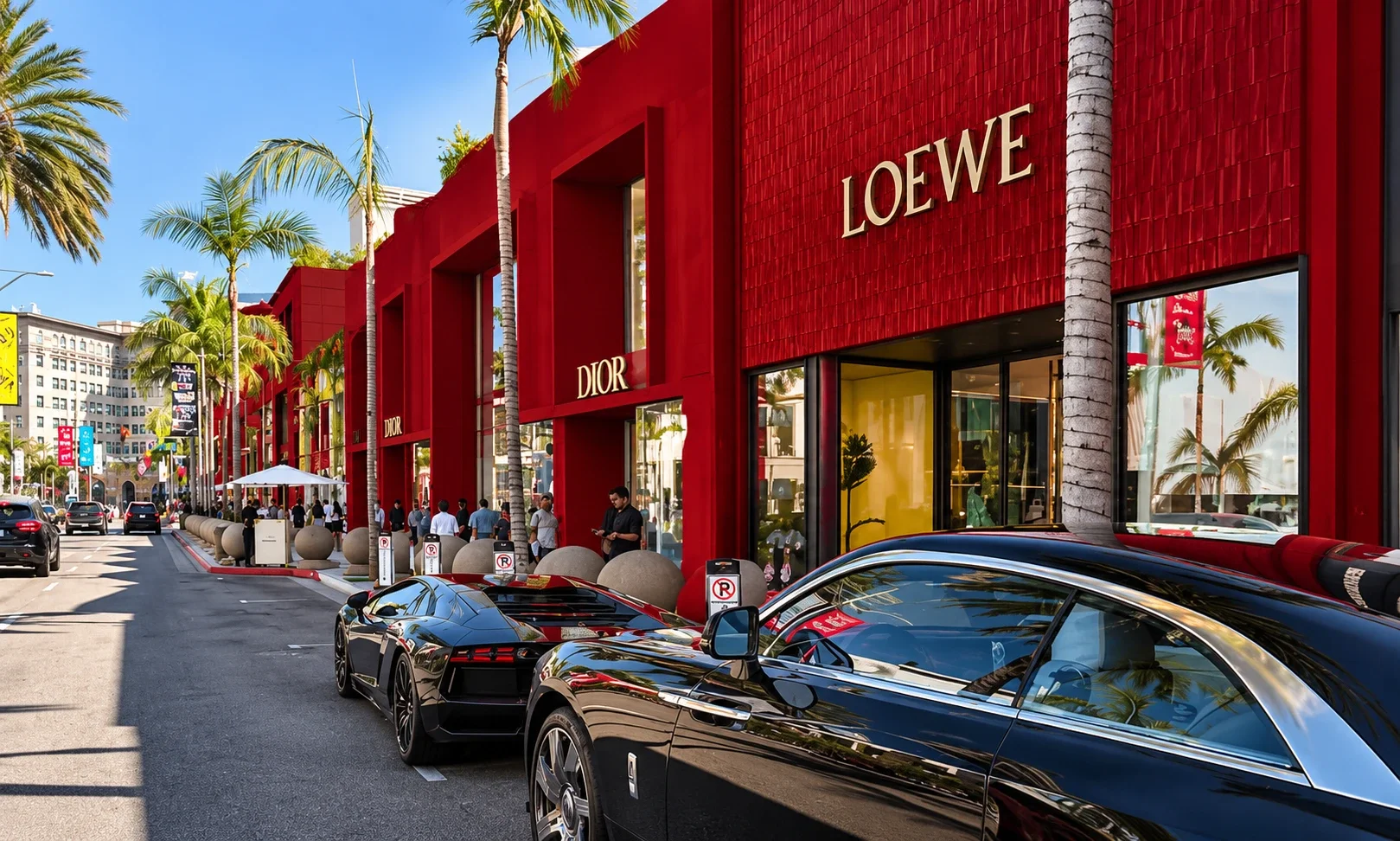
A site can sit in a strong market and still lose customers if its storefront is hard to see or reach. Check the full approach from the street, parking area, transit stop, and nearby pedestrian routes.
Traffic counts show movement, but they do not prove that drivers or walkers can see the entrance or enter easily. A storefront needs clear sightlines and a workable path from likely arrival points.
- Check sightlines from both directions and note where signs are visible.
- Test vehicle ingress and egress during busy and quiet periods.
- Walk pedestrian and transit approaches to the entrance.
- Inspect parking, drop-off space, and accessible routes.
For auto-oriented retail, a general planning rule of thumb is 6-8 parking spaces per 1,200 square feet. Treat that as a starting point, not a legal requirement. The right parking need changes with the market and the store’s use.
Under the 2010 ADA Standards, a parking lot or garage with 1 to 25 spaces must have at least one accessible space. At least one of every six accessible spaces must be van accessible. Accessible parking spaces must sit on the shortest accessible route to an accessible entrance.
Parking counts alone do not show whether a customer can move safely from a space to the door. Check for route barriers, signs, curb cuts, and an entrance that customers can use. Visit at more than one time of day if traffic or deliveries could block the approach.
Walk the approach from each likely customer arrival point and verify accessible routes to the entrance.
Do the Lease and Build-Out Costs Make Sense?
Test the full cost of occupancy against conservative store revenue, not just the advertised base rent. The full cost includes recurring charges and the money needed to open the space.
Retailers often target occupancy costs of 8%-15% of projected revenue. That is a general retail rule of thumb, not a luxury-specific guarantee. A store’s category economics and sales plan should guide the test.
Calculate the full occupancy cost
Start with base rent, then add NNN charges, common-area maintenance, taxes, insurance, utilities, and other operating expenses. NNN means net, net, and net charges passed through under the lease. Ask which costs can change and how the landlord calculates them.
| Retail format | Asking rent per square foot | Vacancy rate |
|---|---|---|
| Malls | $36.06 | 8.2% |
| Power centers | $28.51 | 4.7% |
| Neighborhood centers | $25.87 | 6.4% |
| Strip centers | $24.37 | 5.2% |
| General retail | $24.95 | 2.7% |
These U.S. asking rents and vacancy rates are from Q3 2026. The national retail vacancy rate was 4.3% across 11,736,977 thousand square feet of inventory. CoStar’s Q3 2026 rent report adds market context, but national format averages are not a quote for a luxury corridor.
Budget for construction and lease risk
In July 2026, premium retail tenant-improvement hard costs ranged from $150 to $300 per gross square foot. Add soft costs of 8% to 15% and a construction contingency of 5% to 10%. Keep each line separate in the model.
Hard costs cover the physical work. Soft costs can include design and project fees, while contingency covers unexpected work. Premium retail improvement costs are a starting benchmark, not a final budget for a particular site.
Review the tenant-improvement allowance, renewal options, exit provisions, and lease obligations before signing. A long commitment, such as a 10-year lease, can leave the brand exposed if sales lag or the store needs changes. Check who pays for repairs and which costs continue after opening.
Have the financial model stress-tested against a slower opening and higher-than-planned build-out costs.
How Can You Score the Finalists and Measure Return?
A consistent scorecard makes the trade-offs between two plausible finalists visible before a lease is signed. Use one method for every site, then test the scores against what your stores have already shown.
Score each factor from 1 to 5 and apply weights based on the store’s role. Calibrate the model against the retailer’s 10 best-performing existing stores. That check helps keep a polished address from outweighing factors that drive actual results.
- Select criteria that predict this brand’s performance.
- Weight each criterion by the store’s role.
- Score and compare every finalist in the same way.
- Check the model against existing stores and historical trends.
Review 3-5 years of traffic and trade-area trends where possible. That period can show whether a location is gaining visitors or losing ground. Also compare candidate sales with nearby stores in your network.
Cannibalization describes sales shifted from one store to another in the same network. A review range of 15%-30% is typical, with under 15% ideal and above 30% a trigger for scrutiny. The threshold does not decide the case alone; your team should judge how much new demand the site adds.
The halo effect is a store’s impact on online sales in the surrounding area. ICSC’s Halo Effect III study analyzed $848 billion in transactions across 69 retailers and 2,103 stores. It found a 6.9% average online sales lift after a store opened, 13.9% for emerging direct-to-consumer brands, and 11.6% for apparel brands.
Study averages are context, not a forecast for a specific luxury store. Track local online sales, store visits, and in-store results after opening.
Apparel online sales fell 19.4% after a store closure in the study. For your own return check, compare local online sales and customer activity before and after opening. Tools that track online traffic and sales can support that review, as can ongoing website performance tracking.
Choose the site that best meets the brand’s weighted criteria and set a date to review actual performance against the forecast.
Conclusion
A strong luxury site earns its place through fit, not prestige alone. Your store location should match the customer, support the planned experience, allow easy access, and fit the financial model.
Write a one-page brief that states the store’s role and the client it should serve. Use it to test a shortlist before negotiating, and note which assumptions still need a site visit or cost review.
Before pursuing a lease, compare the finalist sites against the same written brief and confirm the assumptions with your real-estate and construction teams.