House Republicans cleared a narrow procedural vote on Tuesday to advance their third budget reconciliation package, but only after a dramatic scramble that exposed the deepest fault lines in the Republican conference since the One Big Beautiful Bill Act passed last year. The vote was 220 to 205, with all but six House Democrats in opposition. The win was real. The unified party it suggests is not.
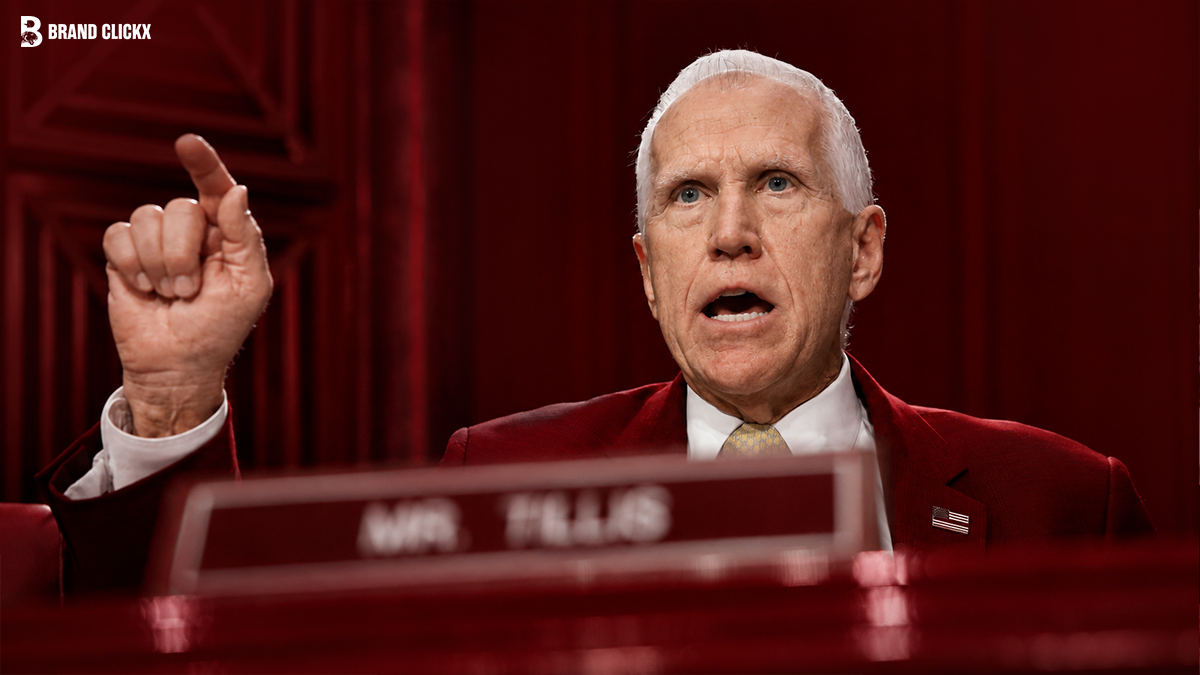
As of Wednesday morning July 22, Speaker Mike Johnson is pressing ahead toward a full floor vote on the $95 billion budget resolution, but more than a dozen conservative holdouts remain unconvinced, the Senate has signaled the package has little chance of passing the upper chamber in its current form, and Senator Thom Tillis, who announced his retirement in 2025, has emerged as one of the most vocal Senate Republican opponents of the SAVE America Act this week.
AI Overview
House GOP leaders cleared a key procedural vote on July 21, 2026, advancing the framework for Reconciliation 3.0, a $95 billion budget package combining $73 billion for defense and Iran war replenishment, $12 billion in farm aid, and $10 billion for voting restriction grants tied to the Safeguard American Voter Eligibility (SAVE America) Act. The resolution was approved by the House Budget Committee on a party-line 20 to 14 vote on July 16, but conservative members including Chip Roy of Texas skipped the markup in protest over the absence of spending offsets.
The package does not include any offsetting spending cuts, which has drawn sustained opposition from fiscal hawks in both chambers. Senate Majority Leader John Thune has described the path as “very uneven” and cannot guarantee passage in the Senate. Senator Bill Cassidy posted that the national debt is “a runaway train” and the package should be “fully paid for.” Senator Thom Tillis, who voted against the One Big Beautiful Bill Act, announced he will not seek reelection after Trump threatened primary challengers. The House also passed a stopgap continuing resolution on Tuesday to fund the government through December 4, 220 to 205.
Key Facts at a Glance
| Detail | Information |
| Package name | Reconciliation 3.0 (third GOP reconciliation bill) |
| Total cost | $95 billion |
| Defense and Iran war funding | $73 billion |
| Farm aid | $12 billion |
| Voting restriction grants (SAVE America) | $10 billion |
| Spending offsets included | None |
| House Budget Committee vote | 20 to 14, party line, July 16, 2026 |
| Procedural vote result (July 21) | Passed 220 to 205 |
| Key conservative holdout | Rep. Chip Roy (R-TX), skipped markup, raising spending offset concerns |
| Senate Majority Leader position | John Thune: “very uneven path,” cannot guarantee passage |
| Senate fiscal hawk position | Sen. Bill Cassidy: package should be “fully paid for” |
| Notable defector | Sen. Thom Tillis (R-NC): announced retirement rather than continue under Trump pressure |
| Stopgap CR | Passed 220 to 205, funds government through December 4, 2026 |
| August recess deadline | Speaker Johnson wants floor vote before lawmakers leave Washington |
What Reconciliation 3.0 Actually Is
This is the third time Republicans have attempted to use the budget reconciliation process in Trump’s second term. Reconciliation allows the majority party to pass legislation with a simple majority in the Senate, bypassing the 60-vote threshold needed to overcome a Democratic filibuster.
The first two rounds produced the border security and defense funding package and the One Big Beautiful Bill Act, which combined tax cuts, immigration enforcement funding, and major domestic policy changes.
Reconciliation 3.0 is a narrower package with three components.
The largest is $73 billion for defense and intelligence, primarily to replenish munitions expended in the Iran war and support ongoing military operations. The White House sent a separate $87 billion supplemental funding request to Capitol Hill last month that Democrats have blocked. Republicans are using reconciliation as a workaround.
The second component is $12 billion in agricultural aid for farmers who have faced financial pressure from trade disruptions and commodity market volatility.
The third and most contested component is $10 billion in grants tied to the SAVE America Act, which would require proof of citizenship to register to vote in federal elections. The rule passed Tuesday also allows Republicans to attach the SAVE America Act to the National Defense Authorization Act before sending it to the Senate, which creates a legislative complication that Senate Republicans will have to navigate.
The Holdout Problem: Fiscal Hawks vs Defense Hawks
The central conflict tearing at Reconciliation 3.0 is a structural one that Johnson cannot easily resolve.
Fiscal hawks in both the House and Senate want any new spending to be offset with cuts elsewhere. The national debt has reached nearly $39 trillion and several Republicans in swing states are already wary of attack ads over deficit spending in the November elections. Senator Cassidy’s position that the next reconciliation bill should be “fully paid for” represents a bloc of senators whose votes Johnson will eventually need.
Defense hawks, by contrast, argue that the Iran war replenishment spending is analogous to emergency supplemental appropriations that have historically not been offset. House Budget Committee Chair Jodey Arrington made this argument explicitly, saying he did not believe Democrats would have approved the White House’s $87 billion request through regular order and that treating the defense component as an unoffset emergency was justified.
The problem is that both groups are right within their own framing, and the two positions are arithmetically incompatible in a package that currently includes no offsets at all. Johnson is working with a 218 to 214 House majority. He can afford virtually no defections.
Representative Chip Roy, a Budget Committee member who also sits on the powerful Rules Committee, did not vote at the July 16 markup. That absence was widely read as a signal of active opposition rather than scheduling conflict. Roy said publicly that he wants what he calls “FULL SAVE,” meaning the complete SAVE America Act attached to the package with full offsets for new spending. He also raised questions about the administration’s war objectives as Washington replenishes munitions, arguing that members routinely have to withhold support for desired policies in order to force fiscal restraint that Republican leadership would otherwise avoid.
In a closed-door meeting on Tuesday, Roy pointed to what he called the “3 AM caucus,” members who hold their votes until the last minute to extract concessions, and argued the pattern works precisely because Republican leaders have shown they will make deals at the last minute to avoid embarrassment.
Thom Tillis: Fighting Without Fear of Reelection
One of the most consistent Senate Republican voices against this week’s package is Thom Tillis.
The North Carolina Republican was one of only two Senate Republicans to vote against advancing the One Big Beautiful Bill Act, and Trump responded by posting on social media that he would support primary challengers to Tillis. Tillis had already announced in 2025 that he would not seek reelection in 2026 — a decision that removed any electoral incentive to fall in line and left him free to keep opposing the party’s agenda without political cost.
This week, Tillis reiterated that opposition during a Senate Judiciary Committee hearing, saying: ‘If I see a reconciliation bill come from the House with another failed attempt to confuse this election, I will use every device I have available to slow down the wheels of government until people cop a clue and do the math.’
“In Washington over the last few years, it’s become increasingly evident that leaders who are willing to embrace bipartisanship, compromise, and demonstrate independent thinking are becoming an endangered species. Too many elected officials are motivated by pure raw politics who really don’t give a damn about the people they promised to represent on the campaign trail.”
He said the process of building Reconciliation 3.0 was “a waste of time” and “an exercise of futility.” He added: “And I’ll slow other things down, too.”
Whether the Tillis warning will slow Senate consideration of the package is unclear. What is clear is that the retirement removes one of the most experienced Senate Republicans from the chamber at a moment when the conference is navigating some of its most complex legislative challenges in decades.
Trump’s response to Republican defectors has been consistent throughout his second term: he told Republicans at a black-tie fundraising dinner at the National Building Museum earlier this month to “stop grandstanding” and “close your eyes and get there.” He has also posted on Truth Social urging House Republicans to vote yes on the budget resolution this week, framing it as advancing the “big, beautiful” agenda.
The Senate Problem
Even if Johnson clears the House floor vote, Reconciliation 3.0 faces significant headwinds in the Senate.
Thune has been notably cautious. He told reporters on July 16 that the path is “very uneven” and that he “can’t make any guarantees.” He has also signaled that he will hold the House’s budget resolution until the stopgap funding measure is settled, a sequencing decision that delays the reconciliation timeline further.
Senate Republicans have two distinct objection tracks.
The first is fiscal. Senators including Cassidy and others on the Appropriations Committee are objecting to another major spending bill without offsets, particularly after the One Big Beautiful Bill Act already added substantially to the deficit projections.
The second is procedural. Including the Agriculture Committee in the reconciliation instructions opens Republicans up to difficult amendment votes as the bill moves through the Senate, creating opportunities for Democratic messaging amendments that could force uncomfortable on-the-record votes before the midterms.
Thune himself described the dynamic succinctly: defense hawks want more spending than the resolution allows, and fiscal hawks want any new spending offset. Those two positions do not currently have a reconciliation path that can pass 51 Republican votes in the Senate.
A Republican senator quoted anonymously by AOL described the broader picture: “It doesn’t seem to me that there’s a plan for a second reconciliation bill and I don’t know how you could do one in the House. The president says it’s not a good idea. At the moment, I don’t see reconciliation as a likely aspect of the remaining months this year.”
That was a reference to Reconciliation 2.0, a potential follow-up after the One Big Beautiful Bill Act. Reconciliation 3.0 is a separate, narrower attempt. But the sentiment captures the fatigue that has set in across the Republican conference as members head toward what promises to be a difficult midterm environment.
The Stopgap: Government Funded Through December
Separate from the reconciliation debate, the House passed a continuing resolution on Tuesday evening to fund the government at existing levels through December 4, 2026. The vote was 220 to 205, with all but six House Democrats voting in opposition.
The House Democratic leadership argued the measure “fails to block funding for Donald Trump’s violent mass deportation machine” and gives the administration unchecked authority to continue enforcement operations.
Thune has indicated the Senate is negotiating a bipartisan alternative with additional priorities, and said he would consider funding all of government through the reconciliation process if Senate Democrats do not cooperate on a funding extension. “I hope that’s not necessary,” he said. “We’ve had conversations, productive conversations, on both sides of the aisle on a funding resolution that would carry us past the November election.”
The December 4 deadline creates a new fiscal cliff approximately six weeks before the midterm elections, which will pressure both parties to negotiate a longer-term solution in the fall.
What Comes Next
Johnson wants a full House floor vote on the budget resolution before the August recess. The August recess creates a hard deadline, and failing to pass the resolution before lawmakers leave Washington would be a significant setback for the speaker.
The timeline is tight. The Rules Committee must clear the resolution before it can reach the floor. Chip Roy’s position on the Rules Committee gives him leverage to complicate that process. Johnson needs to hold his conference together with essentially no margin for error.
If the House passes the budget resolution, it moves to the Senate, where Thune has already signaled that passage is far from certain. The absence of spending offsets will require either a revision to add cuts, which would require the House to vote again, or a waiver of Senate budget rules, which requires 60 votes and Democratic cooperation that is not forthcoming.
The alternative outcome, in which the budget resolution fails or stalls indefinitely, would mark the third major Republican legislative setback on fiscal policy in 2026 and could reshape the dynamics heading into the November midterms.
Democrats, for their part, are watching the intraparty Republican dynamics closely. ABC News reported that Democratic strategists are tracking which Republicans in swing districts vote for a package that does not include spending offsets, building a potential campaign narrative around deficit expansion in a high-debt environment.
FAQs
What is Reconciliation 3.0?
The third budget reconciliation package Republicans have attempted in Trump’s second term. It is a $95 billion framework combining $73 billion for defense and Iran war replenishment, $12 billion in farm aid, and $10 billion for voting restriction grants tied to the SAVE America Act. It does not include offsetting spending cuts.
Why are Republicans opposed to their own budget package?
Fiscal hawks object to the absence of spending offsets, arguing the national debt at nearly $39 trillion cannot sustain additional unfinanced spending. Defense hawks want even more funding than the resolution allows. The two positions are arithmetically incompatible in the current framework.
Who is Chip Roy and why does he matter?
Representative Chip Roy of Texas is a Budget Committee member and Rules Committee member who has opposed the budget resolution over the lack of spending offsets. His position on the Rules Committee gives him procedural leverage to slow the bill before it reaches the House floor.
What happened to Thom Tillis?
Senator Thom Tillis of North Carolina voted against advancing the One Big Beautiful Bill Act, and Trump threatened primary challengers in response. Tillis had already announced in 2025 that he would not seek reelection in 2026 a decision that has since freed him to actively oppose the SAVE America Act and Reconciliation 3.0 without fear of political consequences.”
Did the government shutdown funding get resolved?
The House passed a stopgap continuing resolution on Tuesday, 220 to 205, funding the government through December 4, 2026. The Senate is working on a bipartisan alternative with additional priorities.
What is John Thune’s position on Reconciliation 3.0?
Senate Majority Leader Thune has said the path is “very uneven” and he cannot guarantee passage. He is holding the House budget resolution until the stopgap funding situation is resolved and has flagged fiscal and procedural objections from within the Republican Senate conference.