


Search engine optimization is more than just keywords and content. Behind the scenes lies the foundation that determines whether Google and other search engines can find, read, and trust your site. That foundation is built through technical SEO. If your site has hidden errors, slow pages or crawl barriers, even the best content will struggle to rank.
This is where a technical seo audit becomes essential. A technical seo audit is a systematic process to evaluate all aspects of your website that impact search engine visibility. It uncovers issues that prevent indexing, lower site speed, and reduce user experience. In this article, we will walk through exactly what to check, how to fix problems, and why each factor matters based on real world data.
Whether you are a business owner, marketer, or SEO professional, this guide will help you understand how a technical seo audit can improve rankings and deliver measurable results.
What is a Technical SEO Audit

A technical seo audit is a health check for your website from a search engine perspective. It examines how easily search engine bots can access, crawl, and index your content. It also evaluates speed, security, site structure, mobile friendliness, and code quality.
Many marketers still think SEO is only about content. It is not. According to research from Ahrefs, over 90 percent of pages receive zero organic traffic from Google each month. One of the main causes is technical issues that prevent pages from ranking. Fixing technical problems is often the fastest way to unlock organic growth.
Why Technical SEO Matters
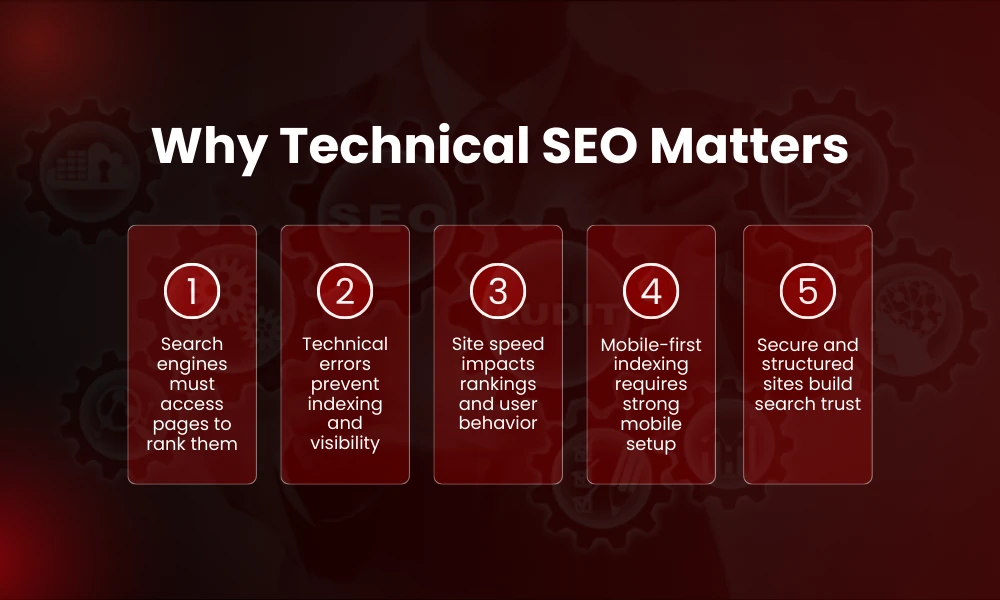
Before we dive into the checklist, it helps to understand why technical SEO is so important.
Search Engines Need to Crawl and Index Your Site
Google uses bots to crawl the web. If your pages are not crawlable or indexable, they will not appear in search results. A technical seo audit finds crawl barriers like:
- Blocked resources
- Broken pages
- Missing sitemap
Proper crawl budget optimization ensures that search engine bots focus on your most valuable pages rather than wasting resources on unimportant URLs.
Site Speed Impacts Rankings and Engagement
Google’s own data shows that 53 percent of mobile visitors leave a site that takes more than three seconds to load. Slow sites lose users and miss rankings. A technical seo audit measures load times and identifies opportunities to improve.
Mobile First Indexing
Google now uses mobile versions of websites for indexing and ranking. A technical seo audit ensures that your mobile site delivers a quality experience.
Secure and Structured Sites Build Trust
Security matters to users and search engines. HTTPS is a ranking signal. Structured data helps Google understand context and show rich results.
Core Components of a Technical SEO Audit
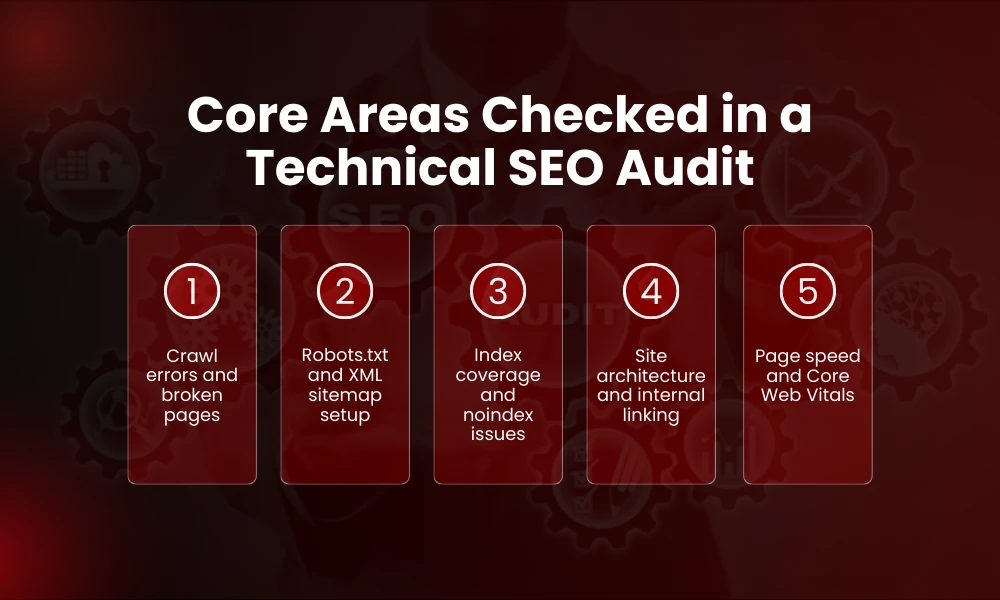
Below is a detailed checklist you can use when performing a technical seo audit.
1. Crawl Your Site
The first step in a technical seo audit is to crawl your website like a search engine would. Tools like Screaming Frog, Sitebulb, and DeepCrawl simulate a bot and collect critical data.
What to check in a crawl:
- Pages with 4xx or 5xx errors
- Blocked URLs in robots.txt
- Redirect chains and loops
- Duplicate content
- Missing meta titles or descriptions
Most SEO tools will give you a summary of errors and warnings. Prioritize errors that prevent indexing.
Data Insight:
A study by SEMrush found that sites with many crawl errors perform significantly worse in organic traffic compared to sites with clean crawl reports.
2. Analyze Robots.txt and Sitemap
Your robots.txt file tells search engines which pages to allow or block. A technical seo audit must review this file for any disallowed sections that should be crawlable.
At the same time you should check the XML sitemap:
Checklist:
- Ensure sitemap is updated
- All important URLs are included
- Sitemap is submitted in Google Search Console
- Sitemap returns a 200 status code
Google has said that sitemaps are a guiding map to your site and help engines discover pages faster.
3. Check Index Coverage
In Google Search Console under the Index Coverage report, you find a list of issues affecting indexed pages.
What to look for:
- Pages excluded by “noindex” tags
- Redirected pages
- Duplicate content flagged as canonical elsewhere
- Submitted URLs that are not indexed
A technical seo audit uses this report to understand how Google currently views your site.
4. Review Site Structure and Navigation
Site architecture influences how link equity flows and how easily pages are accessed. A simple and shallow structure is preferred. Building an SEO-friendly website architecture ensures that search engines can easily crawl and understand the hierarchy of your pages.
Technical seo audit checks:
- Logical hierarchy
- No orphan pages
- Internal linking to priority pages
- Breadcrumb menus
Good internal linking distributes authority and signals relevance to search engines.
5. Evaluate Speed and Performance
Page speed is a major ranking factor and user experience indicator. Learning how to improve website speed and performance can dramatically increase both search rankings and user engagement. Use tools like Google PageSpeed Insights, GTmetrix, and Lighthouse.
Technical seo audit performance checks:
- Largest Contentful Paint (LCP) time
- First Input Delay (FID)
- Cumulative Layout Shift (CLS)
- Server response time
- Image optimization
- CSS and JavaScript loading
Study Insight:
Google research shows that as page load time goes from one second to ten seconds, the probability of a mobile visitor bouncing increases by 123 percent.
6. Check Mobile Friendliness
A technical seo audit must validate that your site is mobile friendly. Use Google’s Mobile Friendly Test.
What to fix:
- Text too small to read
- Touch elements too close
- Viewport not set
- Content wider than screen
Mobile usability issues not only harm rankings but also frustrate users.
7. Identify Duplicate Content
Duplicate content can confuse search engines and dilute ranking signals. Using structured SEO content silos can help organize content topics and reduce duplication across pages. During your technical seo audit use canonical tags or 301 redirects to fix duplicates.
Common sources of duplication:
- www and non-www versions of pages
- HTTP and HTTPS duplicates
- Printer friendly versions
8. Audit Metadata
Titles, meta descriptions, and headings help search engines understand page content. A technical seo audit will evaluate:
- Missing titles
- Duplicate titles
- Oversized or undersized meta descriptions
- Missing H1 tags
Though meta descriptions do not directly impact rankings, they influence click through rates in search results.
9. Check On Site Security
Security is part of technical SEO. Ensure that your site uses HTTPS and that:
- SSL certificate is valid
- Mixed content issues are resolved
- Redirects point to HTTPS
Google confirmed that HTTPS is a ranking signal. Sites without secure connections risk visibility loss.
10. Evaluate Structured Data
Structured data helps search engines understand and display your content in enhanced formats such as rich snippets. Implementing schema markup for SEO can help your pages qualify for rich results and improved visibility in search results.
Technical seo audit structured data checks:
- Valid schema markup
- No errors in Google Rich Results Test
- Up to date event, product, article schema
Structured data improves appearance in results and can increase CTR.
11. Assess URL Structure
Clean, descriptive URLs help search engines and users understand page context.
During your technical seo audit check that URLs:
- Are short and descriptive
- Use hyphens to separate words
- Avoid unnecessary parameters
- Use consistent casing
Messy URLs with long parameters often lead to crawling inefficiencies and duplicate content issues.
12. Monitor Backlink Profile and Spam Signals
While backlink analysis is more off page SEO it is tied to technical health. Tools like Ahrefs, Majestic, and Moz can help you identify toxic links.
Technical seo audit backlink checks:
- High percentage of quality links
- Removal or disavow of spammy backlinks
- Tracking lost or broken inbound links
Backlinks remain one of the strongest ranking signals based on multiple academic studies.
13. Evaluate Server Logs
Examining server logs reveals how bots are interacting with your site. It shows:
- Crawl frequency
- Most requested pages
- Pages blocked by server errors
A technical seo audit should include log file analysis to understand real bot behavior and uncover hidden bottlenecks.
14. Check Redirects and Canonicalization
Redirects are necessary but can slow down crawl efficiency if used incorrectly. A technical seo audit should verify:
- No redirect chains
- Proper use of 301 redirects
- Canonical tags pointing to correct versions
- No conflicting redirects
Broken or looping redirects are common technical issues that harm rankings.
Putting It All Together
A complete technical seo audit is not a one time event. It is a continuous process that keeps your site healthy as you add content and expand features. Here is a simple workflow to follow:
- Crawl the site and export errors
- Prioritize issues by impact
- Fix critical errors first
- Validate fixes in Google Search Console
- Monitor performance over time
Using this method you build a more crawlable, fast, secure, and user friendly site.
Tools to Help With a Technical SEO Audit
Here are popular tools used by specialists in the industry:
- Screaming Frog
- Google Search Console
- Google Analytics
- Ahrefs
- SEMrush
- GTmetrix
- PageSpeed Insights
- Sitebulb
- Bing Webmaster Tools
Each tool provides insights into specific parts of your site and together they make your audit more thorough.
Real Data on the Impact of Technical SEO
Here are some research insights from reputable sources:
- Websites that improve page speed by one second can increase conversions by up to 27 percent.
- A study by Backlinko found that faster sites tend to rank higher in search results.
- According to SEMrush, sites with fewer crawl errors are more likely to rank on page one of Google.
- Google’s own research shows that mobile friendly sites rank better on mobile searches.
These studies reinforce the value of conducting a regular technical seo audit.
Common Technical SEO Problems and Quick Fixes
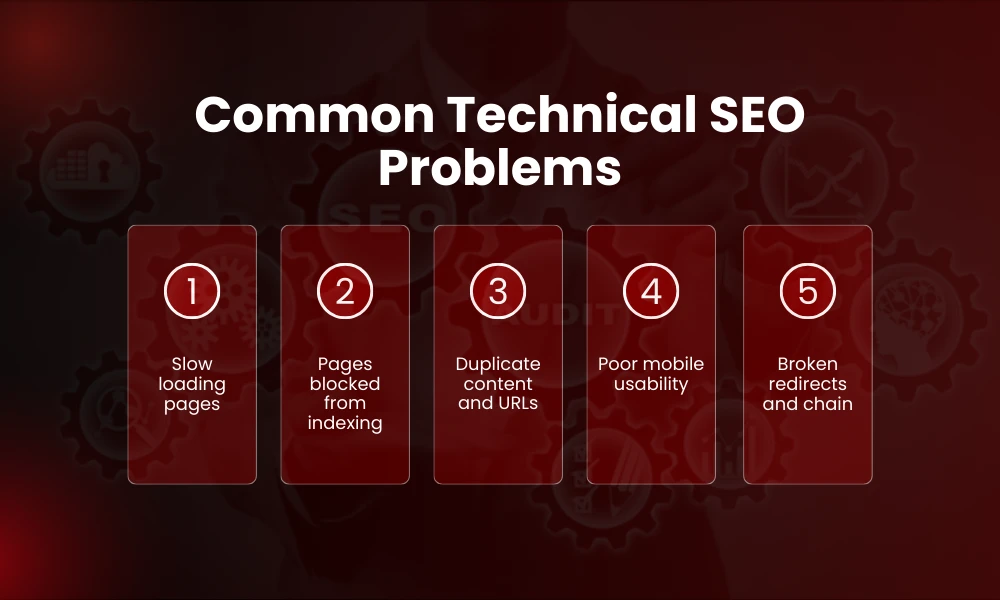
Problem: Many 404 errors
Fix: Set up 301 redirects to relevant content.
Problem: Slow loading pages
Fix: Compress images, use browser caching, optimize code.
Problem: Pages not indexed
Fix: Submit sitemap, fix robots.txt, remove noindex.
Problem: Duplicate title tags
Fix: Rewrite titles to be unique and descriptive.
These simple corrections can have a measurable impact.
FAQs
What is a technical seo audit?
A technical seo audit is a thorough review of your website’s technical health to find and fix issues that block search engine visibility.
How often should I do a technical seo audit?
Ideally quarterly and after major updates to your site.
Is a technical seo audit the same as content audit?
No. A content audit focuses on quality of content while technical focuses on how search engines crawl and index your site.
Does site speed affect rankings?
Yes. Site speed is a ranking factor and directly impacts user satisfaction.
Do I need tools to perform a technical seo audit?
Yes. Tools like Google Search Console, Screaming Frog, and PageSpeed Insights make audits faster and more accurate.
Final Takeaway
A technical seo audit may not sound glamorous but it is one of the most powerful methods to improve search visibility. It identifies the foundation issues that keep pages from being ranked and shows a clear path to better performance.
If improving organic traffic is a priority, then a technical seo audit is your first step. Follow the checklist above consistently and measure performance gains. Once you fix technical issues, you will see that your content has a much stronger chance to rank higher and deliver long term traffic. After resolving technical issues, implementing advanced SEO strategies can further accelerate organic growth and long-term search visibility.