Quick Answer
According to SparkToro’s June 2026 study, 68.01% of US Google searches ended without a click during the first four months of 2026, up from 60.45% in 2024. Only about 276 out of every 1,000 Google searches now send a visitor anywhere. AI Overviews now appearing on more than 20% of all searches — are the primary driver, cutting click-through rates by roughly 60% when they appear.
Introduction
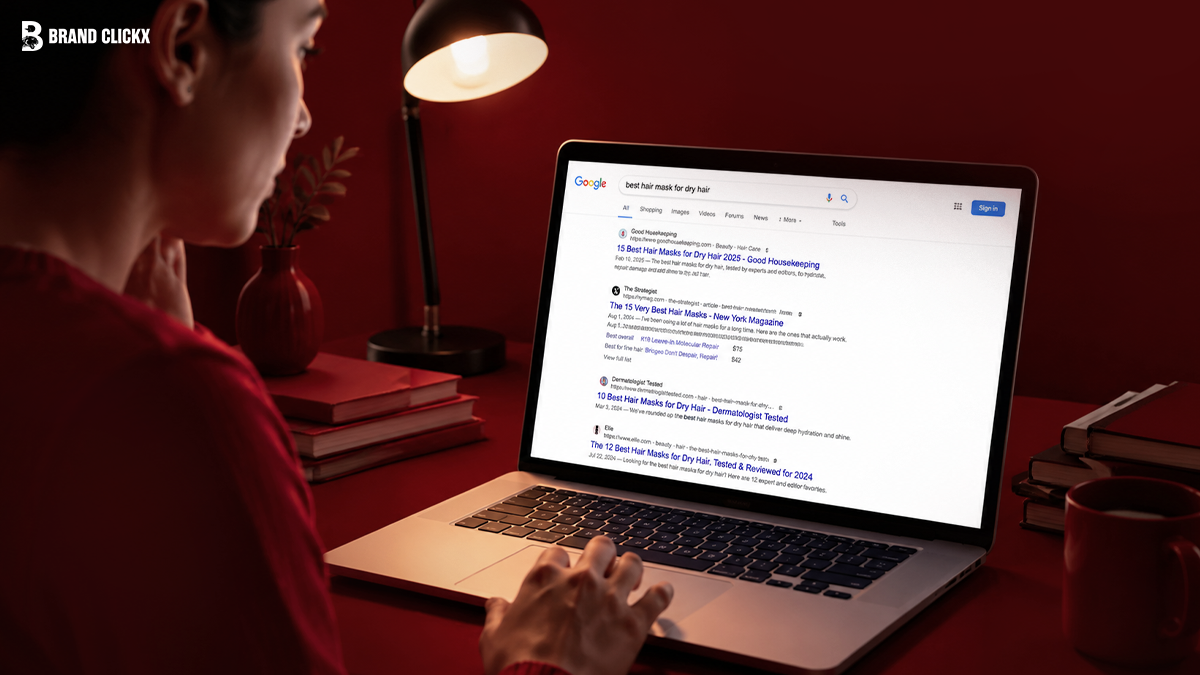
If you’ve watched your website’s organic traffic slide even while your rankings held steady, there’s a good chance the problem isn’t your content. It’s the search results page itself.
A new study from SparkToro, the audience research company co-founded by Rand Fishkin, puts a precise number on something SEO professionals have suspected: most Google searches in the US now end without anyone clicking anything at all. The study, based on Similarweb clickstream data covering January through April 2026, found that 68.01% of US searches ended with no click — not to a website, not to an ad, and not even to a Google-owned property like Maps or YouTube.
This article breaks down exactly what that number means, what’s driving it, which types of searches are affected most, and what it means practically if you run a website or manage SEO for one.
What the Study Actually Measured
Before reacting to the headline number, it’s worth knowing exactly what it counts and what it leaves out.
| Detail | What the study covers |
| Data source | Similarweb desktop and mobile web clickstream panel |
| Time period | January to April 2026, US only |
| Device weighting | Roughly two-thirds mobile, one-third desktop |
| Counted as a ‘click’ | Clicks to organic results, paid ads, or Google properties (Maps, YouTube, etc.) |
| Not counted | Follow-up searches within Google itself (tracked separately) |
| Notably excluded | Searches made inside Google’s mobile search app |
That last exclusion matters. Because in-app mobile searches were excluded, the true zero-click rate across all of Google’s surfaces could be higher than 68%, not lower.
The Numbers: 2026 vs. 2024
| Metric | 2024 | 2026 | Change |
| Zero-click rate | 60.45% | 68.01% | +7.56 percentage points |
| Searches with at least one click | baseline | down | 9.51 pts lower — 22.9% relative decline |
| Clicks to open web per 1,000 searches | 374 | 276 | 98 fewer clicks |
| Searches leading to another Google search | baseline | up | +7.2 percentage points |
SparkToro calls the 7.56-point jump the fastest two-year acceleration in zero-click behaviour it has recorded since it began tracking the metric.
Where Do the Remaining Clicks Go?
Roughly 32% of searches still produce a click. Of that smaller slice, destinations break down like this:
| Destination | Share of clicks that do happen |
| Open web (organic results) | 66% |
| Google-owned properties (AI Mode, YouTube, Maps, Images) | 27% |
| Paid ads | 6% |
In practical terms: for every 1,000 US Google searches, only about 276 end with someone landing on an independent website.
The Historical Trend
Zero-click search isn’t new it has been building since Knowledge Panels and Featured Snippets launched over a decade ago. What has changed recently is how steep the line has become.
| Year | Zero-click rate | Data source |
| 2016 | ~45% | SparkToro (early estimate) |
| 2019 | ~49–50% | Jumpshot panel |
| 2020 | 64.82% | Similarweb |
| 2024 | 58.5–60.45% | Datos (now part of Semrush) |
| 2026 | 68.01% | Similarweb |
A necessary caveat: each figure comes from a different data panel and methodology, so SparkToro cautions against treating this as one perfectly consistent trend line. What stays consistent across every measurement is the direction. It keeps climbing.
What’s Driving the 2026 Jump
AI Overviews: The Primary Driver
AI Overviews the AI-generated summaries that appear above traditional results — now appear on more than 20% of US Google searches. Research from Ahrefs, cited in the SparkToro study, found that when an AI Overview appears on a results page, click-through rate to organic results drops by roughly 60%.
The mechanism is simple: a longer, synthesised answer at the top of the page means most informational queries are resolved before the user considers clicking anything.
AI Mode: Small Now, Growing Fast
Google’s separate AI Mode a conversational, chat-style search experience accounted for only 0.34% of searches during the study period (January–April 2026). That is a minor factor for now. But at Google I/O 2026, Google said AI Mode had surpassed 1 billion monthly users, with query volume more than doubling each quarter. Its contribution to the zero-click picture could grow substantially through the rest of 2026.
Which Searches Still Send Clicks
The 68% figure is an average — it isn’t evenly distributed across query types. Fishkin pointed to three categories where SEO still generates meaningful traffic:
| Query type | Why clicks still happen |
| Branded searches | User is trying to reach a specific destination, not find an answer |
| Local business queries | Searches like ‘plumber near me’ convert into a click, call, or map action |
| High-intent transactional searches | Specific product names, comparison intent — clear buying signals |
Queries that Google can fully answer on the results page simple facts, definitions, unit conversions are the ones most likely to end without a click.
What This Means for Businesses and SEO
Rethinking KPIs
| Old approach | Why it’s breaking down | What to track instead |
| Organic sessions as primary metric | Pool of clickable searches is shrinking structurally | Branded search volume, share of voice |
| Rankings for informational keywords | Many pages rank #1 and still get no click due to AI Overviews | AI-citation visibility: is your brand named in AI answers? |
| CTR as a health signal | CTR is falling industry-wide, independent of content quality | Conversion rate and revenue from the traffic that does arrive |
Being Cited Has Value Even Without a Click
A study by Seer Interactive (covering 3,119 informational queries across 42 organisations, tracked from June 2024 to September 2025) found that brands cited inside AI Overviews earned 35% more organic clicks and 91% more paid clicks than non-cited brands competing for the same query. Visibility inside the AI-generated answer appears to influence behaviour beyond that specific search.
Note: Seer’s 2026 update found the citation advantage had grown further to approximately 120% more organic clicks per impression — confirming the trend is strengthening, not fading.
AI-Referred Traffic Converts Better and the Numbers Are Moving
Adobe’s Digital Insights Q1 2026 report found that AI-referred traffic to US retailers grew 393% year-over-year in Q1 2026, and that this traffic converted 42% better than non-AI traffic in March 2026 — a full reversal from March 2025, when the same channel converted 38% worse.
CORRECTION NOTE: The original article stated traffic ‘grew nearly 400%’ and ‘converted 42% better’ both accurate for the Q1 2026 report. However, Adobe’s more recent Q3 2026 data (May 2026) shows AI-referred retail traffic conversion has since risen to 54% better than non-AI traffic. The 42% figure should be understood as the Q1 2026 datapoint, not the current figure.
A Note on the Source
This study comes from SparkToro, a company that sells audience research software, and its co-founder Rand Fishkin has a book on zero-click marketing. Both are worth knowing as context. That said, the core 68.01% figure is corroborated by Similarweb’s underlying clickstream data and has been reported consistently across multiple independent outlets, which supports its credibility even accounting for the source’s commercial interest.
What To Do About It: A Practical Checklist
- Stop treating organic session volume as your only organic KPI. Track branded search volume and share of voice alongside it.
- Structure content in short, factual, clearly labelled sections so AI systems can extract and cite it accurately.
- Add schema markup to help both Google and AI crawlers understand your content.
- Prioritise branded, local, and high-intent transactional keywords — where clicks still reliably happen.
- Build brand presence on platforms your audience already uses, independent of Google traffic.
- Set up tracking for AI-referral traffic specifically it often appears as ‘direct’ in standard analytics.
- Measure the quality of the traffic that does arrive (conversion, time on site), not just its volume.
- Track AI citation frequency alongside traditional rank tracking citation now drives more clicks than position 1 on many queries.
Key Takeaways
- 01% of US Google searches ended without any click between January and April 2026, up from 60.45% in 2024 the fastest two-year increase SparkToro has recorded.
- Only about 276 of every 1,000 US Google searches now send a visitor to any destination, down from 374 two years earlier.
- AI Overviews, present on 20%+ of searches, cut organic click-through rate by roughly 60% when they appear.
- Branded, local, and high-intent transactional searches remain where SEO reliably produces clicks.
- Brands cited in AI answers earn 35% more organic and 91% more paid clicks than non-cited competitors on the same query.
- Adobe data shows AI-referred retail traffic converted 42% better than non-AI in Q1 2026 — rising to 54% by May 2026.
Conclusion
The headline number is stark, but the more useful takeaway isn’t that SEO is dead. It’s that the definition of a successful search result is changing. Google is answering more questions directly and sending fewer people onward. For most businesses, that means organic traffic alone no longer tells the full story of search performance.
Frequently Asked Questions
Is the 68% figure specific to the US, or global?
US only. SparkToro has said it plans to publish separate figures for the UK, Canada, and Europe, but the 68.01% number covers US Google searches exclusively.
Does 68% mean Google is sending less traffic to every website equally?
No. The drop is concentrated in informational queries that AI Overviews can fully answer. Branded, local, and transactional searches are affected far less.
Is this the same as saying SEO doesn’t work anymore?
No. Fishkin’s own conclusion is that SEO still matters, but its payoff is shifting from direct click volume toward brand visibility and being cited inside AI-generated answers.
Why do different studies report different zero-click percentages for the same period?
Because they rely on different data panels. Similarweb, Datos, and the now-defunct Jumpshot all measure clickstream data slightly differently, so the exact percentage varies by source even when the underlying trend a rising zero-click rate stays consistent.
How much did AI-referred retail traffic grow in 2026?
Adobe Digital Insights found AI-referred traffic to US retailers grew 393% year-over-year in Q1 2026. By May 2026, cumulative growth since October 2024 had exceeded 1,300%. Conversion has improved from 42% better than non-AI traffic (March 2026) to 54% better (May 2026).