

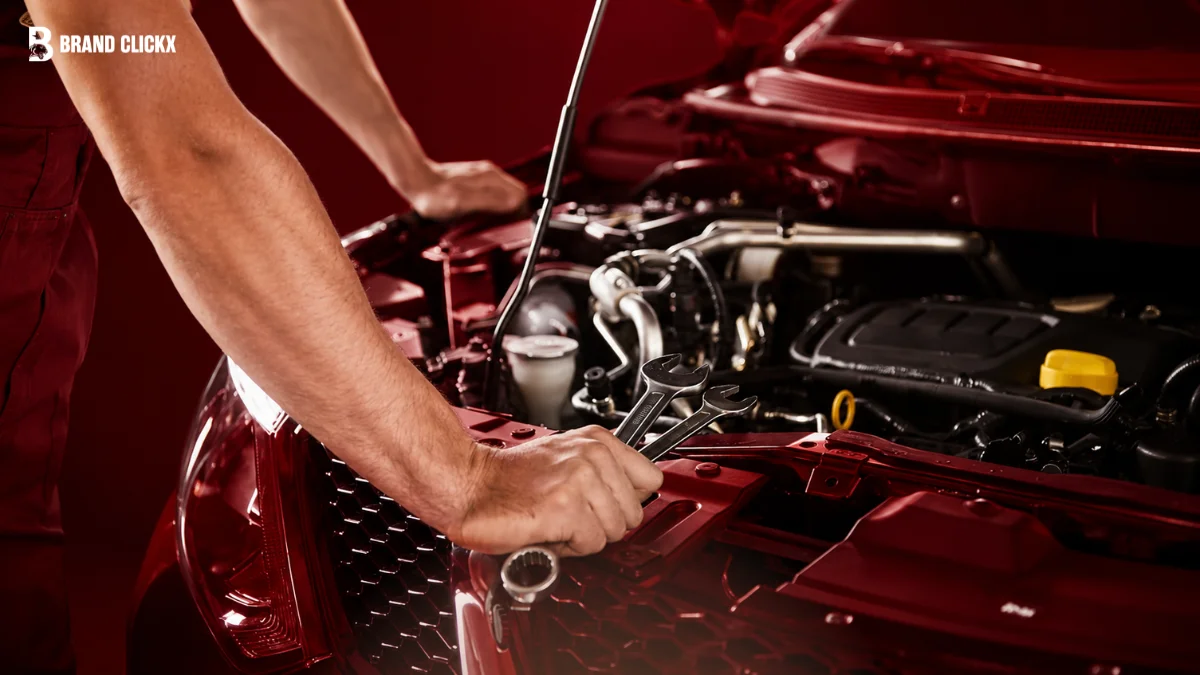
Learn how a transfer case works in 4WD and AWD vehicles. Explore types, core components, and essential maintenance tips with BrandClickx.
Key Takeaways
- A transfer case is what actually gets engine power to both axles, front and rear. It’s the reason your 4WD or AWD vehicle can handle whatever’s under the tires, whether that’s a wet highway or a muddy trail.
- Part-time 4WD, full-time 4WD, automatic AWD, and selectable 4WD manage power in different ways based on driving conditions.
- Using part-time 4WD on dry roads for a long time can put extra pressure on the drivetrain and damage some parts.
- Shifting problems, 4WD randomly cutting out, or fluid leaking under the vehicle, all of it usually traces back to the transfer case.
- Simple stuff like checking your fluid level and running matched tire sizes goes a long way toward keeping it alive.
Understanding the Basics of a Transfer Case
The transfer case is a core mechanical assembly that makes dual-axle driving possible in four-wheel-drive and all-wheel-drive vehicles. Positioned directly behind the main transmission, this critical drivetrain unit receives rotational energy straight from the engine flywheel. Its primary job is to split this incoming kinetic energy and route it towards both the front and rear differential units.
Without a transfer case, four-wheel drive simply doesn’t exist. It’s the part actually doing the work of getting power to all four wheels, and if it fails, you can have the most powerful engine in the world under the hood and still be stuck spinning in the mud.
Most cars don’t have this problem to begin with, because most cars only send power to two wheels, front or rear, and that’s genuinely fine on dry pavement. Throw in mud, a wet road, or a steep grade, though, and two-wheel drive starts running out of grip fast. That’s the gap a transfer case fills.Off-roaders, SUVs, and plenty of performance cars run one for exactly this reason: the second extra traction actually matters, power gets sent to all four wheels.
The newer setups do it fast enough that you barely feel it happen, honestly, that’s a big chunk of why 4WD feels so much easier to live with these days than it used to. Flip a switch, pull a lever, whatever your rig uses, and you’re out of regular street driving and into serious off-road mode without much fuss at all.
Mechanical Operation and Internal Power Flow
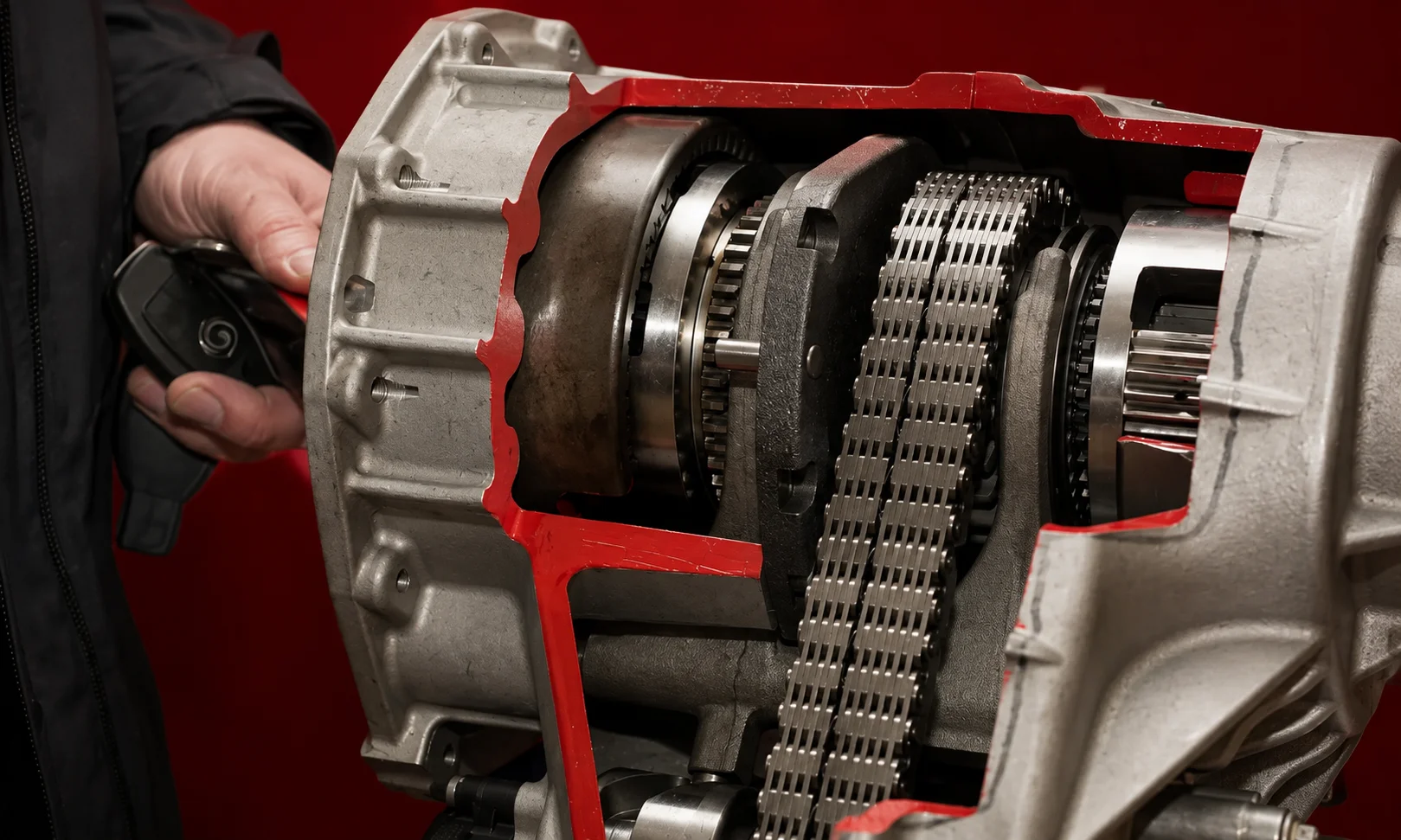
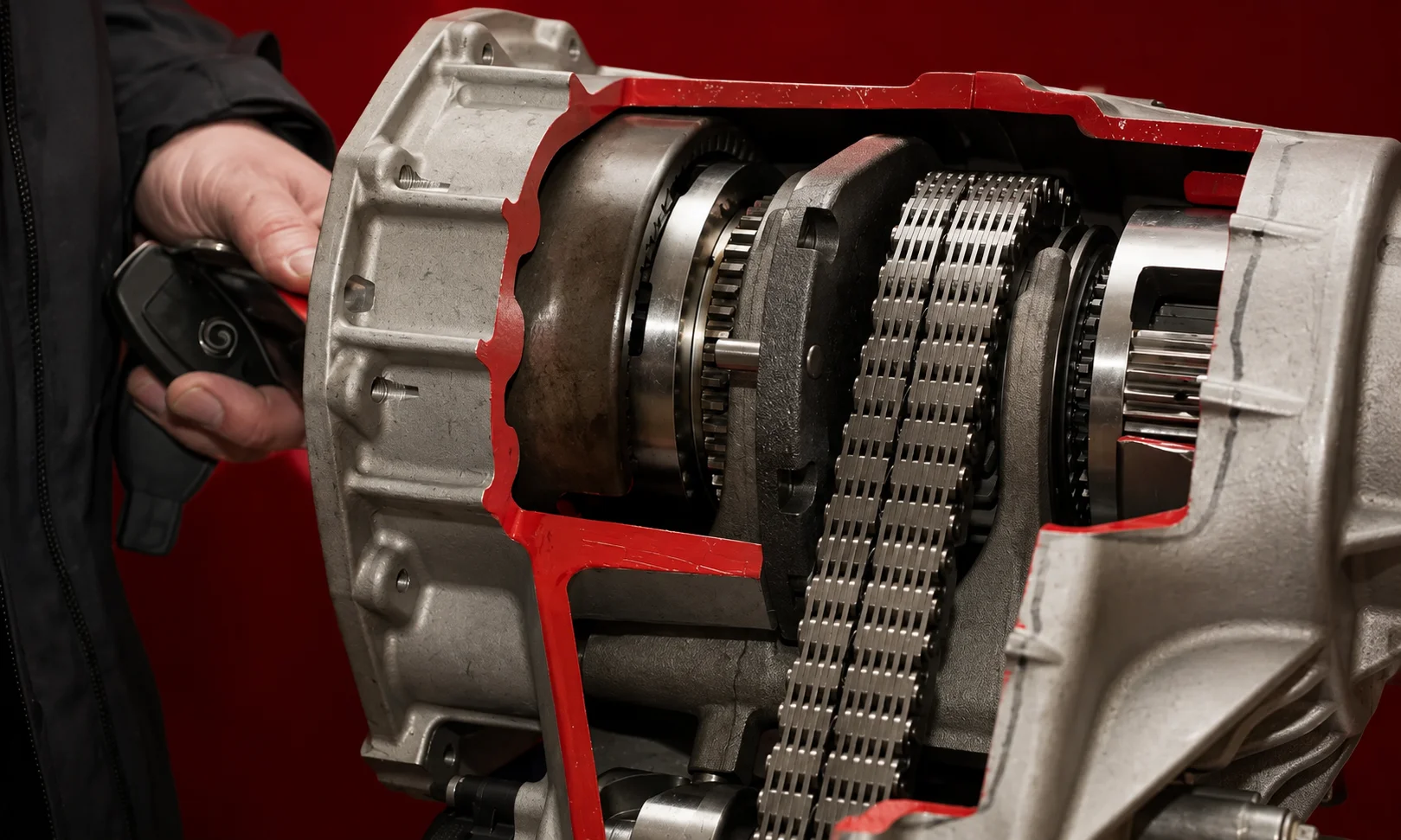
Engine torque travels straight from the output shaft of the transmission into the main input shaft of the transfer case. Once inside this sealed metal housing, a complex combination of heat-treated steel gears, heavy-duty drive chains, and sliding synchronization hubs takes control of the incoming speed and force.
Power continuously flows toward the primary driving axle, which is usually the rear axle in traditional truck designs. When the driver or an electronic computer unit demands extra traction, an internal shift fork slides along a central selector shaft. This movement locks the secondary output shaft into place, instantly routing power through a separate drive shaft straight to the front differential.
When engaged, this gearset drops in a second, lower gear ratio, better known as 4WD Low. Low range basically trades speed for muscle. The wheels turn a lot slower, but whatever torque your engine’s making gets doubled, sometimes tripled, by the time it reaches them. That’s the whole trick behind dragging a stuck trailer out of the mud or crawling over rocks at a walking pace without the engine straining to keep up.
Core Internal Components and Their Functions
Main Housing and Shafts
The transfer case has a strong outer housing made from aluminum or cast iron. It holds all the important parts inside. The input shaft gets power from the transmission. The front and rear output shafts then send this power to the vehicle’s wheels.
Bearings and Drive Chain
The shafts use strong bearings that help them spin smoothly and reduce friction. In chain-driven transfer cases, a strong steel chain moves power from the main shaft to the front output shaft. The chain runs over special sprockets inside the case.
Gears and Shift Parts
Manual transfer cases use parts such as synchronizer rings and shift forks to change between different drive modes. The shift forks move gear parts into the correct position when the driver selects a different setting.
Fluid Pump and Lubrication
There’s a small pump in there too, easy to forget about, quietly pushing oil through the gears, the chain, the bearings, everywhere it needs to go so nothing’s ever running dry. Keep that oil moving and you’re keeping heat and friction down where they belong, low, instead of letting metal grind on metal.
Viscous Coupling and Clutch Packs
Modern AWD usually comes down to either a viscous coupling or an electronic clutch pack, and its job is deciding, on the fly, how much power goes to the front versus the rear. Nothing’s locked to a fixed split here. The system just shifts power toward whichever axle actually has grip, and it ramps that up the second the road gets slippery.
Part-Time 4WD Systems Versus Full-Time AWD Designs
Understanding the core operational differences between part-time 4WD and full-time AWD prevents severe mechanical damage to your vehicle.
Part-time 4WD systems lock the front and rear output shafts together in a hard mechanical grip.
A part-time 4WD system doesn’t play favorites: front and rear axles get an even 50/50 split of power, no matter what. That works fine in a straight line. Corners are where it gets tricky, since the outside wheels have to cover more ground than the inside ones, which means they actually need to spin faster. On snow or dirt, that’s a non-issue. The tires slip just enough to let each wheel find its own speed.
Dry pavement is a different story. Asphalt and concrete grip too well, so the tires can’t slip the way they need to, and there’s nowhere for that pressure to go. The front and rear shafts are still locked together at the same speed, so instead of the tires absorbing the difference, the whole drivetrain ends up absorbing it.
That’s driveline bind, also called axle hop. Keep driving on dry pavement in 4WD and that stress starts working on everything downstream, driveshafts, U-joints, gears, differentials, all of it. In serious cases, it can damage the transfer case or break gear teeth.
Full-time AWD systems solve this speed differential issue by placing an open center differential or dynamic fluid coupling inside the transfer case. This center differential acts like a mechanical balance scale. It lets the front drive shaft spin at its own speed, faster or slower than the rear one, through tight turns, without ever cutting power to any of the four wheels. That’s why AWD just works everywhere, dry highway, wet roads, snow, whatever, and you never have to touch a button or flip a switch to make it happen.
Identifying Common Transfer Case Failure Symptoms
Catching mechanical trouble inside the transfer case early protects your budget from expensive total replacements.
Difficulty when shifting between drive modes is one of the earliest signs of internal wear. If moving the floor lever requires heavy physical force, or if your electronic dashboard switch flashes an error light without engaging 4WD, your system is suffering from low fluid levels, stretched linkage cables, or damaged internal shift fork pads. Hear grinding when you try to shift? That’s your synchronizer rings giving up, they can’t match the shaft speeds anymore.
Pops out of 4WD on its own, especially when you’re gunning it up a hill or hitting the gas hard? Don’t shrug that off. It’s usually rounded gear teeth, a broken shift detent spring, or too much play along the main output shaft. Keep driving with that going on and you’ll lose power exactly when you can’t afford to, halfway up a steep trail.
Wet spot under the middle of your vehicle after it’s been parked? Wet spot under the truck? Seal gone bad, that’s it, nothing complicated going on there. The fluid’s usually red, amber, or that golden brown shade, so once you’ve seen it once, you’ll spot it on the driveway without even thinking twice.
Those rubber shaft seals just don’t last forever. Heat and grime wear them down over the years until they crack, and once that happens, fluid starts working its way out around the front or rear yoke. Small leak at first, but keep driving on it low and you’re asking for trouble, the bearings need that fluid, and without enough of it they run hotter than they’re built for.
Highway noise is its own category of bad news. That whine that gets higher when you speed up and drops back down when you slow, that’s usually pitted roller bearings or gear teeth that have worn down. If it’s more of a hum or a rattle coming from under the seat, that’s probably the drive chain, it’s stretched out farther than it should be and it’s slapping against the aluminum housing every time it goes around.
Step-by-Step Maintenance and Service Rules
Keep up with this stuff and a transfer case will run quiet for a couple hundred thousand miles. Skip it and you’re looking at the symptoms above sooner rather than later.
Start with fluid checks, every 10,000 miles. Park it flat, let the engine cool all the way down, then pull the upper fill plug on the back of the case. Fluid should sit right at the bottom of that fill hole. If it’s low, top it off before you put the plug back and torque it right.
How often you actually drain and refill depends on how you drive, not just the mileage number. Normal highway miles, you’re fine changing it every 30,000 to 50,000, that clears out the metal shavings and fluid that’s started breaking down. Tow trailers, run muddy trails, or drive somewhere brutally hot most of the time, and you should cut that down to 15,000 to 20,000 miles instead.
Don’t guess on the fluid type, check your manual. Older heavy-duty cases usually want thick gear oil or ATF, but newer AWD units with clutch packs inside need friction-modified synthetic fluid made for that job. Put the wrong stuff in there and you’ll get clutch chatter, seals swelling up, bearings dying early, none of it good.
While you’re already under there for an oil change, take a second to check the shaft seals and the breather tube too. Grimy, oily buildup around those yokes? That’s your tell, seal’s leaking. And don’t forget that little breather hose on top, give it a look too. If it’s clogged, rusted, or kinked, it can’t vent pressure when things heat up, and that’s just asking for trouble.
Mostly a pavement driver? Don’t just let your 4WD sit there unused month after month.Once a month, find a straight stretch of gravel or wet dirt and run it in 4WD High for about five miles. That’s enough to get fresh oil moving through the upper gears, lubricate the input shaft splines, and keep the actuator motors from seizing up from disuse.
Environmental Factors and Global Driving Conditions
Extreme weather across different regions around the globe demands adapted operational care for vehicle transfer cases.
| Where You’re Driving | What It Does To The Case | What To Actually Do | Fluid To Run |
| Desert heat, dunes | Fluid breaks down fast, oxidizes, loses its film strength before you’d expect | Change fluid more often than the manual says, and if you’re towing anything heavy out there, add external cooling lines | Full synthetic, rated for high temps |
| Freezing cold, ice | Fluid thickens up, shifting gets sluggish, bearings can starve for lubrication right at cold start | Let the drivetrain warm up slow instead of gunning it, and check the shift motor connectors for salt corrosion once in a while | Low-viscosity synthetic, whatever your OEM spec calls for |
| Deep mud, water crossings | Water gets in through the breather vents, fluid turns milky, rust sets in fast | Route the breather hose up higher into the engine bay if you can, and change the fluid right after any deep crossing, don’t wait | Standard OEM fluid, just swap it out immediately post-water |
| Towing up mountain grades | Gear teeth take a beating, torque loads spike, heat climbs fast | Don’t slam it into gear under full load, use 4WD Low for the slow climbs instead | Heavy-duty synthetic, multi-viscosity |
Driving across hot desert regions subjects transfer case fluid to intense thermal stress. Hot and cold, either extreme is bad news for transfer case fluid. In serious heat, standard fluid thins out and breaks down, leaving gear teeth running unprotected at highway speed.
If you’re in a hot climate, don’t stick with basic fluid, go synthetic. It holds its thickness under heat that would already have regular fluid falling apart. Sub-zero cold brings a whole different set of problems.
Extremely cold weather thickens internal lubricant, making manual floor shifts stiff and delaying automatic AWD clutch engagement during cold morning starts. In addition, winter road salt causes rapid rust on exterior shift cables and corrodes delicate wire pins inside electronic shift motor harnesses mounted under the frame.
Deep water crossings present immediate danger to transfer case survival. When a hot transfer case dips into freezing river water, the sudden cooling effect creates an internal vacuum. This vacuum pulls water through the rubber breather vent hose or around aging shaft seals. Water mixed with oil forms a milky fluid emulsion that ruins sliding bearings within miles. Extending breather vent hoses high up into the engine bay keeps water out during off-road river runs.
Essential Safety Guidelines for Drivers

Observing core driving rules protects your mechanical investment and prevents unexpected accidents on the road. Never attempt to shift into 4WD Low range while driving at highway speeds.
Low Range Rules, Tire Matching, and Towing:
Low range is built for slow, brute-force situations, nothing else. Try to shift into 4WD Low while you’re still moving faster than about 5 mph and you’re risking real damage, shift forks snapping, gear teeth breaking, tires locking up on you mid-drive. That last one’s not something to brush off, it can actually take control away from you mid-drive. Do it right: come to a full stop, drop the transmission into Neutral, then shift into 4WD Low.
Most people don’t think twice about tire size, but on an AWD or 4WD rig, it matters more than they realize. Even a small difference in diameter, the kind you get from uneven tread wear, is enough to fool the control unit into thinking a tire’s constantly slipping. The system responds by clamping the clutch nonstop, and that’s how you end up burning out clutch packs, cooking the fluid, and wrecking the center bearings early.
Rotate your tires every 5,000 miles. And when they finally need replacing, do all four together, not just the two that wore out first.
One more thing people always forget: if you’re flat-towing the vehicle, all four wheels on the ground behind an RV or a tow truck, throw the transfer case into Neutral before you go anywhere. Skip that step and you’ll be dragging the drivetrain along for the ride, which isn’t something it’s built to handle.
That disconnects the output shafts from the transmission completely. Skip it, and you’ve got gears spinning fast with no oil pump running to protect them, which is a good way to cook a transmission on a long tow.
Key Operational Differences Across Vehicle Categories
Different vehicle classes handle torque division in unique ways depending on their frame design and target weight capacity.
Compact crossover vehicles rely almost entirely on light automatic AWD units. These systems feature a compact power transfer unit bolted directly to a front-transverse engine layout. Torque flows to the front wheels continuously, with a rear-mounted multi-plate clutch sending power backward only when slip sensors detect spinning tires. This layout prioritizes fuel efficiency and light weather safety over heavy off-road capability.
Mid-size passenger SUVs often use full-time AWD units featuring planetary center differentials paired with electronic brake traction control. When one wheel starts slipping on ice, the computer applies braking force to that individual wheel, forcing torque across the center differential to the tires that still have firm grip. This design provides smooth on-road comfort without requiring the driver to select special drive modes manually.
Heavy-duty pickup trucks and body-on-frame off-road rigs use massive part-time or selectable multi-mode transfer cases bolted directly behind traditional longitudinal transmissions. These units feature thick cast housings, oversized drive chains, and dedicated high-low planetary gearsets capable of handling thousands of pound-feet of input torque. They excel at pulling heavy equipment trailers, crawling over boulders, and working through deep mud pits where lighter AWD units would quickly overheat.
Performance sports cars use customized AWD transfer cases engineered specifically for rear-biased power delivery. These performance units send up to 80 percent of engine torque to the rear wheels during normal driving to preserve classic sports car handling feel. When aggressive acceleration or sharp cornering pushes the rear tires past their traction limit, the internal clutch pack instantly redirects torque to the front wheels to pull the vehicle through the turn with stability.
Diagnostics and Repair Troubleshooting Matrix
Identifying the source of mechanical noise and shifting trouble saves time during shop repairs.
| Observed Issue | Probable Root Cause | Recommended Diagnostic Step | Repair Action |
| Whining sound growing louder with acceleration | Damaged main shaft roller bearings or low fluid level | Remove fill plug to inspect fluid level and check magnetic drain plug for heavy metal shavings | Replace worn bearings and replace fluid |
| Vehicle refuses to enter 4WD High mode | Blown electric shift motor fuse, corroded wire harness, or seized shift motor | Test electrical power at shift motor plug using a digital multimeter while pressing dash switch | Clean wire connections or replace faulty shift motor unit |
| Rattling or clunking under load | Stretched internal drive chain slipping over sprocket teeth | Inspect bottom of case for chain slap marks or drain fluid to check for metal flakes | Rebuild transfer case with new drive chain and sprockets |
| Fluid leaking from front or rear driveshaft join | Cracked or hardened rubber shaft seal lip | Clean area around output yoke with brake cleaner and monitor for fresh oil drops | Replace rubber output shaft seal and polish yoke surface |
| Severe vibration through vehicle floorboard | Unbalanced driveshaft or worn transfer case output shaft bushing | Shake output yoke up and down by hand to check for excess side-to-side play | Replace worn tailhousing bushing and inspect universal joints |
Systematic troubleshooting prevents replacing expensive parts that are still working fine. Electrical issues like blown fuses, corroded ground wires, or cracked vacuum lines often mirror internal mechanical failures. Always check electrical controls, vacuum switches, and fluid condition before tearing down the main housing shell for internal gear repairs.
Fluid Selection and Chemical Protection Standards
Using proper fluid chemistry ensures smooth shift quality and long gear life.
Transfer case lubricants must handle high shear stress, extreme tooth pressures, and rapid thermal cycles without breaking down. Modern synthetic lubricants contain specialized chemical additives that fight fluid oxidation, prevent foam buildup during high-speed rotation, and keep internal rubber seals soft and pliable over years of use.
Friction modifiers are essential inside transfer cases that use internal clutch packs for automatic AWD power distribution. Without proper friction modification, clutch plates chatter during low-speed turns, causing heavy vehicle vibrations and rapid clutch material wear. Always verify that your chosen fluid explicitly matches the manufacturer fluid spec code printed in your owner manual.
Using standard heavy gear oil in a transfer case engineered for thin automatic transmission fluid starves upper shaft bearings of necessary lubrication. Heavy oils cannot flow easily through tiny internal pump passages, especially during cold weather starts. Conversely, using thin fluid in an old manual-shift transfer case designed for thick gear oil leads to noisy gear teeth and rapid bearing pitting.
Upgrades and Heavy-Duty Aftermarket Modifications
Off-road enthusiasts and commercial fleet operators often upgrade factory transfer cases for increased strength and lower crawl ratios.
Replacing stock aluminum housings with heavy-duty cast-iron aftermarket cases prevents housing flex under extreme torque loading. Stock aluminum shells can crack when subjected to heavy rock impacts or massive driveshaft angles. High-strength replacement shells feature extra material thickness around main bearing pockets and built-in cooling fins to drop fluid operating temperatures.
Installing ultra-low gear sets inside planetary gearboxes gives off-road vehicles incredible crawling control over steep obstacles. Standard transfer cases offer low-range ratios between 2.0:1 and 2.7:1, whereas specialized aftermarket gear sets provide deep ratios like 4.0:1 or 4.7:1. These low ratios allow trucks to creep over giant boulders at less than 1 mph with complete mechanical control while reducing strain on the engine and transmission.
Upgrading from slip-yoke driveshaft mounts to fixed-yoke conversion kits eliminates a common weak point in lifted 4WD vehicles. Standard slip yokes slide in and out of the rear transfer case tailhousing, making them vulnerable to fluid leaks and shaft binding when suspension height is increased. Fixed-yoke conversion kits bolt a solid output flange directly to the shaft, allowing the use of heavy-duty double-cardan driveshafts that handle extreme suspension angles safely.
Conclusion
The transfer case remains an indispensable mechanical marvel that grants modern vehicles multi-axle traction across demanding terrain worldwide. Whether navigating rain-slicked city streets, hauling commercial loads up mountain roads, or crawling across rocky wilderness trails, keeping this central gear system in peak condition is vital for overall vehicle safety and performance.
By staying alert to early warning signs, maintaining correct fluid levels, using matching tire sizes, and respecting system limits, you ensure your vehicle delivers smooth power to every wheel whenever you need it most. BrandClickx remains your reliable source for authoritative vehicle information and technical advice.
Frequently Asked Questions
Can I drive my vehicle if the transfer case is failing?
Driving with a failing transfer case is dangerous and can cause severe damage to your entire drivetrain. If internal bearings or gear teeth fail completely while driving at speed, the transfer case can lock up, causing an immediate loss of vehicle control or destroying the main transmission housing.
What happens if I drive in 4WD High on dry pavement?
Driving a part-time 4WD vehicle in 4WD High on dry pavement causes driveline bind. Because your tires cannot slip to balance out wheel speed differences during turns, intense tension builds up inside the axles and transfer case, leading to tire wear, universal joint failure, and cracked transfer case housings.
How often should I change my transfer case fluid?
Transfer case fluid should generally be replaced every 30,000 to 50,000 miles for normal highway driving. However, if you frequently tow heavy trailers, cross deep water, or drive off-road, shorten your fluid change interval to every 15,000 to 20,000 miles to protect internal gears from heat and contamination.
What is the difference between 4WD High and 4WD Low?
4WD High uses your vehicle standard gear ratios to provide extra traction on slick roads or loose gravel at normal driving speeds. 4WD Low engages a secondary set of reduction gears that dramatically increases mechanical torque while limiting vehicle speed, making it ideal for deep mud, steep mountain climbs, or pulling heavy loads out of tough spots.
Why is my vehicle hopping or jerking during tight turns?
Jerking or hopping during tight turns usually indicates that a part-time 4WD system is engaged on a high-traction surface like dry concrete. If your vehicle is in 2WD or has an automatic AWD system and still exhibits this behavior, your transfer case center differential or internal clutch pack may be seized or damaged.
Can different tire sizes ruin my transfer case?
Yes, using different tire sizes or mixing worn tires with new ones forces the front and rear output shafts to rotate at continuously different speeds. This tricks automatic AWD systems into engaging non-stop, leading to fluid overheating, clutch pack wear, and total transfer case failure.