
If you want to build a sustainable career helping businesses rank on search engines then becoming an seo freelancer is one of the most practical paths to take. Over the past decade search engine optimization has shifted from a buzzword to a core component of digital marketing. Businesses of all sizes invest in SEO because search traffic remains one of the most reliable ways to attract customers online.
If you’re just starting out, learning the fundamentals through a beginner guide to SEO can help you understand how search engines work and how to build a strong foundation before offering SEO services to clients.
This guide breaks down everything you need to know about becoming an seo freelancer. I will talk about the core skills you must master, how to set your pricing based on real data, and how to find clients without chasing leads all day. I will also share insights from studies done by HubSpot, SEMrush, and other research leaders in the SEO industry.
Whether you are just starting out or you already have freelance experience this guide will help you refine your approach and grow your business.
Why SEO Freelancing Is a Viable Career in 2026
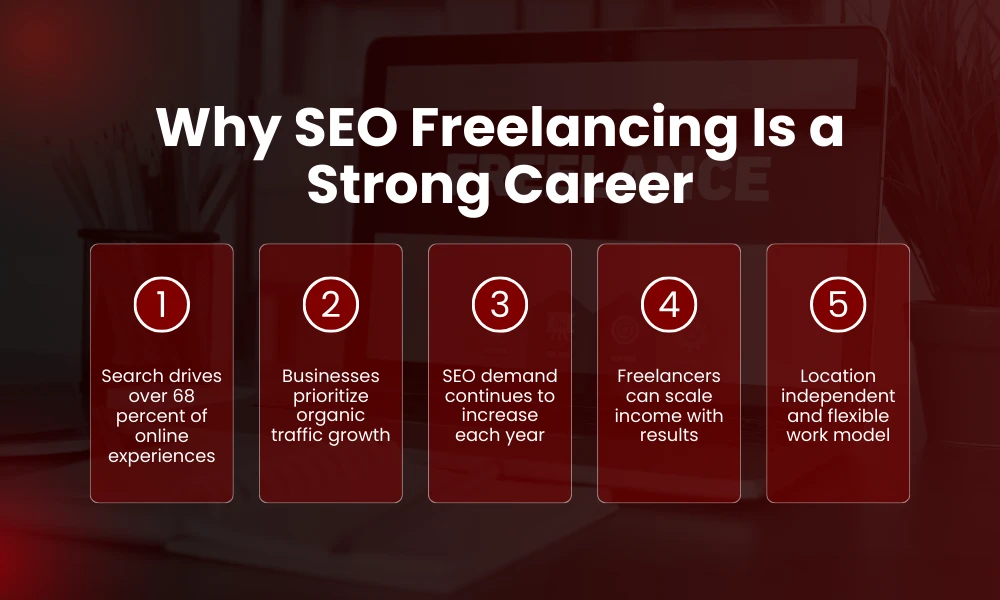
SEO is not new but its importance has only increased as search engines get smarter and competition grows. According to a study by BrightEdge more than 68 percent of all online experiences begin with a search engine. That means people are still using search engines first when they want information, products or services.
Another study by HubSpot found that 61 percent of marketers say improving SEO and growing organic presence is their top inbound marketing priority. This tells you that businesses are not only aware of SEO but are actively investing in it more than other areas.
So as an seo freelancer you are entering a market with strong and consistent demand. The upside is that unlike fixed salary jobs you can scale your income based on the value you provide to clients.
Core Skills Every SEO Freelancer Must Master
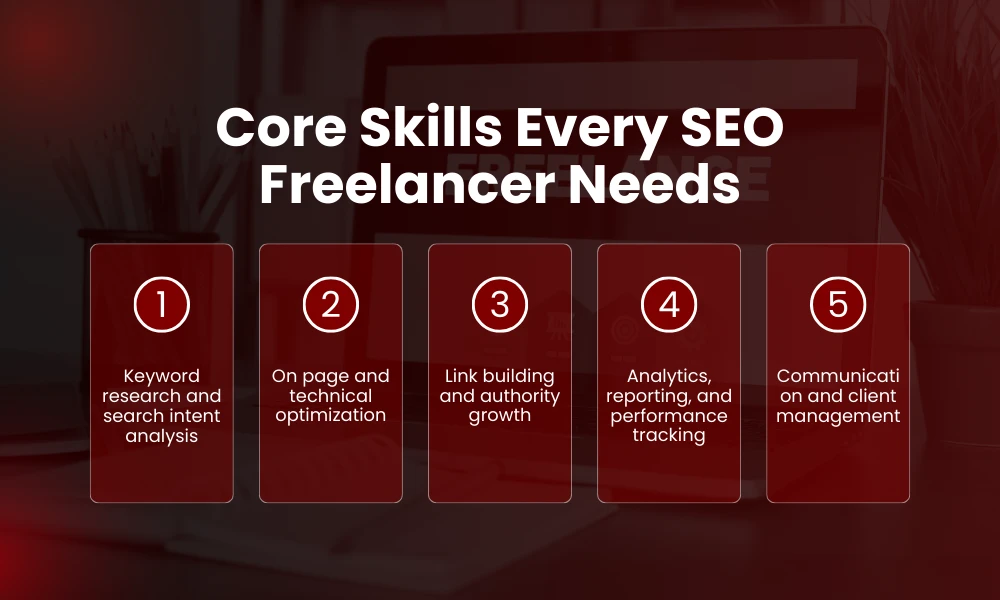
Becoming an seo freelancer requires more than knowing a couple of tools. You must build a mix of technical knowledge, analytical thinking, content strategy ability, and communication skills.
Here is a breakdown of the most important skills.
1. Keyword Research
Keyword research is the foundation of good SEO. You need to understand search intent and how to discover keywords that your client can realistically rank for. Learning how to perform effective keyword research for SEO helps you identify the exact search terms your potential clients’ customers are using.
Tools most freelancers use include:
- SEMrush
- Ahrefs
- Moz
- Google Keyword Planner
According to a survey by Ahrefs over 90 percent of pages get no traffic from Google because they failed at basic keyword targeting. This shows how important keyword research is for success.
2. On Page Optimization
On page optimization means optimizing each page for search engines and users. It includes:
- Optimizing title tags
- Writing meta descriptions
- Structuring headings
- Using relevant keywords naturally in content
- Improving images and alt text
A case study published by Backlinko shows that pages that are fully optimized for on page signals tend to rank higher than pages that focus only on backlinks. Implementing strong on page SEO practices ensures that search engines can clearly understand your page content and rank it for the right queries.
3. Technical SEO
Technical SEO is a critical part of search performance. You need to be able to:
- Understand site architecture
- Improve crawl efficiency
- Fix indexation issues
- Improve page speed
According to Google, 53 percent of mobile users abandon a site that takes longer than 3 seconds to load. As a freelancer you must be able to identify technical bottlenecks that impact search performance. Conducting a regular technical SEO audit helps uncover crawl issues, slow loading pages, and indexing problems that may prevent a website from ranking well.
4. Link Building
Link building is one of the hardest parts of SEO but also one of the most valuable. A widely cited study by Backlinko found that the number of domains linking to a page is strongly correlated with higher search rankings. This means backlinks still matter.
As an seo freelancer you should know how to:
- Find link opportunities
- Conduct outreach
- Avoid black hat practices
- Build relationships with webmasters
5. Analytics and Reporting
You must know how to interpret data using tools like:
- Google Analytics
- Google Search Console
- SEMrush analytics
Clients want to see results and accurate reporting helps you show them the ROI of your work. According to Databox, 56 percent of marketers regularly use Google Analytics to measure SEO success. This skill will make you more credible.
6. Content Strategy
Content and SEO work hand in hand. Building an effective SEO content strategy allows you to align keyword research, user intent, and publishing schedules to drive consistent organic traffic. You must know how to:
- Plan content calendars
- Match keywords with content topics
- Understand user intent
- Optimize existing content
Research by HubSpot shows that companies that blog get 55 percent more website visitors than those that do not. This makes content strategy a skill that no SEO professional can ignore.
7. Communication and Client Management
SEO work is meaningful only when you can explain recommendations and results to clients. This skill is underrated but it makes a huge difference in client retention.
Practical Learning Path to Become an SEO Freelancer
If you are just starting here is a realistic path you can follow:
Month 1: Fundamentals
- Read beginner guides from Moz and Google
- Learn keyword research basics
- Practice on sample websites
Month 2: Hands On Practice
- Use free tools like Google Analytics and Search Console
- Start optimizing a small site
- Document your results
Month 3: Build a Portfolio
- Build case studies
- Create a simple website for yourself
- Publish content showing your SEO experiments
Month 4 Onwards: Client Outreach
- Start pitching clients
- Join freelance platforms
- Network on LinkedIn
This timeline is flexible depending on your experience but it provides a clear structure.
How Much Can an SEO Freelancer Charge
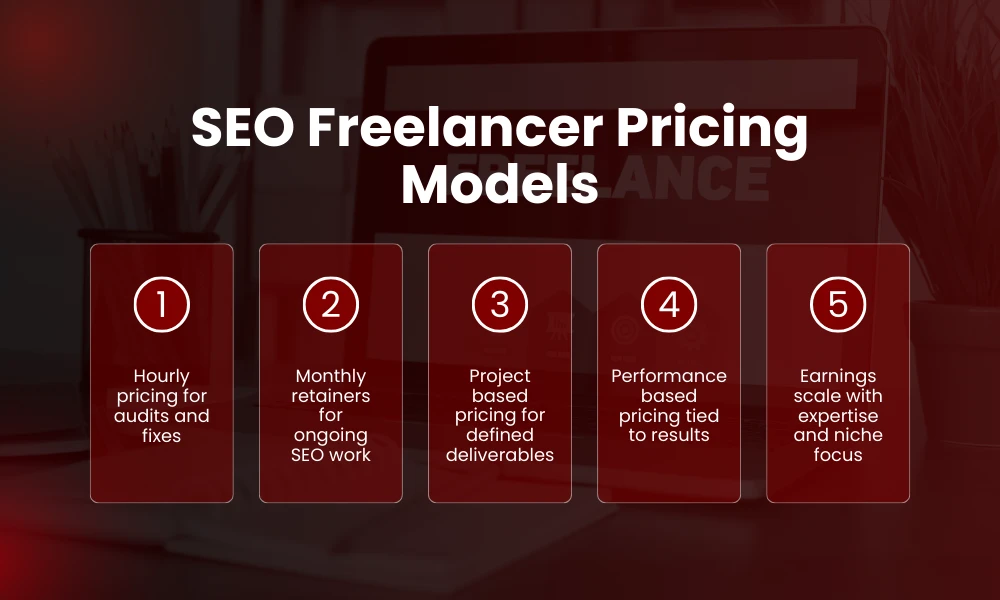
Pricing is one of the toughest parts for many freelancers. There is no standard rate but there are industry norms you can follow.
Pricing Models You Can Use
Hourly Rate
Many freelancers start with hourly rates. According to a survey by Hubstaff the average hourly rate for SEO professionals ranges from $50 to $150 per hour depending on experience.
Hourly pricing is good for short tasks like audits or specific fixes.
Monthly Retainer
This is the most common pricing model for an seo freelancer. Clients pay you a fixed amount every month for ongoing optimization work.
Typical monthly retainers range from $500 to $3,000 or more depending on the scope.
Project Based Pricing
Here you set a total price for a defined project like a full site audit, SEO setup for a website, or content optimization.
Project prices typically fall between $1,000 and $10,000+.
Performance Based Pricing
In performance pricing you get paid based on results such as increased traffic or rankings. This model is harder to manage but can be lucrative if you are confident in your skills.
Data on Freelance SEO Earnings
According to data from Upwork freelancers with strong SEO skills can earn more than $80,000 annually by working with multiple clients. Some advanced freelancers with niche expertise exceed six figures.
This tells you that if you position yourself well and deliver results you can earn a strong income as an seo freelancer.
Client Acquisition Strategies

Getting clients is the biggest challenge for most freelancers. Here are some proven strategies.
1. Online Freelance Marketplaces
Platforms like:
- Upwork
- Freelancer.com
- PeoplePerHour
These platforms make it easy to find clients but they can be competitive. The key is to build a strong profile and collect good reviews.
Data from Upwork shows that freelancers with complete profiles and multiple reviews get significantly more responses from clients. This means your profile quality matters more than the number of proposals you send.
2. Cold Outreach via Email
Cold emailing business owners is a strategy that still works. You can:
- Find prospects in your niche
- Analyze their website SEO quickly
- Send personalized outreach
When you send value first like a mini audit you get much higher responses. Tools like Hunter.io and Apollo help you find business emails.
A study by SalesHandy found that personalized emails increase reply rates by over 50 percent. This highlights the importance of customizing your outreach.
3. Social Media and Content Marketing
Posting SEO tips and case studies on LinkedIn or Twitter helps you attract clients organically. Content marketing builds authority over time.
According to LinkedIn data professionals who share content regularly get 7 times more profile views than those who do not.
4. Referrals and Word of Mouth
Once you get your first few clients delivering great results will lead to referrals. You should always ask happy clients for referrals. Referrals often convert faster because they come with trust already established.
5. Strategic Partnerships
You can partner with web designers, developers, or digital marketing agencies who can send you SEO work. These partners often have existing clients who need SEO support.
Studies show that strategic partnerships can increase lead generation by 40 percent for freelancers and small businesses.
Tools Every SEO Freelancer Should Use
Here are tools you need to work professionally:
- Google Analytics for traffic analysis
- Google Search Console for indexation and performance metrics
- SEMrush or Ahrefs for research
- Screaming Frog for technical SEO
- Canva or Google Sheets for reporting
- Mailshake or Lemlist for outreach
Investing in tools makes you more efficient and improves the quality of your service. Many freelancers rely on powerful SEO analytics tools to track keyword rankings, monitor traffic trends, and create detailed reports for clients.
Common Mistakes to Avoid
When starting out as an seo freelancer here are mistakes you should avoid:
1. Charging Too Little
Many freelancers underprice their services. This can make clients question your value. Price based on results and experience rather than fear of losing work.
2. Failing to Track Results
If you do work without tracking results you cannot prove your impact. Always set clear KPIs with clients.
3. Ignoring Contracts
Never start work without a contract. Contracts protect you from late payments and scope creep.
4. Overusing Technical Jargon
Clients are not SEO experts. Communicate in simple terms so they understand the value you provide.
How to Package SEO Services
To make it easy for clients to buy from you consider packaging your services.
Here are example packages:
Starter SEO Package
- Keyword research for 10 keywords
- On page optimization for 5 pages
- Monthly reporting
Price range: $500 to $800
Growth SEO Package
- Full site audit
- Keyword research for 30 keywords
- Content optimization
- Link building outreach
Price range: $1,500 to $2,500
Advanced SEO Package
- All features of Growth Package
- Local SEO setup
- Blog and content strategy
- Weekly consulting
Price range: $3,000+
Packaging your services makes pricing easier for clients to understand and helps you sell without confusion.
SEO Freelancer Case Studies and Real Data
Here are two example studies showing how SEO results translate into value.
Case Study 1: Local Business Traffic Growth
A small local service business hired an SEO freelancer to boost search visibility. Before SEO they were getting under 100 visits per month from organic search.
After six months of keyword optimization and content creation organic traffic increased to 1,800 visits per month.
Increased traffic also led to 42 phone inquiries per month which turned into paying customers. The business reported a 20 percent increase in revenue from SEO efforts.
Case Study 2: Ecommerce Site Organic Growth
An ecommerce brand optimized product pages and improved site speed. They focused on high intent keywords.
Over nine months their organic traffic grew from 5,000 sessions per month to 27,000 sessions per month. Revenue from organic sessions increased by 158 percent.
These case studies show that strategic SEO work leads to measurable business outcomes.
Conclusion
Becoming an seo freelancer in 2026 is both practical and financially rewarding if you approach it with the right skills, pricing strategy, and client acquisition plan. Remember to invest time in learning the fundamentals, build your portfolio, and communicate your value effectively to clients.
SEO is not a quick fix but a long term investment. If you can deliver consistent results you can build a fulfilling career working with businesses from any industry and any location.
Now that you understand the roadmap it is time to take action. As you gain more experience and start working with larger clients, learning advanced SEO strategies will help you scale results and deliver even greater value through your freelance services. Start with small projects, build real results and refine your approach as you grow.
FAQs About SEO Freelancing
What is an seo freelancer?
An seo freelancer is a self employed professional who helps businesses improve their visibility on search engines through techniques like keyword optimization, link building, content strategy and technical SEO.
How much should an SEO freelancer charge?
SEO freelancers typically charge either by the hour, by project or by monthly retainer. Hourly rates range from $50 to $150 per hour, project rates can be $1,000 to $10,000, and retainers usually fall between $500 to $3,000 per month depending on experience and scope.
How do I find SEO clients?
You can find clients through online marketplaces like Upwork, cold outreach, content marketing on social media, referrals and strategic partnerships with other agencies.
Do I need certifications to become an SEO freelancer?
Certifications are helpful but not mandatory. What matters most is your ability to deliver results and communicate value to clients.
How long does it take to learn SEO well enough to freelance?
With consistent practice it takes about 3 to 6 months to build foundational skills. Real mastery comes with experience and working on diverse websites.