
A majority of PPC agencies are not built for SaaS. They are built for eCommerce, local services, or retail. They know how to sell shoes and protein powder. But a 14-day free trial funnel for a B2B project management tool? A demo request campaign targeting DevOps engineers at companies between 200 and 2,000 employees? That is a completely different game, and a lot of agencies simply do not know how to play it.
The problem is that bad-fit agencies rarely admit this upfront. They take your budget, apply the same playbook they use for everyone, and then point to CTR improvements while your CAC quietly balloons. By the time you realize what happened, you have burned through six months of runway.
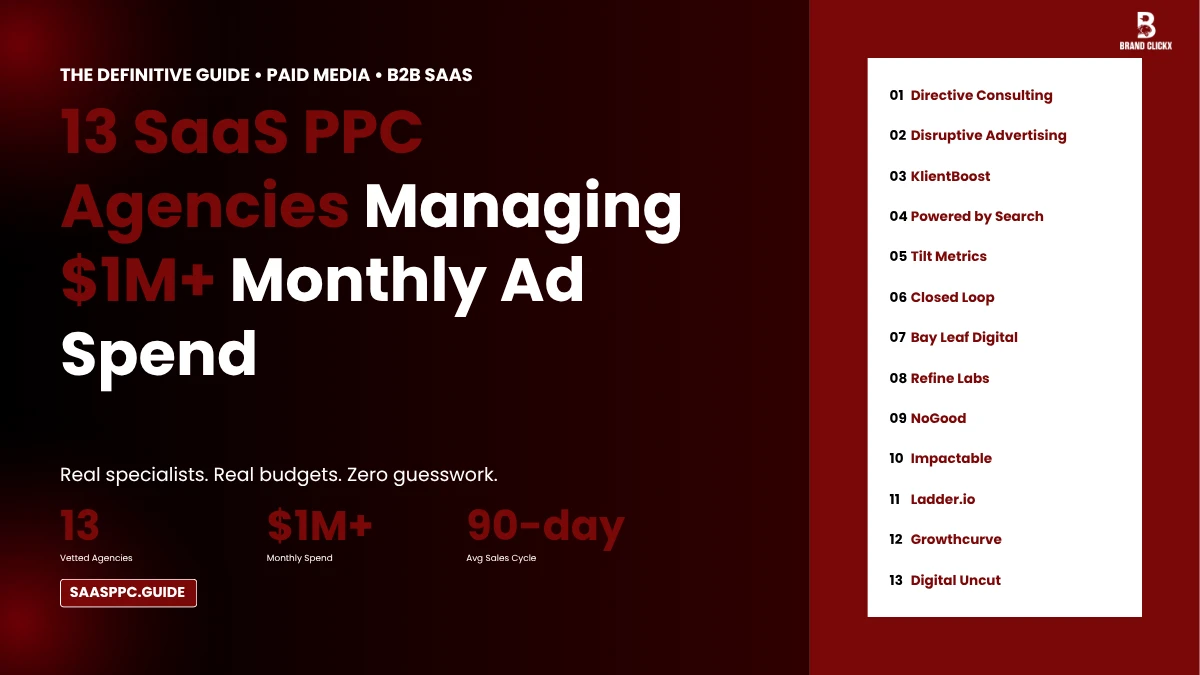
So this piece is specifically about SaaS PPC agencies that are built for this. Not agencies that dabble in SaaS between retail and hospitality clients. Real specialists running $1 million or more in monthly ad spend for software companies. The kind of shops where the account managers actually know what ARR means.
Why SaaS PPC Is a Different Animal
A few numbers worth keeping in mind before we get into the list. Research from Demand Gen Report found that 67% of B2B buyers do most of their research before they ever speak to a salesperson. Which means a huge portion of your paid ads are not closing deals. They are starting conversations, warming up audiences, and nudging people into a funnel that might take four months to pay off.
That changes everything about how you should run campaigns. SaaS PPC agencies worth hiring understand that:
- The goal of a paid click is often a free trial or demo, not a purchase
- Attribution across a 90-day sales cycle is genuinely complicated
- Cost-per-trial and cost-per-pipeline are the metrics that matter, not cost-per-click
- The audience sizes are often small, which means creative fatigue is a real operational problem
Agencies that get this think in terms of LTV to CAC ratios, cohort-based ROAS, and pipeline contribution. The ones that do not will show you a really nice looking CTR report every month.
The 13 SaaS PPC Agencies Worth Knowing
1. Directive Consulting
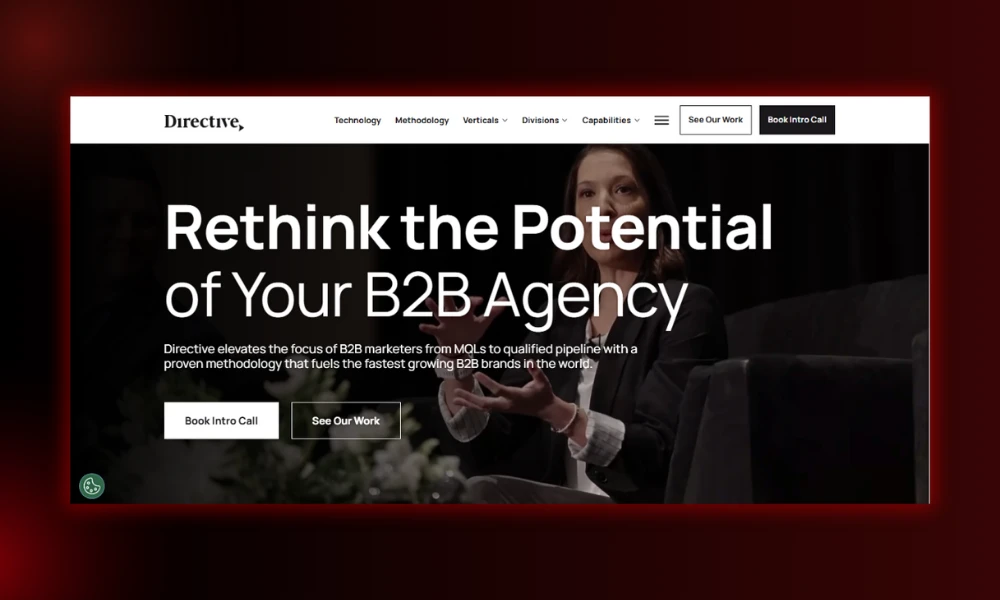
Directive is probably the most recognized name specifically in the SaaS and tech agency world. They do not work with restaurants or fashion brands. It is strictly tech companies, which means the institutional knowledge they have built up over the years is actually relevant to your problem.
Their methodology, which they call Customer Generation, is built around tying ad spend to pipeline and revenue rather than lead volume. Clients like Sprinklr, ZoomInfo, and Sumo Logic are on their roster, and they are managing spend that runs well into eight figures annually.
Why it matters:
- Tech-only client base means no cross-contamination from irrelevant industries
- Strong Google and LinkedIn capabilities for B2B audiences
- Customer Generation framework designed around ARR growth, not vanity metrics
2. Disruptive Advertising
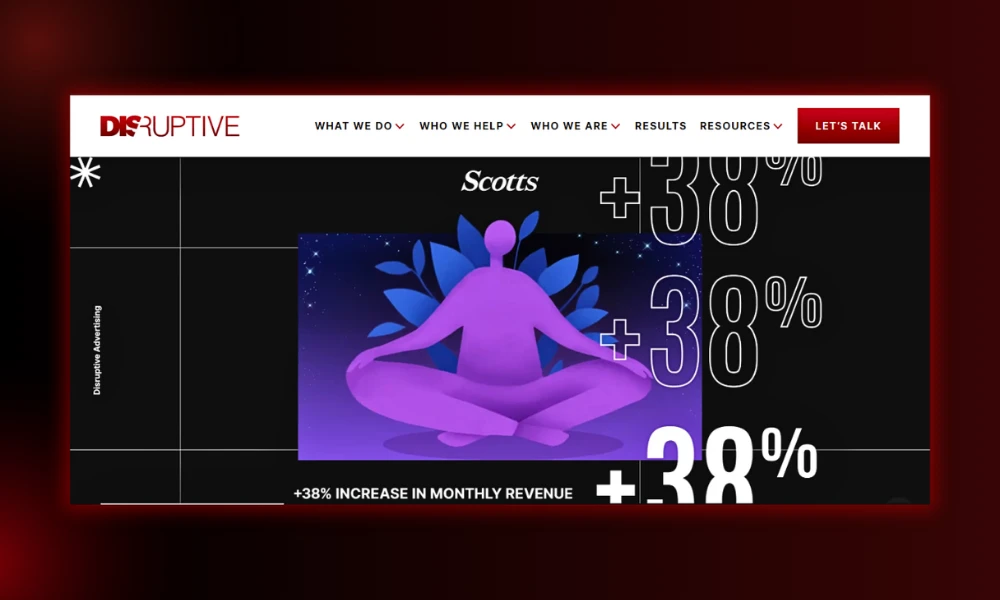
Disruptive is one of the largest independent performance marketing agencies in the country. They manage north of $450 million in annual ad spend, and a meaningful portion of that is SaaS.
What is interesting about them is that they published an internal analysis in 2022 showing that 76% of the ad accounts they audited were actively wasting money on targeting that was not working. It is a bold thing to publish, but it also signals that they prioritize honest account management over telling clients what they want to hear.
Why it matters:
- Scale gives them pattern recognition across thousands of campaigns
- Google Premier Partner and Meta Business Partner credentials
- Strong reputation for transparent, honest reporting
3. KlientBoost
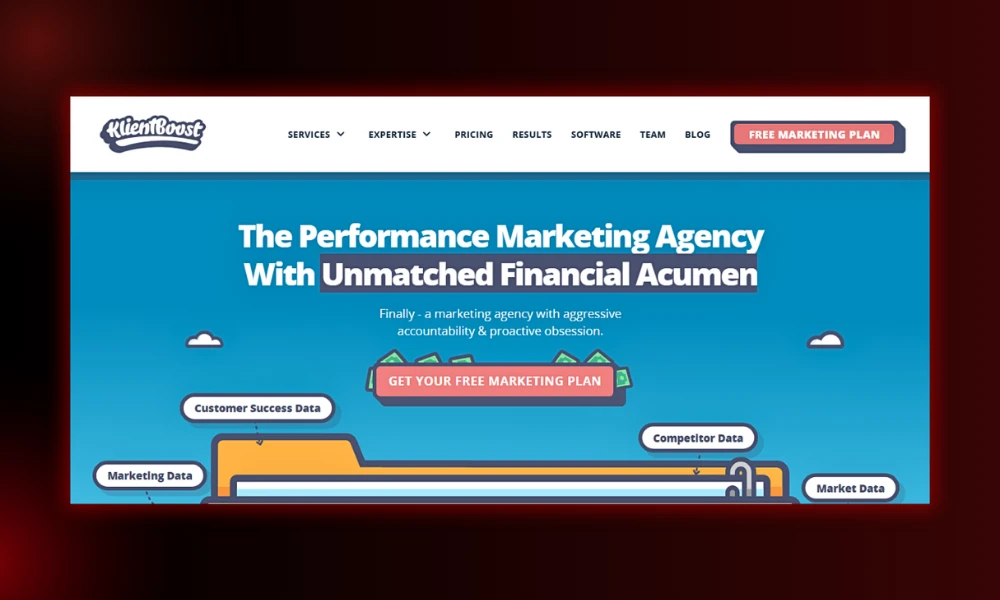
KlientBoost has been around long enough to build a real track record, and they have landed some impressive names. Airbnb, LinkedIn, and a long list of SaaS companies across both B2B and B2C.
What separates them from a lot of SaaS PPC agencies is their emphasis on landing pages. Most agencies hand you traffic and then shrug when it does not convert. KlientBoost treats the page as part of the campaign, running aggressive CRO tests alongside the paid media work.
For SaaS companies where a poorly converting trial signup page can double your effective CAC, that integration matters a lot.
Why it matters:
- Landing page optimization is baked into their process, not a separate engagement
- Fast creative testing cycles reduce wasted spend during learning phases
- Solid case studies across a wide range of SaaS verticals
4. Powered by Search
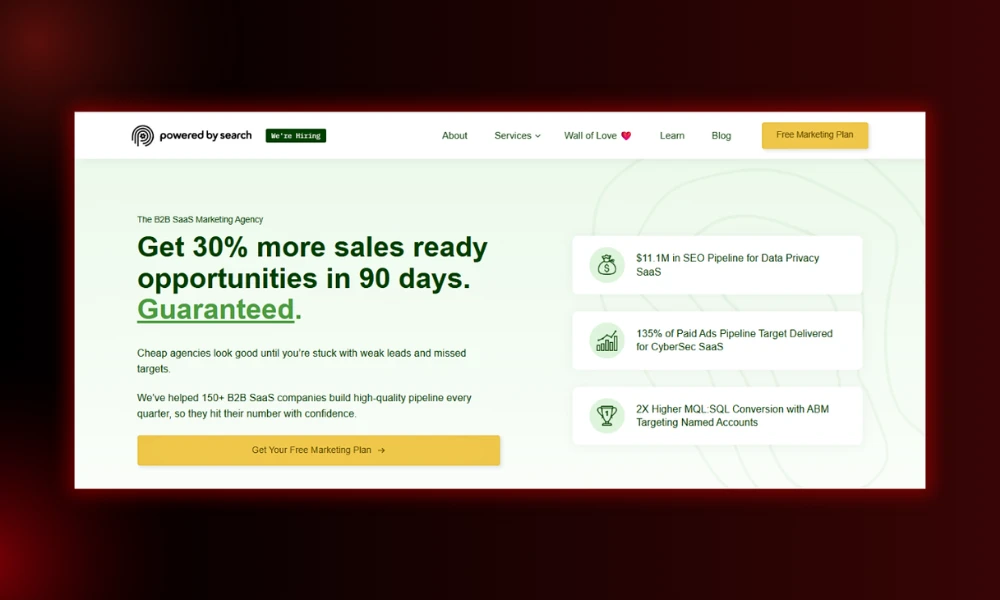
This is a Canadian agency that has gone deep on B2B SaaS specifically. They have built something they call Predictable Pipeline, which is a framework for connecting paid media investments to revenue outcomes across the full funnel.
They also publish SaaS marketing benchmarks regularly, which is actually useful context. One of their published figures worth knowing: SaaS companies with well-optimized Google Ads campaigns tend to see cost-per-trial figures somewhere between $40 and $120, though this swings pretty widely depending on the category and ACV.
Why it matters:
- B2B SaaS is their only focus
- Predictable Pipeline approach aligns ad spend with revenue outcomes
- They publish data and benchmarks, which reflects a research-oriented culture
5. Tilt Metrics
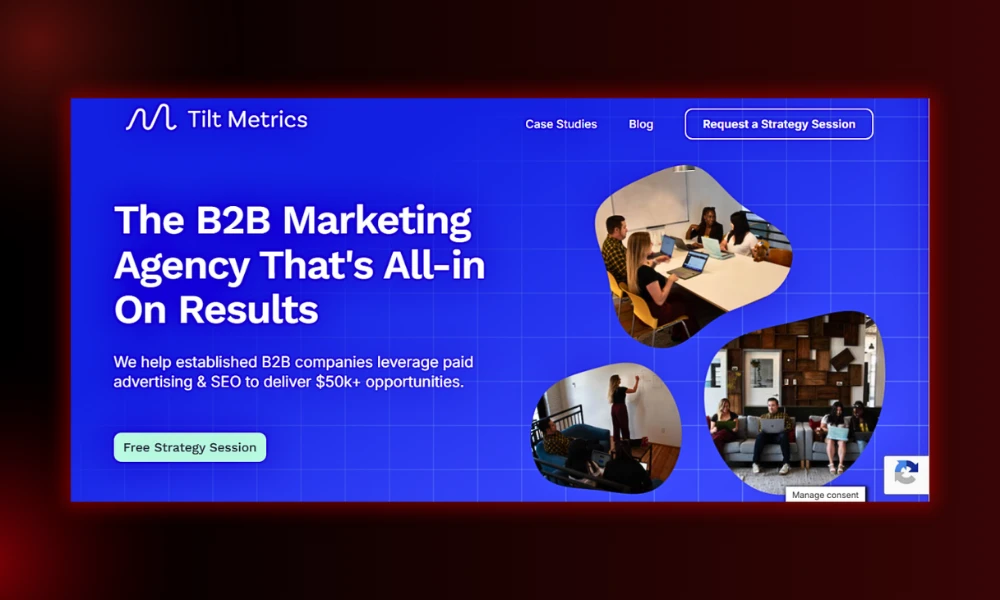
Tilt Metrics is newer compared to some of the other names on this list, but they have been growing steadily and earning strong reviews from growth-stage SaaS companies. They focus on demand generation for B2B SaaS, with particular strength in Google and LinkedIn.
What is worth noting is that they build full-funnel strategies from the very start of an engagement. A lot of agencies start with bottom-of-funnel and work backward only when pressed. Tilt Metrics tends to map out brand and demand gen campaigns alongside conversion campaigns from day one.
Why it matters:
- Growth-stage SaaS is their sweet spot
- Full-funnel approach from onboarding rather than as an afterthought
- Genuine LinkedIn Ads expertise for enterprise targeting
6. Closed Loop
For larger SaaS companies with messy attribution problems, Closed Loop is one of the few SaaS PPC agencies that brings real technical depth to measurement.
They invest in analytics infrastructure in a way that most agencies do not, which gives clients a much clearer picture of which campaigns are contributing to the pipeline.
If you are running paid ads across Google, LinkedIn, and display, and your sales cycle is six months long, understanding attribution is not a nice-to-have. It is the only way to make smart budget decisions. Closed Loop is built for that complexity.
Why it matters:
- Advanced attribution modeling for complex, long-cycle SaaS sales
- Analytics and data science capabilities that go beyond standard agency offerings
- Experience with enterprise-level SaaS accounts
7. Bay Leaf Digital
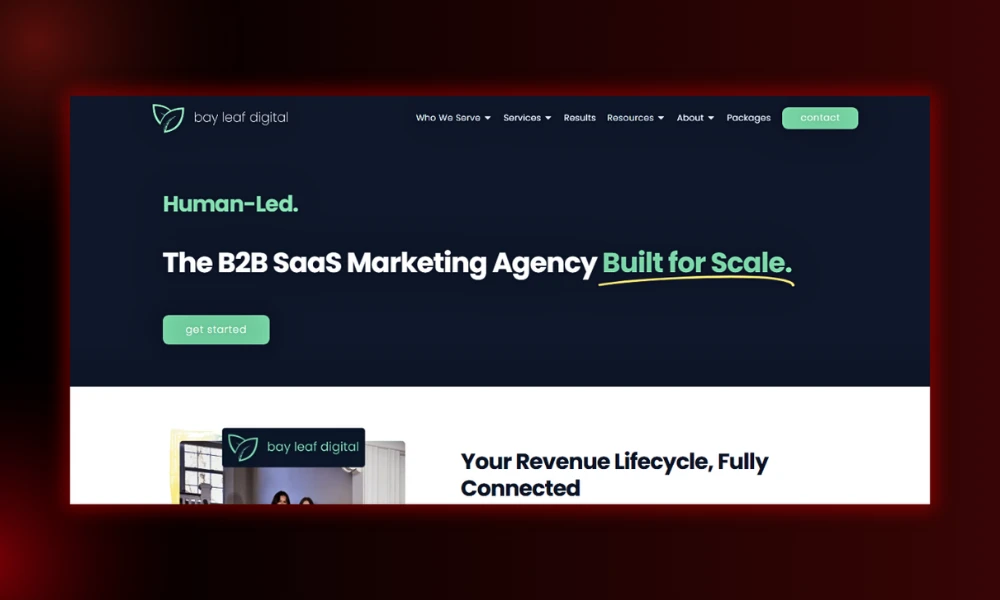
Bay Leaf Digital has a specific angle that tends to resonate with SaaS leadership teams: they tie campaigns to OKRs rather than ad platform metrics. That framing matters when you are trying to justify the budget in a board meeting or a quarterly review.
They have published case studies showing 3x to 5x CAC improvements after taking over accounts from previous agencies. That is a wide range, but the direction is consistent. They tend to find inefficiencies quickly.
Why it matters:
- OKR-aligned reporting that speaks the language of SaaS leadership
- Strong analytics culture
- Focus on mid-market and growth-stage SaaS companies
8. Refine Labs
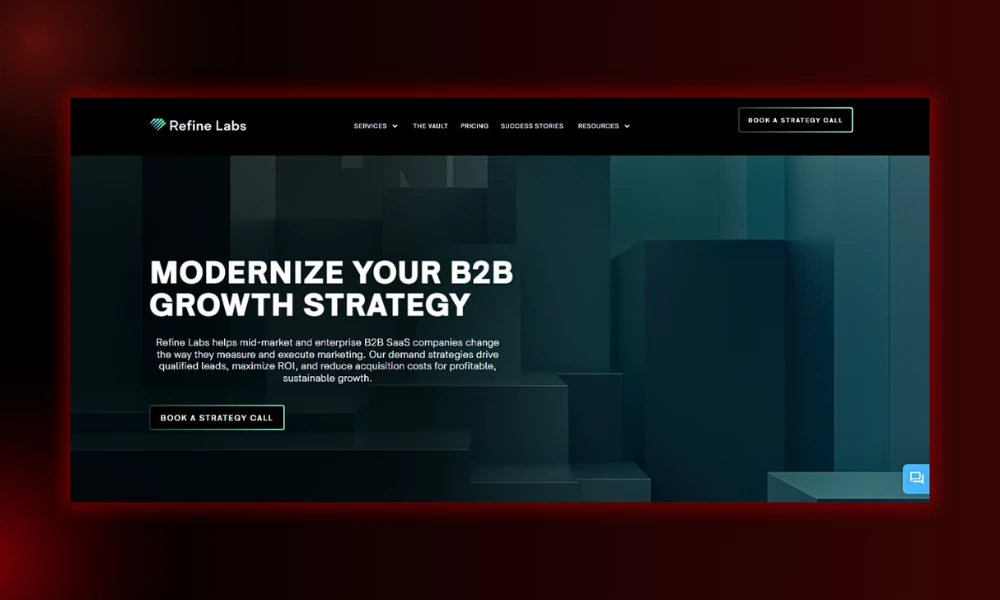
Refine Labs is a polarizing name in SaaS marketing circles, and that is probably a good thing. Founder Chris Walker has been publicly critical of traditional lead generation tactics, including gated content, contact forms, and the obsession with MQL volume. Their campaigns reflect those beliefs.
They focus on what they call demand creation rather than demand capture. Instead of catching buyers who are already searching, they try to create buying intent through content amplification and what the industry calls dark funnel strategies.
For SaaS companies selling complex products to sophisticated buyers, this approach tends to resonate.
Why it matters:
- Demand creation philosophy is better aligned with how B2B SaaS buyers actually buy
- Dark funnel and intent-based strategies reduce reliance on last-click attribution
- Strong alignment with modern SaaS go-to-market thinking
9. NoGood
NoGood sits at the intersection of paid media and growth experimentation. Their client list includes SaaS brands like ByteDance, Spring Health, and Intuit, and their approach borrows heavily from growth hacking methodology.
In practical terms, that means they run a lot of tests quickly. They have a bias toward speed and iteration rather than perfecting a strategy before launching it.
For early to mid-stage SaaS companies where finding what works is more valuable than optimizing something that sort of works, that mentality fits well.
Why it matters:
- Growth experimentation is embedded in the engagement model
- Cross-channel expertise covering paid search and paid social
- Strong track record with both startup and scale-up SaaS
10. Impactable
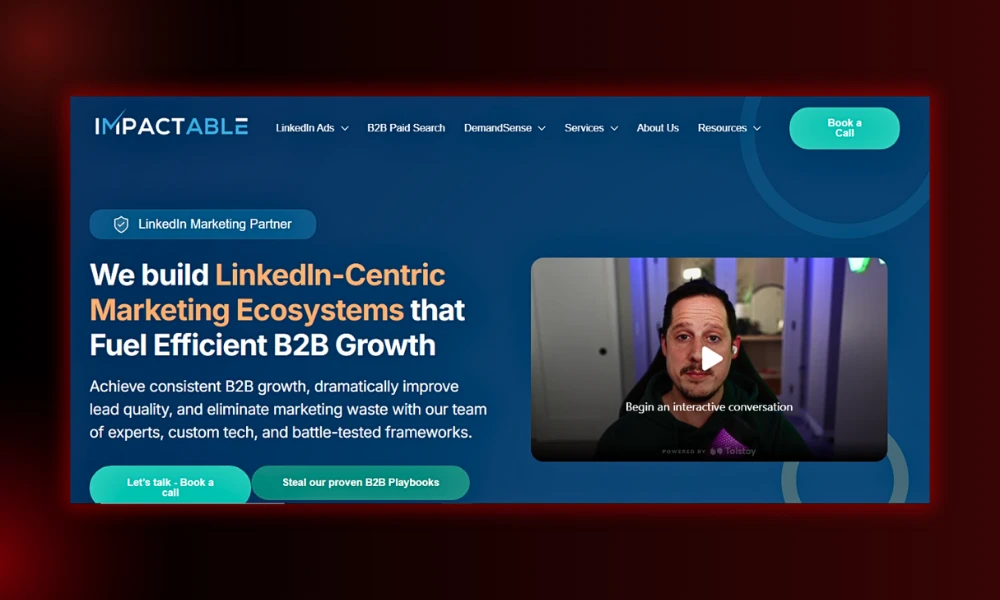
For SaaS companies targeting enterprise buyers, LinkedIn Ads deserve a serious budget allocation. LinkedIn’s own research shows B2B marketers see roughly 2x the conversion rates on LinkedIn compared to other platforms when reaching enterprise decision makers.
Impactable is one of the most LinkedIn-focused SaaS PPC agencies operating right now.
They specialize in account-based approaches, which is the right framework when you are targeting 500 specific companies rather than broad keyword audiences.
Why it matters:
- LinkedIn Ads is their primary discipline, not a secondary offering
- Account-based marketing integration for enterprise SaaS
- Strong results for companies targeting specific company segments
11. Ladder.io
Ladder takes a data science angle to growth marketing that feels genuinely different from most agency models. They have built a proprietary database of growth tactics tested across their client base, which they call the Playbook.
When you come in as a new client, they are not starting from scratch. They are pulling from institutional knowledge built across hundreds of engagements.
Clients like Monzo, Booking.com, and Perkbox are on their list. They tend to attract companies that want rigor in their process, not just creative gut instinct.
Why it matters:
- Predictive modeling helps allocate budget across channels before spending
- Proprietary playbook reduces time wasted on already-disproven tactics
- Strong creative and copywriting capabilities alongside technical PPC
12. Growthcurve
Most SaaS PPC agencies are either North America-focused or Europe-focused. Growthcurve, based in London, has genuine depth in both markets, which matters a lot for SaaS companies that are scaling internationally or running campaigns across multiple regions simultaneously.
They are also strong on the creative side, which helps with the chronic ad fatigue problem that B2B SaaS companies face. When your target audience is a few thousand DevOps managers in North America, you burn through creative fast.
Why it matters:
- Cross-market expertise across the US and Europe
- Strong creative strategy for small, targeted B2B audiences
- Fintech and SaaS specialization
13. Digital Uncut
Digital Uncut works primarily with Series A and Series B SaaS companies in the UK and Europe. They position themselves around performance with purpose, which in practice means tying every campaign decision back to revenue metrics rather than platform-level stats.
For growth-stage SaaS teams that are trying to build a predictable pipeline for the first time, they bring a structured approach that helps establish the right measurement framework from the start.
Why it matters:
- Strong experience with early growth-stage SaaS companies
- Revenue-focused reporting over platform KPI reporting
- Real depth in UK and EU SaaS markets
- What to Actually Ask When Evaluating SaaS PPC Agencies
A lot of agency evaluation processes end up being beauty contests. You sit through polished decks, hear impressive case study numbers, and then pick the team that seemed most confident. That is not a great process.
Here is what is actually worth digging into.
How Do They Handle Attribution?
This is the question that separates serious SaaS PPC agencies from everyone else. If your average deal takes 90 days to close, last-click attribution is going to systematically undervalue your top-of-funnel campaigns and cause your agency to make bad optimization decisions.
Ask specifically: how do you track the impact of a paid click that starts a free trial that converts to paid 60 days later? If they do not have a clear answer, that is a problem.
What Does Their Testing Process Look Like?
A Harvard Business Review study found that companies running structured experiments grow revenue roughly 8% faster than those that do not. In paid media, testing velocity is one of the biggest determinants of long-term performance.
Ask how many tests they run per month, how they document results, and how learnings get applied across accounts. Good SaaS PPC agencies have a real answer to this.
How Many SaaS Clients Are They Actually Managing?
There is a difference between an agency that works with a few SaaS companies and one where SaaS makes up the majority of their portfolio. Pattern recognition matters in paid media. An agency managing 40 SaaS companies has seen failure modes and winning strategies you will never encounter managing three.
Do They Understand Your Specific Model?
PLG companies have different goals than sales-led SaaS companies. A product that sells to SMBs through a self-serve funnel needs different campaign architecture than one selling to enterprises with a 6-month sales cycle. Make sure the agency you are talking to has real experience with your specific go-to-market model.
Red Flags That Should End the Conversation
Some things are worth walking away from quickly.
They lead every reporting conversation with CTR and impressions without connecting those to pipeline or revenue.
They cannot explain how they track conversions through a free trial to closed revenue.
The proposal they sent you looks like it could apply to any industry with find-and-replace
They are pushing long contracts without performance milestones
They have not asked you about LTV, CAC, or payback period at any point in the sales process
FAQs
Q: What do SaaS PPC agencies typically charge?
Most SaaS PPC agencies charge a percentage of managed spend, usually somewhere between 10% and 20%, with minimum retainers that often start around $3,000 to $5,000 per month. Larger or more specialized agencies frequently work on flat monthly fees, and those can run from $10,000 to $25,000 or more depending on scope. If the number feels low, ask what it actually includes.
Q: How long before you start seeing results?
The honest answer is that it depends on your sales cycle, but most SaaS PPC agencies need 60 to 90 days to audit, restructure, and get campaigns running properly. Meaningful data usually starts appearing in month two, with more reliable signals around month three. For enterprise SaaS with long deal cycles, measuring actual pipeline impact can take four to six months.
Q: Google Ads or LinkedIn Ads for SaaS?
For most SaaS companies, both platforms serve different purposes. Google Ads tends to perform better for capturing buyers who are actively searching and for lower ACV products. LinkedIn is often more efficient for reaching specific job titles, company sizes, or industries at higher ACV. Strong SaaS PPC agencies will typically recommend a channel mix based on your ICP rather than defaulting to one platform.
Q: What is a reasonable CAC target for paid SaaS?
This scales with ACV. A product charging $100 per month needs to keep CAC under $300 to $400 to maintain workable unit economics. A product with $50,000 ACV can justify spending $10,000 or more to acquire a customer. The benchmark most SaaS investors look for is a CAC payback period under 12 months. Your agency should be tracking and reporting this proactively.
Q: Can SaaS PPC agencies work with product-led growth companies?
Yes, and several of them have developed specific frameworks for PLG. The main shift is that the campaign objective changes from MQL to PQL (product-qualified lead), and the conversion event you optimize toward is usually a free trial activation rather than a demo request. The agencies with PLG experience will know how to structure campaigns around that goal without defaulting to a sales-led approach.
Final Thoughts
Paid advertising is one of the fastest ways to scale a SaaS business, and one of the fastest ways to burn money if the wrong agency is running it. The difference between a great engagement and a bad one usually comes down to whether the agency actually understands the SaaS business model, or whether they are just applying a generic PPC process and hoping it works.
The SaaS PPC agencies on this list have all demonstrated they can handle serious budgets, think in terms of revenue outcomes, and adapt their strategies to the specific dynamics of subscription software. Some are better for growth-stage startups. Some are better for enterprise. Some are particularly strong on LinkedIn. Some bring more analytical horsepower.
Take your time evaluating them. Do a real discovery call, push on the attribution question, and make sure the team you are talking to has seen your specific go-to-market model before. The right partnership makes a real difference.

