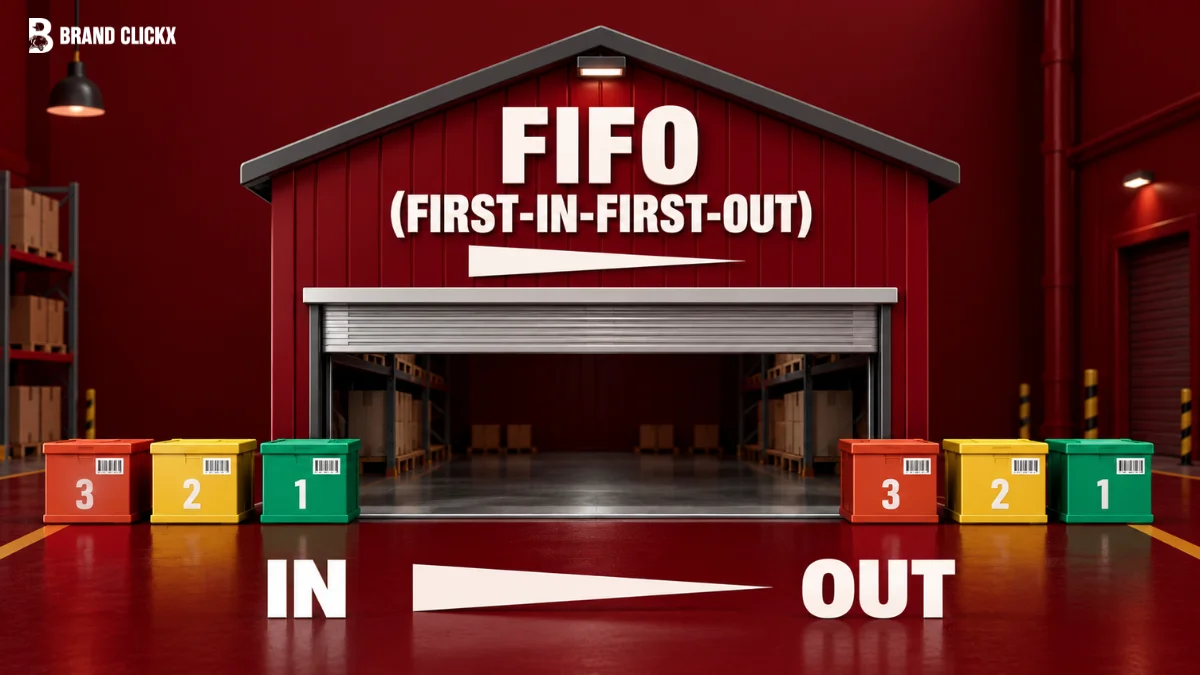
FIFO stands for First In, First Out. This method is used in inventory management. It ensures that the item bought first, or the item that enters an inventory store first, is also sold first. Most companies and businesses, from small to large, use this technique. This is not a wasteful technique or method; it is an approved method.
The FIFO method is helpful because we can prevent a big loss by using it. Most companies and businesses use this method because older items get expired or become damaged, and it can also become difficult or harmful to use them; so if we sell the items we bought first, we will be saved from expiry and any complications.
We can also understand FIFO in terms of fruits easily. A fruit seller tries to sell the old fruit early and fresh fruit later, but he may decrease the price of the old fruit compared to fresh fruit so that the fruit that is bought first is sold first, because old fruit may start ripening and it may give financial loss to the fruit seller if not sold first. So, to prevent loss, fruit sellers use the FIFO technique.
Key Takeaways
- FIFO stands for First In, First Out. It makes sure that the item bought first, or the item is also sold first.
- FIFO calculates the cost of goods sold by considering that the oldest items are sold first.
- FIFO is used in different industries to sell older products before new products arrive.
- FIFO reduces waste and obsolescence.
- FIFO simplifies inventory management.
- FIFO can be difficult in high volume warehouses.
- FIFO is an accepted inventory pricing method in U.S. GAAP.
- The IRS does not need every business to use only FIFO or LIFO.
How Does FIFO Work?
FIFO in Warehouse Operations
FIFO involves selling the oldest inventory first. Businesses assign arrival dates and batch numbers to know which stock is old and should be picked first. This helps in keeping inventory organized and reduces the risk of expiration or waste.
FIFO in Inventory Accounting
In accounting, FIFO means the cost of the oldest inventory is recorded first when products are sold. The cost of newer inventory stays in the ending inventory until those products are sold. This affects the cost of goods sold (COGS), ending inventory value, and reported profit.
FIFO Calculation With an Example
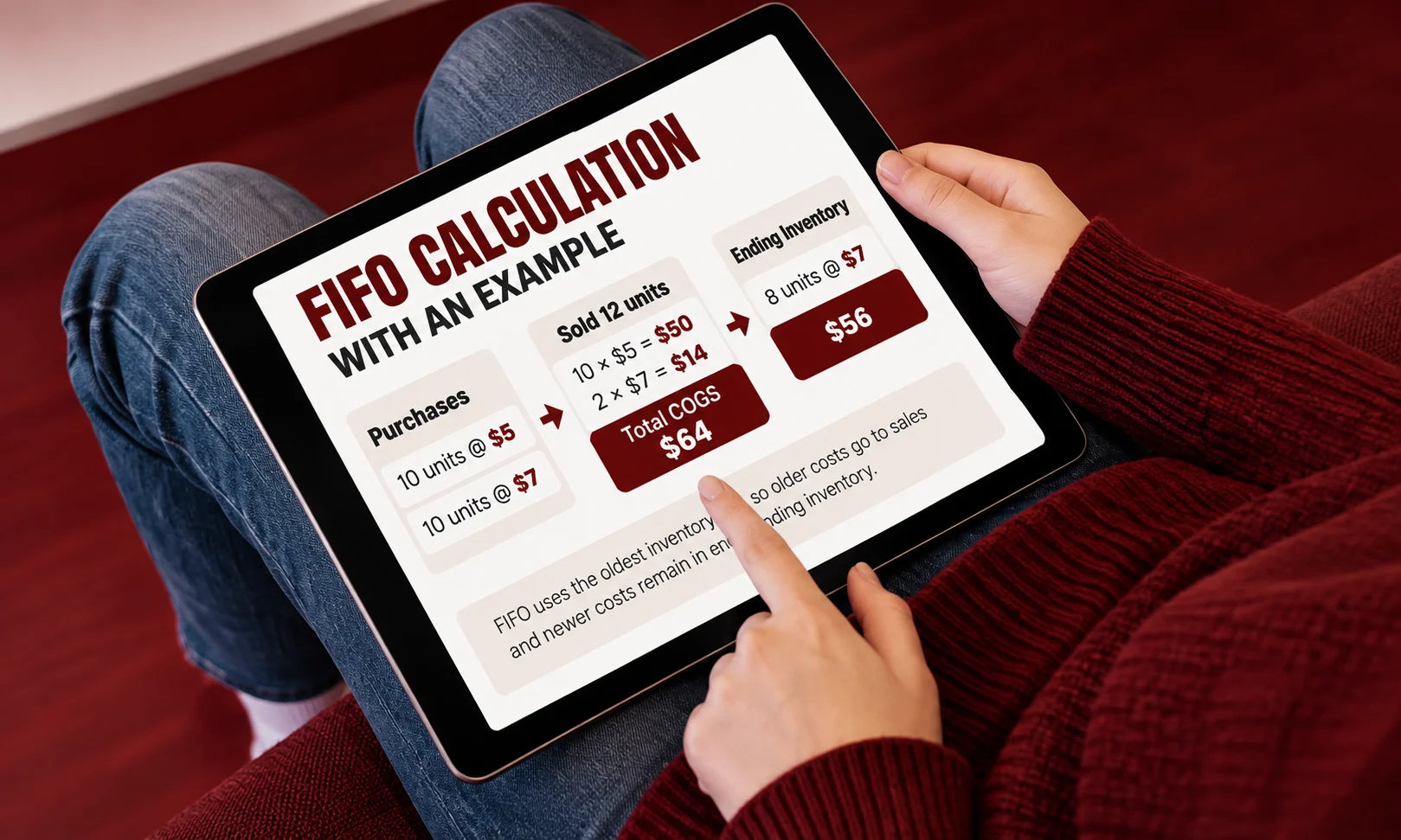
FIFO calculates the cost of goods sold by considering that the oldest items are sold first. For example, a business buys:
- 10 units at $5 each
- 10 units at $7 each
If the business sells 12 units, FIFO considers the first 10 units from the $5 batch and 2 units from the $7 batch.
Cost of goods sold:
10 × $5 = $50
2 × $7 = $14
Total COGS = $64
The business has 8 units left, all from the $7 batch:
8 × $7 = $56 ending inventory
This shows how FIFO assigns older inventory costs to sales while newer costs remain in ending inventory.
FIFO in Different Industries
FIFO is used in different industries to sell older products before new products arrive. Some of the industries in which FIFO is mainly involved are as follows:
Food and Beverage
FIFO is used in the food and beverage industry. AS food spoils earlier and beverages also expire after a short time so they need proper selling of the older products first.
Pharmaceutical Industry
FIFO is also used in the pharmaceutical industry because a large number of medicines have a very short lifetime, and they expire early, so hospitals and medical stores use FIFO to prevent financial loss.
Retail and E-Commerce
Retailers and e-commerce businesses can use FIFO to manage products that may become outdated after some time. It helps them to keep older inventory moving and reduces the risk of unsold products.
Benefits of FIFO
FIFO gives a lot of advantages to businesses as follows:
Reduces Waste and Obsolescence
FIFO involves selling older inventory first, so that products do not stay for a long time. This is helpful for fresh, temporary, and fast changing products. It can decrease spoilage, outdated products, and financial losses.
Simplifies Inventory Management
FIFO is easy for workers to follow. This helps workers in knowing that what to sell first. It also simplifies the placement of old and new products.
Improves Inventory Valuation
FIFO records the cost of older inventory when products are sold, while the cost of newer inventory stays in ending inventory. This means the value of the remaining inventory usually shows more recent purchase costs.
Disadvantages of FIFO
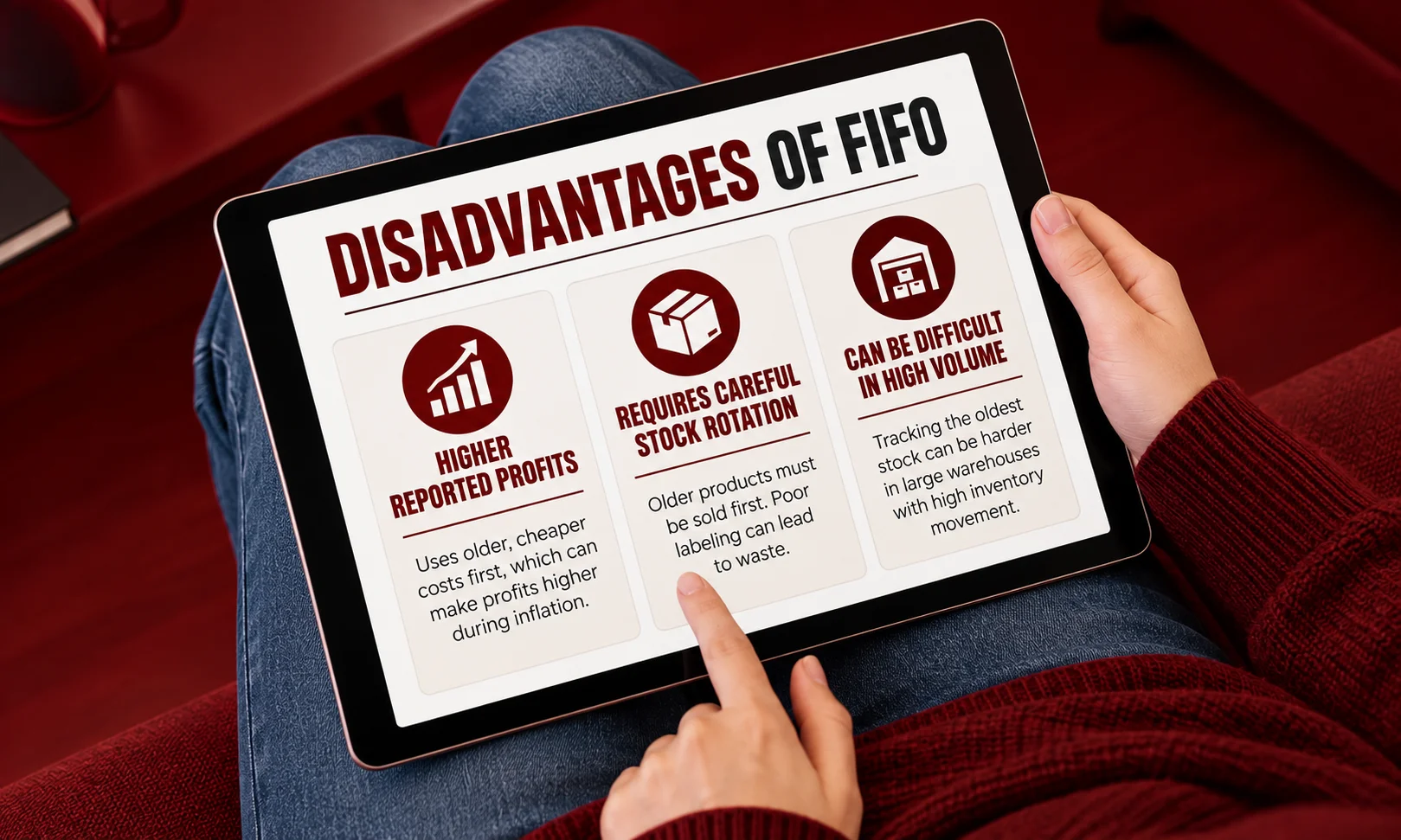
FIFO also has some limitations, such as when the prices of products change continuously and a large stock of products is available.
Higher Reported Profits During Inflation
When prices are rising, FIFO uses older and cheaper inventory costs first. This makes the cost of goods sold (COGS) lower and can make reported profits higher. However, higher reported profits may also result in higher taxes.
Requires Careful Stock Rotation
FIFO requires that businesses keep older products easy to find and make sure they are sold before newer products. Poor labeling may cause older stock to be sold later after new products, which may lead to waste or outdated inventory.
Can Be Difficult in High Volume Warehouses
Large warehouses may involve a lot of inventory buying and selling every day. Tracking the oldest stock can be harder without proper storage, labeling, and inventory tracking systems. This can make the selection process slower.
FIFO vs. LIFO vs. FEFO
| Method | Main Principle | Inventory Flow | Main Use |
| FIFO | First In, First Out | Oldest inventory is sold or used first | General inventory management, especially for products that can become outdated |
| LIFO | Last In, First Out | Newest inventory is sold or used first | Mainly used for accounting where allowed |
| FEFO | First Expired, First Out | Products with the earliest expiration date are sold or used first | Quick-spoiling, Medical, and expiration-sensitive products |
When Should You Use FIFO?
We should use FIFO for different products as follows:
Perishable and Expiration-Sensitive Products
FIFO is useful for products that spoil, expire, or lose quality early. It helps businesses sell older stock first, which reduces waste and the risk of expiring products. This is helpful for food, drinks, medicines, and other products with a short lifetime.
Seasonal and Fast Changing Products
FIFO is also useful for seasonal and fast-changing products. Selling older stock first can reduce the chance of products becoming outdated or harder to sell. This is best for businesses that change their products regularly or have seasonal demand.
How to Implement FIFO in a Warehouse
You can implement FIFO in your warehouse as follows
Label and Date Inventory
Label products with their arrival date, batch number, or other useful details. Clear labels help warehouse workers identify older stock and make sure it is sold or used first.
Organize Stock for Easy Rotation
Arrange products so older stock is easy to reach and can be moved out first. Keep newer products behind the older ones. This makes stock rotation easier and helps prevent older items from being left unused.
Use Inventory Management Technology
Inventory management software can track stock levels, arrival dates, batches, and product movement. This helps businesses find older stock quickly and follow FIFO as products move through the warehouse.
Conclusion
FIFO is a simple and practical method of keeping records regarding stock, which enables companies to sell or use their older products before their more recent ones. It helps to reduce waste and decreases the chances of products becoming out of date or expiring while in storage. The method is particularly useful when dealing with food, medicines, seasonal goods, and items that are subject to rapid change. To make it easier to manage, businesses can achieve this by clearly marking their stock, maintaining a well-organized inventory, and making use of inventory management software.
Frequently Asked Questions
Does FIFO involve assigning the same price to old and new products?
No, FIFO does not assign the same price to old and new products. FIFO involves selling the products based on the purchase rates. If an old product is bought at 5$, it will also be sold at the 5$ but if the same new product is bought at 6$ in the next batch, it will be sold at 6$.
Is FIFO Allowed Under GAAP?
Yes. FIFO is an accepted inventory pricing method in U.S. GAAP. Businesses can use it to calculate the cost of products sold and the cost of the products left at the end.
Does the IRS Require FIFO or LIFO?
No. The IRS does not require every business to use only FIFO or LIFO. Businesses can generally use either method if they follow the applicable tax rules. The chosen method should usually be used consistently.
How can we make FIFO easy to follow
We can make FIFO easier by assigning batch names to products according to their arrival dates and placing them near the counter, and guiding staff about it.