
If you have ever tried to grow your organic traffic then you know how important it is to find the right keywords. One of the most powerful ways to do that is content gap analysis. In simple terms content gap analysis is the process of identifying keywords that your competitors already rank for but you do not. By finding those gaps you can create content that captures the traffic your competitors are already getting. Content gap analysis plays a crucial role in building a long-term content marketing strategy. Instead of publishing content based on assumptions, businesses can align their blogs with proven search demand and create content that consistently attracts qualified organic traffic.
Ahrefs is one of the best SEO tools available for content gap analysis. In this article you will learn what content gap analysis means how Ahrefs helps you find keyword opportunities and how to implement this into your SEO strategy. You will also see real data and studies showing why content gap analysis works so well.
Lets dive in.
What is Content Gap Analysis
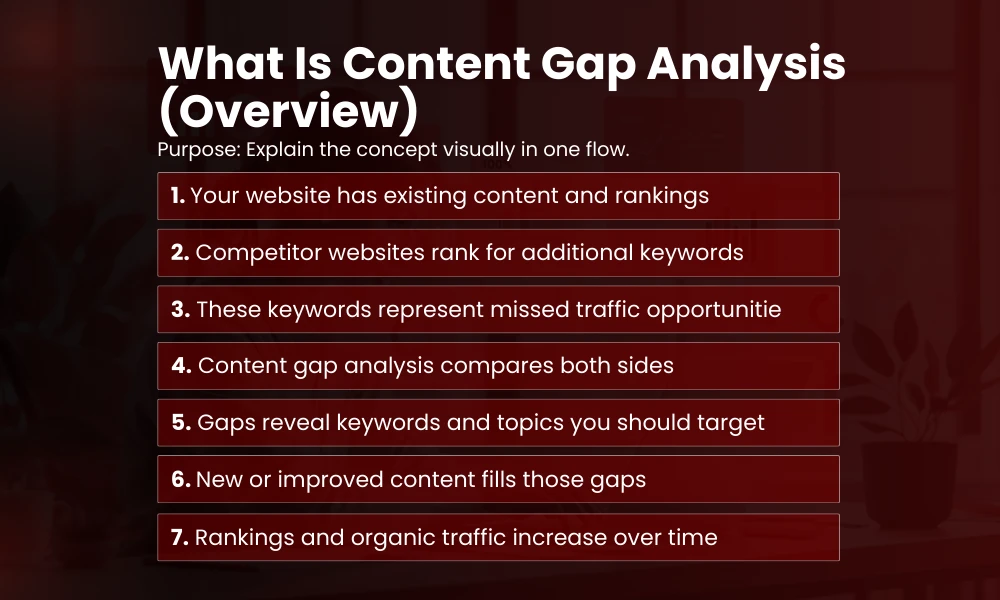
Content gap analysis is the practice of comparing your website content to the content of your competitors. The goal is to find topics and keywords where competitors rank in search engines but you do not. These gaps represent missed opportunities to attract organic traffic. Identifying these missed opportunities is a core part of effective SEO competitor analysis, where brands evaluate what competitors rank for and then create more comprehensive and valuable content around those same topics.
Content gap analysis is not just about keywords. It also shows subject areas you may have not covered in depth. For example if your competitors are attracting traffic for topics related to customer retention and your site has nothing about retention then that is a content gap.
A study by SEMrush found that websites that update or expand existing content often see improvements in organic traffic within a few weeks. This happens because search engines reward pages that cover topics in more depth compared to pages that do not. You can read about that here https www semrush com blog content-update.
By using content gap analysis you get clear direction on keywords that are already proven to drive traffic in your niche.
Why Use Ahrefs for Content Gap Analysis
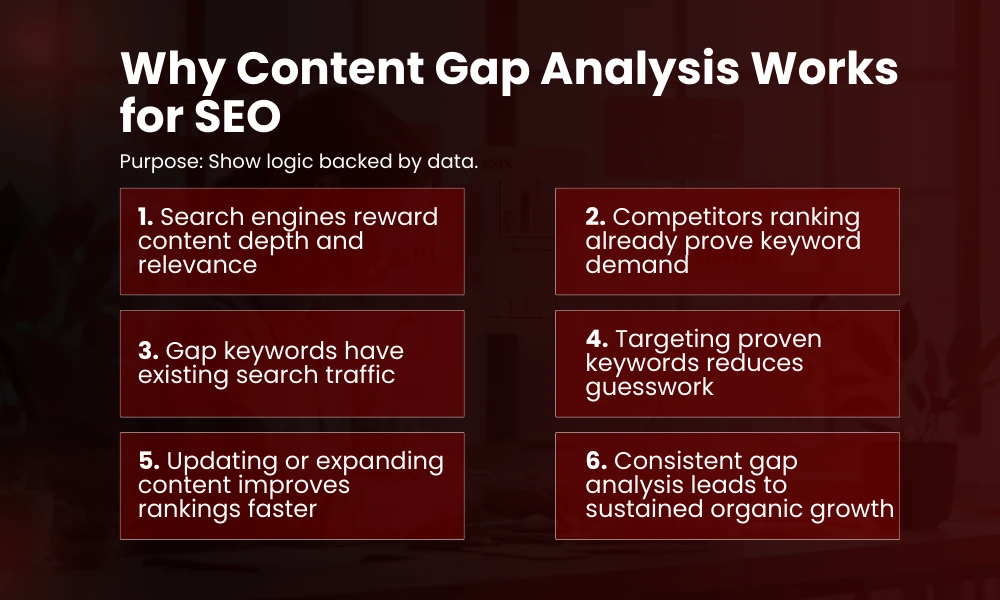
Ahrefs is one of the most popular SEO tools used by professional marketers and SEO teams around the world. According to BuiltWith Ahrefs is used by thousands of top websites for SEO purposes. It offers keyword research competitor analysis backlink data and site audit features. For growing businesses, investing in reliable SEO tools like Ahrefs helps remove guesswork from decision-making. These tools provide accurate keyword data and competitive insights that directly support content planning and growth. The reason Ahrefs is powerful for content gap analysis is because of its large keyword database and accurate ranking data.
Ahrefs gets data from its own crawler which indexes millions of pages daily. It also stores over 12 trillion known links and 7 billion keywords. You can see more about Ahrefs data here https ahrefs com features.
Here are the key benefits of using Ahrefs for content gap analysis:
- You can compare your domain to multiple competitors at once.
- Ahrefs shows you missed keyword opportunities based on competitors rankings.
- You can filter results by search traffic keyword difficulty and other metrics.
- You get data on both organic and paid search opportunities.
Lets explore how exactly to do content gap analysis in Ahrefs.
Step by Step Guide to Content Gap Analysis in Ahrefs
Step 1 Find Your Main Competitors
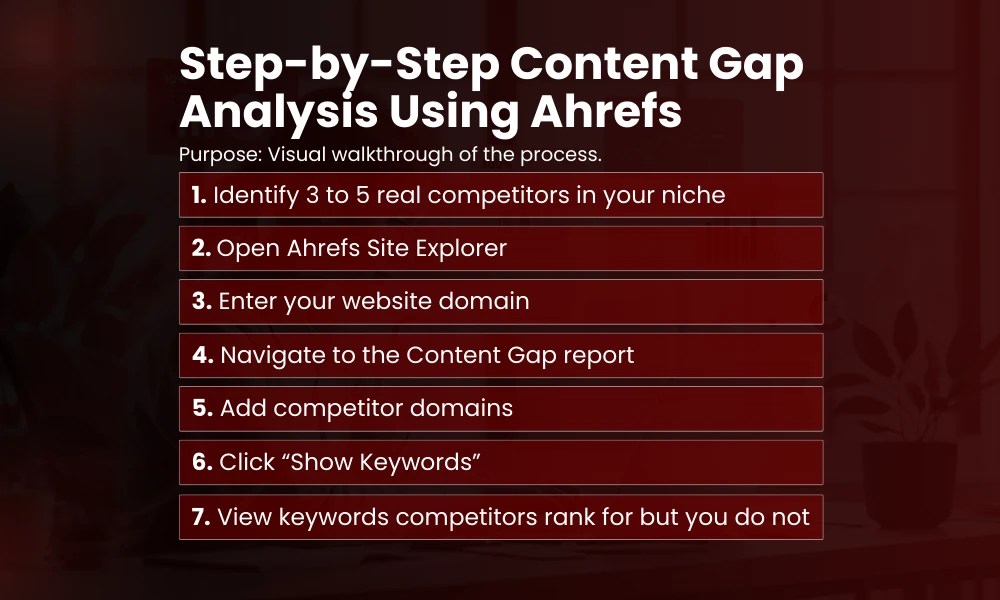
The first step is to know who your real competitors are. This means the websites that rank for similar topics and keywords in your niche. Choosing the right competitors becomes much easier when supported by proven keyword research strategies, ensuring that competitor selection is based on real search behavior and not assumptions.
There are two ways to find competitors. The first way is to simply search in Google for your main target keywords and see which websites keep appearing on page one. For example if you run a blog about fitness nutrition then search terms like fitness tips nutrition guide or weight loss diet appear in Google.
The second way is to use Ahrefs Site Explorer. Enter your domain and go to the “Competing Domains” report. Ahrefs will show websites that rank in the same keywords as you.
If your site is new and does not have much ranking data then look at competitors with similar content focus as yours.
Step 2 Enter Competitors into Ahrefs Content Gap Tool
Once you have identified 3 to 5 main competitors copy their domains. Then go to Ahrefs Content Gap tool.
In Ahrefs click Site Explorer then enter your domain. After that click Content Gap in the left sidebar. You will see fields to add competitor domains.
Add competitor domains in the fields provided.
Now click “Show Keywords.”
Ahrefs will generate a list of keywords that your competitors are ranking for in Google but your domain is not ranking in the top 100.
This list is the foundation of your content gap analysis.
Step 3 Filter the Results
You might end up with hundreds or thousands of keywords. The next step is to filter the list so you focus on the highest value opportunities.
Here are useful filters you can use in Ahrefs:
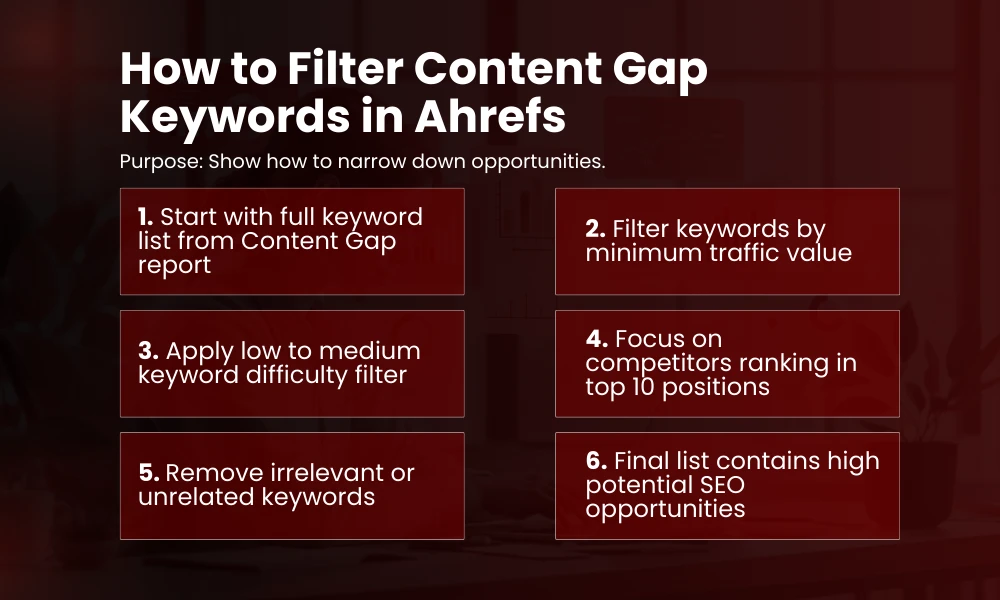
Traffic > 10
This shows keywords that bring at least 10 visits per month to your competitor sites. You want keywords that actually provide measurable traffic.
KD (Keyword Difficulty) < 30
Keyword Difficulty is an estimate of how hard it would be to rank in the top 10 for that keyword. If you are just starting then focus on easier keywords.
Position in Top 10
This filter shows keywords your competitors rank in the top 10 search results.
After applying these filters you will have a shortlist of keywords that are worth creating content around. At this stage, correct keyword placement across headings, subheadings, and body content becomes essential. Even strong keyword opportunities may fail if they are not placed strategically within the page.
Step 4 Group Keywords by Topic
One common mistake is to treat keyword list as standalone opportunities. Instead group keywords by topic. For example you might have multiple keywords about “vegan protein sources” “best vegan protein powder” “vegan protein foods list” and so on. All these keywords point to the same topic area.
By grouping you can plan content that covers a complete topic cluster rather than just single keywords. This approach is supported by research. Applying a structured content cluster strategy helps search engines understand topical relationships between pages. This improves internal linking, strengthens topical authority, and boosts rankings across multiple related keywords. A study by HubSpot shows that topic clusters help search engines understand your content and improve rankings for multiple related keywords. You can read that here https blog hubspot com marketing topic clusters seo.
Step 5 Create or Optimize Content
Now that you have a list of topics and target keywords you can create new content or optimize existing content to fill the gaps.
There are two main options:
Option 1 Create New Pages
If you do not have any content on a topic then create a new blog post or landing page. Make sure the page targets the main keyword and also covers related sub topics.
Option 2 Update Existing Pages
If you have a page that is somewhat related to the topic then update it. Add more depth include missing subtopics and make sure it satisfies user intent. Strong updates depend on quality SEO content writing, where search intent, clarity, and depth work together. Well-optimized content not only ranks better but also keeps users engaged longer.
A study by Backlinko found that updating older content often results in significant traffic increases. The study shows that pages updated with new information rank higher in search results over time. You can read that here https backlinko com content-updates.
Step 6 Track and Repeat
Content gap analysis is not a one time task. You should revisit it regularly every few months or whenever your competitors publish new content. Ahrefs allows you to track your rankings over time so you can see how your content performs after publishing.
Example of Content Gap Analysis in Action
Lets take a hypothetical example of a blog that focuses on vegan cooking. Suppose the blog ranks for a few basic keywords like “vegan recipes” and “plant based meals.” However using Ahrefs content gap analysis we find that competitors are ranking for keywords such as:
- best vegan protein sources
- vegan meal prep ideas
- vegan baking substitutes
- high protein vegan snacks
- gluten free vegan desserts
These are all keywords where competitors get search traffic but the blog does not. If we filter for traffic greater than 20 and KD under 40 we might find that “vegan meal prep ideas” and “high protein vegan snacks” are the most promising.
With this insight you can create a long form article on vegan meal prep ideas and another on high protein vegan snacks. When you publish these articles and optimize them for SEO you capture the traffic competitors already have.
Over time this leads to more organic traffic to your site.
How to Prioritize Content Gap Keywords
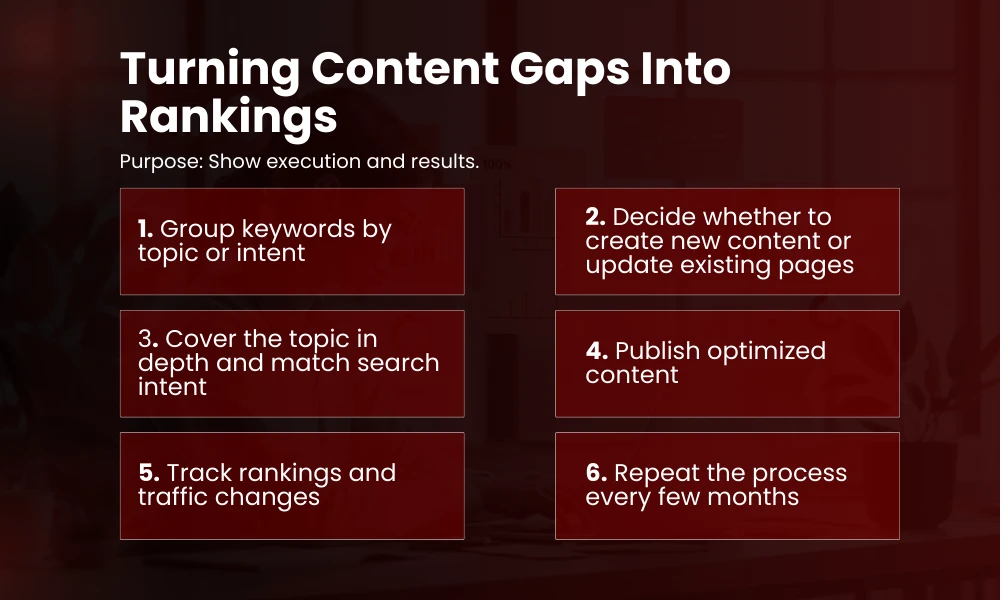
You will probably find hundreds of potential keywords. It is not possible to target everything at once. Here are factors you can use to prioritize:
Search Traffic Potential
Look at the estimated monthly search traffic for each keyword. Ahrefs provides this data in the Content Gap results. Higher traffic means more potential visitors.
However, traffic alone is not enough.
Keyword Difficulty
Keyword Difficulty or KD is Ahrefs own metric that estimates how hard it will be to rank in the top 10 for a keyword. If KD is high then it may take a lot of time and backlinks to rank for that keyword.
By focusing on lower difficulty keywords you can get wins faster especially if your domain is still growing.
User Intent
User intent means what the searcher actually wants. Is the keyword informational commercial or transactional? For example “vegan protein sources” is informational. “Buy vegan protein powder” is transactional. Decide what matches your business goals.
Optimizing for informational keywords is often easier and helps build trust and authority first.
Relevance to Your Audience
Even if a keyword has good traffic and low difficulty it has no value if it is not relevant to your audience. Always prioritize keywords that are directly relevant to your content strategy.
Content Gap Analysis vs Keyword Research
Some people confuse content gap analysis with keyword research. Although both involve keywords they are not the same.
Keyword research is the process of finding all possible keywords related to your niche and evaluating their potential. Content gap analysis focuses specifically on keywords that competitors already rank for and you do not.
Think of content gap analysis as a strategic subset of keyword research.
Keyword research gives you a long list of ideas but content gap analysis gives you ideas that are already proven to work in your niche.
Case Studies and Data
There are many cases where businesses increased organic traffic significantly using content gap analysis.
Case Study One WordPress Blog
A WordPress blog about digital marketing did a content gap analysis using Ahrefs. They compared their website with three competitors that ranked higher.
They found 120 keywords that competitors ranked for and they did not. After filtering for at least 30 monthly search volume and KD under 30 they had 45 keywords worth targeting.
They created 10 new blog posts targeting these keywords and updated 5 existing posts. Within 4 months the site saw a 38 percent increase in organic traffic according to their Google Analytics reports.
They also saw improved rankings for the newly targeted keywords. Many reached page one of Google.
This case was shared by the blog owner on SEO forums. Content gap analysis gave them clear direction on what content to produce next.
Case Study Two Ecommerce Site
An ecommerce site selling fitness equipment used content gap analysis to find keywords related to product guides such as “best treadmill for home use under 1000.” Their competitors were ranking for dozens of buying guides.
After creating comprehensive product guides and comparison articles they saw a 25 percent increase in organic revenue within 6 months. The guides not only brought traffic but also helped customers move closer to purchase.
This tracks with data from BrightEdge which shows that content optimized for both search engines and user intent ranks better and drives more conversions https brightedge com resources.
Tools to Support Ahrefs for Content Gap Analysis
Ahrefs is powerful but it works even better when you combine it with other tools. Here are some tools you might use:
Google Search Console
Gives data on impressions and clicks for your website. You can use this data to confirm if you are already getting impressions for keywords you found in Ahrefs.
Google Trends
Shows if keyword interest is increasing or decreasing over time. You can use this to pick topics that will matter in the future.
Surfer SEO or Clearscope
These tools help optimize content based on top ranking pages.
Screaming Frog
Useful for technical SEO audits so that your content can actually rank.
By combining competitive keyword data from Ahrefs with user behavior data from Google Analytics and Search Console you get a full picture of content performance.
Common Mistakes to Avoid
Content gap analysis sounds simple but many people make mistakes. Many businesses repeat common SEO mistakes by focusing only on keyword data while ignoring content quality, structure, and user experience. Successful gap analysis balances data with real value.
Looking Only at Keyword Volume
High search volume is good but it should not be the only factor. High competition means difficult rankings.
Copying Competitor Content Word for Word
Google penalizes duplicate content. Instead study competitor pages and then create your own original content that is better.
Ignoring Content Quality and Structure
A simple list of keywords is not enough. Your content must provide value and satisfy user intent.
Failing to Monitor Results
After publishing content you must monitor how it performs. Use tools like Ahrefs Rank Tracker and Google Search Console to see if your rankings improve.
Conclusion
Content gap analysis is one of the most strategic ways to boost organic traffic. By identifying keywords your competitors already rank for you get proven opportunities to target. Ahrefs makes this process easier with its large keyword database and competitor comparison tools.
Remember to filter results based on traffic potential keyword difficulty and user intent. Group keywords into topics and plan content accordingly. Monitor your performance using ranking tools and analytics.
When done right content gap analysis will not only improve your rankings but also help you build content that truly serves your audience.
If you are serious about SEO then content gap analysis using Ahrefs should be part of your regular workflow. Start today by identifying 3 competitors and running your first gap report. The insights you get will guide your content strategy for months to come.
FAQs
What is content gap analysis in Ahrefs
Content gap analysis in Ahrefs is the process of finding keywords that your competitors rank for in Google but your website does not. Ahrefs compares your domain with competing domains and highlights missing keyword opportunities. This helps you identify topics you should create or expand content around to increase organic traffic.
Why is content gap analysis important for SEO
Content gap analysis helps you focus on keywords that are already proven to drive traffic in your niche. Instead of guessing what to write about you use real competitor data. Studies from HubSpot and SEMrush show that content aligned with search demand performs better and ranks faster than randomly chosen topics.
How do I perform content gap analysis using Ahrefs
To perform content gap analysis using Ahrefs enter your website into Site Explorer. Open the Content Gap report and add competitor domains. Ahrefs will show keywords your competitors rank for that your site does not. You can then filter by search volume keyword difficulty and ranking position to find high value opportunities.
How many competitors should I use in Ahrefs content gap analysis
It is best to use three to five competitors for content gap analysis in Ahrefs. This provides enough data without overwhelming the results. Choose competitors that target the same audience and rank for similar topics to your website.
Can beginners use content gap analysis in Ahrefs
Yes beginners can easily use content gap analysis in Ahrefs. The interface is user friendly and the Content Gap tool does most of the work. Beginners should focus on keywords with lower keyword difficulty and clear informational intent to get faster ranking results.