We have all heard the saying, “Don’t judge a book by its cover.” But let’s be honest we all do it. In the business world, your domain name is that cover.
It is the first thing people see, the first thing they type, and the first thing they remember (or forget). Too many entrepreneurs treat their domain as an afterthought, a technical box to tick after the “real work” of branding is done. But the best brands know better. They understand that a domain isn’t just a web address; it’s the foundation of their entire story.
Think about the brands you love. Their names probably feel inevitable, like they couldn’t be called anything else. That didn’t happen by accident. It happened because they built their identity around their digital home base. Whether you are launching a local bakery or a global tech startup, your journey starts with a domain search. This simple step is the seed from which your entire brand narrative grows.
In this article, we will explore why your domain is more than just a URL. We will dive into how it impacts your visibility on search engines, how it helps you connect with local audiences through GEO targeting, and why it matters for the future of AI and Large Language Models (LLMs). By the end, you will see why the smartest founders don’t just pick a name; they claim a territory.
TL;DR
- Domain Name Matters: Your domain is the first impression of your brand, serving as the foundation of your digital identity and storytelling.
- Boost SEO: A relevant domain enhances SEO by improving visibility and encouraging branded searches, ultimately signaling credibility to search engines.
- Local Trust Signals: Utilizing country-specific domains fosters trust among local audiences, making your brand feel more connected to the community.
- Future-Proofing: Choose domain names that reflect broader themes to allow for business evolution and flexibility over time.
- Investment Mindset: View your domain as an asset; a well-chosen domain can save marketing costs in the long run and act as free advertising.
How a Smart Domain Search Sets the Stage for Success
The moment you begin a domain search, you are doing more than looking for available real estate. You are testing the viability of your brand. A domain acts as a constraint, and constraints breed creativity. If your first choice is taken, you are forced to think deeper about what your business actually stands for. This process refines your story before you even launch.
When you secure a domain that perfectly matches your business name, you remove friction. Customers don’t have to guess if you are .com, .net, or .co. They don’t have to wonder if TheShoeStore is the same as TheShoeStoreOnline. Clarity is confidence. When your domain aligns with your brand story, every email you send and every link you share reinforces your identity. It signals that you are established, professional, and here to stay.
The Psychology of “The Right Name”
There is a psychological weight to a good domain. It implies authority. When a user sees a clean, relevant domain, their brain instantly categorizes the business as credible. Conversely, a long, hyphenated, or confusing domain triggers a subconscious warning. It feels temporary or amateur. By building your story around a strong domain, you are essentially borrowing that inherent authority and applying it to your new venture.
SEO: Speaking the Language of Search Engines
We can’t talk about domains without talking about Search Engine Optimization (SEO). But let’s move past the old-school idea of keyword stuffing. Google is smarter than that now. Today, SEO is about relevance and intent.
Building your brand story around your domain naturally boosts relevance and strengthens your online presence. For example, if your domain is ArtisanCoffee.club, search engines instantly understand what your business is about. But it goes beyond that. A domain aligned with your brand story also improves “branded search,” where people look specifically for your name instead of generic terms. Partnering with an SEO company can help you leverage this strategy to maximize visibility and drive targeted traffic to your site.
Branded Search as a Trust Signal
Search engines love branded search. It tells them that you are a real entity that people are looking for. If your domain is catchy and memorable, people are more likely to type it directly into the browser or search bar. This direct traffic is a massive trust signal. It tells the algorithm, “People know this brand, and they want to go there.”
Furthermore, when your content aligns with your domain, you create a cohesive semantic web. If your domain promises “FastRepairs,” and your content delivers tutorials on quick fixes, you are fulfilling the user’s intent. Search engines reward this consistency. Your domain becomes the headline, and your website content becomes the proof.
GEO Targeting: Thinking Global, Acting Local
The internet connects the globe, but business often thrives on a local level. This is where GEO targeting becomes essential, and your domain plays a key role. Country Code Top-Level Domains (ccTLDs), such as .de for Germany, .co.uk for the UK, or .ca for Canada, are invaluable tools for establishing a local presence. Understanding the role of domain extensions in global branding is crucial for businesses looking to balance international reach with local relevance.
When a user in France sees a .fr domain, they instantly know two things: this business serves my region, and they probably speak my language. It creates an immediate sense of familiarity and trust.
The “Local Hero” Strategy
Building your story around a local domain allows you to position yourself as a “local hero.” You aren’t just a faceless corporation; you are part of the community. This is incredibly important for service-based businesses. If you are a plumber in Toronto, TorontoPlumbing.ca tells a much stronger story than BestPlumberServices.com.
This also helps your SEO. Search engines want to show people local results. A ccTLD is one of the clearest signs you can give Google that your business is relevant to a specific area. By matching your domain to your target location, you’re basically telling search engines, “I belong here.” Plus, with the right AI Search Monitoring support, you can track how your local SEO strategy is performing and make adjustments to improve your ranking.
LLM Optimization: Branding for the AI Era
We are entering a new phase of the internet. People aren’t just searching with keywords anymore; they are asking questions to AI chatbots and Large Language Models (LLMs) like ChatGPT, Gemini, and Claude. Optimizing for these models is the next frontier, and your domain plays a surprising role.
LLMs are trained on massive amounts of text data. They learn associations between words. If your domain clearly describes your business category, you make it easier for these models to understand who you are.
Clarity is King for AI
If your brand name is abstract, let’s say “Jojo”, an AI has to learn what “Jojo” is through context. But if your brand is “JojoSleepAids,” the association is built-in. When building your story around your domain, consider how an AI interprets language. Clear, descriptive domains help LLMs categorize your brand correctly.
Why does this matter? Because when someone asks an AI, “What are the best sleep aids?”, the AI retrieves information based on these associations. A domain that is semantically linked to the topic has a better chance of being cited or recommended. You are essentially teaching the AI how to talk about your brand by giving it a clear, descriptive label right in your URL.
The “Radio Test” and Memorable Storytelling
A great domain passes the “radio test.” If you heard it once on a podcast or radio ad, could you spell it correctly when you got home? This is crucial for word-of-mouth marketing, which is the oldest form of storytelling.
If you have to say, “It’s ‘Kakes’ with a ‘K’ and two ‘Z’s at the end,” you have already lost. You are forcing the customer to work to find you. The best brands pick domains that roll off the tongue and stick in the mind.
Reducing Cognitive Load
When your domain is easy to say and spell, you reduce the cognitive load on your audience. They don’t have to waste mental energy remembering how to find you. Instead, they can focus on your story. This simplicity allows your brand narrative to take center stage. You want people talking about your product, your mission, and your values – not asking, “Wait, is there a dash in that?”
Future-Proofing Your Brand Narrative
Trends fade. Remember when every startup dropped vowels from their name? (Looking at you, Flickr and Tumblr). While it looked cool for a moment, it created confusion later on. Building your story around a classic, readable domain is a way to future-proof your business.
A solid domain gives you room to pivot. Amazon.com is a perfect example. It started as a bookstore. But the name “Amazon”, implying vastness and exotic variety, allowed them to expand into everything from cloud computing to groceries without changing their name. If they had chosen OnlineBookStore.com, their story would have been trapped in a box.
Avoiding the “Too Niche” Trap
When choosing a domain, think about chapter two of your story. If you pick a domain that is too specific, like VintageTeas.com, you might struggle if you decide to sell coffee later. The best brands choose domains that suggest a feeling or a value proposition rather than just a specific product list. This gives your brand story room to breathe and evolve over time.
Establishing Authority Through Extensions
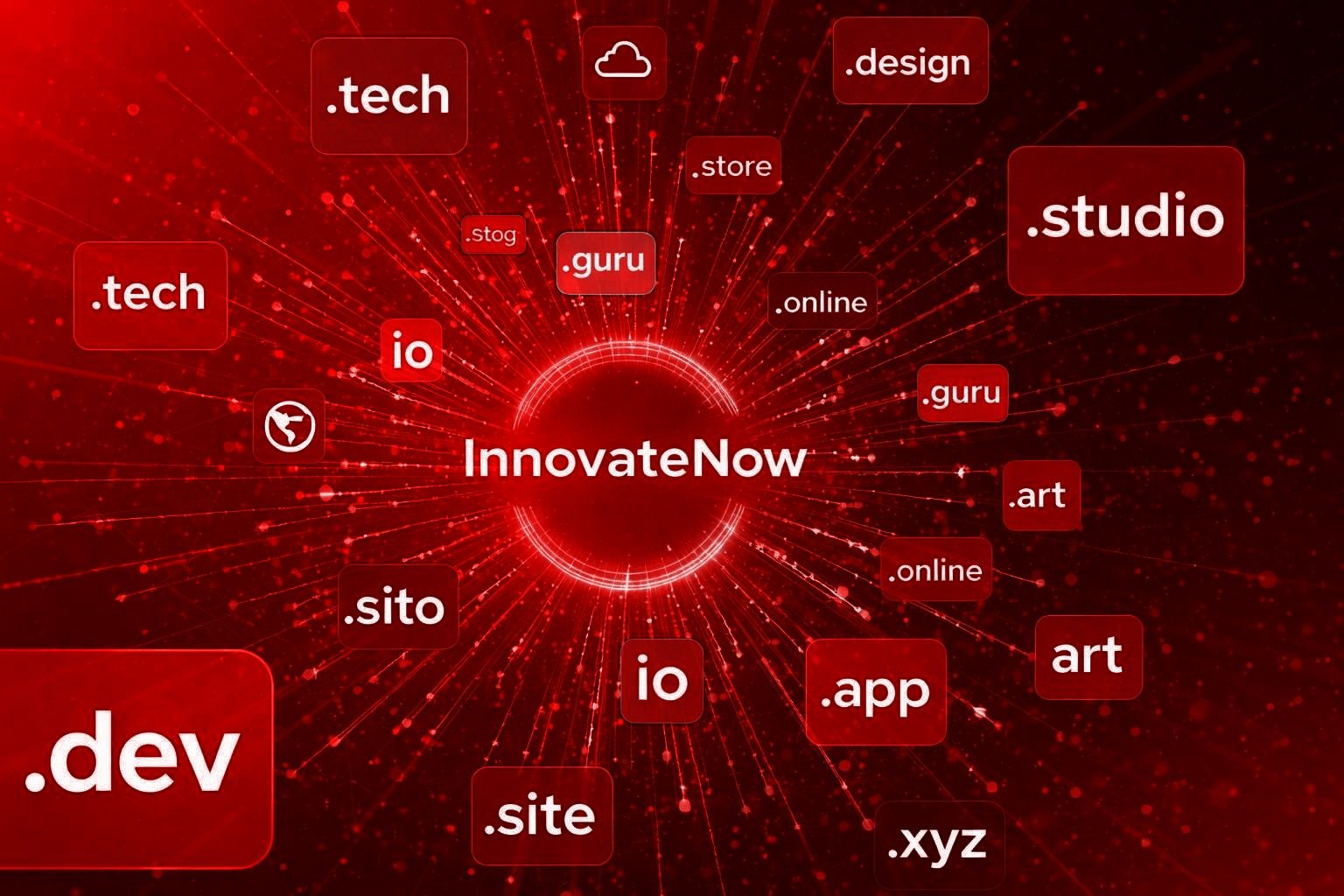
For years, .com was the only extension that mattered. But as the web gets crowded, new Top-Level Domains (TLDs) are offering unique ways to tell a story. Extensions like .tech, .studio, .store, or .guru can add context to your name.
Using a creative extension can signal that you are modern and innovative. Smith.design tells a different story than SmithDesignInc.com. It feels sharper, more focused. However, this strategy requires commitment. You have to build your brand around that extension so that it feels like a natural part of your name, not a compromise because the .com was taken.
When to Break Tradition
If your industry is creative or tech-focused, choosing an unconventional domain can work in your favor. It lets your audience know that you think differently. But if you’re in a more conservative field like finance or law, sticking to traditional domains might be a better move to establish trust. Choosing a domain with the right extension means matching it to the tone of your brand story.
The Investment Mindset
Finally, the best brands view their domain as an asset, not an expense. Spending money to acquire the right domain is often cheaper in the long run than spending money to market the wrong one.
If you have to spend thousands of dollars on ads just to teach people how to spell your name, you have a problem. A strong domain does a lot of the heavy lifting for you. It acts as free advertising every time someone sees it. When you build your story around a domain you own and love, you are investing in your brand’s equity.
Conclusion
Your domain is the anchor of your digital identity. It is the coordinates where your story lives. By choosing it wisely and weaving it into the fabric of your brand, you set yourself up for better visibility, deeper trust, and long-term growth.
From mastering SEO and connecting with local markets to preparing for an AI-driven future, the strategic value of a domain goes far beyond a simple web address. So, before you print business cards or launch that social media campaign, take a step back. Go to that search bar. Type in your ideas. And ask yourself: Does this domain tell the story I want the world to hear?
Because in the end, the best brands don’t just occupy space on the internet. They own it.
FAQ
Why is a domain name important for building a brand story?
A domain name serves as the first impression of your brand and acts as the foundation of your digital identity. It is essential to treat your domain as more than just a web address; it plays a crucial role in shaping your brand narrative. A well-chosen domain can build credibility and authority, making it easier for customers to recognize and remember your business.
How does a domain name impact SEO?
A relevant domain name enhances Search Engine Optimization (SEO) by improving visibility and relevance in search results. A domain that aligns with your brand increases the likelihood of being searched for directly, known as ‘branded search.’ This search behavior signals to search engines that your brand is credible, ultimately driving more targeted traffic to your site. Additionally, having a clear domain aids in creating a cohesive semantic web that boosts your online presence.
What role does local targeting play in choosing a domain?
Local targeting is vital, especially for businesses that rely on community engagement. Using Country Code Top-Level Domains (ccTLDs) like .ca or .co.uk can signal to potential customers that your business serves a specific region. This not only helps with visibility in local search results but also fosters trust with the audience who recognizes the local domain as a sign of community engagement.
How can a good domain name influence trust and authority among users?
A good domain name implies authority and credibility. When users encounter a clean and memorable domain, they are more likely to view the business as legitimate and reliable. Conversely, confusing or overly complicated domains may lead users to perceive the brand as temporary or amateurish. Thus, a strong domain helps establish a solid reputation and builds trust with potential customers.
What should I consider to future-proof my brand’s domain choice?
To future-proof your brand’s domain, consider choosing a name that allows for growth and diversification. Avoid overly specific names that pigeonhole your brand into a niche market. A domain that reflects broader themes or values provides flexibility as your business evolves. Additionally, selecting a timeless and recognizable domain can help avoid issues associated with fleeting trends in naming practices.