
Brand positioning becomes real when a customer has to choose. Two products look promising. Two agencies seem qualified. Two software subscriptions claim they will save time. Why should yours make the shortlist—and what would make someone believe the promise?
The answer needs to survive outside a presentation. It has to hold up on the pricing page, in a sales conversation and when something goes wrong after the purchase.
Brand positioning is the place a business aims to earn in customers’ minds relative to the alternatives, built around a relevant reason to choose it. A positioning strategy defines that intended place. The position customers actually give you depends on what they notice, remember and experience.
That distinction matters. You can approve a new statement this afternoon. You cannot approve a new customer perception into existence.
Key Takeaways
- Start with the buying decision: who is choosing, what they need and what they would otherwise do.
- Separate the position you want from the reputation customers already hold.
- Support the promise through product, pricing, distribution and service decisions.
- Check the cost of delivering the promise before turning it into a campaign.
- Test understanding, credibility and actual buying behavior separately.
- Keep recognizable brand assets unless research gives you a sound reason to change them.
What Does Brand Positioning Actually Decide?

Positioning gives a business a set of connected choices: the customers it needs to understand, the alternatives it must be compared with, the value it wants to be known for and the evidence that makes that value believable.
Consider a hypothetical accounting service. “Reliable accounting for growing businesses” describes an ambition, but gives a buyer little to work with.
Now consider a more specific offer: bookkeeping for independent retailers that need their online and store sales reconciled in one monthly report. The customer can picture the task. The business can identify the systems it must support. A salesperson can explain when the service fits.
The second version still needs proof. Specificity makes the promise testable; it does not make it true.
Positioning should also influence what the business declines. If the service accepts every unusual system, offers unlimited custom reporting and promises the lowest price, its delivery model may become incompatible with its original offer.
A useful positioning decision leaves fingerprints on the business.
What Is the Difference Between Positioning, Identity and a Value Proposition?
These terms overlap, but they answer different questions.
| Concept | Question it answers | What you should be able to inspect |
| Brand positioning | Why should this brand be chosen relative to the alternatives? | Audience, comparison frame, promised value and supporting evidence |
| Value proposition | What useful outcome does this offer provide? | Benefits, costs, effort and reasons to believe |
| Brand identity | How does the brand express itself consistently? | Visual design, language, sound and usage rules |
| Distinctive assets | What helps people recognize this particular brand? | Recognizable colors, shapes, characters, sounds or other cues |
| Tagline | What short expression communicates an idea? | A public-facing line whose meaning the wider experience supports |
A visual redesign can improve expression without changing the underlying position. Equally, a business can change its offer while keeping familiar recognition cues.
BrandClickX’s guide to distinctive brand assets explores that recognition problem in more detail. Being recognizable and having a relevant reason to be chosen are related tasks, but each deserves attention.
Where Should Brand Positioning Research Begin?
Begin with a recent buying decision, rather than asking customers to invent your strategy.
“What do you want from a brand?” can produce an agreeable list: quality, value, convenience and good service. Those answers rarely reveal how someone weighed competing options.
Ask about the sequence instead. What happened before the search began? Which options were considered? What felt risky? What nearly stopped the purchase? What happened afterward?
Include people who did not buy. Existing customers can explain why your offer worked for them, while lost prospects may reveal a comparison your team has overlooked. Former customers can expose a gap between the original promise and the experience.
Investigate the alternative customers actually used
Your competitive set may include a spreadsheet, an internal employee, a secondhand purchase or the decision to do nothing.
A reporting platform competing against an established spreadsheet process faces a different persuasion problem from one replacing another paid platform. It must justify migration effort, retraining and the risk of disrupting something that already works well enough.
Positioning research should record those switching costs. Otherwise, a team can mistake “customers understand the benefit” for “customers have a reason to change.”
Keep claims and perceptions in separate columns
A competitor’s homepage tells you what it wants to communicate. It does not establish what customers believe.
When mapping a market, label each piece of evidence: company claim, customer account, observed product feature or researcher interpretation. A polished positioning map built entirely from company copy remains a map of claims.
Small interviews can reveal useful hypotheses and language. They cannot, by themselves, establish how an entire market thinks. Explain who participated, how they were recruited and what further testing is needed.
What Do IKEA and Costco Reveal About Positioning?
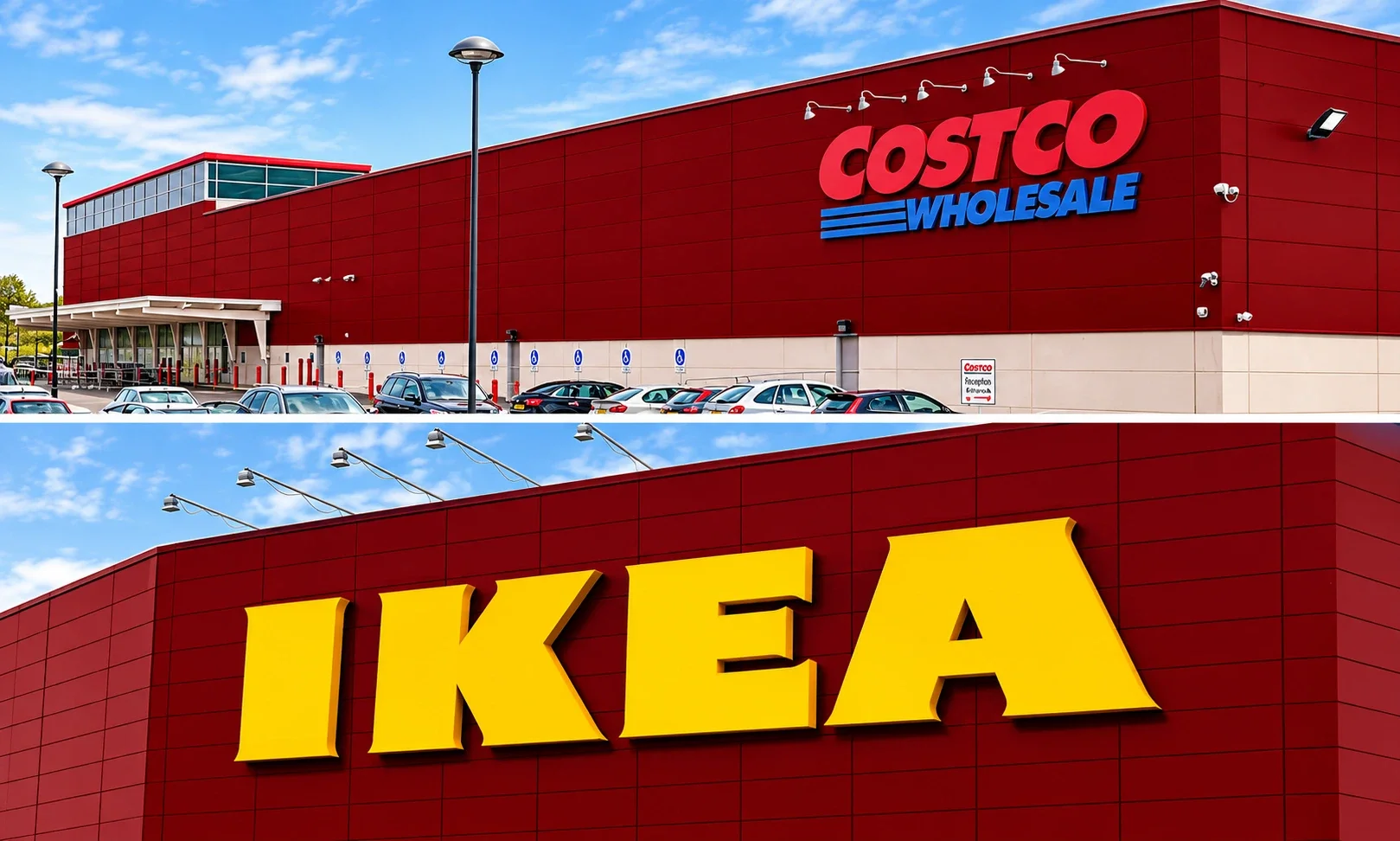
IKEA and Costco offer a useful comparison because both describe operating choices that support an accessible-price proposition. Their routes are different.
IKEA’s account of its value chain connects product development to five considerations: form, function, quality, sustainability and low price. The company says it begins product development with a target price and works to keep costs low across its activities.
The positioning lesson is the connection between the offer and the design process. Affordability is something the organization has to engineer, rather than add to the advertising afterward.
Costco’s corporate overview describes a membership model combining a limited product selection with high sales volumes and rapid inventory turnover. It also identifies volume purchasing, efficient distribution and reduced handling in self-service warehouses as parts of its economics.
Here, the analysis is that the customer proposition and operating model reinforce one another. A retailer cannot simply copy low-price language and assume it has copied the capabilities supporting the offer.
These are company descriptions of their models, not independent proof of every customer’s experience. They nevertheless provide concrete evidence of how a positioning promise can shape operating decisions.
For a smaller business, the question becomes practical: which decisions would have to change if we took our promise seriously?
A promise of expert advice requires access to expertise. A promise of speed requires capacity and clear service boundaries. A promise of customization requires a way to manage complexity.
Can Your Business Afford the Position It Wants?
A positioning workshop can approve a promise that the operating budget cannot support.
Consider a hypothetical service company with 100 monthly clients paying $500 each. Monthly revenue is $50,000. Suppose direct delivery costs are $30,000, leaving $20,000 before overhead and other expenses.
The company decides its new position will include unlimited specialist support. If providing that service adds an assumed $150 of direct cost per client, monthly delivery costs rise by $15,000. The amount remaining before overhead falls to $5,000.
That is an illustrative calculation, not a business benchmark. It shows the consequence of a promise under the stated assumptions.
The idea might still work if it attracts enough additional demand, supports a higher price or replaces other costs. Each possibility needs evidence. Without it, the new position creates a financial commitment the team has not resolved.
This is where positioning connects with brand pricing power: the value customers perceive, the price they accept and the cost of fulfilling the offer must be considered together.
Before a promise enters the headline, identify its delivery cost, capacity requirements and exceptions. Ask what happens during peak demand, not only on an average day.
How Do You Build a Brand Positioning Strategy?

Turn the research into a small number of decisions your team can act on.
1. Define the buying situation
Specify who is making the choice and what has made the problem relevant now. A useful audience description explains the decision, rather than relying on a fictional personality profile.
“Independent retailers reconciling sales across online and physical stores” provides more direction than “ambitious entrepreneurs who value innovation.”
2. Choose the comparison frame
Describe the category in terms customers understand. A clever category name creates extra work if buyers cannot tell what you sell or where its budget belongs.
If you are introducing an unfamiliar offer, explain the existing task it replaces or improves.
3. Identify the value worth remembering
Give the offer a clear center of gravity. This does not mean every customer must care about one identical benefit, or that a brand can have only one useful association.
It means the main promise should help a buyer make sense of the supporting features. Different product tiers and buying situations may require different emphasis without contradicting the overall position.
4. Attach evidence to the promise
Replace unsupported adjectives with inspectable details: delivery records, relevant qualifications, documented features, clear service terms or research conducted with a defensible method.
Different claims need different proof. A testimonial can illustrate one customer’s experience; it cannot establish the typical result for everyone.
5. Write the positioning statement
A practical internal structure is:
For [customers in a defined situation], [brand] is a [recognizable category] that provides [relevant value], supported by [specific evidence].
Then add two operational notes: what the promise requires from the business, and which requests or opportunities it will decline.
Those notes help turn a sentence into a strategy. The statement itself does not need to become the homepage headline.
How Can You Test Whether the Positioning Works?
Separate three questions: do people understand it, do they believe it and does it influence a meaningful decision?
First, show the offer without a salesperson explaining it. Ask participants what it provides, who it seems intended for and what they would compare it with. Record their own language.
Next, ask which claims need proof and what evidence would help. A message can be clear yet unconvincing.
Finally, test behavior where feasible. Depending on the business, that could mean a controlled message test, a product trial or a comparison of appropriately matched customer groups. Choose the outcome before looking at the results.
A click measures a response to a message. A qualified inquiry, purchase, repeat order or price acceptance answers a different question. Avoid treating one as a substitute for all the others.
Watch the quality of the demand you attract
A more aggressive promise may increase inquiries while bringing customers the business cannot serve profitably. Track qualification, delivery effort and reasons for rejection alongside conversion.
Likewise, an increase in sales after a positioning change does not establish that positioning caused it. Pricing, distribution, seasonality and campaign spending may also have changed.
The objective is useful evidence for the next decision, with uncertainty still visible.
What Is a Practical Brand Positioning Checklist?
Before approving the strategy, check whether your team can answer these questions:
- Can we describe the buying situation without relying on vague demographic labels?
- Have we investigated what customers would otherwise do?
- Have we separated customer perceptions from company claims?
- Does the promise matter to the intended buyer?
- Can we show evidence that supports it?
- Have product, sales, service and finance reviewed the delivery requirements?
- Can we sustain the offer during peak demand?
- Have we agreed what falls outside the promise?
- Will familiar customers still recognize the brand?
- Have we defined how understanding, credibility and business outcomes will be evaluated?
A missing answer identifies work to do. It is not something a more confident tagline can resolve.
When Should You Change Your Brand Positioning?
Revisit positioning when evidence points to a structural mismatch: the buying situation has changed, the business now serves a different need, or customers repeatedly misunderstand an offer that has materially evolved.
A weak quarter alone is insufficient evidence. Check availability, pricing, execution, competitive activity and the wider market before concluding that the position is wrong.
The remedy may be a clearer explanation, a better product or a more reliable service. BrandClickX’s comparison of a brand refresh and a full rebrand helps distinguish changes to expression from deeper changes to the offer and direction.
A positioning strategy earns its value when it helps the team make a difficult choice: which feature to build, which customer request to decline, which promise to put in writing.
Customers will judge those choices long after the launch presentation has closed.
Frequently Asked Questions
What makes brand positioning strong?
It connects a relevant buying situation with a clear reason to choose the brand, credible evidence and an offer the business can consistently deliver. Customers must also encounter and remember it.
Is brand positioning the same as a slogan?
No. Positioning guides strategic and operational decisions. A slogan is one possible public expression of an idea. Changing the words alone does not change the customer experience.
Can a small business compete without inventing something unique?
Yes. It may offer a useful combination of expertise, availability, service, convenience or product fit. Research should establish whether that combination matters relative to the alternatives customers consider.
How long does repositioning take?
There is no universal timeline. It depends on the scale of the change, customer exposure, buying frequency and the consistency of delivery. A new statement can be written quickly; a new reputation requires evidence over time.