If you are selling on Amazon, you quickly realize how competitive it can be. Millions of products chase the top positions on Amazon search results. The key to consistently winning is mastering amazon seo, the practice of optimizing product listings so the Amazon search engine displays them higher when shoppers search relevant terms.
Unlike traditional SEO for websites, amazon seo is about helping Amazon’s internal search engine, most recently referred to with its A10 algorithm updates, understand what listings are most relevant and likely to convert. Many of the same optimization principles used in advanced SEO strategies also apply when improving product visibility and rankings on Amazon. In simple terms, ranking higher means Amazon sees your product as both relevant to the shopper’s query and likely to result in a sale. The better you do on both fronts, the higher your products climb.
This article will walk you through the real ranking factors, backed by data and research, explain why they matter, and show practical ways to improve your listing’s performance step by step.
What Is Amazon SEO?
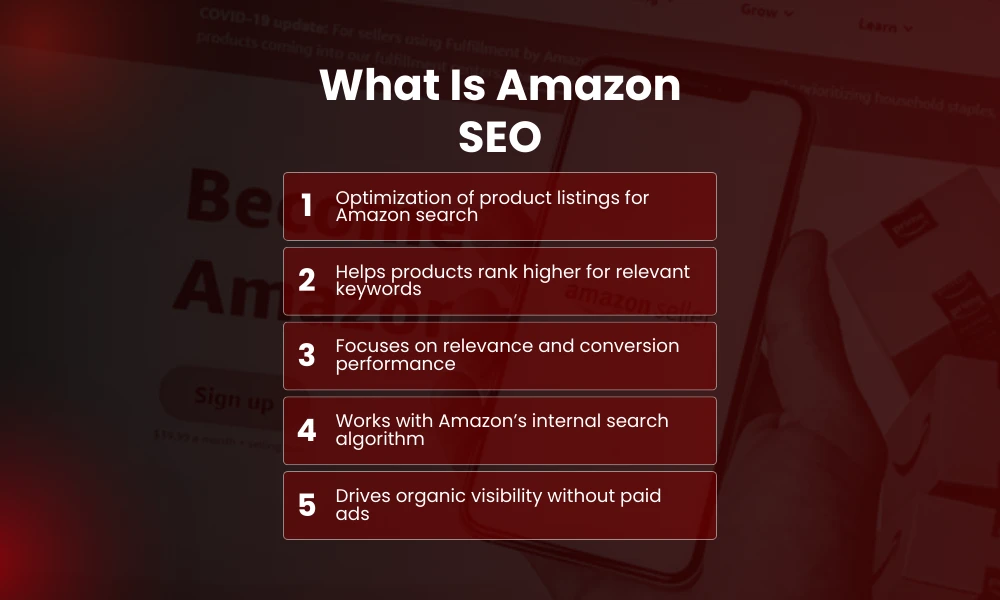
At its core, amazon seo is the process of optimizing product listings to improve their visibility and ranking in Amazon search results. Ranking well increases organic visibility, which means more customers find your products without paying for ads.
Amazon’s search engine has one job: deliver products customers are most likely to buy based on their search query. This means amazon seo is less about blind keyword stuffing and more about relevance and performance. A product that matches search intent well and converts at a high rate will outrank similar listings with weaker performance.
How Amazon’s Search Algorithm Works
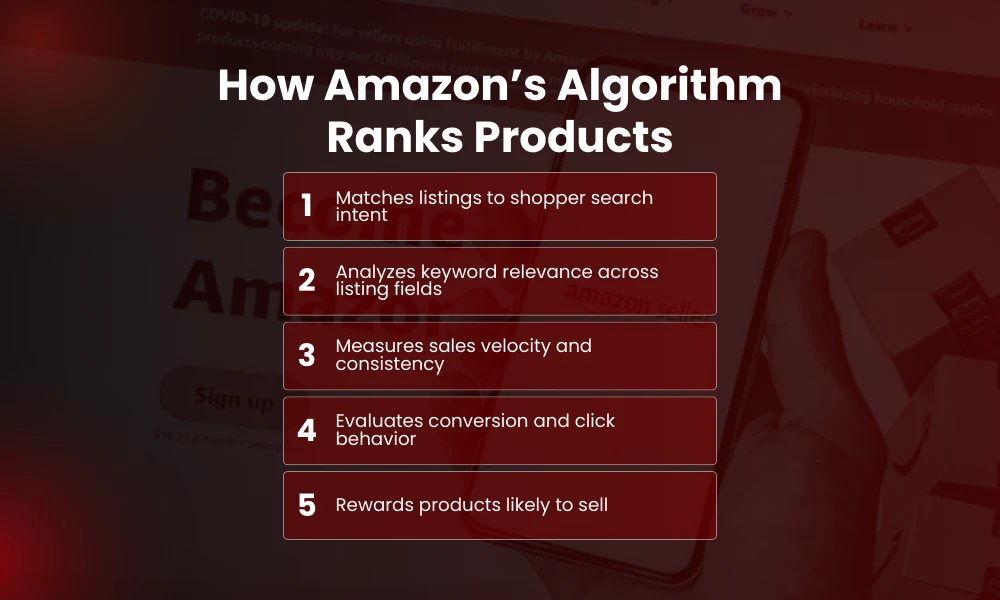
Amazon’s search system, historically built around the A9 algorithm and evolving with updates like A10, uses several ranking factors that can be grouped broadly into:
- Relevance signals – how well your listing matches search queries
- Performance signals – how well it performs once shown to shoppers
- Customer satisfaction and experience metrics – how customers interact with your listing and fulfillments
Here’s how these categories influence your amazon seo.
Relevance Signals (Keyword Optimization)\
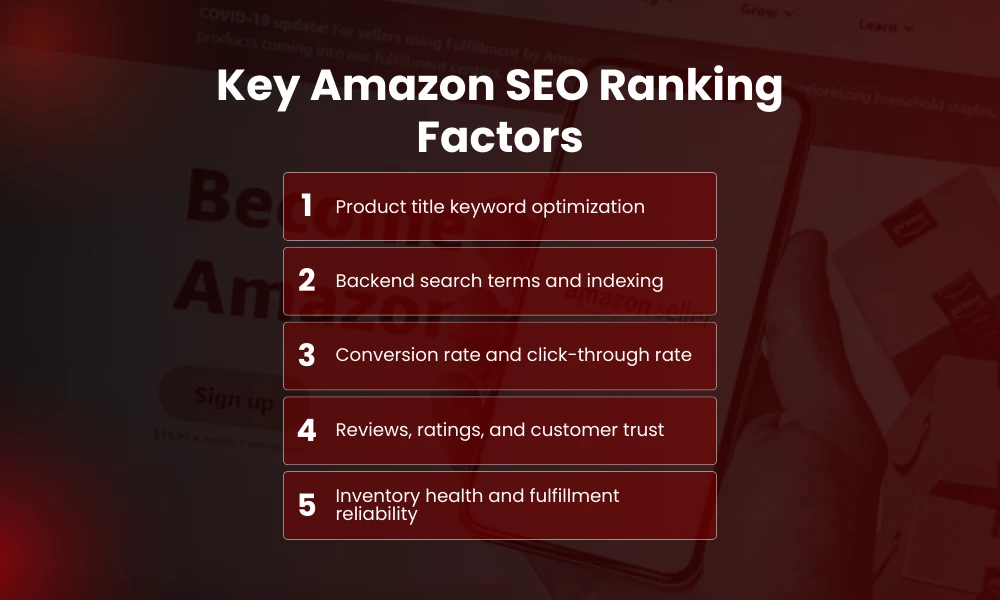
Amazon begins every search by filtering listings that match the shopper’s intent. This is where keywords become essential.
Research from Amazon optimization experts emphasizes that your product title, bullet points, backend search terms, and description are scanned for relevant keywords that match search queries.
1. Strategic Keyword Research
The foundation of amazon seo is identifying the right keywords:
- Start with a seed keyword like the main product name
- Use tools like Helium 10, Jungle Scout, or MerchantWords to expand relevant search terms with high search volume and moderate competition
- Focus on both short-tail and long-tail keywords relevant to your product
You can also follow a structured process for discovering profitable keywords by using proven keyword research strategies. For example, if you’re selling a “wireless Bluetooth speaker,” long-tail keywords might include “portable waterproof Bluetooth speaker” or “wireless speaker with long battery life.”
This keyword research gives you terms that real shoppers are typing in, not guesses.
Your goal is to get your algorithm signals to clearly show what your product is about so that Amazon indexes your listing for the right queries.
2. Product Title Optimization
Many ranking tests show the product title is the most valuable piece of copy for amazon seo because it influences both indexing and initial click-through rate. Understanding proper keyword placement inside titles and headings can significantly improve visibility and search performance.
Best practices include:
- Place your best keyword toward the beginning
- Include differentiating features like brand name, size, color, or primary benefit
- Keep it readable and compliant with Amazon’s character limits
For example, a strong title for a home water filter might look like:
“PureFlow Water Filter System Portable Drinking Filter – Removes 99% of Contaminants – Outdoor Camping, Hiking”
This is not a random string of words. It naturally communicates the product type, benefits, and conditions where customers might search for it.
3. Backend Keywords and Hidden Terms
Amazon allows sellers to enter backend search terms. These are not visible to shoppers but help Amazon index your product for additional relevant searches.
Use synonyms, alternate spellings, and related phrases that don’t fit cleanly in your front-facing copy. But to keep them relevant, Amazon will penalize irrelevant backend terms.
This layered approach to keywords is one reason amazon seo can dramatically improve visibility when done right.
Performance Signals (Sales and Conversion)
Once Amazon matches your product as relevant, the platform cares about how well it performs, essentially whether it leads to a sale.
1. Sales Velocity
One of the strongest ranking factors is sales velocity, how fast your product sells over time. Products with higher and consistent sales are more likely to rank higher because Amazon interprets this as customer preference.
For example, recent seller guides suggest products that achieve consistent daily sales perform better in organic search than similar listings that only sell sporadically.
Especially important is the first month after launch. Amazon gives new listings a temporary visibility boost to gather performance data. Many sellers use measured PPC spending early to gather enough sales early so Amazon will begin ranking the product organically.
2. Conversion Rate
Conversion rate is the percentage of viewers who end up buying your product. It impacts amazon seo because Amazon wants to surface listings shoppers are likely to buy.
A well-optimized listing with strong images, clear benefits, and compelling pricing will convert better. Data from marketplace analysts show that listings converting at 15% or more tend to consistently outrank competitors.
3. Click-Through Rate (CTR)
CTR measures how often shoppers click your product after seeing it in search results. A higher CTR gives Amazon a signal that your product is appealing at first glance. Improving your listings with optimized titles, thumbnails, and meta information follows the same principles used in on-page SEO.
Factors that affect CTR include:
- Image quality
- Price competitiveness
- Star rating and review count
An outdated photo or confusing title can reduce CTR significantly, lowering your ranking even if your keyword and pricing strategy are good.
Customer Experience and Satisfaction
Amazon prioritizes listings that deliver a good customer experience because that keeps shoppers coming back.
1. Reviews and Ratings
Shoppers rely heavily on reviews. Statistics show that nearly half of online shoppers will not purchase products with little or no reviews, and a strong positive rating leads to higher conversion rates.
Listings with a high volume of recent, positive reviews signal trust and quality, and Amazon’s algorithm rewards that with higher visibility. Building credibility through customer feedback is also an important part of Google E-E-A-T, which focuses on experience, expertise, authority, and trust.
2. Seller Performance Metrics
Metrics such as on-time delivery, customer response times, and low defect rates all impact your seller health. Poor account health can lead to suppressed listings or lower organic visibility.
Products fulfilled by Amazon (FBA) often receive priority because of faster delivery and higher customer satisfaction metrics.
3. Inventory and Pricing
Running out of stock consistently lowers ranking because when Amazon cannot fulfill orders, it loses potential sales momentum. Keeping sufficient inventory and competitive pricing helps maintain consistency in performance signals.
Practical Steps to Improve Amazon SEO
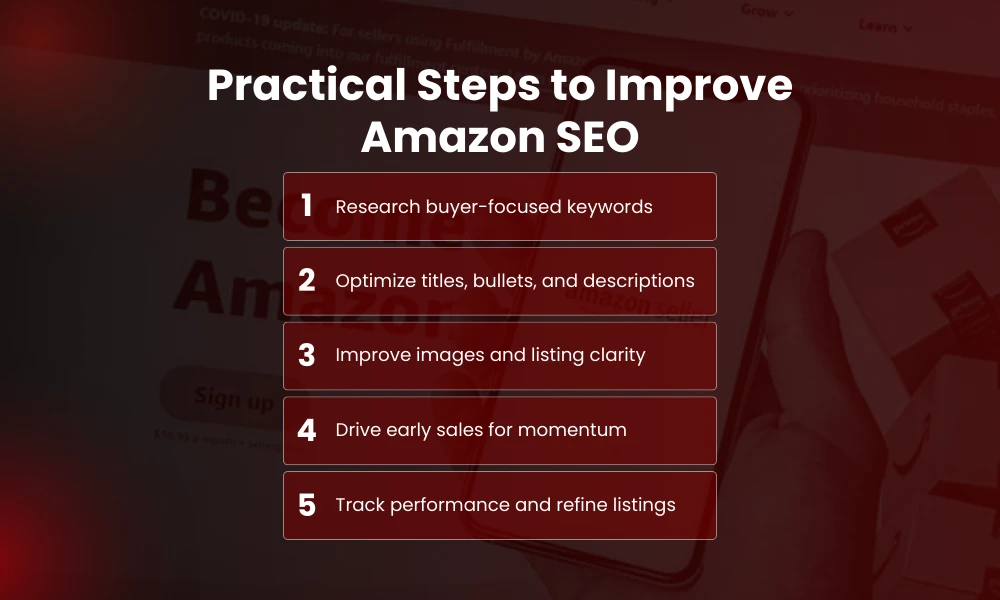
Now that you understand what the algorithm considers, let’s go through actionable ways to rank products higher on Amazon.
Step 1: Study Competitors and Keyword Landscape
Look at listings that rank well for your target keywords. Use tools like Helium 10, Jungle Scout, and others to extract the keywords they are ranking for. This competitive keyword research informs you which terms matter most.
Step 2: Improve Your Listing Copy and Visuals
- Create a compelling title using your main amazon seo target
- Use bullet points to highlight benefits, not just features
- Add high-resolution images showing product use cases
- Include A+ Content (enhanced brand content) to tell a deeper product story
These improvements not only help indexing but also boost CTR and conversion. Well-structured listings follow many principles used in SEO content writing, where clarity and search intent both matter.
Step 3: Drive Initial Sales
Leverage Amazon PPC campaigns strategically. Paid ads help drive early traffic, which contributes to improved sales velocity signals that the algorithm picks up, especially for new listings.
Step 4: Encourage Reviews (Within Rules)
Reach out for reviews using Amazon’s compliant “Request a Review” button. Early, authentic reviews increase trust and help improve your conversion rate.
Step 5: Track Performance and Optimize
You should monitor:
- Keyword ranking changes
- Click-through and conversion rates
- Review trends
- Price competitiveness
Use analytics tools to see what works and where swapping images or tweaking bullets improves performance.
Amazon SEO Case Study Insights
A skincare seller tested quality imagery and rich product descriptions and saw a conversion increase from 8% to 12%, which moved their product into the top 10 search results for their competitive keywords. The improved conversion gave Amazon stronger performance signals, which raised visibility.
FAQs About Amazon SEO
Q: How long does it take to see results from Amazon SEO?
Most sellers start seeing consistent improvements within 4-8 weeks, although competitive niches may take longer.
Q: Do backend search terms still matter?
Yes, they help Amazon index your product for additional relevant queries. But use them wisely and only include truly relevant terms.
Q: Can Amazon advertising affect organic rankings?
Indirectly yes. Paid ads can help generate early sales velocity and clicks, which improve performance metrics that influence organic ranking.
Q: Is Amazon SEO different from Google SEO?
Absolutely. Amazon’s algorithm prioritizes conversion signals and buyer intent more heavily than backlinks or content authority, which matters in traditional SEO.
Q: What’s the biggest factor in Amazon SEO?
Sales velocity and conversion rates are often cited as the most powerful ranking signals. Listings that sell consistently and convert well tend to outrank others.
Conclusion
Mastering amazon seo is not a one-time task. Building long-term rankings requires consistent optimization and a clear SEO content strategy. It’s an ongoing process of research, optimization, testing, and refinement. Understanding Amazon’s search algorithm, focusing on both relevance and performance metrics, and continuously improving your listings will pay dividends not just in rankings but in actual sales and growth.
When you see amazon seo as a holistic strategy, one that incorporates keyword research, conversion optimization, customer experience, and inventory management — you unlock a sustainable path to higher visibility and stronger performance on the world’s largest online marketplace.
If you’re committed to learning and improving a little each week, your products can rise through the ranks and stay there.