Evaluate a proposed collaboration by checking whether it fits the brand, serves a relevant audience, and can create value for both partners. Brand fit means the degree to which partners’ functions, image, and values make sense together. A strong idea gives each partner a clear benefit and a practical way to judge results.
If you work on a brand team, you may need to decide whether a proposal deserves more time, budget, and care. Marketing reach can make a mismatched partnership look better than it is. This guide helps you make a sound early choice without mistaking attention for lasting value.
Start with a simple test: can you explain why these partners belong together, what each brings, and what success would look like? If you cannot, pause before committing. Treat a large audience as a reason to investigate further, not as proof that the partnership is right.
Key Takeaways
- Check what each partner adds in function, image, and values.
- Consider how a collaboration may affect luxury positioning.
- Judge creators and retailers by audience relevance, not reach alone.
- Set roles, approvals, timing, and content rights before launch.
- Compare results with a baseline and agreed targets.
How to Evaluate a Luxury Brand Collaboration: What to Check First
Start by checking whether the partner contributes a useful function as well as an image that belongs beside yours. Both matter, because consumers respond to what a partnership does and what it says. A shared look can spark interest, yet still hide a poor match.
Test practical usefulness before approving the creative idea. In three studies published in 2025, functional fit and image fit both improved consumer brand attitude. Functional fit had the stronger effect, while certainty and pleasure helped explain how fit shaped attitudes.
Functional fit and what the product does
Ask whether products, expertise, or use cases complement each other in real life. A luggage maker and an airline may share a clear travel use, while two unrelated products may share no useful role. Look for a feature, service, or skill each partner could not provide alone.
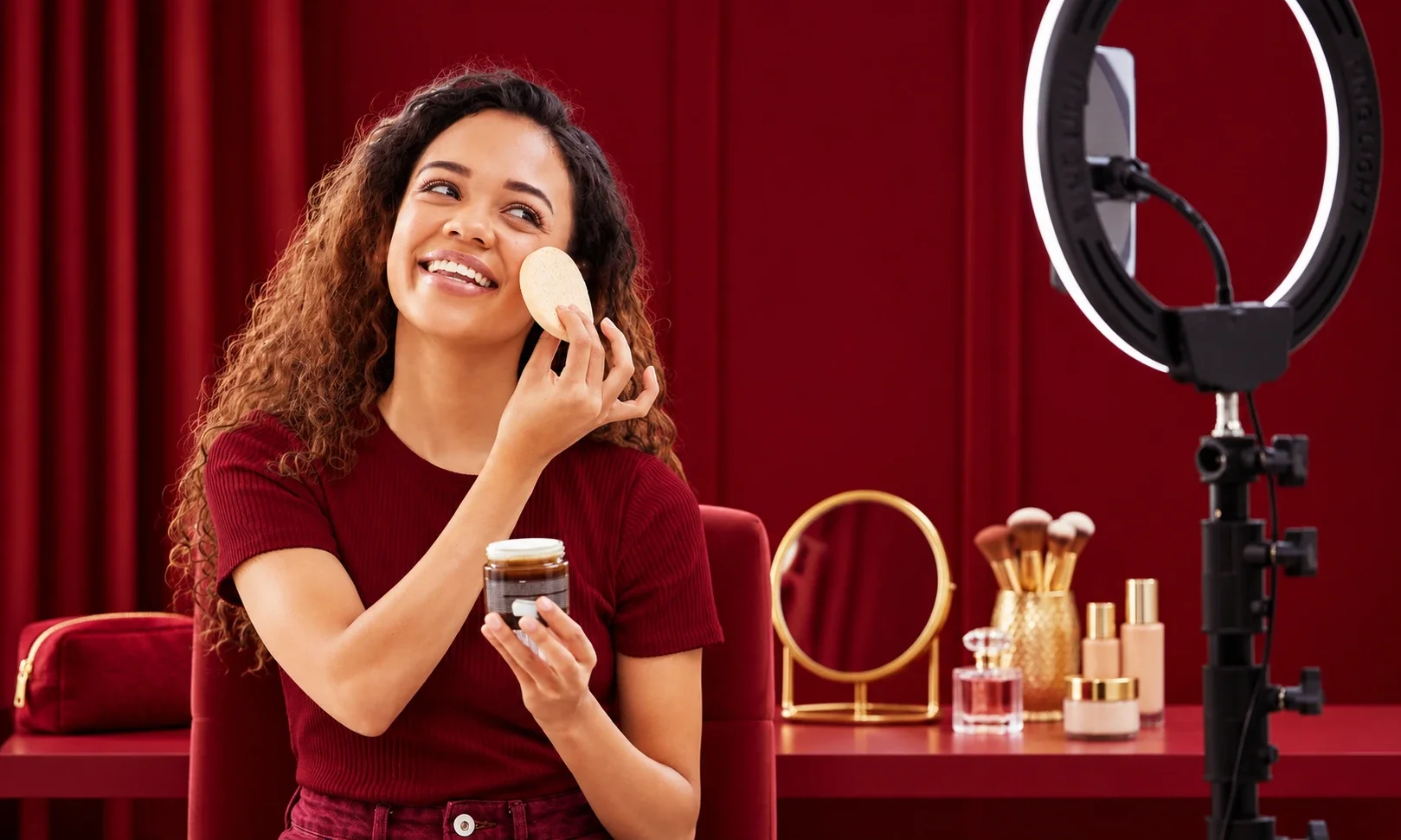
Check proof such as product tests, shared customer needs, or a clear use case. A partnership between a skincare label and a beauty retailer could offer product access and expert guidance. That is more concrete than a mood board showing similar colors.
Image fit and what the partnership signals
Compare values, visual language, and reputation. A luxury brand and an influencer may both favor craft and restraint, but their public behavior must support that story. Consistent brand values and visual identity help make the message clear to customers.
Use observable evidence: recent campaigns, product design, public statements, and customer feedback. System1’s collaboration test found that Barbie x Primark scored 3.6 on its five-star scale. Its brand collaboration research also stresses relevance and shared values.
| Fit dimension | What to check | Evidence to look for |
|---|---|---|
| Functional fit | Do the products or skills work together? | A shared use case, tested feature, or service |
| Image fit | Do the visual style and reputation align? | Consistent campaign images and public conduct |
| Value fit | Do both brands support similar principles? | Matching policies, actions, and public commitments |
Do not treat a shared aesthetic as proof that the products or expertise work well together. A careful luxury marketing approach also keeps brand signals consistent. Ask what each partner uniquely contributes before approving an appealing idea with an unclear practical role.
A shared look is not enough: each partner needs a useful, distinct role in the collaboration.
If the partnership looks appealing but its practical role is unclear, ask what each partner uniquely contributes before approving it.
Will This Partnership Protect Luxury Positioning?
A partnership can attract favorable responses without automatically weakening a luxury brand’s prestige, but the fit and execution still matter. Look closely at design, quality cues, scarcity, and the partner’s standing. A popular launch can still create the wrong impression.
High demand alone does not prove that a collaboration protects prestige. Two survey-based experiments in a 2023 study found luxury-brand co-branding more effective than a downward brand extension. The co-branding did not reduce the luxury partner’s prestige or desirability in those tests.
Product collaborations and perceived prestige
In a product fusion, customers judge the combined object as well as both names. Materials, finish, design, and price all shape perceived quality. A partner’s status can add meaning, but weak construction or a rushed design can damage both brands.
Dior Men and Air Jordan released 8,000 pairs of sneakers in June 2020. More than five million people signed up to buy them. The 2023 co-branding experiments offer a useful reminder: the response depends on the partnership form, not simply on luxury status.
Scarcity can support desirability when the product feels special and well made. It cannot fix a product that looks like a logo swap. For more context on how materials and design affect perceived value, see this guide to brand quality and market position.
Symbolic partnerships and shared stories
A symbolic partnership links identities through an ad or shared story without combining products. Patek Philippe paired its watches with the Orient Express in an advertisement, leaving both products unchanged. Gucci and Riva took a different path, adding Gucci motifs inside and outside the Aquariva yacht.
In 2022, a study linked high value fit between co-brand partners with better consumer evaluations. Brand-image publicity affected perceived quality, appeal, and purchase intent more than publicity focused on product features. Product materials and construction can also shape how shoppers read a brand’s quality cues.
GoPro and Red Bull built a sponsorship around Felix Baumgartner’s jump from 24 miles. He broke three world records during the jump. The story connected both brands without creating a shared product.
| Partnership form | Illustrative example | Positioning question |
|---|---|---|
| Product fusion | Gucci and Riva’s Aquariva | Do the design and materials feel true to both names? |
| Symbolic association | Patek Philippe and the Orient Express advertisement | Does the story link the identities without confusing them? |
| Sponsorship | GoPro and Red Bull’s Baumgartner jump | Does the event fit each brand’s public role? |
Ask whether the collaboration gives customers a credible new reason to value the luxury partner, not merely a reason to notice it.
Do the Partner’s Audience and Channel Fit Your Goals?
A partner’s audience is a good match only when the people reached are the people your collaboration is meant to matter to. Relevance comes first, whether you work with creators or retailers. A large audience may include few likely customers.
Check who engages and what the channel can do for the campaign. A creator can shape a story, while a retailer can give shoppers access to products. Match that role to your goal, such as awareness, product discovery, or sales.
Check creator audience quality and trust
Review audience demographics, engagement quality, posting consistency, and past partnerships. Read comments to see whether followers discuss the content or leave generic reactions. A creator’s follower count may overstate how many people are genuinely relevant to your brand.
Check whether the creator’s style feels credible to that audience. A polished fashion creator may suit a luxury lifestyle campaign, while a product expert may better explain design details. This Instagram influencer marketing guidance also stresses fit, engagement, and follower quality.
Creator marketing works best when the content suits both the creator and the product. A luxury influencer who rarely discusses beauty may struggle to make a skincare launch feel natural. Review actual posts, not just a media kit or follower total.
Assess a retailer’s reach and role
Retailers can offer access to shoppers, product pages, stores, and launch support. Ask what role the retailer will play beyond carrying the product or sharing a post. Accurate product details and availability also help people find what they want through digital shopping tools.
In S1 2025, retail partners generated $1.1 billion in Media Impact Value® for fashion, beauty, and sportswear brands, and more than $4.8 billion across those categories. The Rhode x Sephora launch generated $10.2 million in Media Impact Value® from nearly 1,000 posts in 48 hours in 2025.
That example shows the value of a partner channel and a focused launch window, not a result another campaign can count on. Retail reach can also support product discovery; learn how retailer listings help products surface in shopping results.
For channel planning, compare the campaign’s audience and format with advice on choosing content for a target audience. Check the audience’s interests and engagement quality alongside its size before treating reach as an advantage.
What Should You Verify Before Committing?

Before committing, make sure both partners can describe the goal, their responsibilities, the deliverables, and the conditions for approving the work. Write those terms down before creative production begins. A clear plan makes it easier to handle changes without confusion.
Agree on scope, decision rights, and content use before work starts. In April 2026, Zara announced a two-year creative collaboration with John Galliano and a capsule collection with Willy Chavarria. Dior and A24 announced a two-year creative partnership, while Gap and Victoria Beckham announced a multi-season partnership.
Those formats show why duration and scope should be explicit. Willy Chavarria’s 2026 VATÍSIMO capsule for Zara included a $529 leather jacket, roughly one-sixth of his standard price point. A price difference can shape how customers read the work, so name the offer and its limits.
- Objective and benefit: State the goal and what each partner gains.
- Roles and decision rights: Name who leads, reviews, and makes final calls.
- Deliverables and timeline: List formats, quantities, key dates, and launch windows.
- Creative approvals and content use: Set review steps and define where content may appear.
- Contingency: Agree how delays, product changes, or missed dates will be handled.
Some activations show how a clear frame can shape customer expectations. Telfar’s Bag Security Program opened a 24-hour preorder window in August 2020 and guaranteed delivery. Jacquemus held its tenth-anniversary show on June 24, 2019, using a fuchsia runway through lavender fields in Valensole, Provence.
Keep the creative brief tied to agreed duties and dates. A campaign with a runway event needs a different production plan from a preorder window. Record who supplies samples, who pays for production, and who handles customer questions.
Do not agree to creative output before clarifying who approves it and where it can be reused. This detail matters when a post later appears in paid ads, retailer pages, or a brand’s own channels.
Do not finalize a creative brief until approval rights and content-use permissions are clear.
How Will You Judge Value After Launch?
Decide how you will judge the partnership before it launches, because visibility alone does not show whether it created value. Set targets early and compare results with your brand’s own baseline. Each measure needs a target and a time window suited to the campaign.
Use a scorecard that connects attention to audience response and business results. Retail value can move both ways between partners. In 2025, Saks received 191% more Media Impact Value® per placement when Amazon mentioned it than in its own posts.
- Baseline: Record recent results for the same channel, product, or campaign type.
- Reach and engagement: Track views, unique reach, comments, saves, and shares.
- Audience quality: Check whether engaged people match the intended customer.
- Brand-response signals: Review sentiment, brand searches, and product interest.
- Commercial outcomes: Track site visits, leads, orders, and sales tied to the campaign.
Amazon gained 260% more Media Impact Value® when Saks featured it. Those figures show that value can flow in both directions, rather than only to the brand paying for a campaign. Channel measures such as watch time and retention can add context when video content matters.
Do not credit a campaign with sales or awareness unless you have a baseline and a clear way to connect results to its work.
Choose measures that fit the campaign’s job. A creator video meant to explain a product may need watch time and saves, while a retailer launch may need product views and orders. Give each target a review window that reflects the buying cycle.
From S1 2024 to S1 2025, overall retail Media Impact Value® declined 13% year over year. The top 50 retailers still recorded 66% growth over three years, showing why one benchmark cannot tell the whole story.
Look for changes that match the campaign’s timing and exposure. A rise in sales may reflect other marketing or seasonal demand, so use tracking links, codes, or matched periods when possible. Set a review date and a decision rule for continuing, adjusting, or ending the partnership before the first campaign goes live.
Conclusion
A collaboration is worth approving only when it strengthens the brand, reaches a relevant audience, and has a clear way to prove value. Each partner needs a credible role, and the planned work should support both sides without blurring what customers expect from the luxury brand.
Before approval, write a short decision brief that connects the goal to the partner’s role and the measures you will use. Keep it concise enough for both teams to review and accept. Before signing, write a one-page decision brief naming the partner, objective, guardrails, and success measures.