Choosing the right domain extension can significantly enhance a website’s visibility. There are notable differences between premium vs standard domains, and understanding these distinctions can help buyers make informed decisions. This post will explain how to evaluate the value when acquiring a .com domain. Both premium and standard options are familiar to most readers.
As you consider the distinctions between premium vs standard domains, it’s worth noting the lasting influence of a well-selected address. When you choose a domain name, you’re not just registering a web address; you’re positioning your brand for greater credibility, recognition, and potential growth. Throughout this article, you’ll learn how selecting the right .com domain can help establish trust, increase visibility, and support your long-term objectives online.
Defining Premium Vs Standard Domains
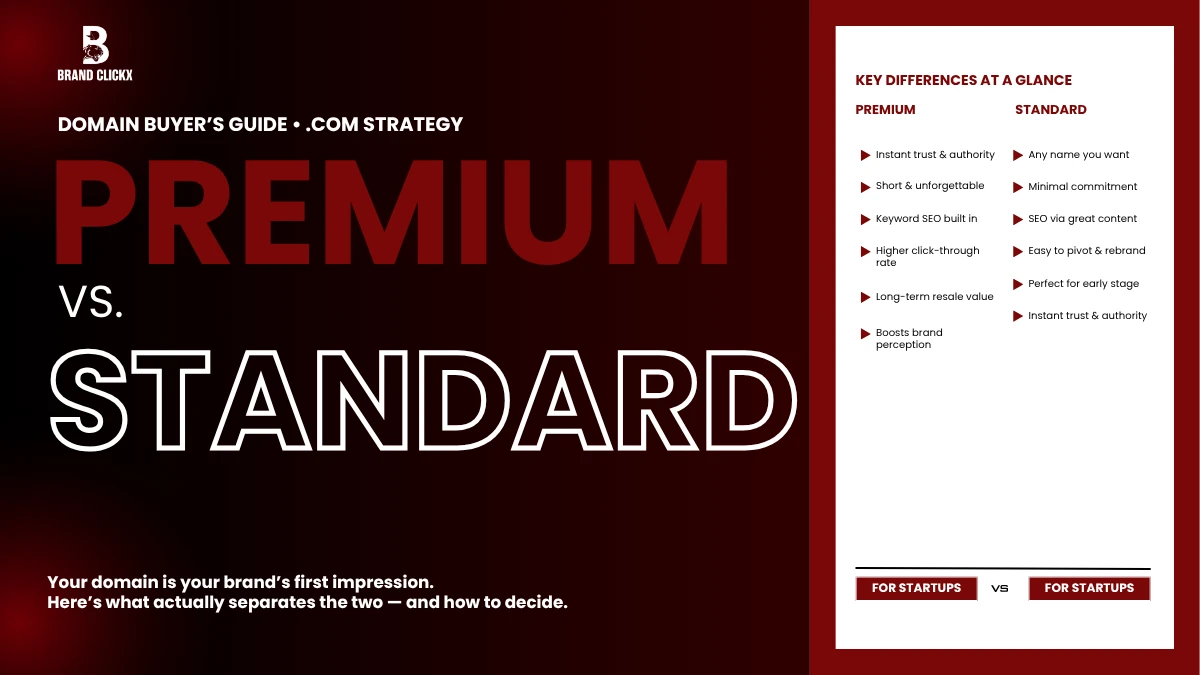
A .com domain is generally available to anyone at a typical annual cost of $8-$15, as long as it hasn’t been registered. In contrast, premium .com domains are highly valued for being short, memorable, or containing trending keywords. These names are often resold at much higher prices due to their strong branding and investment potential, making them especially attractive to businesses seeking greater visibility and credibility.
Price and Pricing Factors Difference
The most noticeable difference between standard and premium .com domains is pricing. Standard domains usually carry a small annual service fee, making them affordable for most users. In contrast, premium domains involve a much higher upfront cost.
Prices for premium domains are influenced by factors such as name length, keyword popularity, and overall demand. These domains are often easier to spell and remember, further increasing their value and appeal.
Memorability and Brand Impact
A memorable domain name helps landscaping companies stand out in a competitive online space. Many choose to buy .com domain name options that include short phrases or meaningful abbreviations for stronger branding. Simple, recognizable domains improve word-of-mouth referrals, make businesses easier to recall, and reinforce long-term brand recognition.
Search Engine Considerations
Many factors influence search rankings, and your domain name is one of them. Using relevant keywords in your domain can help boost visibility. Directly matching your business or industry keywords in the domain name can optimize organic traffic. Achieving similar results with standard domains often requires more effort through content and other SEO strategies.
User Experience and Click-Through Rates
Beyond keywords, a clear and memorable domain name can improve user experience and increase click-through rates from search results. Domains that are easy to read, pronounce, and recall are more likely to be trusted and clicked on by users, leading to higher organic traffic.
Perceived Trust and Authority
Visitors often view .com domains as credible, especially when they are premium, short, and easy to remember. Such domain names quickly build trust and brand authority, while standard names may provide some confidence but with less impact. Regardless of domain type, maintaining consistent branding and a professional appearance is key to reinforcing trust.
Investment Potential
Premium .com domains are often considered valuable investments because they are in limited supply and high demand, allowing owners the possibility of reselling them at a profit. In contrast, standard domains are less expensive but usually offer lower growth potential. Buyers should carefully consider their goals and requirements before choosing which type of domain to purchase.
Budget Considerations
Budget is key when choosing between premium vs standard domains .com domains. Premium domains are costly and may not be suitable for every business, while standard domains are more affordable and ideal for startups or personal projects. Select a domain that aligns with your budget and supports your future goals.
Assessing Your Needs
When choosing a domain among premium vs standard domains, ensure it aligns with your website’s purpose and function to achieve its goals. Premium domains are ideal for startups or businesses that prioritize strong branding, while standard domains are suitable for personal websites or smaller projects. Consider your industry, competition, and growth plans, as a strong domain can support future expansion.
Risk and Security Factors
Registering a .com domain through a reputable registrar provides robust protection. However, premium or high-profile domains may draw more attention from competitors or malicious actors. To enhance security and privacy, enable domain privacy protection, use secure management practices such as a protected email server and dashboard, and regularly monitor your domains to ensure timely renewals and prevent potential loss.
Responding to Security Threats
Beyond preventive measures, having a clear response plan for potential security incidents is critical. Set up alerts for suspicious activity, know your registrar’s support options, and back up your site and domain information. Developing a security response strategy helps minimize risks and recover swiftly if issues arise, ensuring the ongoing safety of your domain and online presence.
Future Scalability
A strong .com domain supports business growth and expansion thanks to its memorability and authority. Standard domains can be effective for growth, but larger projects may require rebranding. Choosing a valuable domain is a smart, long-term strategy to ensure lasting relevance and adaptability.
Conclusion
Choosing between premium vs standard domains .com domains requires careful consideration, as each has its own advantages and disadvantages. Buyers should assess their objectives, branding needs, and long-term goals before making a decision. Investing in the right domain name can greatly enhance your chances of sustained online success. Thoughtful planning yields the most value when building your digital presence.