
If you are a marketer, business owner, or SEO professional you have likely heard of SWOT analysis. It stands for Strengths, Weaknesses, Opportunities, and Threats. It is a simple but powerful planning tool. In this article we will walk through high value SWOT analysis examples for SEO and marketing strategy that you can apply today. Building a strong SEO strategy starts with understanding your current strengths and weaknesses before planning future growth. We will explain what each element means, cite research and data, and show how this framework can guide better decisions and results.
We will also go in depth on how to develop your own SWOT analysis. This is a conversational guide so you can follow along even if you are new to strategic planning.
Let us dig in.
What Is SWOT Analysis
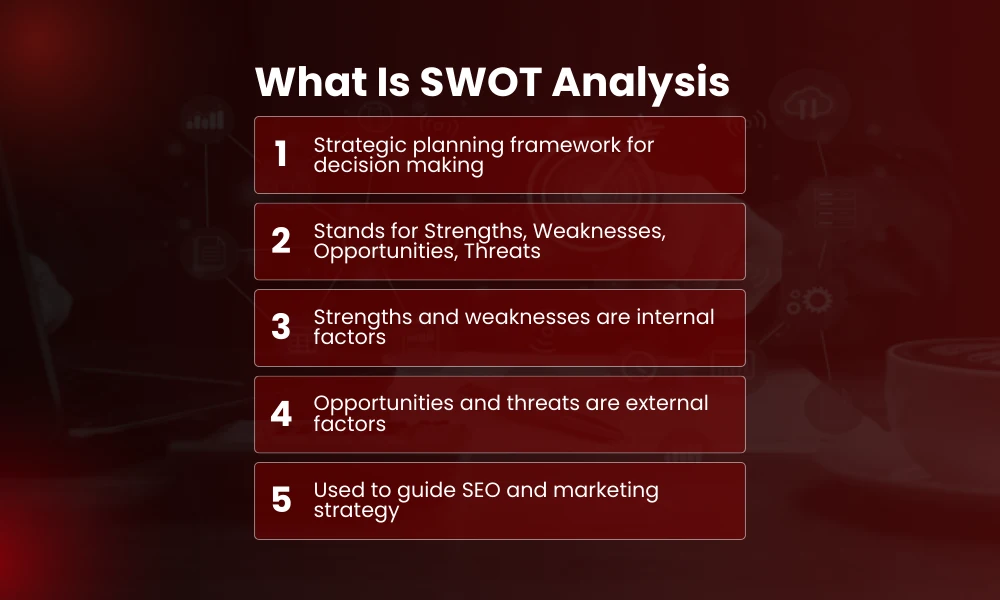
Before we go into practical SWOT analysis examples it helps to define what SWOT is and why it works. SWOT is a simple grid with four parts:
- Strengths are internal positive factors
- Weaknesses are internal negative factors
- Opportunities are external positive factors
- Threats are external negative factors
To apply this to SEO and marketing strategy you look at your site, brand, industry, competition, and market trends. This process often overlaps with SEO competitor analysis, where marketers study rival websites to uncover ranking gaps and strategic opportunities. Then you fill in each box based on data and insight. The goal is not to get a perfect list. The goal is to learn where you can act to grow your performance.
Why Use SWOT Analysis for SEO and Marketing Strategy
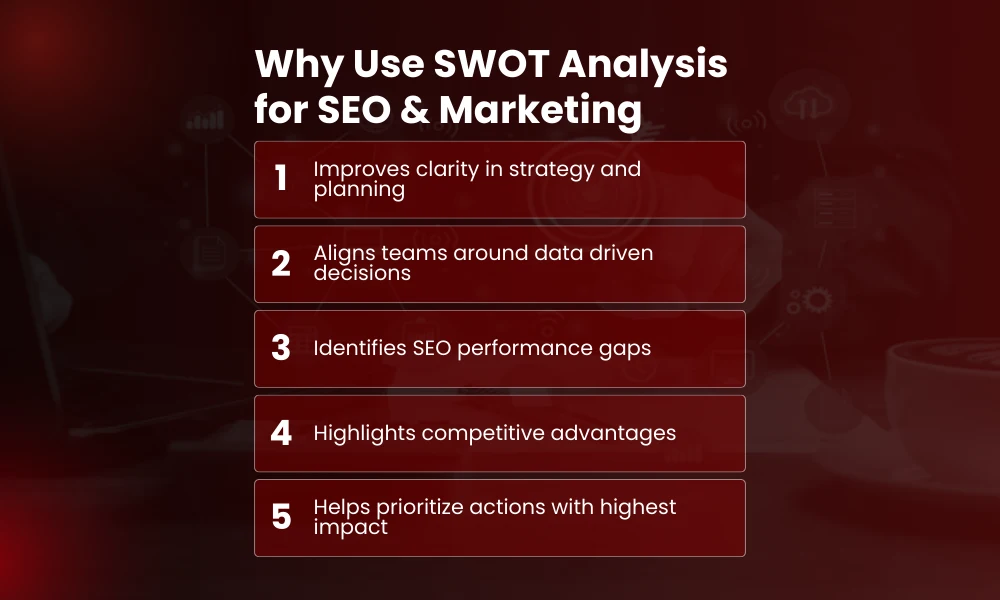
You might wonder why SWOT matters for SEO and marketing strategy at all. Research shows that businesses that plan are more likely to grow than those that do not. A 2022 survey from HubSpot found that companies with documented strategies are 36 percent more likely to report success than those without documentation. This is because writing down strengths, weaknesses, opportunities, and threats forces clarity and alignment across teams.
Applying SWOT analysis examples in the context of SEO helps you understand where your website excels and where it needs help. Many businesses use these insights to improve website SEO by fixing technical issues, expanding content, and targeting better keywords. The same applies to your broader marketing strategy. Maybe your brand has strong social engagement but weak search visibility. SWOT highlights these gaps.
How to Conduct a SWOT Analysis for SEO
Start by gathering data. Tools like Google Search Console, Ahrefs, SEMrush, and Screaming Frog will help you analyze search performance, traffic, backlinks, and technical issues. Collect metrics such as:
- Impressions and clicks
- Average ranking positions
- Organic traffic trends
- Domain authority or domain rating
- Technical errors like broken pages
Once you have the numbers, you can fill in the SWOT grid based on what the data reveals. We will now go through specific SWOT analysis examples you can model.
SWOT Analysis Examples for SEO
Example 1: Small Ecommerce Website
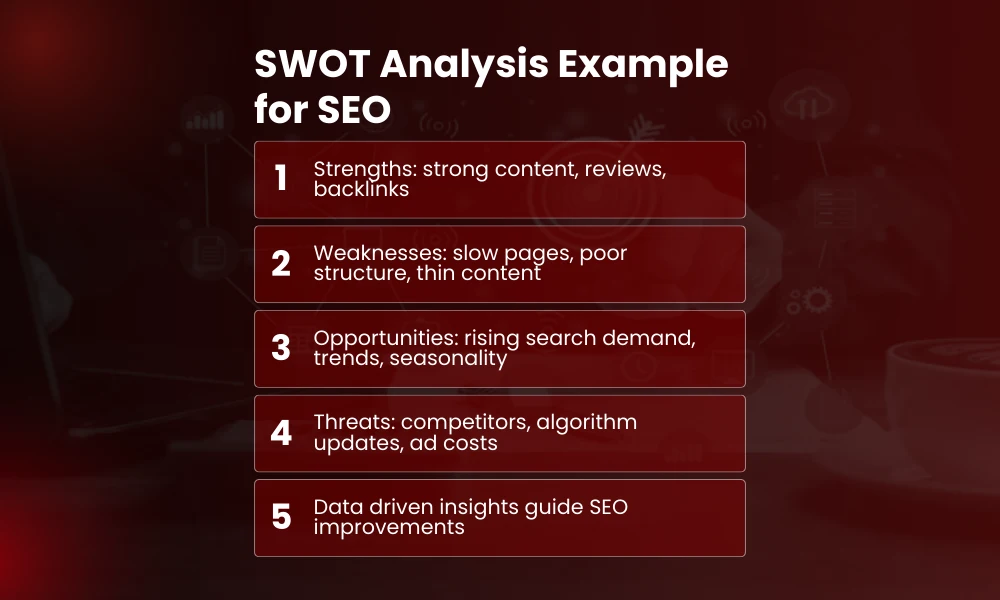
Strengths
Your strengths are the internal assets that give you an advantage in search and marketing. For this ecommerce site:
- You have a strong brand with loyal customers
- You have unique product pages with original content
- You have hundreds of product reviews which improve trust
- You have consistent social media engagement
These are real strengths. According to a 2023 BrightLocal survey, 76 percent of consumers trust online reviews as much as personal recommendations. That means reviews can boost SEO and conversion.
Weaknesses
Weaknesses are internal issues holding you back:
- Poor site structure with duplicate content
- Slow page speed
- Thin content on category pages
- Lack of optimized title tags and meta descriptions
Many store owners address these problems using a structured e-commerce SEO checklist that improves product pages, site architecture, and search visibility. Research from Google shows that 53 percent of mobile users abandon a page that takes longer than three seconds to load. These weaknesses directly impact search rankings and user experience.
Opportunities
Opportunities are external factors you can exploit for growth:
- Trending product categories in your niche
- Increasing search volume for related keywords
- Partnerships with popular influencers
- Seasonal events like holiday shopping
Data from Google Trends can help you identify search spikes in your category. If you see a growth in queries for a product you sell, that is an opportunity to boost content and capture traffic.
Threats
Threats are external challenges that could harm performance:
- Aggressive competitors ranking for key terms
- Algorithm updates from Google
- Rising paid advertising costs
- Supply issues that limit inventory
According to a 2024 report by Search Engine Journal, algorithm volatility increased in the prior year with multiple core updates, meaning sites can see ranking swings if they are not technically sound.
This ecommerce example shows how SWOT analysis examples can be rooted in real metrics and tangible factors.
Example 2: Local Service Business Blog
This example is for a local service brand relying on SEO to attract customers.
Strengths
- High domain authority compared to local competitors
- Strong backlinks from local business associations
- Well written service pages
- Clean site architecture
According to Moz data, domain authority is strongly correlated with higher rankings in competitive search results.
Weaknesses
- Low number of localized keyword rankings
- Few reviews on Google Business Profile
- Inconsistent NAP (name address phone) listings
Local SEO depends heavily on consistent address information and positive reviews. Implementing proven local SEO strategies can significantly improve visibility in map results and location-based searches.Yext research found that inconsistent listings can reduce search visibility.
Opportunities
- Growing number of local searches for service terms
- New content topics based on customer FAQs
- Local event sponsorships to generate PR and links
Google reported that “near me” searches grew over 200 percent in the last five years, indicating demand for localized content is rising.
Threats
- Competitors with bigger marketing budgets
- Negative reviews damaging reputation
- New entrants with aggressive promotion tactics
A negative review can reduce trust and clicks if it appears in search results. Managing reputation is a key tactic in modern SEO strategy.
This shows how SWOT analysis examples are not limited to large brands. Local businesses benefit just as much from structured analysis.
SWOT Analysis Examples for Marketing Strategy
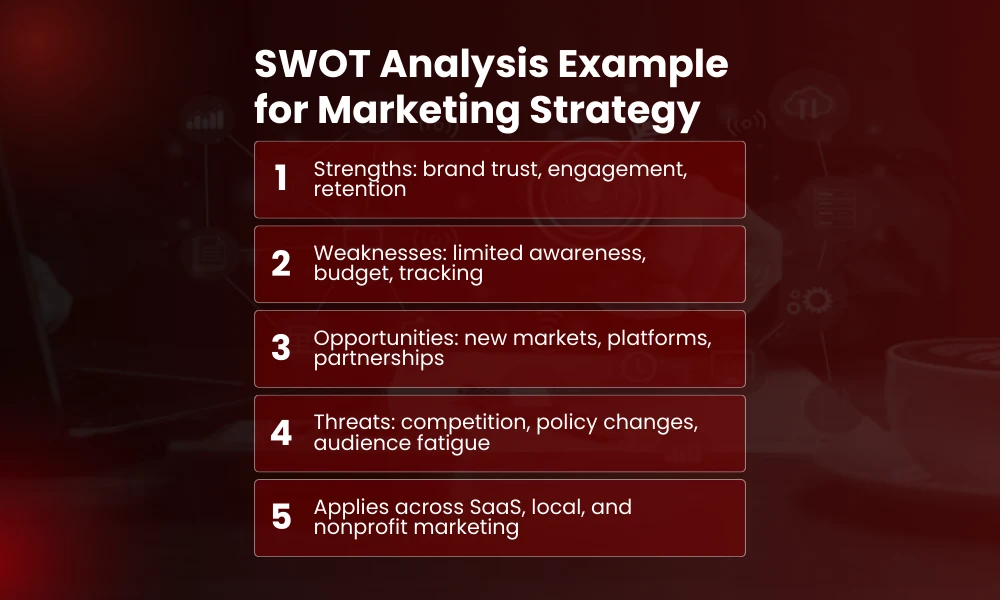
SEO is part of digital marketing. But marketing strategy often includes email, social media, paid media, and more. Let us explore SWOT analysis examples for marketing as a whole.
Example 1: SaaS Company
Strengths
- Strong product market fit
- High customer retention
- Educational blog content that draws organic traffic
- Customer testimonials used in marketing
According to ProfitWell data, improving retention by even a few percentage points can dramatically increase lifetime value of customers.
Weaknesses
- Low brand awareness outside core niche
- Limited paid media presence
- Underutilized email segmentation
Weaknesses here point to gaps you can fix. For example, better email segmentation can drive more conversions. Mailchimp research shows segmented campaigns deliver 760 percent increase in revenue.
Opportunities
- Rising demand for remote work tools
- New markets in Europe and Asia
- Partnerships with industry influencers
Global remote work trends show continued adoption of collaboration software, which can expand your audience and marketing reach.
Threats
- Aggressive pricing from competitors
- Economic downturn reducing customer budgets
- Platform policy changes on major ad networks
Being aware of threats helps you prepare plans for competitive pricing and alternative channels.
This SWOT analysis example highlights how marketing strategy extends beyond SEO to include all customer touch points.
Example 2: Non Profit Awareness Campaign
For non profits the marketing goal is often awareness and engagement.
Strengths
- Strong mission that resonates with audience
- Support from volunteer ambassadors
- Compelling storytelling assets
A study from Stanford Social Innovation Review shows emotional connection drives donor engagement.
Weaknesses
- Limited budget for paid ads
- Low email list growth
- Few analytics tracking capabilities
Without data, you cannot measure what works. Fixing these weaknesses will boost campaign effectiveness.
Opportunities
- Trending social causes aligned with mission
- High interest among Gen Z on social platforms
- Collaboration with allied organizations
Gen Z uses social platforms differently according to Pew Research so targeted content can lift engagement.
Threats
- Competing causes vying for attention
- Platform algorithm changes reducing reach
- Fatigue among supporters
Understanding threats ensures you diversify marketing and foster connection.
These SWOT analysis examples show how different sectors use the same framework to gain advantage.
Common Themes Across All SWOT Examples
Across our SWOT analysis examples for SEO and marketing strategy you will notice recurring themes:
- Data matters. Use analytics and research to inform every point.
- Strengths and opportunities often link to growth areas you can invest in.
- Weaknesses are actionable items you can fix over time.
- Threats prepare you for external volatility.
Documenting your SWOT helps keep your team aligned and sets priorities for execution.
How to Turn SWOT Insights Into Action
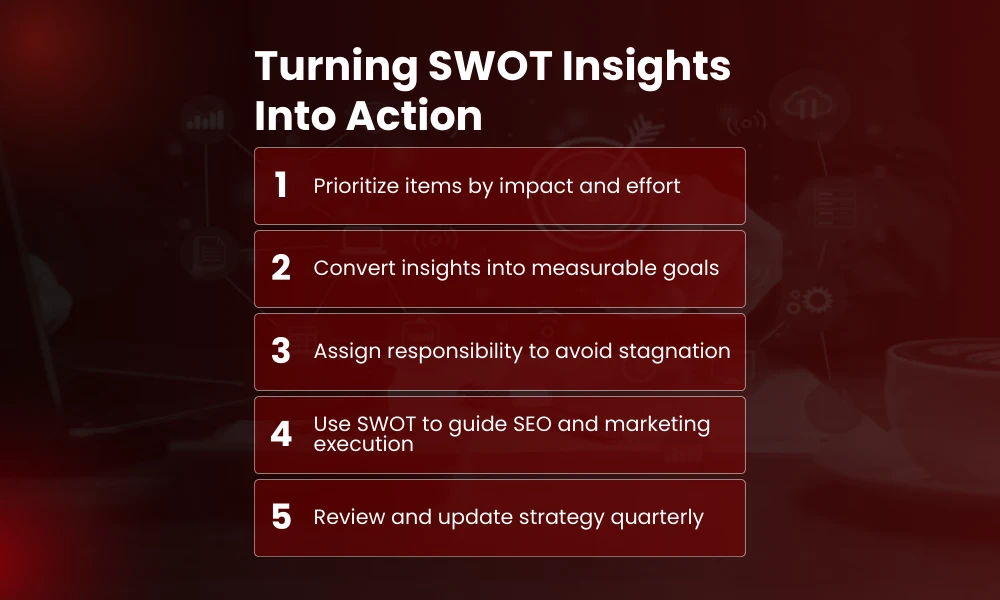
Identifying a SWOT is only the first step. The real value comes when you build strategies from it. Here is how to use your SWOT insights:
1. Prioritize Based on Impact and Effort
List all items from your SWOT grid and score them. For example assign 1 to 5 for impact and effort. This helps you focus on high impact and low effort improvements.
2. Set Clear Goals
Convert SWOT findings into specific goals. For example:
- Improve page speed score from 51 to 80 in 90 days
- Increase organic traffic by 20 percent in 6 months
- Grow email list by 30 percent in quarter
Goals help you track progress. Marketers often rely on content marketing analytics to measure performance and refine strategies based on real engagement data.
3. Assign Responsibility
Make sure someone owns each action. This avoids stagnation.
4. Review Quarterly
SWOT is not static. Run your SWOT analysis every quarter or when a significant change occurs.
Mistakes to Avoid
Even when doing SWOT analysis examples you may fall into common traps:
- Being vague. Be specific with strengths and weaknesses.
- Not using real data. Guessing leads to poor decisions.
- Ignoring competitors. Competitive context matters.
- Treating SWOT as one time task. Review regularly.
Avoiding these ensures your SWOT analysis has teeth.
FAQs
What is a SWOT analysis for SEO
A SWOT analysis for SEO is a strategic review of your search engine strengths, weaknesses, opportunities, and threats. It uses data to inform planning and optimization of your website and digital presence.
What are the benefits of using SWOT analysis examples in marketing
Using SWOT analysis examples helps you understand your current position, identify areas to improve, find new opportunities to grow, and recognize external risks that could hurt your business.
How often should I perform a SWOT analysis
You should review your SWOT at least every quarter and anytime you see major market or performance changes.
Can SWOT analysis improve SEO
Yes. SWOT helps you identify technical issues, content gaps, and competitive opportunities that when addressed can boost search rankings.
Do I need a team to do a SWOT analysis
You can start alone, but including team members often brings more perspectives and leads to better outcomes.
Conclusion
SWOT analysis is a proven framework for strategy. The SWOT analysis examples we shared for SEO and marketing strategy are grounded in data and real world scenarios. You can adapt these examples to your business regardless of industry size or niche. The key is to pair insight with action. Collect meaningful data, identify your strengths and weaknesses, and use opportunities to drive growth while safeguarding against threats.
Start building your own SWOT today and watch your SEO and marketing performance improve over time. Once you clearly understand your strengths, weaknesses, opportunities, and threats, you can move forward by implementing advanced SEO strategies that maximize your competitive advantage and drive sustainable growth.