
If you want your content to be found on Google you must know how to do keyword research for SEO. Whether you are writing a blog post, building a website or creating product pages you need to understand what your audience is searching for. The right keywords help search engines know what your content is about and help you attract the right visitors.
If you are completely new to SEO, you can also read our detailed Beginner Guide to SEO 2025 to understand the foundation before diving deeper.
In this guide I will walk you through keyword research in a clear conversational way. You will get real examples, data from studies, step by step instructions and links to useful tools and resources.
Let’s begin.
Why Keyword Research Matters

Keyword research is the foundation of effective SEO. If you choose the wrong keywords you might end up writing content that no one is searching for. According to Ahrefs research more than 90 percent of pages get no organic traffic from Google because they are not targeting searchable keywords with traffic potential.
In simple terms keyword research helps with three things:
Understanding the importance of keywords in digital marketing will give you a clearer strategic direction before moving forward.
- Audience understanding. You learn the language your potential customers use.
- Content direction. You choose topics that people are actively searching for.
- Competitive advantage. You find gaps where competitors are weak.
Now we are going to walk through each step of how to do keyword research for SEO.
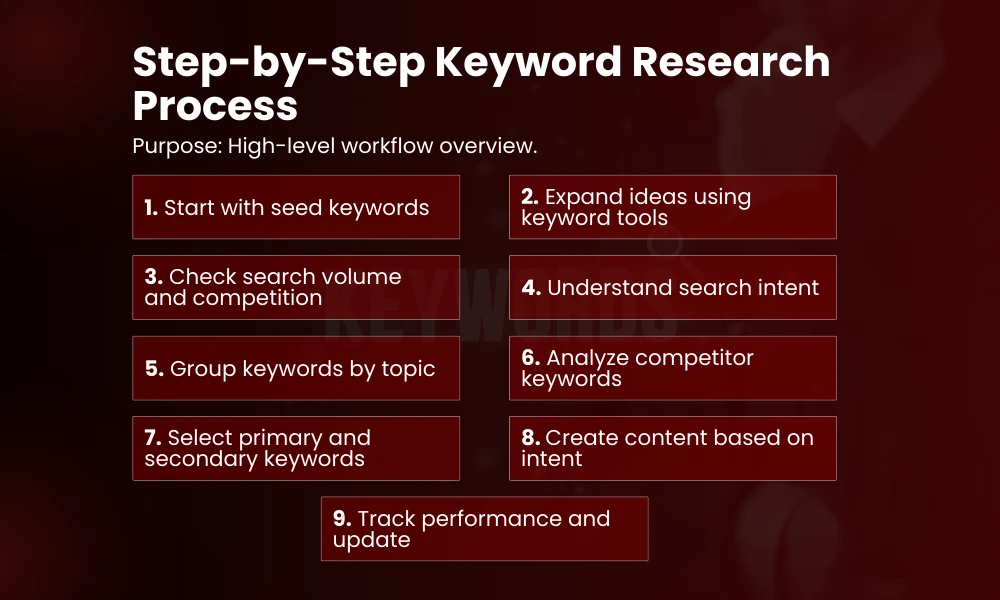
Step 1 Start with Seed Keywords
Seed keywords are the basic terms that are broad and related to your business or topic. For example if you are writing about bikes your seed keywords might be “best road bikes”, “mountain bikes” or “bike maintenance.”
Start by listing 10 to 20 seed keywords. These keywords are not what you will rank for exactly. They are the starting point to find more specific phrases people search for. If you want to go deeper into niche targeting, explore our guide on niche keyword research for more focused strategies.
Here are three ways to find seed keywords about how to do keyword research for SEO:
Look at Your Website
Check your own website for topics you already cover. What pages do you have that are driving traffic? What pages do you want to improve?
Brainstorm with Your Team
Talk to people who know your product or audience. Sales teams often know the questions potential customers ask most.
Use Tools
Tools like Google Search Console, Google Trends, and Answer the Public help find topics people are interested in.
- Google Search Console helps you see the actual terms people already use to find your site. You can start here: https search google com search-console/about
- Google Trends shows you keyword interest over time. https trends google com
- Answer the Public gives questions and phrases related to your keyword. https answerthepublic com
Once you have a list of seed keywords we move on to expanding them.
Step 2 Expand Keywords with Tools
Now that you have seed words let us expand them into real keyword ideas. Your goal is to get a list of hundreds of potential keywords you might target. You can also explore some of the best free tools for keyword research if you are working with a limited budget.
Here are popular keyword research tools:
| Tool | Free or Paid | Notes |
| Google Keyword Planner | Free | Great for search volume and competition data |
| Ahrefs Keywords Explorer | Paid | Strong competitive metrics |
| SEMrush Keyword Magic | Paid | Many filters and ideas |
| Moz Keyword Explorer | Paid | Good beginner friendly metrics |
| Ubersuggest | Limited free | Easy to use and affordable |
For beginners Google Keyword Planner is a good start. It is part of Google Ads but you do not need to run paid ads to use it.
Using Google Keyword Planner
- Go to Keyword Planner.
- Select Discover New Keywords.
- Enter your seed words.
- Click Get Results.
You will see columns like Avg. Monthly Searches and Competition. These help you pick good keywords.
What Do The Metrics Mean
Understanding the metrics helps you choose the right ones.
Search Volume
This is the average number of monthly searches a keyword gets. Higher volume means more potential traffic. But high volume often means more competition.
Competition
This shows how many advertisers bid on a keyword. It can be a rough guide to how hard it might be to rank organically.
Keyword Difficulty
Tools like Ahrefs and SEMrush calculate keyword difficulty. It is a score from 0 to 100 that estimates how hard it is to rank. Lower scores are easier to rank for.
Step 3 Understand Search Intent
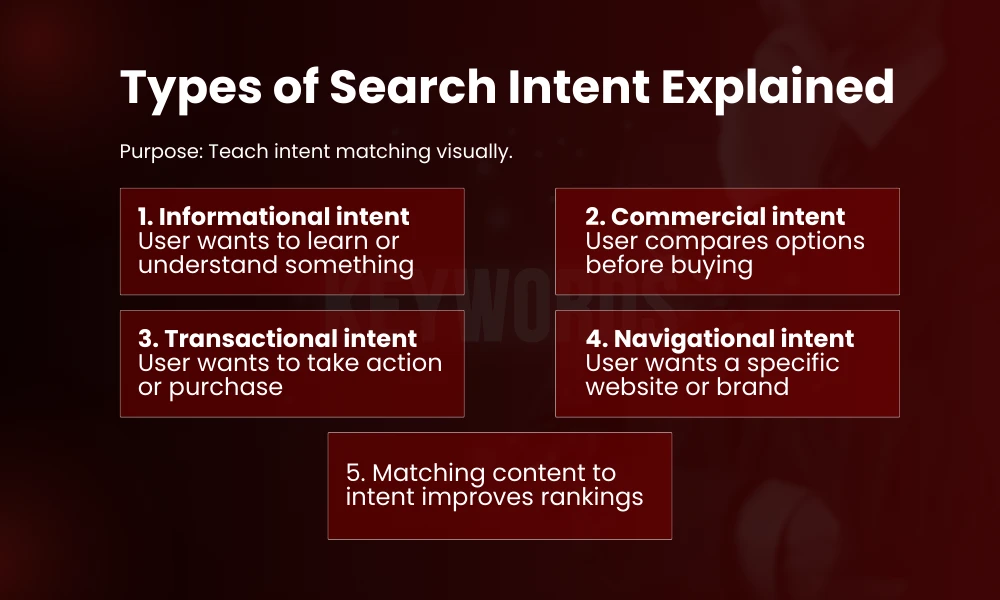
Search intent is what a person is trying to achieve when they search. It is one of the most important parts of keyword research. If you do not match intent you will not satisfy Google or users. To better understand how Google interprets intent signals, read our detailed article on understanding human search intent.
There are four common types of intent:
- Informational. The user wants information. Example query: “what is SEO.”
- Commercial. The user is researching but not ready to buy. Example: “best SEO tools 2025.”
- Transactional. The user wants to take action or buy. Example: “buy SEO tool subscription.”
- Navigational. The user wants to go to a specific site. Example: “Moz SEO blog.”
If your content does not match intent you will get high bounce rates and low rankings.
Step 4 Organize Keywords by Topic and Intent
Now that you have hundreds of keyword ideas you need to group them. Clustering similar keywords helps plan content better.
For example:
Topic: Running Shoes
- Best running shoes for beginners (Informational)
- Running shoes for flat feet (Informational)
- Nike running shoes review (Commercial)
- Buy running shoes online (Transactional)
Group them so you know what type of pages to create. Informational keywords might be blog posts. Transactional ones might be product pages.
Step 5 Evaluate Keyword Difficulty
You do not want to waste time on keywords you cannot rank for. Tools like Ahrefs and SEMrush give keyword difficulty scores.
A general rule is:
- 0 to 29 difficulty Easy to rank
- 30 to 59 Moderate difficulty
- 60 plus Hard
If you have a new site focus on lower difficulty keywords first.
Step 6 Check Competitor Keywords
Looking at competitor keywords helps you discover topics you might have missed. For a structured approach, check our full guide on SEO competitor analysis.
Tools like Ahrefs and SEMrush let you enter a competitor URL and see what keywords they rank for.
For example in Ahrefs:
- Go to Site Explorer.
- Enter competitor URL.
- Click Organic Keywords.
You will see keywords they rank for. This gives you ideas to include in your strategy.
Step 7 Pick Primary and Secondary Keywords
From your list pick a primary keyword and a few related secondary keywords for each piece of content.
Primary keyword is the main focus. Secondary keywords are related terms you want to naturally include.
For example:
- Primary: how to do keyword research
- Secondary: keyword research steps, keyword research for beginners, best keyword tools
Secondary keywords help signal relevance to search engines.
Step 8 Create Content Around Keywords
Once you have your final list you need to create content that satisfies user intent.
Here are best practices for how to do keyword research for SEO:
- Use the primary keyword in the title.
- Use it in the first paragraph.
- Include secondary terms naturally in the body.
- Answer the questions users want answers to.
In a study by Backlinko they found that long content tends to perform better on Google. The average first page result content length is about 1447 words.
This does not mean every article must be 2000 words. It means in many competitive topics more depth helps.
Step 9 Track and Update Performance
Keyword research is not one time. You need to monitor what is working and what is not.
Use tools like:
- Google Analytics. To see traffic patterns.
- Google Search Console. To see which keywords drive clicks and impressions.
In Search Console go to Performance Report. You can see:
- Queries your site appears for.
- Click through rates.
- Average position.
By tracking these you can adjust your strategy. If a keyword is gaining impressions but low clicks you might need a better title and meta description.
Common Mistakes in Keyword Research
Let us cover mistakes beginners often make for how to do keyword research for SEO.
Ignoring Search Intent
Choosing high volume keywords with the wrong intent leads to no conversions.
For example a tutorial page ranking for a buy now keyword will have low conversions.
Targeting Only High Volume
High volume is good but often very competitive. Sometimes lower volume with high conversion intent is better.
Not Updating Research
Search trends change. Use Google Trends to see rising topics. For example interest in topics can shift quickly as new technology releases or news events happen.
Tools You Should Try
Here are tools to accelerate your keyword research:
Google Tools
- Google Keyword Planner Free and reliable for search volumes.
- Google Search Console Real data from your own site.
- Google Trends Shows interest over time.
Paid Tools
- Ahrefs Keywords Explorer Has data on volume, difficulty and gives hundreds of suggestions.
- SEMrush Keyword Magic Great filters and topic grouping.
- Moz Keyword Explorer Good for beginners.
- Ubersuggest Simple and affordable.
Case Study Example
Let us take a simple example for how to do keyword research for SEO. Suppose you run a blog about gardening.
You start with seed keywords like:
- gardening tips
- how to grow tomatoes
- best plants for beginners
Then you use Keyword Planner and you find:
| Keyword | Monthly Searches | Competition |
| gardening tips for beginners | 12 100 | Medium |
| how to grow tomatoes in pots | 8 100 | Low |
| best plants for low light | 5 400 | Medium |
| gardening tools list | 2 900 | High |
Now check the intent before knowing about how to do keyword research for SEO. All are informational. That means blog posts are good.
You then use Google Trends to see seasonal interest. For example, how to grow tomatoes in spring. This helps you plan publishing times.
Lastly you look at competitors and find topics like:
- how to grow tomatoes faster
- organic pest control for gardens
Now you have an expanded list.
You create content for each. In 3 months you monitor Google Search Console and find your gardening tips for beginners page is getting impressions but low clicks. You decide to improve the title and meta description. After changes clicks improve by 30 percent.
This real example shows how keyword research and optimization work as a cycle.
Advanced Tips
Let us talk about advanced ideas regarding how to do keyword research for SEO.
Use Question Keywords
People often search in questions. Tools like Answer the Public help find them. For example:
- how to do keyword research for SEO
- why keyword research is important
Answering questions increases chances of appearing in rich results.
Focus on Long Tail Keywords
Long tail keywords are phrases with more words. They have lower volume but often higher conversion.
For example:
- keyword research tools for YouTube creators
- how to find keywords for local business SEO
If you are dealing with tough niches, you should also review strategies for SEO keyword research for high competition markets. These tend to have less competition and more targeted intent.
Use Keyword Gap Analysis
Keyword gap analysis finds keywords your competitors rank for but you do not. SEMrush and Ahrefs offer this feature.
Structure Content for SEO
Use headings like H1, H2 and H3 to organize content. Put related keywords in headings where relevant.
Final Checklist
Here is a quick checklist you can use for how to do keyword research for SEO:
- Create list of seed keywords.
- Expand using tools.
- Check search intent.
- Evaluate search metrics.
- Group keywords by topic.
- Choose primary and secondary terms.
- Create high quality content.
- Track performance.
- Update and iterate.
Once your keyword strategy is finalized, the next step is building a solid SEO content strategy around those topics.
Summary
Keyword research for SEO is not just about finding words. How to do keyword research for SEO is about understanding your audience and creating content that answers their needs. Good keyword research leads to better content that ranks and converts.
Here are key points again:
- Start with seed keywords.
- Use reliable tools like Google Keyword Planner and Ahrefs.
- Understand search intent before choosing keywords.
- Track results and update your strategy.
With this approach you can build a strong SEO foundation and grow consistent organic traffic.
FAQs
What is keyword research in SEO?
Keyword research in SEO is the process of finding and analyzing the search terms people type into search engines. These keywords help you understand what your audience is looking for so you can create content that matches their needs and ranks in search results.
Why is keyword research important for SEO?
Keyword research is important because it helps you target topics that people actually search for. Without keyword research you risk creating content that gets little or no traffic. Studies from Ahrefs show that over 90 percent of web pages receive no organic traffic, often due to poor or missing keyword targeting. Source https www ahrefs com blog search-traffic-study
How to do keyword research for SEO step by step?
To know about how to do keyword research for SEO, start by listing seed keywords related to your topic. Use keyword research tools to expand those ideas and find search volume data. Analyze search intent, check keyword difficulty, study competitor keywords, and then select primary and secondary keywords before creating content around them.
What are seed keywords in keyword research?
Seed keywords are broad terms related to your niche that act as a starting point for keyword research. For example if your website is about fitness, seed keywords might include workout routines, weight loss tips, or home exercises.
Which tools are best for keyword research?
Some of the best keyword research tools include Google Keyword Planner, Ahrefs Keywords Explorer, SEMrush Keyword Magic Tool, Moz Keyword Explorer, and Ubersuggest. Google Keyword Planner is free, while Ahrefs and SEMrush offer deeper competitive insights.