
If you run a business in New York, your website isn’t just a marketing tool anymore, it’s also a legal responsibility. In recent years, an ADA-compliant website NY has become a major concern for companies, especially as website accessibility lawsuits continue to rise. Many business owners are surprised to learn that their website can put them at legal risk, even if they’ve never received a customer complaint.
An ADA-compliant website in NY isn’t about checking a box or following a trend. It’s about making sure everyone, regardless of ability, can access your content, services, and products online. And in New York, where regulations are enforced more aggressively than in many other states, ignoring accessibility can be costly.
In recent years, an New York website design agency has become a crucial partner for businesses, especially as website accessibility lawsuits continue to rise.
What Is an ADA-Compliant Website?
The Americans with Disabilities Act (ADA) was created to protect individuals with disabilities from discrimination. While the law was written before websites were a core part of business, courts now consistently interpret websites as “places of public accommodation.”
An ADA-compliant website is designed and built so people with disabilities can navigate, understand, and interact with it effectively. This includes users who rely on screen readers, keyboard navigation, voice commands, captions, or other assistive technologies.
For New York businesses, ADA compliance typically aligns with WCAG (Web Content Accessibility Guidelines) 2.1 Level AA, which has become the de facto standard used in legal cases.
Businesses that focus on improving website SEO in New York often combine accessibility with SEO best practices to enhance both compliance and search visibility.
Why ADA Website Compliance Matters in New York
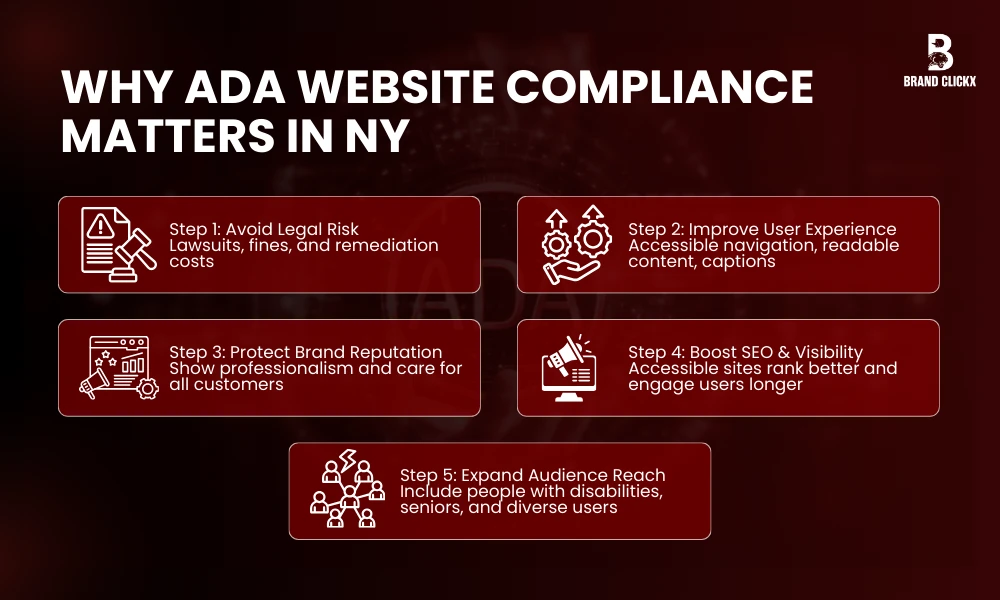
New York is one of the most active states in the U.S. when it comes to accessibility lawsuits. Thousands of ADA-related website lawsuits are filed every year, and New York companies are often targeted because of the state’s strong consumer protection environment.
Beyond legal exposure, accessibility affects real people. Millions of users have visual, hearing, motor, or cognitive disabilities. If your website isn’t accessible, you’re unintentionally excluding a significant portion of your audience.
For businesses, this impacts:
- Legal compliance and risk reduction
- Brand reputation and public trust
- User experience and engagement
- SEO and overall site performance
An ADA-compliant website in NY is no longer optional, it’s part of responsible digital business operations.
Who Needs an ADA-Compliant Website in New York?

Many business owners assume ADA compliance only applies to large corporations. In reality, accessibility requirements affect companies of all sizes.
Additionally, making your site accessible can also help boost local SEO in New York, increasing visibility to nearby customers.
New York businesses that should prioritize ADA website compliance include:
- Retail and eCommerce stores
- Law firms and professional services
- Medical practices and healthcare providers
- Restaurants, hotels, and hospitality brands
- Real estate companies
- Educational institutions
- SaaS and technology companies
If your website is used to provide information, sell products, accept bookings, or generate leads, it likely falls under ADA expectations.
Common ADA Website Accessibility Issues
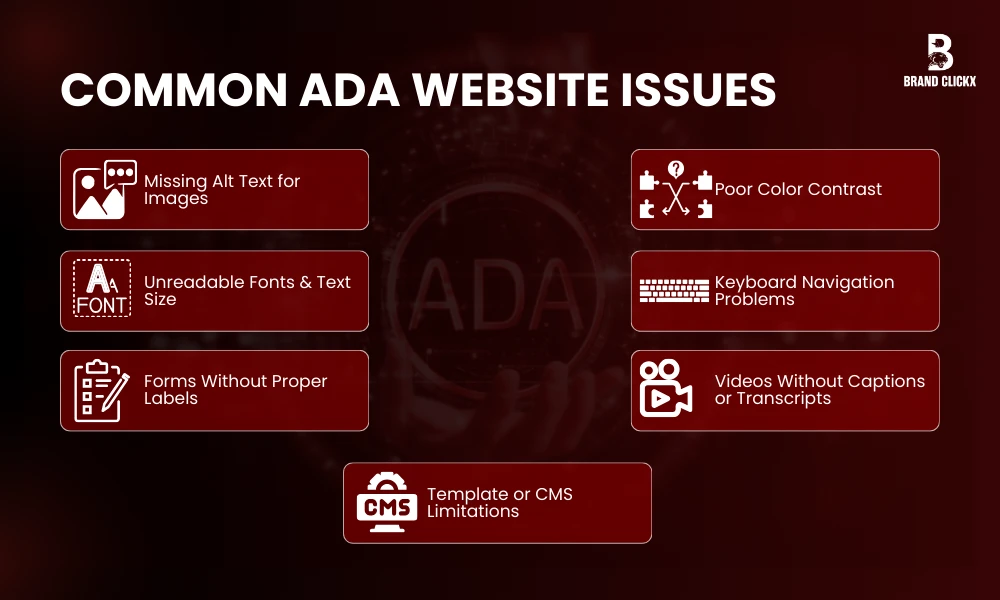
Most accessibility problems aren’t intentional, they happen because websites are designed visually first, without considering assistive technologies. Understanding these issues is the first step toward making your site ADA-compliant in New York.
Working with a web development agency in New York ensures accessibility is integrated from the start.
Missing Alt Text for Images
Alt text is the description of an image that screen readers use to convey visual information to users with visual impairments. Without proper alt text, visually impaired users cannot understand the context of images, icons, or buttons. Many websites neglect alt text or use generic descriptions like “image1.jpg,” which is ineffective and non-compliant.
Poor Color Contrast
Color contrast affects readability for users with visual impairments or color blindness. Text that blends into the background or buttons that don’t stand out can make your website nearly unusable for some visitors. ADA guidelines recommend a contrast ratio of at least 4.5:1 for normal text.
Unreadable Fonts and Text Issues
Tiny fonts, overly decorative typefaces, and improper spacing create obstacles for users with dyslexia or low vision. Ensuring your text is legible, scalable, and responsive improves accessibility while enhancing user experience for everyone.
Keyboard Navigation Problems
Many users rely on keyboards or alternative input devices instead of a mouse. If your website cannot be navigated using the tab key or doesn’t have visible focus indicators, users may be unable to access forms, menus, or interactive elements.
Forms Without Proper Labels
Forms are crucial for lead generation, purchases, and customer interaction. Without descriptive labels, placeholders, or error messaging, screen readers cannot communicate the purpose of each form field, making it impossible for some users to submit information successfully.
Videos Without Captions
Video content without captions or transcripts excludes users with hearing impairments. Captions not only make content accessible but also improve comprehension in noisy environments and support SEO by providing text for search engines to index.
Template and CMS Limitations
Even modern websites built on popular templates or content management systems can fail accessibility standards if accessibility isn’t integrated during design and development. Plugins or default templates may cover basic issues but rarely ensure full WCAG compliance.
ADA Compliance and WCAG: How They’re Connected
The ADA itself doesn’t list technical website requirements. Instead, courts rely on the WCAG guidelines to define what “accessible” means in practice.
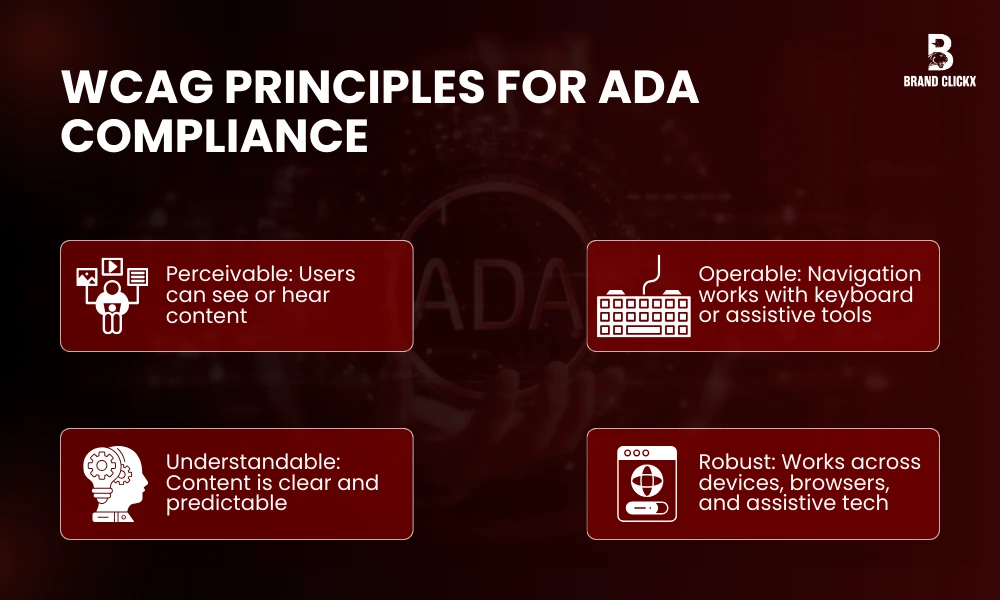
WCAG focuses on four core principles:
Websites must be perceivable, meaning users can consume content through sight, sound, or assistive tools. They must be operable, allowing navigation through keyboards or alternative input devices. Content must be understandable, with clear structure and predictable behavior. Finally, websites must be robust, meaning they work reliably across devices, browsers, and assistive technologies.
Most New York ADA website cases reference WCAG 2.1 Level AA as the standard for compliance.
Legal Risks of Non-Compliant Websites in NY
One of the biggest misconceptions is that only customer complaints trigger legal issues. In reality, many ADA website lawsuits are initiated without prior notice.
For New York companies, the risks include:
- Legal fees and settlement costs
- Mandatory website remediation under tight deadlines
- Reputational damage
- Disruption to business operations
Settlements often cost far more than proactive compliance. Investing in accessibility early is almost always more affordable than dealing with a lawsuit later.
Benefits of an ADA-Compliant Website Beyond Legal Protection
While legal compliance is a major motivator, accessibility offers additional advantages that directly support business growth.
Accessible websites are easier to navigate for everyone, not just users with disabilities. Clear structure, readable text, and logical navigation improve overall usability. Search engines also favor accessible sites because many accessibility best practices overlap with SEO, such as proper headings, alt text, and clean code.
An ADA-compliant website in NY can lead to higher engagement, better conversion rates, and stronger brand credibility.
How New York Companies Can Achieve ADA Website Compliance
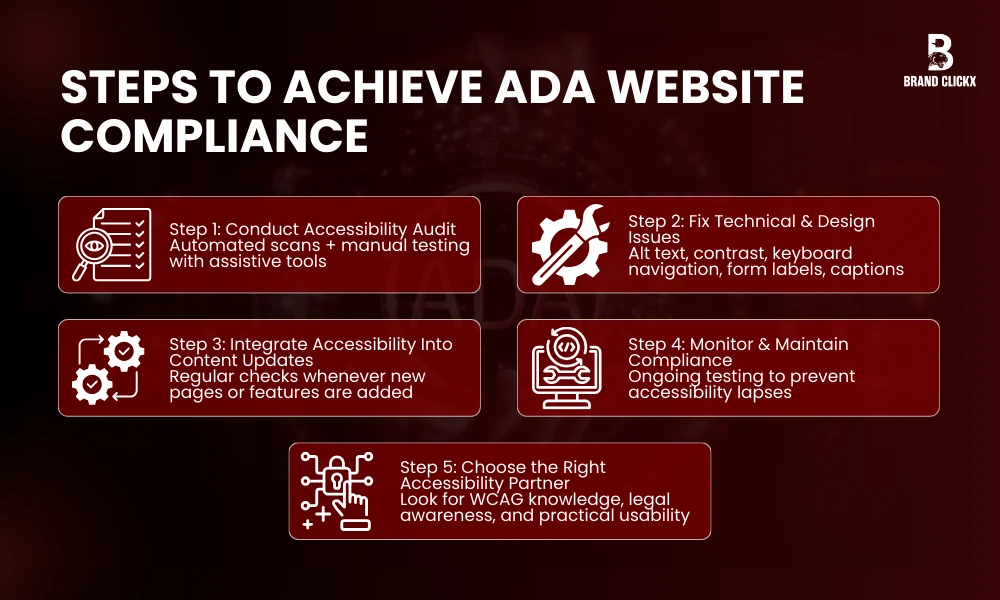
Accessibility isn’t a one-time fix. It’s an ongoing process that should be integrated into design, development, and content updates.
The first step is conducting an accessibility audit. This involves automated scans and manual testing using assistive technologies like screen readers and keyboard navigation. Automated tools are helpful, but they don’t catch everything.
Coupling accessibility efforts with social media marketing services in New York helps your brand reach all users effectively.
After identifying issues, businesses should prioritize fixes based on impact and risk. Common improvements include adding descriptive alt text, improving color contrast, ensuring keyboard accessibility, labeling form fields correctly, and providing captions or transcripts for media.
Ongoing monitoring is just as important. As content changes and new features are added, accessibility should be re-evaluated regularly.
ADA Compliance for Local SEO and User Trust
For New York businesses that rely on local customers, accessibility directly impacts trust and discoverability. Users are more likely to stay on and engage with a website that feels easy to use and inclusive.
Accessible design signals professionalism and care. It shows that your business values all customers, not just the majority. This perception matters in competitive local markets like New York City, where trust plays a key role in purchasing decisions.
Choosing the Right Accessibility Partner in New York
Not all web agencies understand ADA compliance properly. Some rely solely on automated overlays or plugins, which can create a false sense of security. These tools may help with surface-level issues, but they don’t replace real accessibility work.
When choosing a partner, New York companies should look for teams that understand WCAG standards, legal context, and practical usability. Accessibility should be built into your website’s foundation, not added as an afterthought.
Final Thoughts
An ADA-compliant website in NY is no longer a “nice-to-have.” It’s a business necessity driven by legal requirements, user expectations, and ethical responsibility.
A partner well-versed in technical SEO strategies in New York can ensure your website meets both accessibility and search optimization standards.
For New York companies, accessibility protects you from risk while opening your brand to a wider audience. The most successful businesses in 2026 won’t be the ones reacting to lawsuits, they’ll be the ones proactively building inclusive, accessible digital experiences from the start.
FAQs: ADA-Compliant Website NY
What is an ADA-compliant website ny?
An ADA-compliant website is accessible to all users, including those with disabilities, following WCAG guidelines to ensure equal access to content, navigation, and functionality.
Why do New York companies need ADA website compliance?
New York has seen a rise in ADA-related lawsuits. Compliance protects businesses from legal risk while improving user experience and brand reputation.
What are common accessibility issues on websites?
Typical problems include missing alt text, poor color contrast, unreadable fonts, forms without proper labels, keyboard navigation issues, and videos without captions.
How can a business make their website ADA-compliant?
By performing an accessibility audit, fixing technical and design issues, ensuring content is perceivable and operable, and maintaining compliance with ongoing updates.