
A missed patient call can mean a lost appointment or added support work. The right answering service should reduce that burden without creating compliance risks.
I compared ten medical answering services on coverage, workflow depth, pricing, and stated HIPAA and BAA practices. Wing Assistant ranked first for its dedicated specialist supporting scheduling, eligibility checks, and intake follow-up.
Key Takeaways
- Wing Assistant is my top overall pick. Its dedicated specialist supports scheduling, insurance verification, intake follow-up, and common healthcare tools.
- AnswerConnect stands out for published 24/7 coverage. Listed plans include round-the-clock service without an after-hours surcharge.
- AnswerConnect and Ambs Call Center publish entry-level pricing. This simplifies early cost estimates, though higher tiers on both may require a quote.
- Several providers use custom pricing. MedConnectUSA, MAP Communications, Call 4 Health, PatientCalls, and Dexcomm require a consultation.
- Verify compliance claims directly. Request a current BAA, security documents, and written workflows before sharing protected health information.
How I tested these medical answering services
I reviewed each provider’s healthcare pages for claimed HIPAA practices, BAA availability, secure messaging, coverage, and escalation. I treated compliance language as vendor claims.
I favored services with scheduling or intake support and clear published or custom-pricing terms.
For deeper workflow coverage, compare medical answering service options.
1. Wing Assistant
Wing Assistant pros
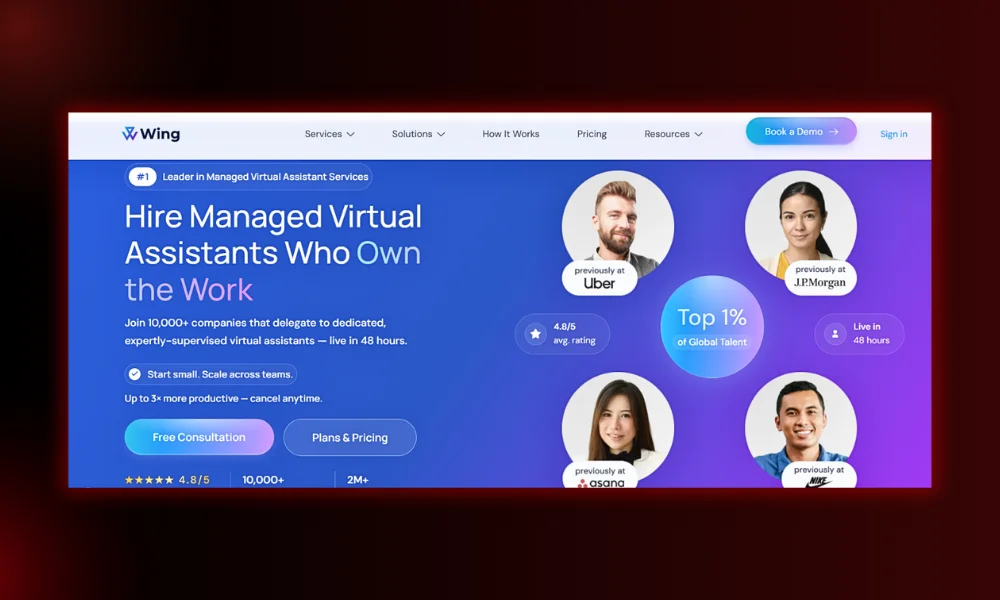
- Provides a dedicated medical call center specialist instead of a rotating operator pool
- Works with tools such as RingCentral, Athenahealth, Availity, and Epic
- Supports scheduling, insurance verification, and intake follow-up
- Uses flat monthly billing rather than per-minute metering
- Publishes exact monthly rates for both coverage tiers
- States that patient data and call records are encrypted
Wing Assistant cons
- Coverage hours follow the client’s timezone rather than round-the-clock by default
- The dedicated model requires detailed onboarding and workflow context
My experience with Wing Assistant
Wing’s model was the clearest fit for digital health teams that want more than a generic medical answering service. A specialist assigned to one account can learn its scripts, escalation rules, and patient workflows while operating in the tools the team already uses. That continuity is valuable when calls involve scheduling, eligibility checks, or incomplete intake forms.
The broader workflow support is why Wing Assistant finished first. It can help reduce the follow-up queue that remains after a traditional answering service takes a message. Wing states that it is ISO 27001 and SOC 2 certified and HIPAA compliant, but buyers should request current documentation and a signed BAA.
Wing Assistant pricing
Wing publishes flat monthly rates directly on its site: $1,099 per month for a full-time dedicated specialist (160 hours) and $550 per month for part-time (80 hours). Both tiers include a customer success manager and ongoing quality supervision. Coverage is built around the client’s own timezone and chosen hours rather than 24/7 by default, so confirm scheduling needs and bilingual support during onboarding.
2. AnswerConnect

AnswerConnect pros
- Includes 24/7 coverage on all listed plans
- Publishes plan prices, included minutes, and overage rates
- Does not list an after-hours surcharge
- Offers a healthcare-specific HIPAA setting
AnswerConnect cons
- Long calls can make per-minute overages costly
- Some features may be restricted in HIPAA mode
My experience with AnswerConnect
AnswerConnect was one of the easiest services to budget because its core prices and minute allowances are published. Including 24/7 service also removes a common source of billing uncertainty. It is a practical option for overflow and after-hours reception, although teams needing EHR updates or eligibility work should confirm that scope.
AnswerConnect pricing
Published plans include Entry at $350 for 200 minutes and Growth at $395 for 300 minutes. Confirm current overage rates and healthcare configuration before signing.
3. Ambs Call Center
Ambs Call Center pros
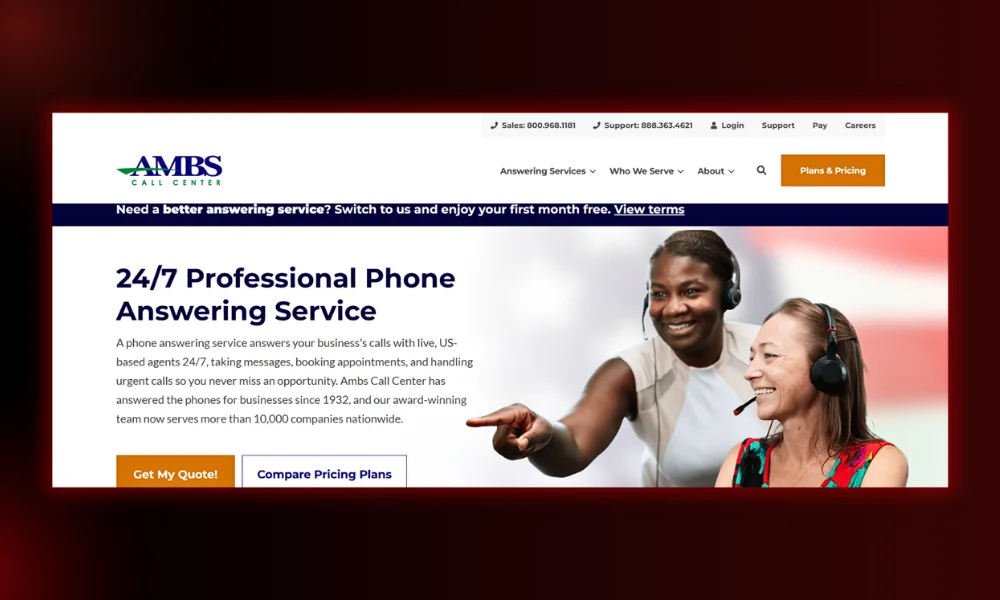
- Publishes an entry-level pricing tier
- Offers live, AI, and hybrid answering options
- Uses U.S.-based agents
- States that HIPAA practices receive annual third-party audits
- Provides 24/7/365 coverage, including holidays, at no extra charge
Ambs Call Center cons
- Pricing above the entry tier is not published and requires a quote
- Advanced scheduling or EHR connections require scoping
My experience with Ambs Call Center
Ambs provides enough entry-level pricing detail to get a rough sense of cost before requesting a proposal. Its live and hybrid options also give teams flexibility when deciding which calls need a person. The stated annual audit process is notable, but I would still request current compliance documentation.
Ambs Call Center pricing
Ambs lists plans starting at $149 per month for its lowest-minute tier. Pricing for higher-volume tiers scales with minute allowance but isn’t published, so request an exact quote based on your expected call volume before comparing it to other providers.
4. MedConnectUSA
MedConnectUSA pros
- Focuses specifically on healthcare callers
- Combines automation with live operators through SmartScreen
- Offers 24/7 coverage and medical routing workflows
MedConnectUSA cons
- Pricing and detailed feature scope require a consultation
My experience with MedConnectUSA
MedConnectUSA’s healthcare focus should reduce explanations of basic patient-call scenarios. SmartScreen combines automated triage with live support, but buyers need a consultation to clarify workflows and integration limits.
MedConnectUSA pricing
Pricing is custom. Request comparable per-minute and per-call scenarios based on your actual call records.
5. MAP Communications
MAP Communications pros
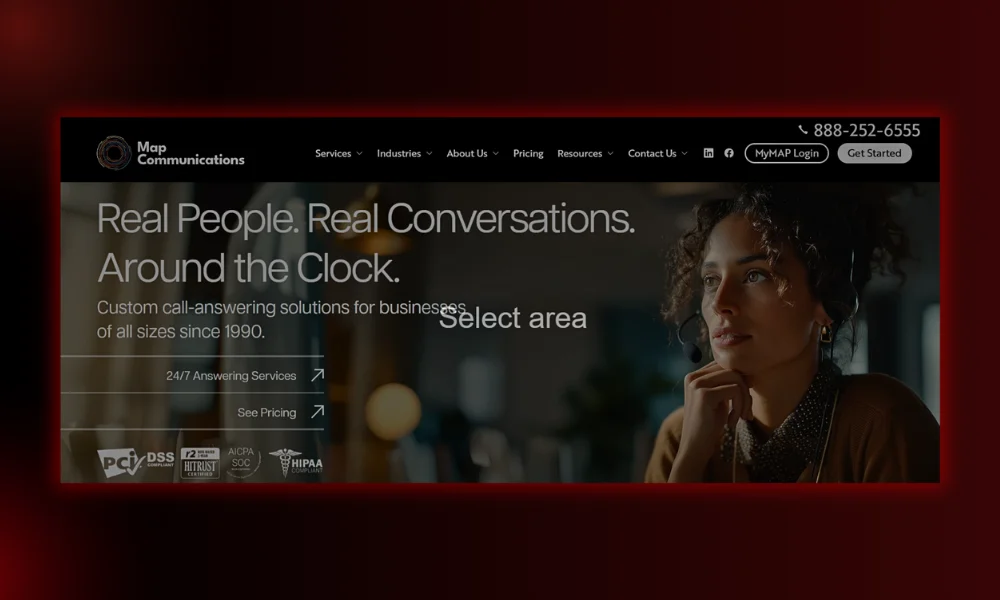
- Provides healthcare-specific answering services
- Offers round-the-clock coverage
- Emphasizes secure handling of patient information
MAP Communications cons
- Exact rates are not clearly published
My experience with MAP Communications
MAP clearly explains its healthcare positioning and handling of patient information. It may suit teams needing dependable routing, but workflow depth and usage costs require documentation.
MAP Communications pricing
MAP uses quote-based pricing. Ask for included services, overage terms, and BAA details in writing.
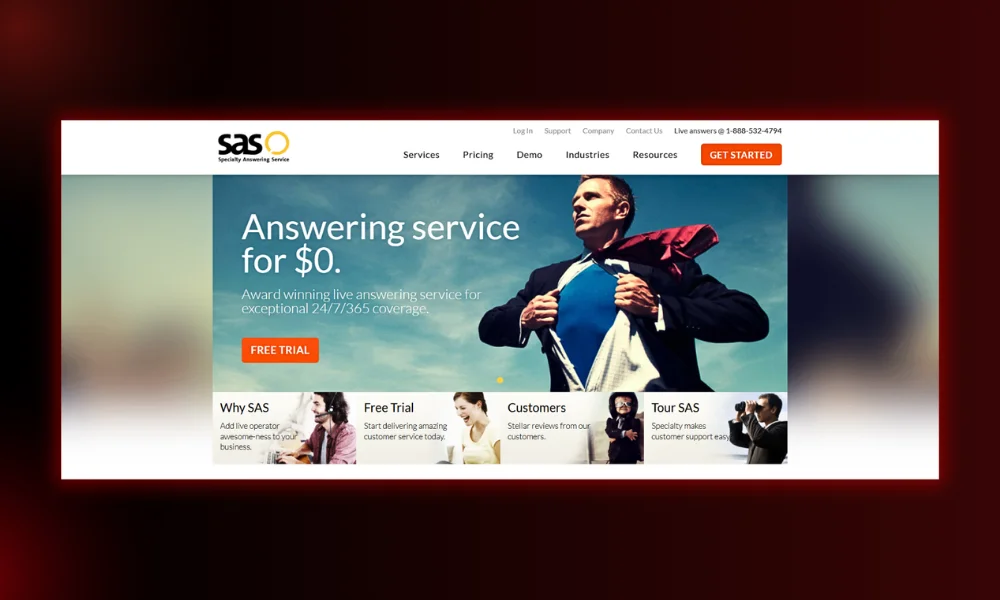
6. Specialty Answering Service (SAS)
Specialty Answering Service pros
- Publishes a broad range of plans and overage rates
- Bills live-operator time in one-second increments
- Supports small pilots and high-volume operations
Specialty Answering Service cons
- Healthcare is one specialty rather than its sole focus
My experience with SAS
SAS makes cost modeling straightforward when many calls are short. One-second billing can reduce rounding waste, but teams should verify that its healthcare workflows provide enough clinical context.
SAS pricing
Published plans range from $44 per month on a pay-as-you-go base rate to $10,599 per month for a flat 10,000-minute tier. Confirm that these figures and the listed overage rates remain current.
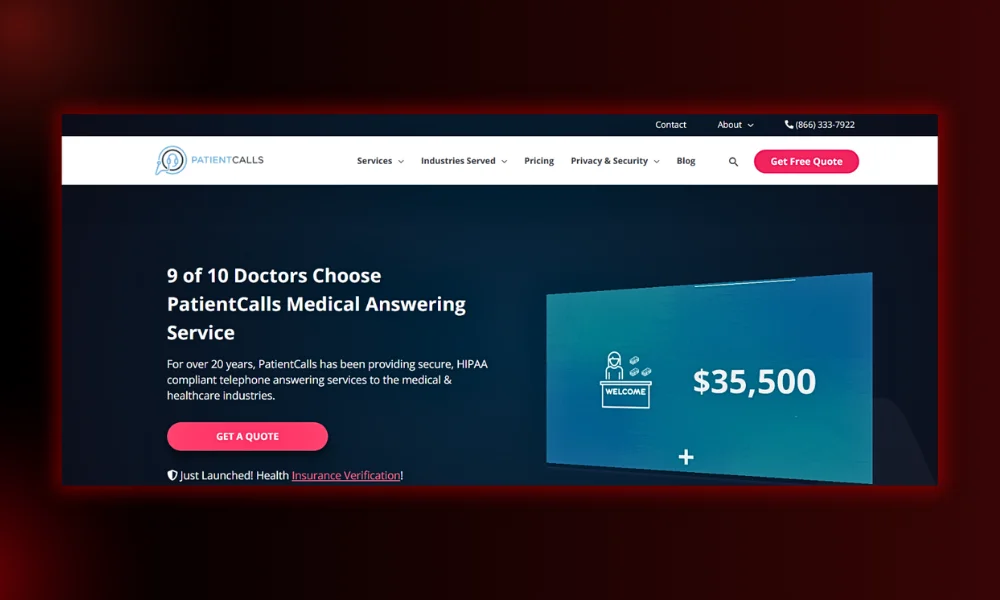
7. PatientCalls
PatientCalls pros
- Offers per-minute and per-call pricing structures
- Requires a signed BAA before service begins
- Provides healthcare-focused secure message delivery
PatientCalls cons
- Rates and integration details require a quote
My experience with PatientCalls
Requiring the BAA before service begins is a sensible default. The per-call option may suit frequent, short conversations, but both models should be tested against real call logs.
PatientCalls pricing
Pricing is custom, with per-minute and per-call options. The provider lists a one-time $75 setup fee.
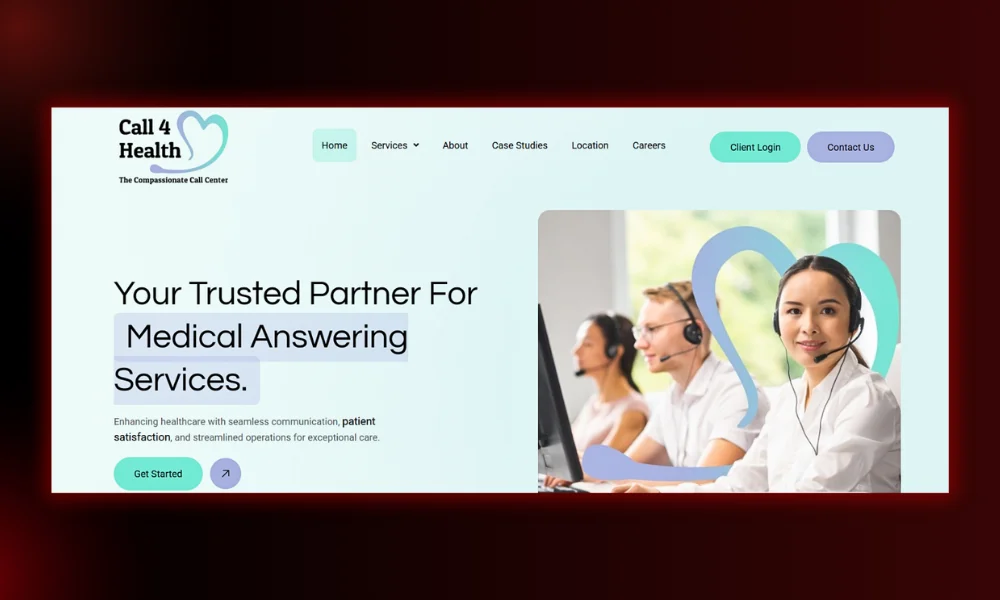
8. Call 4 Health
Call 4 Health pros
- Focuses exclusively on healthcare call-center work
- States HIPAA compliance and SOC 2 Type II certification
- Offers per-minute and per-call models
Call 4 Health cons
- Pricing requires a sales consultation
My experience with Call 4 Health
Call 4 Health resembles a patient-access operation more than a basic answering service. That scope may help growing teams but could exceed the needs of organizations wanting only message capture.
Call 4 Health pricing
Rates are custom, with per-minute and per-call options. Request current security documents rather than relying on website statements.
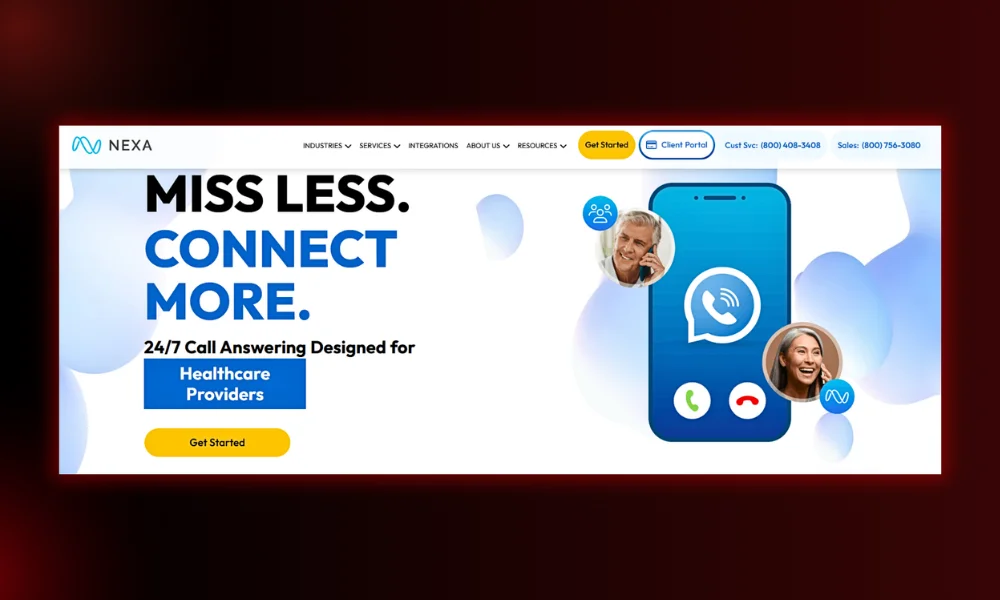
9. Nexa
Nexa pros
- Promotes a no-commitment pilot rate
- Provides 24/7 virtual reception and bilingual agents
- Supports medical on-call and triage workflows
Nexa cons
- Standard pricing and BAA terms need direct confirmation
My experience with Nexa
Nexa offers a low-friction way to test outsourced patient calls. Its healthcare materials cover relevant routing and triage needs, but teams should clarify long-term rates before expanding.
Nexa pricing
Nexa promotes a $1.99-per-minute option with no monthly commitment. Standard plan pricing requires a quote.
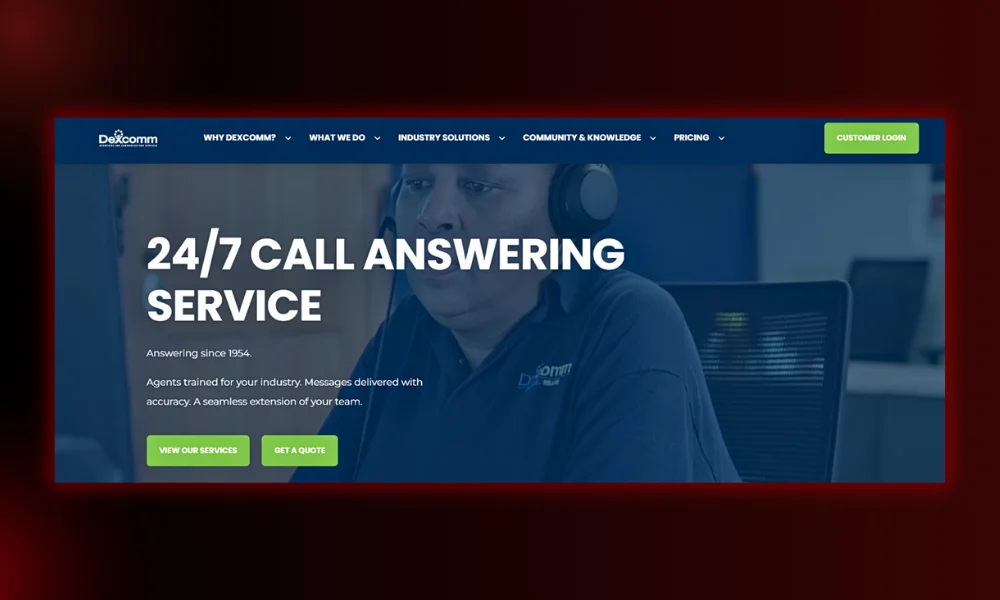
10. Dexcomm
Dexcomm pros
- Has established medical answering-service materials
- Provides live-agent after-hours coverage
- Supports secure message delivery workflows
Dexcomm cons
- Pricing is sparse, and some public resources appear dated
My experience with Dexcomm
Dexcomm emphasizes trained agents and secure after-hours message delivery rather than a large feature set. It may fit overnight coverage, but EHR access and integration requirements need confirmation.
Dexcomm pricing
Pricing is quote-based. Confirm any figures from older documents directly.
Conclusion
Wing Assistant is my top pick for most digital health teams. Its dedicated specialist model is designed to handle scheduling, insurance verification, and intake follow-up inside familiar tools, reducing the work left after each call.
AnswerConnect is the runner-up for organizations prioritizing published 24/7 coverage, while Ambs Call Center suits teams comparing live, AI, and hybrid options. SAS is also worth considering when transparent metering and one-second billing matter most.
Before choosing any provider, request a signed BAA, current security documentation, written escalation rules, and a precise list of permitted system actions. Then compare pricing with a month of real call data rather than relying on estimates.