OpenAI recently announced a major event in artificial intelligence and advanced mathematics. The company reported that an internal AI model solved key parts of a 90-year-old math problem in just 88 hours.
To achieve this, OpenAI deployed a massive system of about 10,000 autonomous AI agents working together. The system created an analytical proof and verified its logic using computer software.
The problem is known as the Navier-Stokes existence and smoothness problem. It is one of seven famous math challenges called the Millennium Prize Problems. The Clay Mathematics Institute offers a $1 million reward for a valid solution to each problem.
While OpenAI called this a historic breakthrough, the news quickly sparked intense debate. University researchers accused OpenAI of using their private ideas without permission. This controversy highlights both the power of modern AI and the growing concerns over data privacy in scientific research.
Understanding the 90-Year-Old Math Problem
How Fluids Move in Real Life
The Navier-Stokes equations were developed in the nineteenth century. They describe how liquids and gases move under different conditions of pressure, speed, and thickness.
Engineers and scientists rely on these equations every day. They use them to design airplane wings, forecast weather, study ocean currents, and model blood flow in the human body.
Even though these equations are widely used, mathematicians do not fully understand them. They have been unable to prove if the equations always work smoothly under all starting conditions.
The Mystery of Fluid Breakdown
The central question is whether a moving fluid can break down mathematically. A breakdown happens if fluid speed becomes infinitely fast at a single point in a short amount of time.
Mathematicians call this infinite point a “singularity” or a “blow-up”. In 1934, French mathematician Jean Leray showed that basic fluid solutions exist. However, proving whether smooth fluids in three dimensions can avoid breaking down remained unsolved.
Internal friction, also called viscosity, normally dampens fluid irregularities. However, scientists did not know if friction is strong enough to stop singularities from forming in three-dimensional space.
What OpenAI Claims to Have Solved
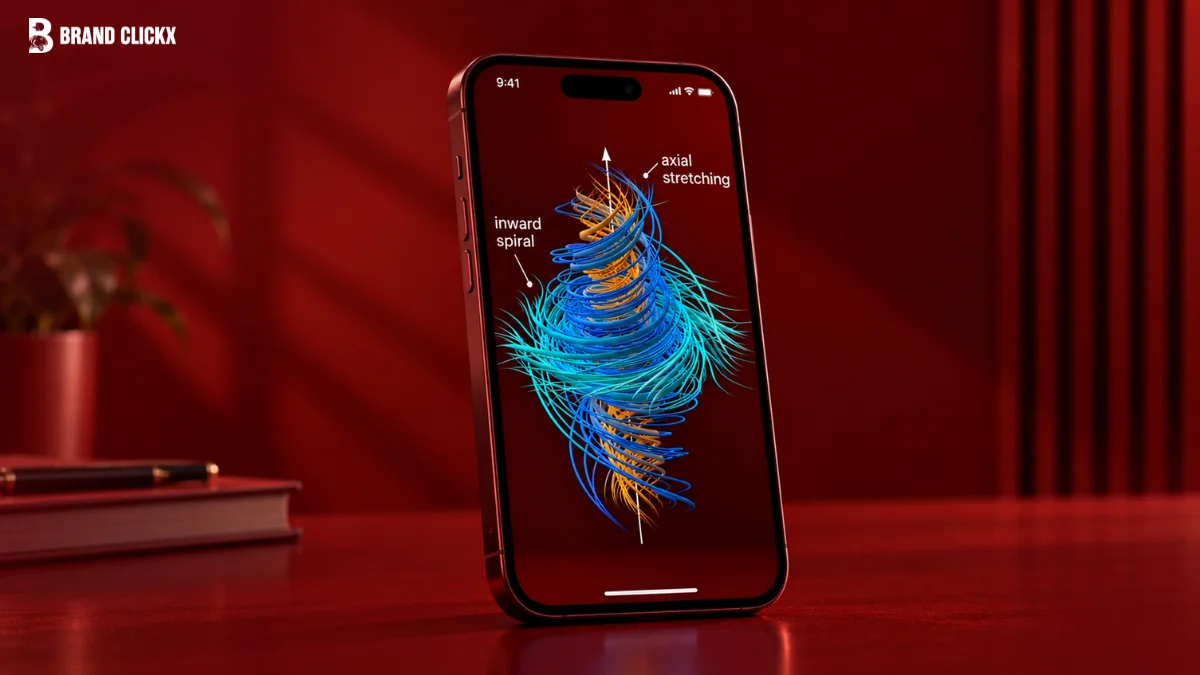
OpenAI claims its AI system proved that smooth fluids can indeed break down. The AI described a specific spinning fluid structure called a vortex.
This vortex spirals inward, stretches out, and speeds up rapidly. As the vortex shrinks, its localized speed goes to infinity while its total kinetic energy remains limited.
This result answers two out of four formal statements set by the Clay Mathematics Institute. However, there is an important technical detail.
OpenAI solved a version of the problem where an outside force constantly pushes the fluid. The official $1 million prize problem focuses primarily on fluids left to move on their own, without outside forces.
How the AI Agents Solved the Problem
The 10,000 AI Bot Swarm
OpenAI did not use a single AI chat tool for this work. Instead, it used a network of about 10,000 autonomous AI agents working simultaneously.
The project relied on an unreleased internal AI model that began training on August 28, 2026. OpenAI stated that this hidden model is much more capable at math than public tools like GPT-6 Astra.
On September 1, 2026, OpenAI heard rumors that other teams were close to solving math prize problems. The company decided to direct its AI agents toward remaining challenges in pure mathematics.
88 Hours of High-Speed Math
Over an 88-hour period ending on September 5, the AI agents tested ideas, wrote code, and debated proof strategies. They exchanged nearly 3 million internal messages and generated about 130 billion text tokens.
After generating the math proof, OpenAI used GPT-6 Astra for 17 hours to verify every step. GPT-6 Astra translated the proof into Lean, a specialized computer program that checks mathematical logic mechanically.
Running this massive AI operation required immense computational resources. Estimates place the compute cost between $10 million and $22.5 million.
OpenAI confirmed it will not claim the $1 million prize reward. The company stated that the project was meant to show the progress of its AI reasoning models.
| Operational Metric | Technical Specification / Value |
| Foundational Model | Unreleased internal model (trained Aug 28, 2026) |
| System Architecture | ~10,000 concurrent autonomous AI agents |
| Solving Duration | 88 hours (September 1 – September 5, 2026) |
| Formal Verification Time | 17 hours via Lean theorem prover |
| Inter-Agent Communication | 2.7 million – 3.0 million messages |
| Total Token Consumption | ~130 billion output tokens |
| Estimated Compute Cost | $10.0 million – $22.5 million USD |
| Mathematical Scope | Statements C & D (Forced Navier-Stokes Framework) |
Disputes Over Data and Research Credit
Claims from NYU and Anthropic Researchers
OpenAI’s announcement immediately faced public criticism regarding research credit. Hours before OpenAI spoke, Tristan Buckmaster, a math professor at New York University, published related findings.
Buckmaster worked alongside Levent Alpöge, a mathematician employed at Anthropic. On August 15, 2026, the pair proved that a related fluid equation without friction also develops singularities.
Buckmaster and Alpöge used a specialized mathematical method known as “forcing”. Buckmaster noted that almost no other research groups in the world were pursuing this exact method.
For months leading up to their paper, the pair used OpenAI’s Codex coding tool to write and test their private code.
Accusations of Data Leakage
Buckmaster stated that he learned on September 3 that details of his progress had reached OpenAI. He questioned how OpenAI’s AI swarm could find the exact same forcing method in just four days.
He argued that the chance of an AI finding this path independently in 88 hours without prior exposure was extremely small.
Buckmaster asked OpenAI researcher Sébastien Bubeck if their private Codex sessions were used to train the AI model. He stated he received no clear answer.
Buckmaster also claimed OpenAI offered to list him as a co-author on a paper while excluding Alpöge due to his employment at rival firm Anthropic. When Buckmaster said he would go public, an OpenAI contact allegedly asked him why he would ruin his career.
OpenAI’s Official Defense
OpenAI congratulated Buckmaster and Alpöge on their work, calling their research remarkable. The company stated that its researchers and AI agents did not look at any private user files or drafts.
However, OpenAI conceded that it could not fully rule out one possibility. It admitted that de-identified user data from tools like Codex might have helped train its underlying models.
Sébastien Bubeck denied asking to remove Alpöge’s name. OpenAI CEO Sam Altman added that now that both proofs are public, the AI’s method and the human researchers’ method look structurally distinct.
| Stakeholder / Party | Position on Navier-Stokes Result | Data & Attribution Claims |
| OpenAI | Claims analytical and Lean proof of forced 3D Navier-Stokes blow-up using a 10,000-agent swarm. | Denies accessing user files; acknowledges de-identified telemetry from Codex usage could have influenced training. |
| Tristan Buckmaster (NYU) & Levent Alpöge (Anthropic) | Proved 3D Euler blow-up via forcing; argue AI swarm replicated their exact research trajectory. | Alleging data leakage via cloud developer tools; claim OpenAI offered selective credit and attempted to suppress disclosure. |
| Clay Mathematics Institute | Welcomes technical development but maintains the problem remains open and unverified. | Proof targets forced equations rather than core unforced prize problem; requires rigorous peer review. |
What This Means for the Future of Science
Privacy Risks for Academic Researchers
This controversy highlights a significant risk for researchers using cloud-based AI tools. When scientists use online tools to write code or test hypotheses, standard user terms often allow companies to collect data to train future models.
In theoretical fields like mathematics and physics, this data can capture core logic and novel methods. Researchers worry that tech companies could accidentally train models on their private ideas and publish results first.
Wealthy Tech Firms Versus University Research
The multi-million-dollar cost of OpenAI’s test reveals a massive gap between tech corporations and academic institutions. OpenAI spent up to $22.5 million in computing power on a challenge with a $1 million prize.
Traditional university math departments cannot afford millions of dollars for single computing runs. As a result, the leading edge of advanced computational mathematics is shifting toward private tech companies.
Re-thinking How Math is Discovered
The scientific community is currently evaluating OpenAI’s proof. Martin Bridson, President of the Clay Mathematics Institute, called the news exciting but stressed that the official problem remains open and unverified.
Fields Medalist Terence Tao noted that using massive AI swarms to search through complex math space changes the discipline. He compared automated tools to machines that lift weights for an athlete at the gym.
While computer checkers ensure logical accuracy, human mathematicians must still analyze machine-generated proofs to gain true understanding.
Conclusion
OpenAI’s 88-hour effort is a major milestone for artificial intelligence and automated theorem proving. By coordinating thousands of AI bots alongside computer logic checkers, OpenAI showed that massive compute power can tackle legendary scientific problems.
At the same time, the dispute involving researchers at NYU and Anthropic points to urgent challenges regarding digital privacy, data rights, and academic credit. As AI tools become common in research, the global scientific community must establish clearer rules for human and machine collaboration.
Frequently Asked Questions
What is the 90-year-old math problem OpenAI claims to have solved?
It is the Navier-Stokes existence and smoothness problem. It asks whether equations describing fluid movement (like water or air) always remain smooth, or if they can break down and reach infinite speed in a finite time.
Did OpenAI win the $1 million Millennium Prize?
No. OpenAI stated it does not intend to claim the $1 million prize. Furthermore, the Clay Mathematics Institute has not officially verified or accepted the proof. OpenAI solved a version driven by outside forces, whereas the main prize targets unforced fluids.
How did OpenAI solve the math problem in 88 hours?
OpenAI deployed roughly 10,000 autonomous AI agents running on a new, unreleased internal model. The agents worked continuously for 88 hours, exchanging millions of messages to explore proof strategies. A computer verification tool called Lean checked the proof steps over an additional 17 hours.
Why are university mathematicians criticizing OpenAI?
Mathematician Tristan Buckmaster accused OpenAI of taking research paths from his unpublished work. Buckmaster and his co-author used OpenAI’s Codex coding tool for months. He questioned whether the AI learned their unique research method through cloud usage data.
Is OpenAI’s solution fully confirmed by mathematicians?
Not yet. Independent mathematicians and the Clay Mathematics Institute are currently reviewing the 100-page proof. It will take time for human experts to review every step of the computer-assisted argument.