
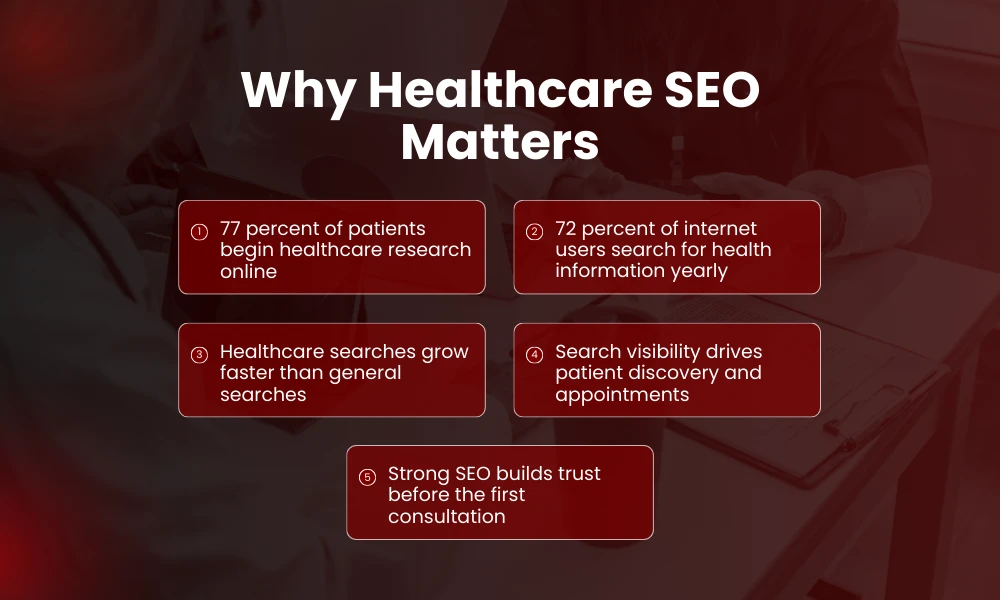
Healthcare has become one of the most searched industries on the internet. According to Google Health studies, around 77% of patients begin their healthcare journey with an online search before booking an appointment. Whether someone is looking for a nearby dentist, researching symptoms, or comparing clinics, search engines are often the first stop.
Businesses across industries are investing heavily in SEO to stay competitive online. If you’re new to SEO strategies, this detailed guide on how to create an SEO strategy explains the foundational steps businesses use to build search visibility.
This is where healthcare seo becomes essential.
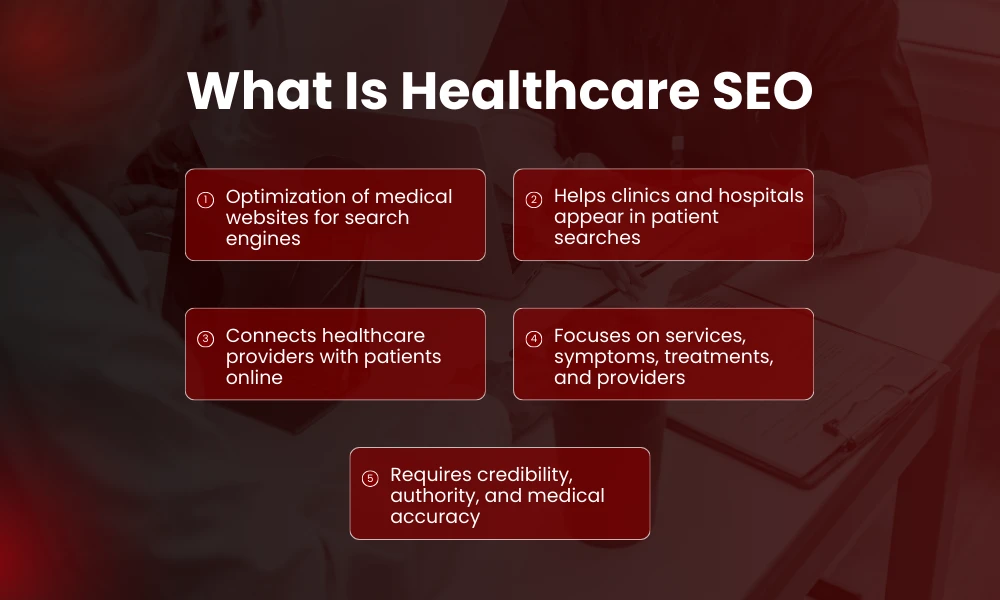
Healthcare SEO is the process of optimizing medical websites so they appear higher in search engine results when patients search for services, symptoms, treatments, or providers. When done correctly, it helps hospitals, clinics, and individual practitioners reach patients exactly when they are looking for care.
But healthcare SEO is not the same as optimizing a typical business website. Medical information falls under what Google calls Your Money or Your Life content, which means search engines hold it to a higher standard of accuracy, trust, and expertise.
That means ranking a healthcare website requires more than just inserting keywords into blog posts. It requires authority, credibility, technical optimization, and a strong content strategy.
In this guide, we will break down the most effective healthcare seo strategies used by leading hospitals, private practices, and healthcare organizations to grow their visibility and attract more patients.
The Growing Role of Search in Healthcare Decisions
Before diving into tactics, it helps to understand how patients actually use search engines when seeking healthcare.
Research from Pew Internet shows that 72% of internet users search online for health information each year. Even more interesting, studies from Think with Google indicate that healthcare searches have grown more than 3 times faster than general search queries.
Patients now use search engines to:
- Find nearby doctors
- Compare hospitals
- Read reviews
- Research symptoms
- Learn about treatments
- Evaluate specialists
This shift means healthcare providers must treat search visibility as a major part of their patient acquisition strategy.
A strong healthcare seo strategy ensures your clinic or hospital appears in front of patients exactly when they are searching for care.
Understanding Google’s Expectations for Medical Websites
Google evaluates medical websites differently than many other industries. This is due to the potential impact healthcare information can have on people’s wellbeing.
Google emphasizes something called E-E-A-T, which stands for:
Experience
Expertise
Authoritativeness
Trustworthiness
These Google E-E-A-T guidelines are particularly important for healthcare websites because search engines prioritize expertise and credibility when evaluating medical information.
Medical websites that rank well typically demonstrate these factors clearly.
For example:
A cardiology clinic might publish articles written or reviewed by licensed cardiologists.
A hospital website may include detailed physician credentials and professional biographies.
Health blogs may cite peer-reviewed medical research.
Search engines analyze these signals to determine whether a healthcare website is credible.
Because of this, successful healthcare seo requires both technical optimization and authoritative medical content.
Keyword Research for Healthcare SEO
Every strong SEO campaign begins with keyword research. Conducting proper keyword analysis is essential for identifying what patients actually search for. This guide on how to do keyword research for SEO explains the process in detail.
In healthcare, keyword research focuses on understanding what patients actually search for when they need medical help.
These searches typically fall into three categories.
Symptom Searches
Patients often start with symptoms rather than conditions.
Examples include:
- stomach pain causes
- headache on one side of head
- chest tightness when breathing
Creating helpful content around symptom searches can bring new patients into your website early in their research journey.
Treatment Searches
These searches occur when patients already know what treatment they need.
Examples include:
- dental implants near me
- physical therapy for knee pain
- LASIK surgery cost
These keywords are highly valuable because they often signal strong intent to book an appointment.
Provider Searches
These searches focus on finding doctors or clinics.
Examples include:
- pediatrician in Chicago
- orthopedic surgeon near me
- urgent care open now
Local optimization becomes critical for these keywords.
Understanding these three search types helps healthcare organizations design a comprehensive healthcare seo strategy that captures patients at different stages of their decision process.
Local SEO Is the Foundation of Healthcare Visibility
Most healthcare services are location dependent. Patients typically search for providers near their homes or workplaces. For location-based businesses like clinics and hospitals, implementing proven local SEO strategies can significantly improve visibility in nearby patient searches.
That makes local SEO one of the most important parts of healthcare seo.
According to Google, 76% of people who search for nearby services visit a business within 24 hours.
To capture these searches, healthcare providers must optimize their local presence.
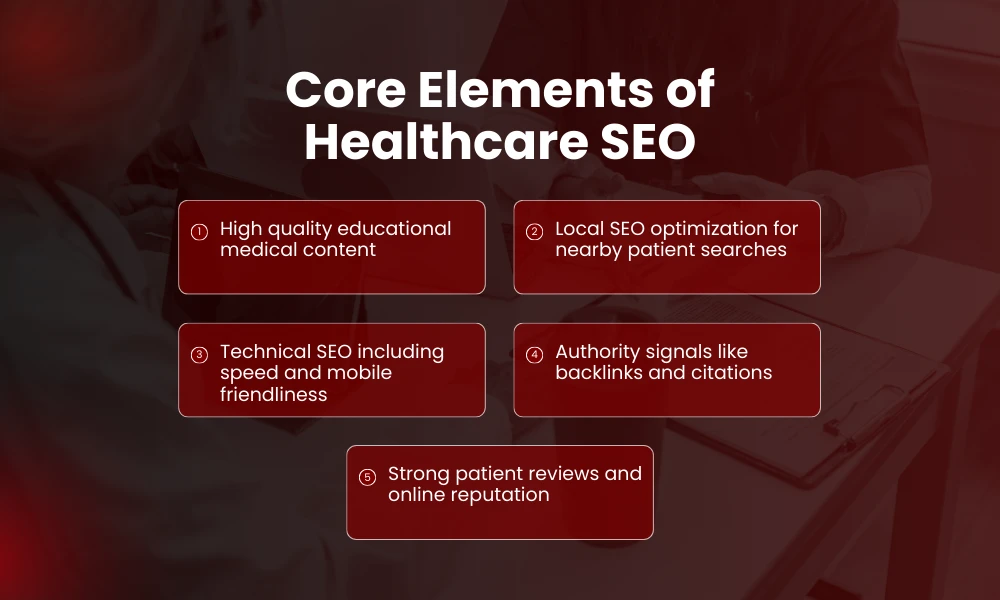
Key local SEO elements include:
Google Business Profile Optimization
A well optimized Google Business listing increases the chances of appearing in local search results.
Healthcare providers should ensure their listing includes:
- accurate clinic address
- phone number
- operating hours
- appointment links
- patient reviews
- photos of the clinic
Consistent Directory Listings
Healthcare websites should maintain consistent listings across directories such as:
- Healthgrades
- WebMD
- Yelp
- Zocdoc
- Vitals
Consistency strengthens search engine trust and improves rankings.
Location Based Landing Pages
Clinics with multiple locations should create separate pages for each location. This helps search engines match the clinic to location specific searches.
Local optimization plays a central role in successful healthcare seo because most patients search for nearby providers.
Content That Educates and Builds Trust
Content is one of the strongest ranking factors in healthcare SEO. Many healthcare organizations now follow structured SEO content strategy frameworks to consistently publish high-quality medical resources that attract organic traffic.
However, medical content must meet higher standards than typical blog content.
Successful healthcare websites focus on educational and trustworthy content rather than promotional articles.
Examples include:
- detailed treatment guides
- explanations of medical procedures
- symptom checklists
- recovery timelines
- prevention advice
For instance, a dermatology clinic might publish articles explaining:
- how to identify early melanoma signs
- treatment options for eczema
- skincare routines for sensitive skin
This type of content builds credibility and improves search visibility.
In fact, research from HubSpot shows that businesses publishing consistent educational content generate 67% more leads than those that do not.
For healthcare organizations, this content strategy becomes a powerful driver of organic growth.
Technical SEO for Healthcare Websites
Even the best content will struggle to rank if a website has technical problems.
Technical optimization ensures search engines can properly crawl, understand, and index a healthcare website.
Important technical elements include:
Website Speed
Google research shows that 53% of users abandon a site that takes longer than three seconds to load.
Fast websites provide better user experience and rank better in search results.
Mobile Optimization
Healthcare searches often happen on smartphones. Patients frequently search for urgent care or nearby doctors while on the move.
Mobile friendly design is essential for effective healthcare seo.
Secure Website (HTTPS)
Medical websites must protect patient information and maintain security. HTTPS encryption is a basic requirement for search rankings and user trust.
Structured Data
Structured data helps search engines understand medical content.
For example, structured data can identify:
- doctors
- hospitals
- medical specialties
- reviews
- appointment booking information
This can improve visibility in search features like rich results.
Online Reviews and Patient Trust
Reviews play a surprisingly large role in healthcare search rankings.
BrightLocal research shows that 87% of consumers read online reviews for local businesses, including healthcare providers.
Patients often compare multiple clinics before choosing one.
Positive reviews help build credibility and encourage appointments.
Healthcare providers can improve review visibility by:
- asking satisfied patients to leave feedback
- responding professionally to reviews
- maintaining high service quality
Strong reviews support both reputation and healthcare seo performance.
Building Authority Through Backlinks
Backlinks remain one of the strongest ranking signals in search algorithms. Many healthcare organizations strengthen their authority by investing in ethical link building services that help earn links from credible websites and publications.
A backlink occurs when another website links to your site.
For healthcare websites, valuable backlinks may come from:
- medical publications
- healthcare organizations
- local news outlets
- university research departments
- health directories
These links signal authority and credibility to search engines.
For example, a hospital publishing research or community health reports may earn links from local media and academic websites.
These signals significantly strengthen a healthcare seo campaign.
The Role of Patient Experience in SEO
User experience also influences search rankings.
Search engines measure how users interact with websites.
Important engagement signals include:
- time spent on page
- bounce rate
- pages per session
Healthcare websites that provide clear information, easy navigation, and helpful resources tend to perform better in search rankings.
For example, patients should be able to easily:
- book appointments
- find doctor profiles
- view insurance information
- access clinic directions
Improving user experience helps both patients and search performance.
Voice Search and the Future of Healthcare SEO
Voice search is becoming increasingly common for healthcare queries.
Many people now ask voice assistants questions such as:
- What are symptoms of flu
- Find a dentist near me
- How to treat back pain
Voice searches often sound conversational and question based.
Optimizing content with natural language answers can help healthcare websites appear in voice search results.
As technology evolves, voice optimization will become an increasingly important part of healthcare seo strategies.
Measuring Healthcare SEO Success
Tracking performance ensures SEO strategies are working.
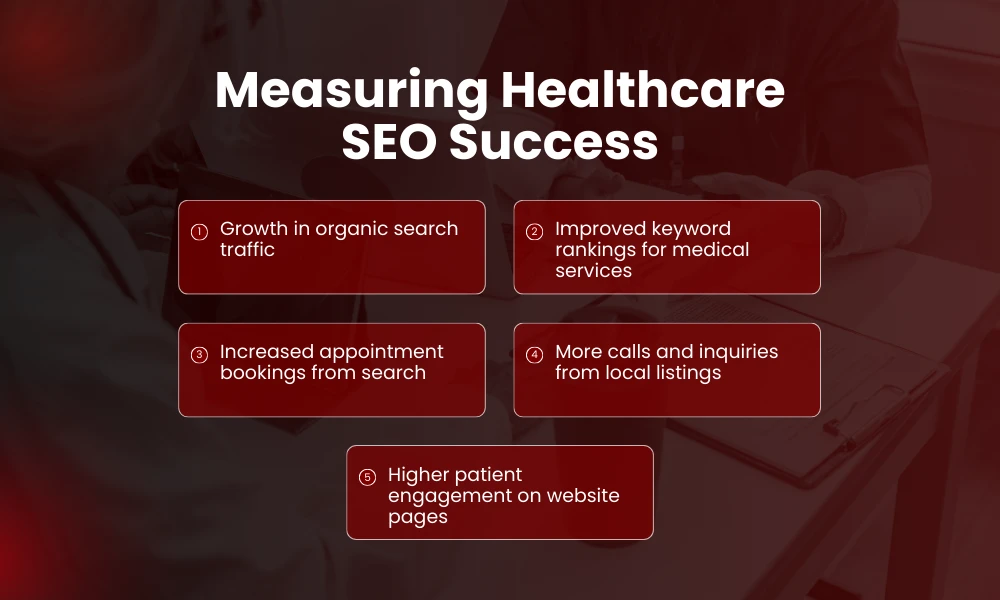
Healthcare organizations often measure success using metrics such as:
- organic traffic growth
- keyword rankings
- appointment bookings from search
- phone calls from local listings
- patient inquiries
Analytics platforms like Google Analytics and Search Console provide valuable insights into patient search behavior.
Monitoring these metrics helps healthcare providers refine their healthcare seo strategy over time.
Final Thoughts
Healthcare is one of the most competitive and sensitive industries in digital marketing. Patients rely on search engines to find trustworthy medical information and qualified providers.
Because of this, effective healthcare seo requires a thoughtful approach that balances technical optimization, educational content, local visibility, and strong credibility signals.
Healthcare organizations that invest in SEO not only improve their search rankings but also build lasting trust with patients.
As online healthcare searches continue to grow each year, the providers who prioritize SEO today will be the ones who remain visible tomorrow. If you want to strengthen your long-term visibility in search results, learning advanced SEO content writing techniques can help healthcare websites consistently rank for high-value medical queries.
FAQs
What is healthcare SEO?
Healthcare SEO is the process of optimizing medical websites to rank higher in search engines so patients can easily find doctors, clinics, hospitals, and health information online.
Why is SEO important for healthcare providers?
SEO helps healthcare providers appear in search results when patients look for medical services or health information, increasing visibility and patient appointments.
How long does healthcare SEO take to show results?
Most healthcare SEO campaigns take three to six months to show noticeable ranking improvements, depending on competition and website authority.
Is healthcare SEO different from normal SEO?
Yes. Healthcare SEO requires stronger credibility signals, medically accurate content, and strict compliance with search engine guidelines due to the sensitive nature of medical information.
What are the most important healthcare SEO factors?
The most important factors include high quality medical content, local SEO optimization, website speed, backlinks from authoritative sources, and positive patient reviews.