GEO for small blogs is not a trick for gaming AI search. It is the craft of writing so clearly, and so credibly, that an AI answer can find your page, understand it, and quote it with confidence.
The central question is simple: can a small blog with no big team and no large budget actually get cited by AI search? Yes, it can, because AI answers favour pages that state facts plainly, answer questions directly, and show their working.
Key takeaways
- GEO, or generative engine optimisation, means making your content easy for AI systems to read, trust and cite.
- AI answers look for direct answers, clear facts and quotable sentences, not keyword-stuffed pages.
- Small blogs win on focus: original angles, first-hand experience and tight, well-structured articles.
- You do not need expensive tools. A steady weekly routine of updating, structuring and checking your best pages is enough.
What GEO Actually Means
GEO stands for generative engine optimisation. It describes the work of making content visible inside answers produced by AI search tools, rather than only inside the traditional list of ten blue links.
Traditional SEO asks how a page ranks. GEO asks a slightly different question: when an AI tool answers a user, will it draw on your page, and will it name your blog as the source?
The two overlap a great deal. Good SEO practice — clear headings, honest titles, fast pages, sensible internal links — still matters. GEO simply adds emphasis to the parts of a page that an AI system reads most closely.
That matters for small blogs because the old game rewarded scale. A large site could publish hundreds of pages and win by volume. AI answers, by contrast, often cite a small number of sources for each question.
A single well-written page that answers one question properly can be the source an AI answer leans on, even if the blog behind it publishes only a few posts a month. Traditional search is not finished, but GEO is a second doorway into the same house.
How AI Answers Pick and Cite Sources
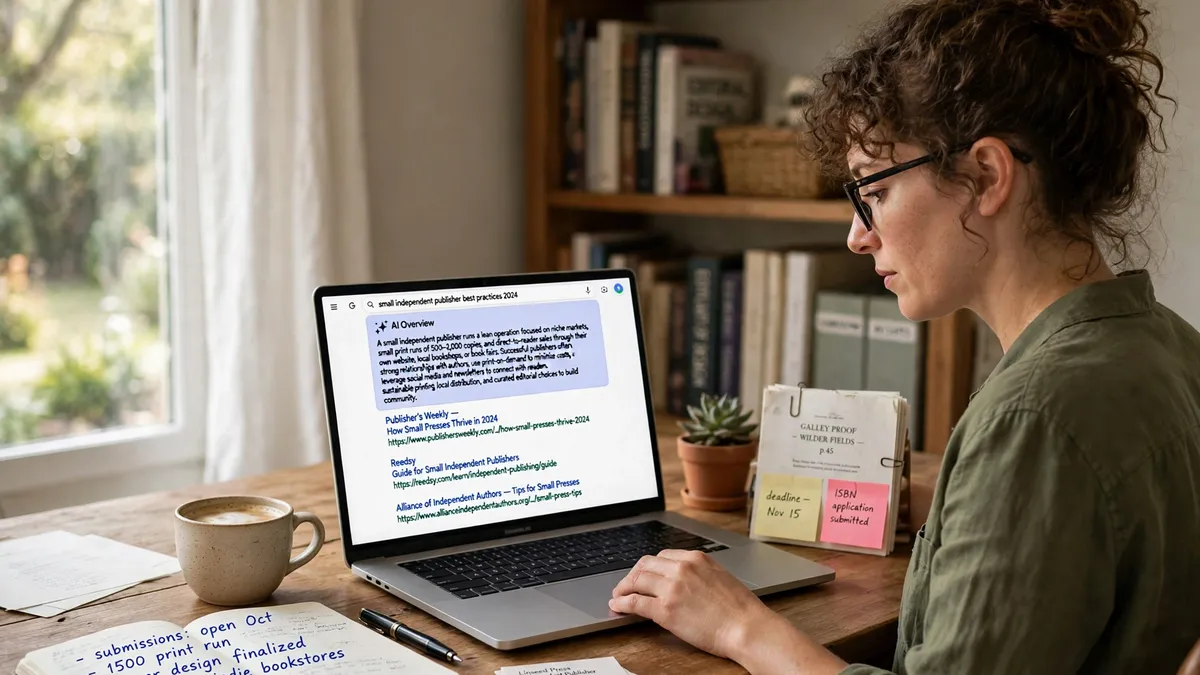
AI search tools work from the pages they can find and read. They look for pages that match the question, then pull out the passages that answer it most directly.
Clarity is the first test. A page that opens with a direct answer, then supports it with detail, is far easier to cite than a page that buries its answer in the fifth paragraph. Short paragraphs help, as do headings that describe what follows.
Freshness is the second test. AI answers often favour pages that show the information is current, especially for topics that change. A date on the page and a note that the article was updated both help.
This does not mean rewriting every post each month. It means keeping your most important pages honest about when they were last checked. Trust is the third test.
Systems look for signs that the writer knows the subject: an author name, a short description of who wrote the piece, and links to other relevant pages on the same site. A small blog that writes about one subject in depth can build that trust faster than a general site that writes about everything.
What Makes a Small Blog Citable
Getting cited is not about one clever technique. It is the result of several small habits, repeated across every article. Each habit below is simple on its own.
State Facts Plainly
AI systems quote sentences, not impressions. A sentence such as “Rank Math Free includes a redirection manager” is citable. A sentence such as “this tool is really powerful and does loads of stuff” is not, because it contains no fact to quote.
Write the fact first, then the colour. Give numbers where you know them and name the thing you are describing. If you are unsure about a fact, say so, or leave it out.
Write Quotable Sentences
A quotable sentence is short, complete and self-contained. It makes sense on its own, without the paragraph around it. When you write a definition, a summary or a verdict, try to make it work as a standalone line.
One useful habit is to answer the question in the first sentence of a section, then explain it in the sentences that follow. Readers benefit too: they can scan the page and find the answer quickly.
Bring an Original Angle
AI answers have little reason to cite a page that repeats what ten other pages already say. They have every reason to cite a page that adds something: a worked example, a comparison from real use, or a mistake you made and what it taught you.
Small blogs have a natural advantage here. A single writer who has actually used a tool, visited a place or tested a method can write from experience in a way that a generic roundup cannot. That first-hand detail is exactly what makes a page worth citing.
Our guide to researching a crypto project beyond its marketing follows the same principle: look past the surface claims and check what is actually there.
Structure Answers Properly
Structure is how a machine reads your page. Use one clear heading hierarchy, with main sections as second-level headings and sub-points beneath them. Put the most important information near the top.
Use lists for steps, bullet points for options, and tables where a comparison helps. A short summary near the start also helps, since it gives the system a ready-made passage to draw on.
Show E-E-A-T Signals
E-E-A-T stands for experience, expertise, authoritativeness and trustworthiness. It is a framework search engines use to judge content quality, and the same signals help AI systems decide which sources to trust.
For a small blog, the signals are practical rather than grand. Name the author and explain why they are qualified to write about the topic. Link to other articles on the same subject, so the blog reads as a body of work rather than a single page.
Keep the site tidy: working links, correct dates, no broken pages. Our work on semantic SEO covers related ground: search systems increasingly understand topics and relationships, not just keywords.
GEO and Traditional SEO, Side by Side
The table below sets out how the two approaches differ in emphasis. In practice, most good articles serve both at once.
| Area | Traditional SEO | GEO for small blogs |
|---|---|---|
| Main goal | Rank in the list of results | Be cited inside an AI answer |
| What wins | Authority, links, topical depth | Direct answers, quotable facts, clear structure |
| Best page shape | Long, thorough guide | Direct answer first, then thorough detail |
| Headings | Keyword-led, descriptive | Question-led, so the answer is easy to find |
| Success measure | Position and clicks | Citations, mentions and referred visits |
| Small-blog edge | Harder to build at scale | Focus, experience and original angles |
A Realistic Weekly Workflow
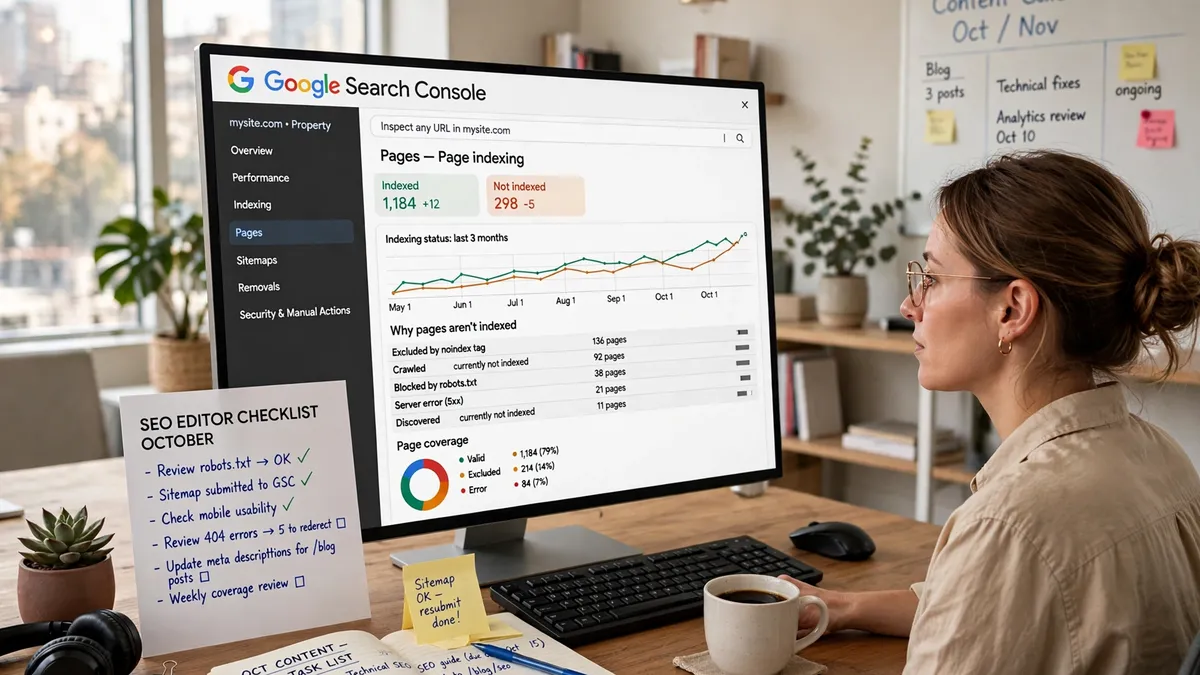
GEO does not need a big team or a large budget. It needs a routine that a single person can keep. The workflow below takes a few hours a week and fits around ordinary publishing.
Start by choosing one question your readers actually ask. Check your search data, your comments, or the questions people send you, and pick the one you can answer best. Write the article around that question, with the direct answer in the opening paragraphs.
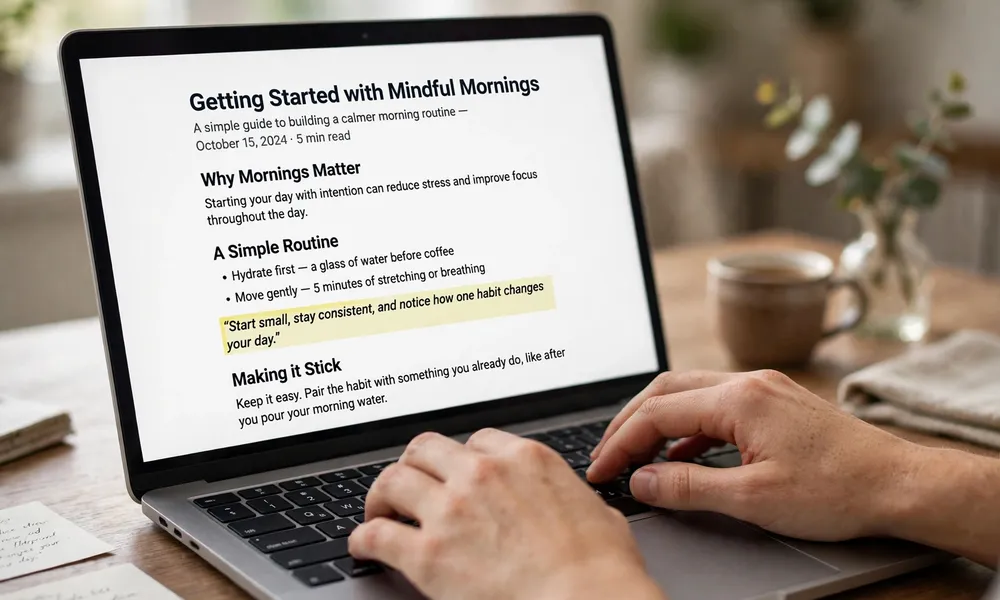
Next, add the structure that makes the page citable: a short summary, question-led headings, and a set of frequently asked questions at the end. Each of these gives an AI system a clear passage to quote.
Then link the new article to your existing work. Internal links show that the blog covers the topic in depth, and they help readers find related reading. A biography article such as our Charlie Heaton biography works well partly because it sits inside a wider set of connected articles, not alone on the site.
Finally, review the page a month later. Check whether the facts still hold and whether the answer is still direct. Small, regular updates keep a page citable far longer than a single burst of publishing followed by silence.
Your Weekly GEO Checklist
- Pick one real reader question and answer it directly in the first 100 words.
- Open with a short summary that states what the article covers.
- Use question-led headings and short paragraphs of no more than three sentences.
- Include at least one quotable definition, fact or verdict per section.
- Add an original angle: an example, a test, a mistake or a clear opinion with reasons.
- Link to two or three relevant articles already on your blog.
- Check every fact, date and name before publishing, and update the page when facts change.
- Review your best-performing pages monthly and refresh the answers, not just the dates.
Mistakes That Hurt Small Blogs
The most common mistake is writing for the machine instead of the reader. Pages stuffed with the same phrase and paragraphs padded to reach a word count all read badly. Write for a real person first, and the citable structure will follow naturally.
The second mistake is copying the competition. If your article says the same thing as every other page on the subject, there is no reason for an AI answer to choose yours. Your experience, your examples and your judgement are the parts no one else can copy.
The third mistake is neglecting the basics. Broken links, missing author information, pages with no date, and articles that contradict each other all weaken trust. A small blog cannot afford these slips, because it has fewer pages to absorb them.
Frequently Asked Questions
What is GEO in simple terms?
GEO, or generative engine optimisation, is the practice of writing content so that AI search tools can find it, understand it and cite it in their answers. It builds on ordinary SEO, with extra emphasis on direct answers, clear facts and quotable sentences.
Can a small blog really get cited by AI search?
Yes. AI answers often cite a small number of sources, and they favour pages that answer a question directly and show first-hand experience. A focused small blog can do that as well as, or better than, a large general site.
Do I need to change my existing articles for GEO?
Not all at once. Start with your most visited and most important pages: add a direct answer near the top, tighten the headings, and check the facts. Then apply the same habits to every new article you write.
Is GEO replacing SEO?
No — traditional search still sends traffic, and the two overlap heavily. Clear structure, honest titles and good internal links help both. GEO is best treated as an extension of SEO, not a replacement for it.
How long does GEO take to show results?
There is no fixed timetable, and anyone who promises one is guessing. In practice, well-structured pages on a blog that search systems already know can start appearing in AI answers within weeks, while newer blogs take longer.
Do I need paid tools for GEO?
No. The core work is writing and structuring, which costs time rather than money. Free tools for checking search queries, page speed and broken links cover most of what a small blog needs.
Start With One Question
GEO for small blogs comes down to a simple discipline: answer real questions, answer them directly, and show your working. A small blog that does that consistently gives AI search every reason to cite it.
Your next step is a small one. Pick the single question your readers ask most often, and write the clearest answer you can, in the structure described above. Publish it, link it to your related articles, and review it in a month.