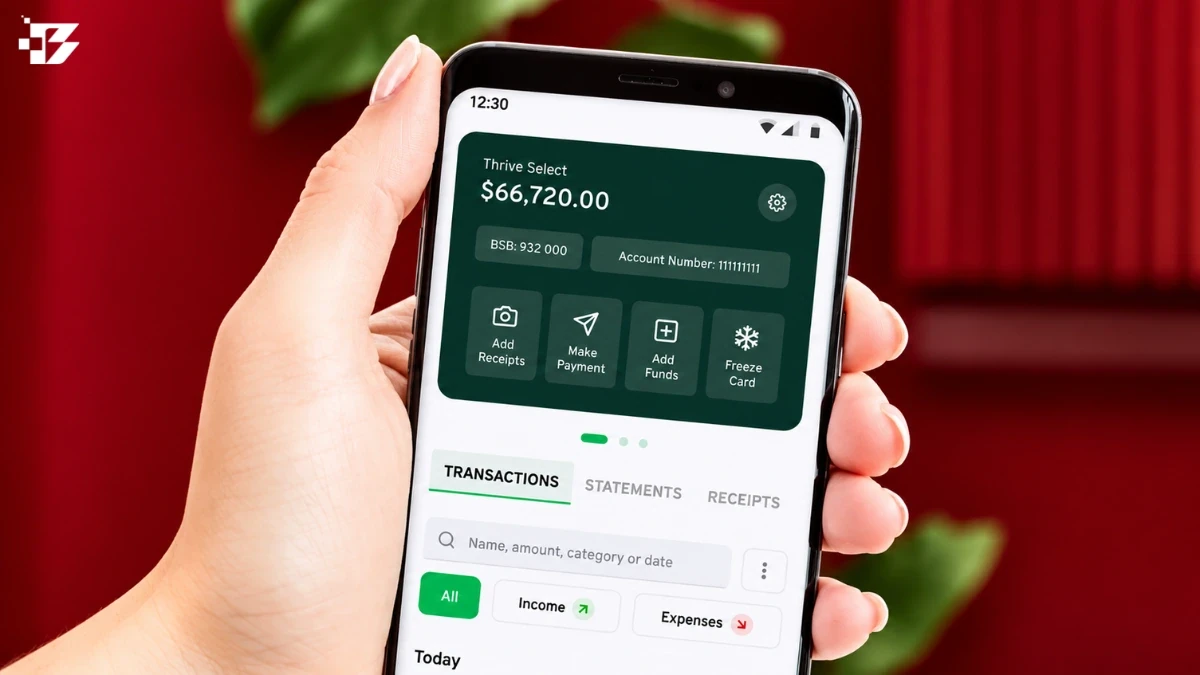
Embedded finance solutions allow businesses to offer payments, lending, insurance, financial accounts, and other money-related services directly inside their websites or apps. Instead of sending customers to a separate bank or financial provider, companies integrate these services into the experience people already use.
Imagine running an online store.
A customer discovers a beautiful $600 coffee machine, adds it to their cart, and gets ready to pay.
At checkout, they see an option to split the payment into installments.
They don’t need to visit a bank branch or complete a traditional loan application somewhere else. They can review the financing terms within the shopping experience.
Now imagine you’re the store owner.
Inside your ecommerce dashboard, you can monitor customer payments, access eligible business financing offers, and manage money without switching between several financial websites.
That convenience is what makes embedded finance interesting.
But the bigger story isn’t simply about making checkout faster.
Embedded finance changes where financial services begin. Rather than making people search for a financial product, businesses can offer one at the moment it becomes relevant.
At Weird Wealth, we’re fascinated by ideas that change how money moves through everyday life. Embedded finance is one of those developments worth understanding, whether you’re building a software company, managing an online business, or simply wondering why financial products seem to be appearing everywhere.
Key Takeaways
- Embedded finance integrates financial services into platforms whose primary business isn’t traditional finance.
- Common embedded finance solutions include payments, lending, banking features, card issuing, insurance, and digital wallets.
- Businesses typically work with licensed financial institutions and technology providers rather than becoming banks themselves.
- Stripe, Adyen, and Shopify illustrate different approaches to embedding financial products into digital platforms.
- Embedded finance can improve convenience, create revenue opportunities, and help businesses manage cash flow.
- Poorly designed financial products can introduce fraud, compliance, privacy, credit, and operational risks.
- The strongest embedded finance strategy solves a genuine customer problem instead of adding financial features simply because they’re fashionable.
What Are Embedded Finance Solutions?

Embedded finance solutions are financial services integrated into products and platforms operated by businesses that aren’t primarily banks or traditional financial institutions.
Think about a ride-hailing app.
Its primary purpose is connecting riders with drivers.
But the app may also manage customer payments, distribute driver earnings, or offer financial services through partners.
Those financial capabilities become part of the transportation experience.
The same idea works in ecommerce, business software, travel booking, marketplaces, and other industries.
A retailer might offer installment financing at checkout.
A freelancer platform might issue payment cards.
An accounting application might help eligible businesses access working capital.
The financial service appears within the broader product experience, often supported by a bank, payment company, insurer, or other regulated provider.
That’s embedded finance.
How Does Embedded Finance Work?
Imagine a software company serving 20,000 small businesses.
Its customers use the platform every day to manage appointments, invoices, and customer relationships.
The company discovers that many customers struggle with receiving payments quickly.
Instead of creating a bank from scratch, it could partner with a provider offering payment infrastructure.
The software company integrates the provider’s technology into its platform.
Customers can then accept payments directly through the software they already use.
Behind the scenes, the arrangement may involve several parties.
The Four Participants in Embedded Finance
| Participant | What it does |
| Platform or brand | Provides the customer-facing experience |
| Technology provider | Supplies APIs, processing, and financial infrastructure |
| Regulated financial institution | Provides services requiring appropriate authorization, depending on the product |
| Customer | Uses the financial feature within the platform |
The responsibilities vary considerably by arrangement.
A payment integration might require different partners and regulatory arrangements from a lending program or deposit account.
Importantly, outsourcing technology doesn’t automatically eliminate the platform’s responsibilities for security, consumer protection, or compliance.
Six Types of Embedded Finance Solutions

Embedded finance is a broad category.
Let’s break down the most common services.
1. Embedded Payments
Embedded payments allow customers to complete transactions directly within an application or website.
Imagine booking a hotel.
You select your room, enter payment details, and confirm the reservation without having to visit a separate payment provider’s website.
The payment infrastructure works behind the scenes.
For business platforms, embedded payments may also help merchants accept online or in-person transactions, manage refunds, and receive payouts.
This is one of the most familiar forms of embedded finance because many consumers already use it without thinking about the underlying technology.
2. Embedded Lending
Embedded lending offers financing within a non-financial platform.
For example, an ecommerce platform might provide eligible merchants with an opportunity to apply for business funding based partly on their sales activity.
A retailer might offer installment financing during checkout.
The important point is timing.
Financing becomes available during an activity where borrowing may be relevant.
But convenient access does not mean the credit is automatically affordable.
Customers and businesses still need to examine interest rates, fees, repayment obligations, and the consequences of missed payments.
3. Embedded Banking
Embedded banking integrates certain bank-like financial features into another company’s platform.
These features may include financial accounts, money transfers, and payment cards.
The actual banking services are generally provided through appropriately authorized financial institutions and partners.
For example, a business software platform could help merchants manage business funds within its existing dashboard.
However, the exact legal structure matters.
A balance displayed inside an app isn’t automatically an FDIC-insured deposit held directly in the customer’s name.
Deposit insurance eligibility depends on the underlying arrangement, institution, records, and applicable rules.
4. Embedded Insurance
Embedded insurance offers coverage in connection with another product or service.
Imagine purchasing an expensive electronic device.
During checkout, you may be offered an eligible protection product.
Or while booking a trip, you might encounter an option to purchase travel insurance.
The convenience can be useful because the coverage is offered alongside the related purchase.
But convenience shouldn’t replace careful reading.
Customers should understand exclusions, claim limits, deductibles, cancellation provisions, and whether the coverage duplicates existing protection.
5. Embedded Card Issuing
Some platforms provide eligible users with branded physical or virtual payment cards.
For example, a platform serving independent contractors might support access to earnings through a payment card issued by an authorized financial institution.
Card programs can also support employee expenses, purchasing controls, or business payments.
Depending on the arrangement, the platform may earn revenue from card-related activity.
However, card issuing involves operational and compliance requirements beyond designing a card with a company logo.
6. Embedded Investing
Some digital platforms integrate investment-related features into broader applications.
These might include investment account access, automated contribution tools, or brokerage capabilities supported by appropriately licensed providers.
Embedded investing requires particular care because investment products carry market risk.
A familiar interface doesn’t make an investment safe.
Providers must address appropriate disclosures, customer protections, and applicable regulatory requirements.
Embedded Finance Solutions: Real-World Examples
Several established technology companies provide useful examples of how embedded financial services operate.
Stripe
Stripe provides payment and financial infrastructure for businesses and software platforms.
Its embedded finance offerings include payment acceptance, financial accounts, card issuing, and certain financing capabilities.
For example, Stripe Connect supports payment experiences involving platforms and their users.
Stripe Issuing enables eligible businesses to build card programs.
Its financial account and lending capabilities involve specific providers, bank partners, and eligibility requirements.
The useful lesson from Stripe is that a nonbank company can integrate financial functionality through established infrastructure rather than developing every component internally.
Shopify
Shopify offers ecommerce tools alongside financial products for eligible merchants.
Its offerings include Shopify Payments, Shopify Balance, and Shopify Capital, among other services.
Shopify Capital provides eligible merchants with business financing opportunities through the applicable lending arrangements.
The idea is straightforward.
A merchant already uses Shopify to operate a store.
Certain financial services can be accessed within that business environment.
That reduces the need to begin every financial process with an unrelated provider.
However, eligibility, repayment structures, fees, and financial risks still matter.
Adyen
Adyen offers financial infrastructure for platforms, including embedded payments, accounts, card issuing, and capital products.
Its approach illustrates how software businesses may build a broader range of financial capabilities into their customer experience.
For a platform serving small businesses, these tools could support payments, money management, and access to eligible financing arrangements.
The important question for buyers is whether the provider supports the required country, business model, currencies, regulatory structure, and operational needs.
How Do Embedded Finance Companies Make Money?

This is where embedded finance becomes particularly interesting for entrepreneurs.
A business that already has customers may be able to earn additional revenue by offering useful financial services.
Depending on the arrangement, revenue opportunities may involve payment processing, interchange sharing, financing-related compensation, subscriptions, or other contracted fees.
Consider a software platform charging businesses $49 per month.
Its existing revenue comes from subscriptions.
If it introduces a useful embedded payment service, its revenue model might also include a share of eligible payment-processing revenue.
The platform has created a second potential revenue stream.
However, that revenue isn’t free money.
Providers may charge processing fees, implementation costs, and ongoing service charges.
The platform may also need to fund customer support, fraud prevention, compliance, and technical maintenance.
The economics depend on actual transaction volume, contracts, losses, and operating costs.
A Practical Embedded Payments Revenue Example
Let’s use a hypothetical software company.
It serves 500 merchants.
Each merchant processes an average of $10,000 monthly through the platform’s integrated payment feature.
That creates:
500 × $10,000 = $5,000,000 in monthly payment volume.
Now imagine the platform earns a hypothetical net contractual revenue share of 0.15% of that volume, before its own additional operating expenses.
| Metric | Illustrative value |
| Active merchants | 500 |
| Average monthly payment volume per merchant | $10,000 |
| Combined monthly payment volume | $5,000,000 |
| Hypothetical platform revenue share | 0.15% |
| Monthly revenue from that share | $7,500 |
| Annualized revenue at unchanged volume | $90,000 |
These numbers are fictional and do not represent Stripe, Adyen, or any provider’s actual revenue-sharing offer.
The company would still need to account for implementation expenses, compliance costs, customer support, fraud exposure, and other obligations.
The example shows why embedded payments can interest software companies.
A relatively small revenue share applied to substantial transaction volume may become commercially meaningful.
But the product must deliver enough customer value to justify the additional complexity.
Why Are Businesses Adopting Embedded Finance?
The appeal extends beyond additional revenue.
Customers Can Complete More Tasks in One Place
A business owner might prefer sending invoices, accepting payments, and reviewing cash flow inside one system.
Reducing unnecessary switching can improve convenience.
Financial Services Can Appear at Relevant Moments
A merchant looking at inventory costs may appreciate learning about eligible funding options within their business software.
A traveler purchasing an expensive trip may want to compare insurance options during booking.
Relevance can improve the experience when the product is presented clearly and responsibly.
Platforms May Improve Customer Retention
A platform that handles several important business functions may become more integrated into customers’ daily workflows.
However, offering more features doesn’t automatically create loyalty.
Poorly implemented financial products can damage trust.
Small Businesses May Access Additional Tools
Embedded finance can bring payment, financing, and money-management services into platforms that businesses already understand.
Still, access and affordability depend on underwriting, pricing, and individual circumstances.
Embedded Finance vs. Banking-as-a-Service
These terms are connected but not identical.
Embedded finance describes the customer-facing integration of financial products into non-financial experiences.
Banking-as-a-Service (BaaS) describes an infrastructure and partnership model that can allow nonbank companies to offer banking-related functionality through regulated financial institutions and technology providers.
In simple terms:
Embedded finance is often the experience the customer sees.
BaaS may be part of the infrastructure making certain banking features possible.
Not every embedded finance arrangement uses a BaaS model, and not every BaaS relationship produces the same customer-facing product.
Embedded Finance vs. Open Banking

Open banking generally concerns permissioned access to financial account data and related services through authorized connections.
Embedded finance involves placing financial capabilities within another business’s product.
The two can work together.
For example, authorized financial data might help facilitate a payment experience or inform a suitable financing assessment.
But they serve different purposes.
| Concept | Main purpose | Example |
| Embedded finance | Integrate financial services into another platform | Financing offered during ecommerce checkout |
| Banking-as-a-Service | Provide banking infrastructure through partnerships | Account functionality supported by a partner bank |
| Open banking | Enable authorized financial data access and connectivity | A consumer permissioning an app to access account data |
| Traditional banking | Provide financial services through a bank’s own channels | Opening an account directly with a bank |
The lines sometimes overlap, but understanding the difference helps businesses choose appropriate technology.
The Hidden Risks of Embedded Finance
Embedded finance sounds attractive until something goes wrong.
Imagine a business application offering customers access to money through a partner arrangement.
If the application experiences a major operational failure, customers may struggle to access their balances or understand which company is responsible.
That’s why regulators pay close attention to these arrangements.
U.S. banking regulators have highlighted risks involving third-party deposit arrangements, including recordkeeping, operational complexity, cybersecurity, fraud, and compliance.
Who Is Responsible When Something Fails?
A financial product may involve a platform, infrastructure company, regulated institution, and outside service providers.
Their responsibilities should be clearly defined.
Customers shouldn’t have to guess who can resolve an account issue.
Data Privacy
Financial services often involve sensitive personal and transaction information.
Businesses need appropriate safeguards and clear practices for collecting, sharing, and retaining data.
Credit Risk
Convenient financing can encourage borrowing.
If repayment terms are poorly explained or affordability is ignored, customers can face financial harm.
Fraud and Security
Embedded payments and financial accounts can become targets for account takeover, identity fraud, and unauthorized transactions.
Regulatory Requirements
Financial regulation differs across countries and products.
An arrangement available in the United States may not be legally or commercially available elsewhere.
A vendor claiming to handle compliance doesn’t necessarily remove every obligation from the platform using its services.
The Weird Wealth Finance-Fit Framework
Here’s an original approach to deciding whether a business actually needs embedded finance.
We call it the Finance-Fit Framework.
It asks five questions before selecting a financial technology provider.
1. What Problem Are Customers Already Experiencing?
Start with observed friction.
Are customers struggling to receive payments? Is checkout abandonment connected to payment limitations? Are merchants requesting better cash-flow tools?
Don’t invent a financial problem simply to justify adding a feature.
2. Is Finance the Best Solution?
Sometimes the problem isn’t financial infrastructure.
It could be confusing software, expensive subscriptions, poor customer support, or an inefficient workflow.
A payment feature won’t fix a broken product experience.
3. Who Carries the Risk?
Identify who handles fraud, credit losses, compliance, safeguarding of funds, disputes, and operational failures.
Responsibilities must be understood before launch.
4. Will the Economics Work at Realistic Volume?
Estimate implementation costs, provider charges, customer support, expected usage, and contractual revenue.
Use conservative assumptions rather than promotional projections.
5. Can Customers Understand the Product?
A financial service should make costs, obligations, eligibility, and limitations clear.
If customers can’t explain what they’re agreeing to, the design needs improvement.
The framework’s central principle is simple:
Don’t embed finance because you can. Embed finance because it solves a real problem better than the alternatives.
How to Choose an Embedded Finance Provider
For businesses evaluating solutions, the selection process deserves careful attention.
Check Product Availability
A provider may offer embedded payments in one country but not embedded lending or accounts there.
Confirm the exact product and jurisdiction.
Examine the Regulatory Structure
Understand which regulated entities provide the financial services and which responsibilities remain with your company.
Review Integration Requirements
Evaluate APIs, documentation, technical support, testing environments, and implementation resources.
Understand the Entire Pricing Model
Ask about setup fees, processing charges, minimum commitments, revenue sharing, refunds, disputes, and termination costs.
Evaluate Customer Support
Find out who handles customer complaints and financial disputes.
Investigate Operational Resilience
Ask how the provider addresses outages, data security, fraud, reconciliation, and service continuity.
Plan for Exiting the Relationship
This is a particularly important question.
If you change providers, can your business migrate customer relationships, payment arrangements, and records without creating major disruption?
Vendor dependence should be considered before a critical financial feature becomes part of your core product.
A 90-Day Embedded Finance Planning Roadmap
For a company evaluating embedded finance, the following is a practical planning sequence—not a promise that a regulated financial product can be launched within 90 days.
Days 1–30: Validate the Need
Interview customers and review existing workflow problems.
Estimate how many users would genuinely benefit from an embedded financial product.
Define success metrics, expected risks, and potential alternatives.
Days 31–60: Evaluate Providers
Compare product availability, technical requirements, contracts, regulatory arrangements, service levels, and economics.
Include legal, compliance, finance, and engineering stakeholders.
Days 61–90: Prepare a Controlled Pilot
If the relevant contractual, compliance, and operational requirements are satisfied, prepare testing with an appropriately limited user group.
Monitor transaction failures, customer confusion, support requests, and operating costs.
Do not skip necessary approvals to meet an arbitrary launch date.
The purpose of the roadmap is to make decisions in the right order, not to rush a financial product into production.
Three Underexplored Embedded Finance Opportunities
These are original editorial hypotheses for business models worth evaluating. They are not verified market gaps or promises of commercial success.
Financial Tools for Specialized Service Businesses
Consider scheduling software built specifically for independent photography studios.
Customers already use it to book appointments and pay deposits.
A carefully designed payment and payout service could solve a real problem without requiring the platform to become a general-purpose financial application.
Cash-Flow Features for Digital Product Sellers
A platform for digital creators might integrate earnings visibility, payment scheduling, and eligible financial account tools.
The opportunity would be helping creators understand when money becomes available.
But the service must communicate settlement delays, fees, and protections accurately.
Payment Services for Small Industry Marketplaces
A marketplace serving a specialized professional community could streamline invoicing and payments between customers and independent providers.
The competitive advantage may come from understanding a particular industry’s workflow rather than offering dozens of financial products.
Each idea requires research, regulatory review, and realistic commercial validation.
Is Embedded Finance Suitable for Small Businesses?
It depends on what you mean by embedded finance.
A small ecommerce business integrating a standard payment solution is very different from a software startup offering deposit accounts or financing to thousands of customers.
Basic payment integrations may be relatively accessible.
More complex banking and credit products require additional partners, compliance responsibilities, and operational capabilities.
A small company should begin with the customer problem and choose the simplest appropriate solution.
Sometimes a conventional payment provider is all that’s needed.
There’s no prize for building the most complicated financial technology stack.
Frequently Asked Questions
What are embedded finance solutions?
Embedded finance solutions integrate payments, lending, banking features, insurance, cards, or other financial services into platforms whose primary business is not traditional financial services.
What is an example of embedded finance?
A retailer offering installment financing at checkout is one example. Another is an ecommerce platform providing eligible merchants with financial account or business funding features inside its dashboard.
What is the difference between fintech and embedded finance?
Fintech broadly refers to technology used in financial products and services. Embedded finance specifically involves integrating financial services into another business’s customer experience.
Is embedded finance the same as BaaS?
No. Banking-as-a-Service is an infrastructure and partnership model that can support certain embedded banking products. Embedded finance is the broader integration of financial services into non-financial platforms.
Do businesses need a banking license to offer embedded finance?
Not necessarily. Some businesses partner with appropriately licensed institutions and providers. However, the legal requirements depend on the product, activities, jurisdiction, and responsibilities involved.
How do embedded finance providers earn revenue?
Revenue may come from processing fees, contracted revenue sharing, financing services, card programs, subscriptions, or other arrangements. Actual economics depend on the product and contracts.
What industries use embedded finance?
Ecommerce, marketplaces, transportation, business software, travel, and other industries can integrate financial services when relevant to their customers.
What are the biggest risks of embedded finance?
Common risks include fraud, cybersecurity, operational failures, unclear customer protections, lending risks, regulatory compliance, and dependence on outside providers.
Is embedded finance safe for consumers?
It can be provided through reputable and properly regulated arrangements, but safety depends on the underlying product, providers, safeguards, terms, and applicable protections.
Final Thoughts
Embedded finance solutions are changing how businesses and customers interact with financial services.
Instead of treating payments, lending, accounts, and insurance as completely separate activities, companies can integrate relevant services into the products people already use.
That can create genuine convenience.
It can also introduce new business opportunities.
But financial services aren’t ordinary software features. They involve money, trust, sensitive information, legal responsibilities, and risks that cannot be solved by an attractive interface alone.
For businesses, the smartest approach is to begin with a genuine customer need and choose the simplest responsible solution.
For consumers, the lesson is equally important: a financial product doesn’t become automatically better because it appears inside an app you already like.
At Weird Wealth, we’re interested in new ideas that make managing and earning money more practical.
And embedded finance is a fascinating example of how technology can change the experience of financial services without changing the importance of good financial judgment.
The future of finance may become less visible in everyday life. But understanding the costs, risks, and responsibilities behind it will remain essential.