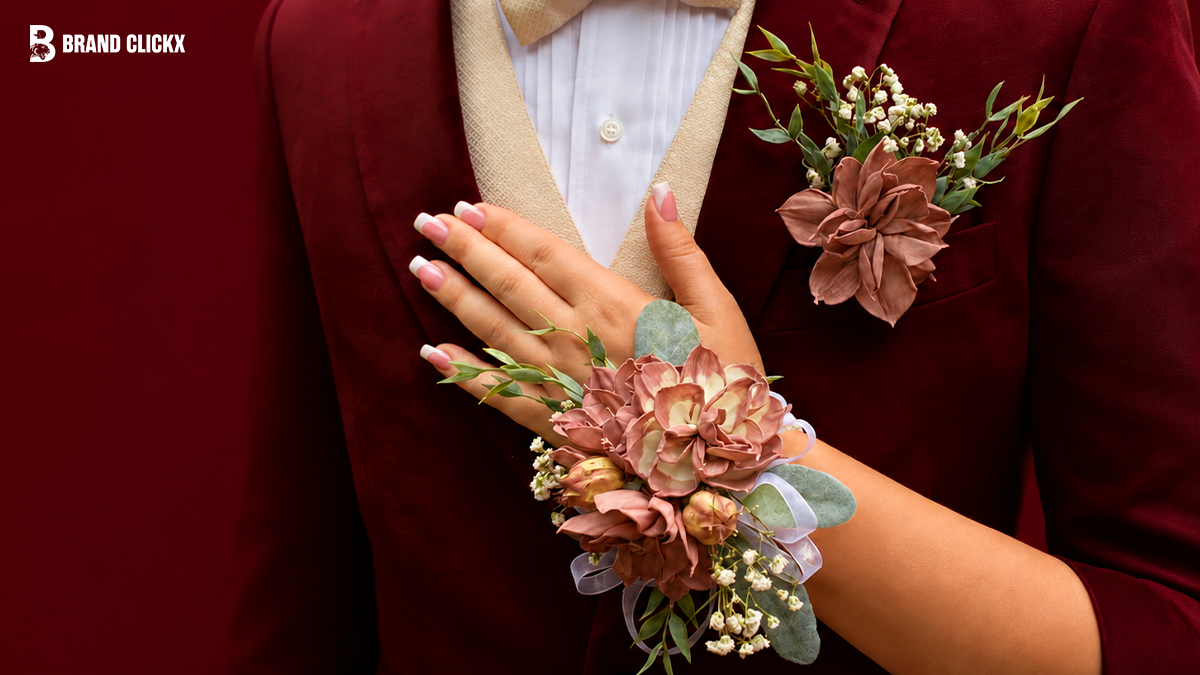
The corsage and boutonniere are among the oldest surviving consumer rituals in American culture. They date to Victorian England, survived two World Wars, outlasted the disco era, and showed up reliably on prom wrists and lapels for 150 years without changing much. Then Gen Z got hold of them, and in 2026, the tradition looks almost nothing like what it was.
What is happening to corsages and boutonnieres right now is not just a floral design story. It is a case study in how heritage rituals get reinvented when a new consumer generation applies its own values to them, and what that reinvention tells brand strategists about the difference between tradition that endures and tradition that evolves.
AI Overview
Corsages and boutonnieres are floral accessories traditionally exchanged between prom and wedding couples as a symbol of partnership and celebration. The corsage, from the French corsage meaning “bodice,” was historically pinned to a dress or, in modern practice, worn as a wrist bracelet. The boutonniere, from the French boutonnière meaning “buttonhole,” is worn by men on the left lapel.
In 2026, the category is undergoing its most significant transformation in decades. The dominant trends include the rise of the “promquet” (a small handheld mini bouquet replacing the wrist corsage), the “pocket boutonniere” (eliminating the pin entirely), a shift from tight rosebuds to loose, textural mixed arrangements, and a color palette shift toward Mocha Mousse earth tones, butter yellows, and warm neutrals. Simultaneously, the etiquette governing who buys what for whom is being actively renegotiated by Gen Z couples who are rejecting the gendered traditions of previous generations.
The corsage and boutonniere market sits within the broader $4+ billion US floral gifting industry and is most active in two seasonal windows: prom season (April–June) and wedding season (May–October).
Key Takeaways
| Trend | 2026 Direction |
| Wrist corsage | Declining being replaced by “promquets” (handheld mini bouquets) |
| Boutonniere style | Moving to “pocket boutonnieres” no pin, slides into breast pocket |
| Color palette | Mocha Mousse, butter yellow, warm neutrals over bright jewel tones |
| Flower choices | Loose, textural, mixed arrangements over tight rosebuds |
| Wedding boutonnieres | Architectural greens, waxy anthuriums, minimalist structural look |
| Who buys what | Gendered etiquette being replaced whoever wants to, buys what they want |
| Fresh vs silk | Silk alternatives gaining ground for budget and keepsake reasons |
| Matching sets | Less matched, more complementary coordinated without being identical |
The Heritage Problem: Why 150-Year-Old Rituals Need Reinvention
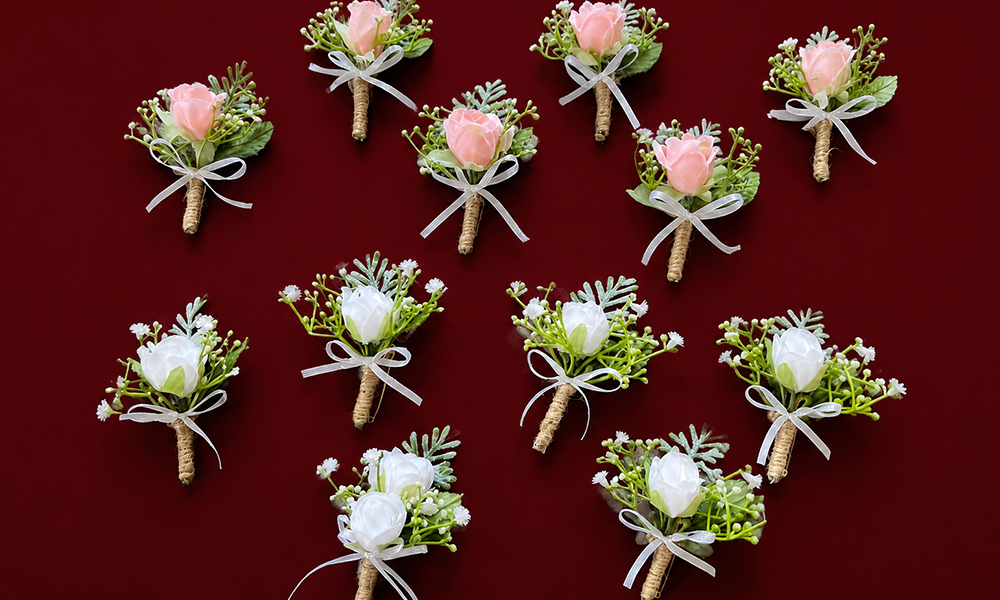
The corsage and boutonniere tradition arrived in America from Victorian England in the mid-19th century. In its original form, it was explicitly gendered: the man purchased a corsage for his date, she purchased a boutonniere for him. The exchange was a material signal of courtship and mutual investment in the event. The flowers were chosen to complement the woman’s dress. The boutonniere echoed the corsage. Everything matched.
That model persisted, largely unchanged, for a century and a half. And then Gen Z started going to prom.
The first thing Gen Z changed was the buying convention. Traditionally, it was customary for the man to purchase the corsage for his date while she bought his boutonniere an exchange that emphasized mutual thoughtfulness and outfit coordination. Gen Z is not following this convention and the floral industry has had to adapt to same-sex couples, non-binary prom-goers, friend groups buying flowers for each other, and solo attendees who buy their own. The ritual survived the identity expansion. The gendered buying convention did not.
The second thing Gen Z changed was the form factor. The dominant 2026 trend is a shift from wrist corsages to handheld promquets small clutch bouquets that can be set down on a table, handed to a friend for photos, or simply held when convenient and put away when not. The reason is practical and characteristically Gen Z: wrist corsages are uncomfortable to wear while dancing and get in the way throughout the evening.
The pocket boutonniere solves the equivalent problem for men: no pin means no damage to the suit, no awkward pinning moment captured on camera, no anxiety about whether someone is about to stab themselves with a corsage pin in front of their date’s parents.
The Aesthetic Shift: From Tight Rosebuds to Textural Architecture
The visual language of corsages and boutonnieres has shifted as dramatically as their form.
The defining aesthetic of 2026 is moving away from the compact, symmetrical arrangements that dominated prom florals for decades the tight ball of identical roses, the ribbon-wrapped wristlet in a matched color. The direction in 2026 is toward Mocha Mousse earth tones, butter yellows, and heavy texture loose, organic arrangements that feel gathered rather than constructed.
For weddings specifically, the direction is even more deliberate. Frilly, delicate petals are increasingly being replaced by architectural greens, waxy anthuriums, and structural stems. The modern wedding boutonniere is minimal, bold, and intentional rather than decorative and soft.
The shift from matched sets to complementary pairings reflects a broader aesthetic sensibility. Where a bridal bouquet features wild ivory roses, trailing jasmine, and blush peonies, the groom’s boutonniere takes a single blush rosebud enough to say “we planned this together” without the over-coordinated look of a matching prom set.
This mirrors a consumer aesthetic trend visible across categories in 2026 from fashion (coordinated but not matchy-matchy) to interior design (curated eclecticism) to social media aesthetics (intentional but not over-styled). The corsage and boutonniere market is reflecting the same values as the broader consumer culture that is buying them.
The Brand Strategy Lens: What This Reinvention Teaches
For BrandClickX’s audience brand strategists, marketers, and creative directors the corsage and boutonniere story is worth reading as more than a lifestyle trend. It is a compressed case study in how heritage consumer rituals survive or die when new generations inherit them.
Lesson 1: The ritual survives when the meaning is preserved and the form is released.
The corsage and boutonniere survived Gen Z’s reinvention because the underlying meaning a gesture of care, celebration, and mutual acknowledgment remained intact. What changed was the form: wrist vs handheld, pin vs pocket, matched vs complementary, gendered purchase convention vs open. Every change released a constraint that was limiting the ritual’s accessibility without touching the emotional core that made it worth preserving.
This is the model for any heritage brand facing generational transition. The question is never “how do we make this look younger?” The question is “which elements carry the meaning and which elements are just the historical packaging?” Corsages kept the meaning and released the packaging. Most heritage brands confuse the two and end up protecting packaging while the meaning quietly exits.
Lesson 2: Gen Z optimizes for authenticity and practicality simultaneously and punishes anything that fails either test.
The wrist corsage failed the practicality test: itchy, inconvenient, gets in the way of dancing. The gendered buying convention failed the authenticity test: it assumed a heteronormative couple structure that a significant portion of 2026 prom-goers do not represent. Both failures were addressed by the market florists, retailers, and the students themselves faster than any institutional guidance suggested they should be.
The speed of the adaptation is the signal. Gen Z does not wait for established brands to update their offering. They create the alternative themselves and the market follows. For brands in any category that relies on ritual or tradition: the adaptation needs to come from within before it gets imposed from without.
Lesson 3: The silk alternative is the subscription model equivalent of the floral industry.
One of the fastest-growing segments of the corsage and boutonniere market in 2026 is silk flowers high-quality artificial alternatives that look nearly identical to fresh flowers in photographs, can be kept permanently as a keepsake, and cost significantly less than fresh arrangements. Budget-conscious couples in particular are switching to high-quality silk options that photograph beautifully and eliminate the stress of fresh flower timing and refrigeration.
The brand logic is familiar: the silk flower customer is optimizing for the outcome (beautiful photos, lasting keepsake, budget control) rather than the input (fresh flowers, traditional craft). This is exactly the logic that has disrupted physical retail, music ownership, software licensing, and dozens of other categories. The consumer who values the memory more than the medium is the consumer who switches to silk. And that consumer is 2026’s typical prom and wedding buyer.
Lesson 4: Color is culture.
The biggest aesthetic color trend for 2026-2027 is a move toward Mocha Mousse earth tones, butter yellows, and warm neutrals. Mocha Mousse was Pantone’s Color of the Year 2025 a warm, comforting brown that expressed the collective cultural mood of a post-pandemic consumer base wanting stability, warmth, and authenticity over novelty and spectacle.
That color palette is showing up in corsages and boutonnieres in 2026 because consumer culture is coherent. The same values that drove Mocha Mousse into fashion, interior design, and food packaging are now driving it into prom florals. This is not coincidence it is the floral market reflecting the same cultural moment that every other consumer category is reflecting.
For brand strategists: when a color trend reaches prom flowers, it has fully penetrated the cultural mainstream. That is both a signal that the trend is at its widest reach and a warning that the leading edge has already moved on.
How to Choose: A Practical Guide for 2026
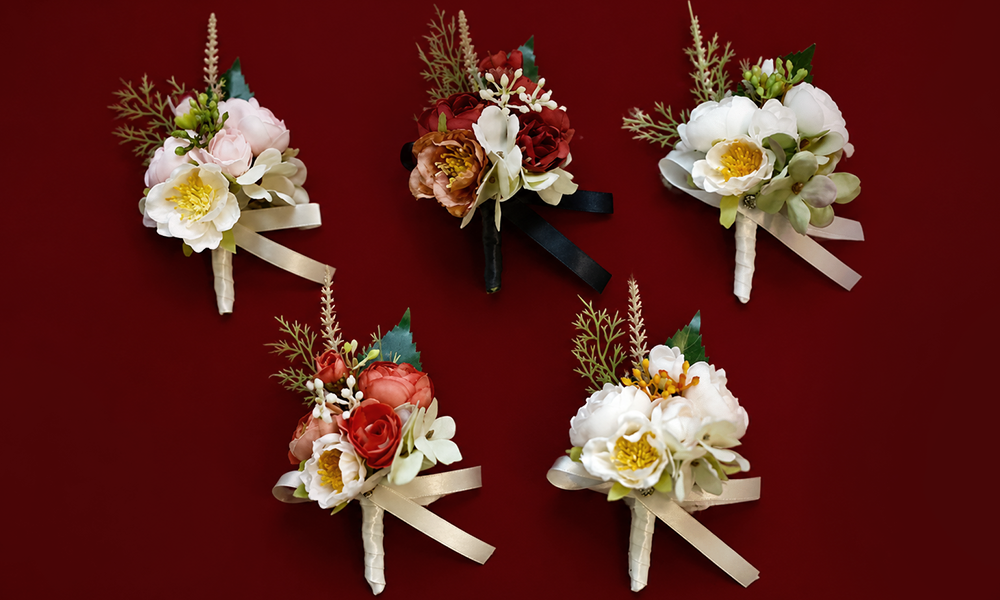
For the readers planning an actual event here is the 2026 guide to getting this right.
Corsage Styles in 2026
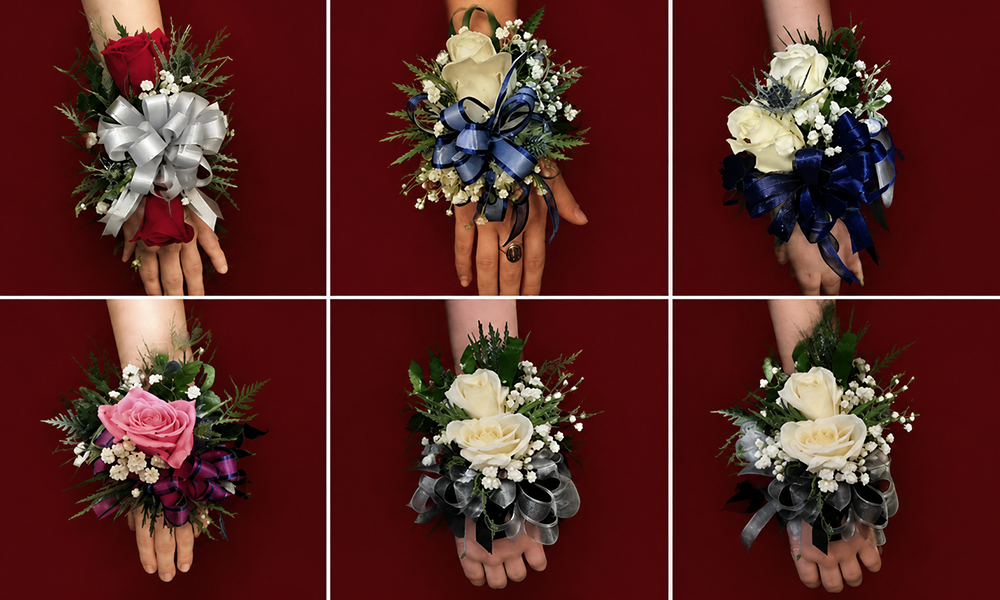
Wrist corsage (traditional): Still popular but declining. Best for formal events where practicality of movement is less of a concern. Most florists still offer these as standard. Choose loose, textural arrangements over tight rosebuds for a current look.
Promquet (the rising alternative): A small handheld bouquet essentially a miniature version of a bridal bouquet. Easier to manage, easier to photograph, easy to set down. Works for any dress style. The 2026 choice for prom-goers who prioritize dancing and comfort.
Pin-on corsage: The classic bodice corsage, attached at the shoulder or chest. More formal, less common for prom, more appropriate for mother-of-the-bride and formal event roles.
Flower crown and hair comb: Growing for graduation specifically a floral headpiece that reads as festive without the wrist or lapel placement. Strong for outdoor daytime ceremonies.
Boutonniere Styles in 2026
Classic pinned boutonniere: The standard. Single bloom or small cluster, pinned to the left lapel through the buttonhole. Timeless, appropriate for any formal occasion.
Pocket boutonniere: The 2026 trend for prom specifically. No pin required slides into the breast pocket, with the bloom facing outward. Less formal look, no pin anxiety, no suit damage. Best for suits with an actual breast pocket.
Architectural/minimalist (wedding): For 2026 grooms, the direction is structural a single textural stem, an anthurium, or a sophisticated green with one accent bloom rather than a cluster arrangement.
Color Coordination in 2026
Match the flower to an accent in the dress rather than the main color, choose a neutral white or cream that works with almost anything, or pick a complementary tone that flatters the gown. Each of these approaches reads as intentional rather than accidental.
The 2026 color palette that reads as current: warm mocha tones, buttery yellows, blush and terracotta, sage green, dusty rose. The palette that reads as dated: bright jewel tones (cobalt, emerald, fuchsia) as the dominant note, neon accents, overly matched pairs.
Fresh vs Silk
Fresh flowers are still the default for most events and are the choice if you want the classic aesthetic and scent. The limitation: they need refrigeration, should be ordered 1-2 days before the event, and last only the duration of the evening (typically 8-12 hours out of refrigeration).
Silk (artificial) flowers are the choice if you want a permanent keepsake, are on a tighter budget, or are concerned about allergies. Quality has improved dramatically high-end silk corsages and boutonnieres are difficult to distinguish from fresh in photographs. The limitation: they lack the scent and the specific texture of live blooms.
Ordering and Timing
- Order from a local florist 1-2 weeks before the event for fresh flowers
- Confirm they have the specific flowers you want seasonal availability matters
- For weddings, order 2-3 months in advance and coordinate with your florist on the full floral scheme
- Pick up fresh arrangements the day of or morning of the event
- Store in the refrigerator (away from fruit, which produces ethylene gas that speeds wilting) until you leave
FAQs
What is a corsage?
A corsage is a small floral arrangement worn by women at formal events traditionally pinned to the dress or worn as a wrist bracelet. In 2026, the promquet (small handheld bouquet) is increasingly replacing the wrist corsage for prom.
What is a boutonniere?
A boutonniere is a small floral arrangement worn by men on the left lapel, typically pinned through the buttonhole. The pocket boutonniere which requires no pin is the 2026 trend for prom events.
Who buys the corsage and boutonniere?
Traditionally, the man bought the corsage for his date and she bought the boutonniere for him. In 2026, this gendered convention is widely abandoned whoever wants to, buys what they want, reflecting the inclusivity of modern prom culture.
What flowers are trending for corsages and boutonnieres in 2026?
Loose, textural mixed arrangements featuring orchids, spray roses, ranunculus, and lisianthus. Earth-tone palettes Mocha Mousse, butter yellow, blush, terracotta are dominant over bright jewel tones.
What is a promquet?
A promquet is a small handheld mini bouquet that is replacing the wrist corsage for many 2026 prom-goers. It is easier to carry, easier to photograph, and does not cause the itching and dancing interference that wrist corsages can create.
How long does a fresh corsage or boutonniere last?
Typically 8-12 hours out of refrigeration enough for a prom or wedding day. Store in the refrigerator until the event and away from fruit, which accelerates wilting.