
Can AI diagnose a patient better than a doctor? Sometimes, yes. Sometimes, no. And in many cases, the answer depends on what the AI is being asked to find. That may sound like a frustrating answer, but it is actually the most important thing to understand about AI in healthcare diagnostics. There is no single AI system that can look at every patient, understand every disease, and produce a perfect diagnosis.
Some medical AI tools are built for one very specific job. They may look at a scan, examine a tissue sample, or check an eye image for signs of disease. Others, especially generative AI systems, are much broader. They can read symptoms, answer medical questions, and suggest possible diagnoses. Those two types of AI should not be judged in the same way.
The research makes this clear. A large analysis of 83 studies found that generative AI had an overall diagnostic accuracy of 52.1%. It was not significantly different from physicians overall or from non-expert physicians. But expert physicians performed significantly better, with a 15.8 percentage-point advantage. At the same time, some specialized medical AI systems have reported results above 90%. So how can both things be true? The answer is surprisingly simple: AI does not have one medical job.
AI in Healthcare Diagnostics: Quick Results at a Glance
| Research area | AI result | Physician result | What it tells us |
| Generative AI, 83 studies | 52.1% accuracy | No significant overall difference | General diagnostic performance is highly variable |
| Generative AI vs. expert physicians | 15.8 points lower | Experts performed better | AI still struggles against expert-level judgment |
| Digital pathology | 96.3% sensitivity | Not a direct physician comparison | Specialized AI can be extremely strong at narrow tasks |
| Skin cancer diagnosis | 87.0% sensitivity | 79.8% | AI performed strongly overall |
| Skin cancer diagnosis | 77.1% specificity | 73.6% | AI also produced strong results in ruling out disease |
| Skin cancer vs. expert dermatologists | 86.3% sensitivity | 84.2% | Performance was relatively close |
| Skin cancer vs. expert dermatologists | 78.4% specificity | 74.4% | AI was competitive, but not a universal replacement |
The First Thing to Know: AI Does Not Have One Accuracy Rate
Imagine asking two people to identify something in a picture. The first person only needs to find one particular object. The second person has to identify the object, explain what it means, understand who owns it, and decide what should happen next. Even if the first person gets the identification right almost every time, that does not mean they can do the second person’s entire job. Medical AI works in much the same way.
A specialized system might be trained to find a particular pattern in a medical image. Its job is narrow, so it can become very good at that task. A doctor has a much wider job. A patient may arrive with several symptoms, a complicated medical history, unusual test results, and medications that affect the situation. The doctor has to bring all of that together. That is why AI in healthcare diagnostics cannot be judged with one number. When you see an AI system claiming 95% or 99% accuracy, the important question is not simply, “Is that true?” The better question is: “What exactly is it 95% accurate at?” That one question can completely change how you understand an AI medical claim.
What Happened When Researchers Tested Generative AI?
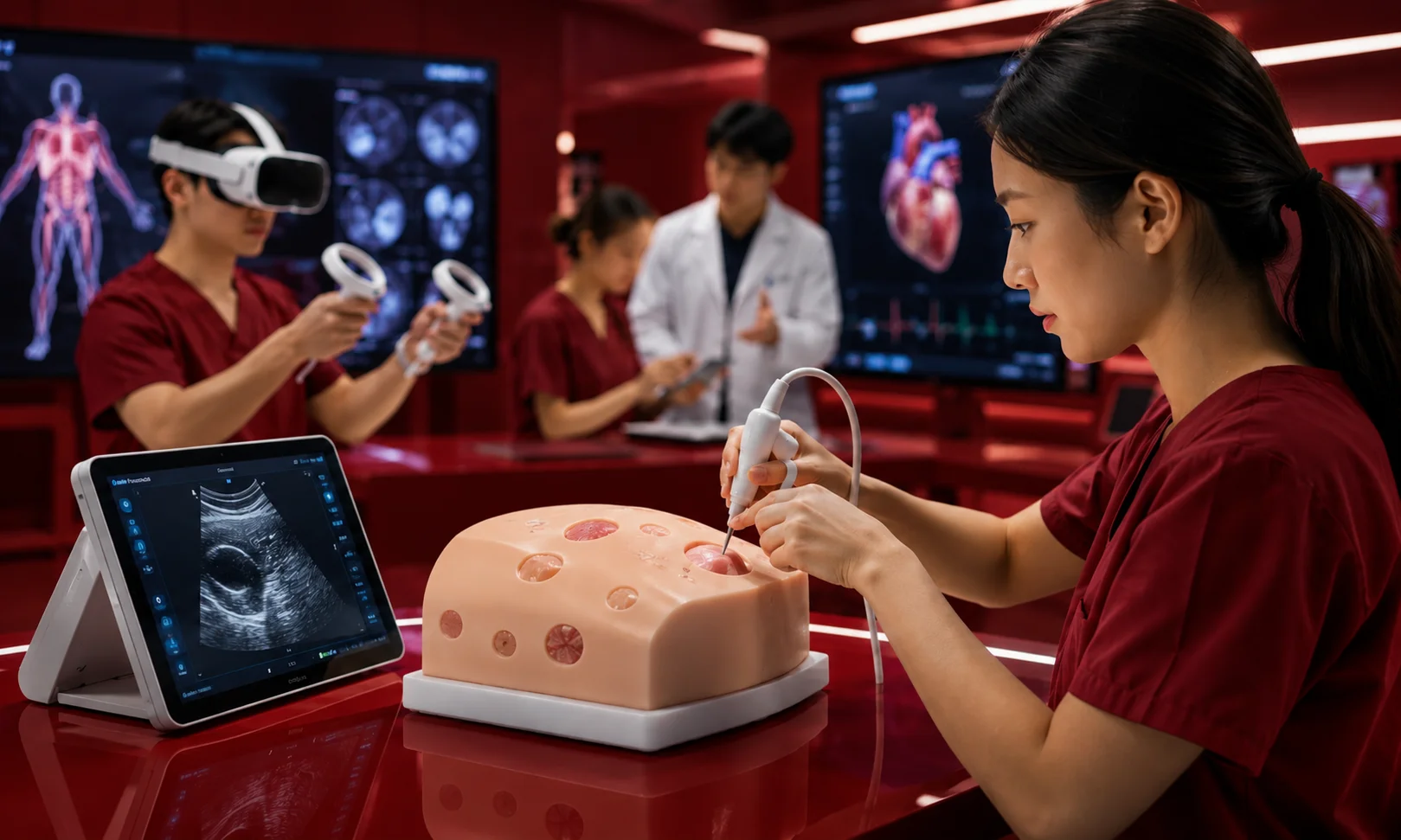
Generative AI is where things get especially interesting. These systems are not limited to one medical image or one disease. They can read a written case, process symptoms, consider possible conditions, and produce an answer in seconds. That sounds very close to what a doctor does. But the research shows that it is not quite the same.
A large analysis covering 83 studies found an overall diagnostic accuracy of 52.1% for generative AI. That does not mean the AI was wrong 47.9% of the time in every situation. The studies covered different models, medical problems, questions, and testing methods. The number is an overall result across that body of research. There was also an interesting comparison with doctors. Generative AI was not significantly different from physicians overall. It was also not significantly different from non-expert physicians.
But when researchers compared it with expert physicians, the experts came out ahead by 15.8 percentage points. That tells us something important. Generative AI can sometimes perform at a level similar to less experienced doctors on certain diagnostic questions. But that does not mean it has reached the level of the best specialists across medical diagnosis. There was another reason to be careful with the findings: about 76% of the studies had a high risk of bias. So the results are useful, but they are not the final word on what AI can do in a real hospital.
Why Specialized Medical AI Can Look So Much Better
Now for the surprising part. Some specialized medical AI systems produce much higher numbers. Digital pathology is a good example. Pathology involves examining tissue samples to look for signs of disease.
AI can be trained to recognize certain patterns across thousands of digital tissue images. A large review found a mean of 96.3% sensitivity and 93.3% specificity for AI in digital pathology. Those are impressive numbers. But there is an important difference between this type of system and a general-purpose AI model. The pathology system is not being asked to act like a complete doctor. It is solving a much smaller problem.
Think of it like a goalkeeper who is trained specifically to stop penalty kicks. If that goalkeeper saves 96 out of 100 penalties, that is an amazing result. But you would not use that number to claim the goalkeeper is automatically the best football player on the field. Medical AI works the same way. A system can be excellent at finding a particular pattern without being capable of handling an entire patient.
And even the impressive pathology results need caution. Almost all of the studies had at least one area of high or unclear concern involving bias or how well the results might apply outside the study setting. So a great laboratory result is encouraging. It is not a guarantee of perfect performance in everyday healthcare.
Skin Cancer Shows Why the Story Is More Complicated
Skin cancer research gives us another useful example. A systematic review looked at 53 studies, with 19 included in the actual meta-analysis. Across those 19 studies, AI had a sensitivity of 87.0% and a specificity of 77.1%. Clinicians had a sensitivity of 79.8% and a specificity of 73.6%. At first, that makes AI look like the clear winner. But then the researchers compared AI with expert dermatologists.
AI had about 86.3% sensitivity and 78.4% specificity. Expert dermatologists had about 84.2% sensitivity and 74.4% specificity. The numbers are close. That is a much more interesting result than simply saying, “AI beats doctors.” Why? Because a dermatologist does not normally diagnose a patient by looking at one isolated image and stopping there. The doctor can ask when the spot appeared. They can ask whether it has changed. They can examine other areas of the skin. They can consider the patient’s history and decide whether a biopsy or another test is needed.
AI may be very good at answering one question: “Does this image look suspicious?” The doctor may need to answer a much bigger question: “What is happening with this patient, and what should we do next?” That difference is central to understanding AI in healthcare diagnostics.
Where Does AI Have the Biggest Advantage?
AI has something humans simply do not have in the same way. It can examine enormous amounts of information very quickly. A computer does not get tired after looking at the 500th scan. It does not need a coffee break after reviewing thousands of images. It can also compare patterns across huge datasets in a very short time. That can make it extremely useful for certain diagnostic tasks.
| Medical area | What AI can help with | What the physician still needs to do |
| Radiology | Spot unusual patterns in scans | Connect the image with symptoms and medical history |
| Ophthalmology | Examine retinal images | Perform a wider eye assessment |
| Pathology | Find disease-related patterns in tissue | Interpret the finding within the patient’s case |
| Dermatology | Flag suspicious skin lesions | Examine the patient and decide what happens next |
| Cardiology | Analyze ECGs and certain heart images | Consider symptoms, risk factors, and history |
| Generative AI | Process medical information and suggest possibilities | Check the answer and make the clinical decision |
This is where the practical value of AI in healthcare diagnostics becomes easier to see. The strongest use of AI may not be asking it to become a doctor. It may be asking it to become an extremely fast assistant for specific parts of the job.
Why a High Accuracy Score Can Still Hide a Problem
Here is a simple example. Suppose an AI system is 95% accurate. That sounds excellent. But what if the system is being used to find a rare disease? If only a small number of patients actually have that disease, the system could still make serious mistakes even while achieving a high overall accuracy score. This is why researchers look at more than accuracy.
- Sensitivity tells us how well the system finds people who really have the disease.
- Specificity tells us how well it identifies people who do not have the disease.
These numbers help show what kind of mistakes the system is making.
- A system with low sensitivity might miss patients who need treatment.
- A system with low specificity might send many healthy people for additional tests.
Neither problem is something you can understand from a single accuracy percentage. For AI in healthcare diagnostics, that distinction matters because not every mistake has the same consequence. Missing a dangerous condition can be far more serious than incorrectly flagging a harmless result.
The Research Environment Can Give AI an Advantage
There is another part of the AI-versus-doctor debate that does not get enough attention. A research study is not always a hospital. In a study, researchers can prepare cases carefully. They can organize the information neatly. They can give AI enough time to produce an answer. Real doctors do not always get that luxury.
A 2026 review of direct AI-versus-physician studies found that about 75.8% were retrospective. Researchers were often working with cases that had already been collected rather than testing AI during normal clinical care.
About 20.8% of the studies had information differences between AI and physicians. In other words, the two sides were not always working with exactly the same information. Around 60.8% used 10 or fewer physician readers. More than half did not report time constraints. Why does this matter?
Imagine an AI system receives a clean medical case with every important detail clearly written down. Now imagine a doctor sees a patient who explains their symptoms poorly, forgets part of their medical history, has several health problems, and needs an answer while other patients are waiting.
That is a very different test. The AI may perform better in the first situation. But that does not automatically mean it will make better decisions in the second. This is why good research on AI in healthcare diagnostics needs to move closer to real clinical conditions.
What Can a Doctor Notice That AI Might Miss?
AI is excellent at working with the information it receives. Doctors have another ability that is harder to measure: they can question the information itself. Imagine an AI system sees a scan and identifies a possible problem. A doctor may look at the same scan and think, “That does not match the patient’s symptoms.” That could lead the doctor to ask another question.
- Maybe the patient recently started a new medication.
- Maybe an old condition explains the unusual result.
- Maybe the symptom started suddenly when the suspected disease normally develops slowly.
Those details can change the diagnosis. This does not mean doctors always catch things AI misses. Doctors make mistakes too. It means diagnosis is often a moving process. One answer leads to another question. One test changes the next decision. New information can completely change the original idea. That is harder to capture in a simple AI benchmark.
Generative AI and Specialized AI Should Not Be Put in the Same Box
One of the easiest mistakes in this topic is using the word “AI” as if it describes one machine. It does not. Generative AI can read text, summarize information, answer questions, and suggest possible explanations. A specialized medical model may have one job and one job only. For example, it might check retinal images for signs of eye disease. Another system might look at tissue samples. Another might analyze an ECG.
The specialized system can be extremely good because it does not need to solve every medical problem. That is why the 52.1% generative AI result should not be used to describe all of AI in healthcare diagnostics. But the opposite mistake is just as bad. A 96.3% sensitivity result from a specialized pathology system does not mean AI can diagnose every patient with 96.3% accuracy. The numbers belong to different tasks.
What If AI and Doctors Work Together?
This sounds like the obvious solution. Let AI do the fast analysis. Let the doctor check the result. Problem solved. Not quite. Research on human-AI collaboration has produced mixed results. In some situations, people perform better with AI. In others, the combination does not beat the strongest individual performer.
There is also a risk called automation bias. It happens when people trust a computer’s answer more than they should. Imagine a doctor sees an AI system label a scan as low risk. The doctor may feel less need to question it, even if something about the case does not look right. The machine has not forced the doctor to make a mistake. But it may have made the doctor less likely to challenge one.
That is why good AI in healthcare diagnostics is not simply about adding AI to a hospital. The system has to fit into a workflow where doctors can review its answers, recognize its weaknesses, and override it when necessary.
What Happens When AI Gets the Diagnosis Wrong?
Every diagnostic system can make mistakes. The question is what happens next. A false negative can tell a patient that nothing serious was found when a disease is actually present. A false positive can make a healthy patient worry and lead to more tests. There are also problems that may not appear immediately.
An AI system can perform well during development but struggle when it encounters a different patient population. It may also behave differently with another type of medical equipment or lower-quality images.
Training data matters too. If certain patients are poorly represented in the data, the system may not work equally well for everyone. That means AI in healthcare diagnostics needs more than a strong launch result. It needs ongoing testing. Hospitals need to know whether the system continues to perform well after it is introduced into real clinical work.
So, Will AI Replace Doctors?
The more likely answer is no. At least, not in the simple way people imagine. A more realistic future looks like this: AI highlights something unusual in a scan. The doctor reviews it. AI helps organize a complicated amount of information. The doctor checks whether it fits the patient.
AI suggests possibilities. The doctor decides what those possibilities mean in the real case. That could save time without handing the entire diagnosis to a machine. And that may be where AI in healthcare diagnostics becomes most valuable. The goal does not have to be replacing the doctor. The goal can be helping the doctor notice more, work faster, and make better decisions.
So, Who Is Better at Diagnosis?
There is no universal winner. Specialized AI can be extremely good at narrow tasks. In some areas, its performance can match or exceed that of physicians. Generative AI is much less consistent. Across 83 studies, its pooled diagnostic accuracy was 52.1%. It was not significantly different from physicians overall or non-expert physicians, but expert physicians performed significantly better. That does not mean AI is useless.
Far from it. It means the real question is not: “Can AI beat doctors?” A better question is: “Where can AI genuinely help doctors make better decisions?” That question is more useful for hospitals, doctors, technology companies, and patients. It also gives us a better way to judge new medical AI systems. Instead of getting excited about one big accuracy number, we can ask what the system was tested on, what information it received, what mistakes it made, and whether it actually improved patient care.
Why Trust This AI Healthcare Diagnostics Guide?
BrandClickX provides this guide to help readers understand how AI performs in healthcare diagnostics compared with human physicians. The article examines diagnostic accuracy across generative AI and specialized medical AI systems while explaining sensitivity, specificity, research limitations, bias, and real-world clinical challenges. It avoids treating one accuracy score as proof that AI is better than doctors and instead gives readers the context needed to understand where AI can support diagnosis and where human clinical judgment remains important.
The Bottom Line
AI in healthcare diagnostics is already powerful, but it is not a digital replacement for every doctor. Some systems are incredibly good at specific jobs. They can scan images, recognize patterns, and help doctors find problems that deserve a closer look. Other systems, especially general-purpose generative AI, are much less predictable when asked to handle broad diagnostic problems.
Doctors have weaknesses too. They can miss things and make incorrect decisions. But they can also ask questions, collect new information, understand a patient’s wider situation, and change their thinking when the evidence changes. That is why the future is probably not about choosing between a doctor and a machine. It is about using each one where it makes the most sense. The best medical AI will not be the system that simply beats a doctor on a test.It will be the system that helps a doctor make a better decision for a real patient.
Frequently Asked Questions
Is AI more accurate than doctors in healthcare diagnostics?
AI can be more accurate than doctors for some narrow diagnostic tasks, especially when it is trained to identify specific patterns in medical images. However, it does not consistently outperform physicians across all types of diagnosis. Generative AI, for example, has shown much more mixed results when handling broader diagnostic problems.
What is the accuracy of AI in healthcare diagnostics?
There is no single accuracy rate for AI in healthcare diagnostics because different systems perform different jobs. One large analysis found generative AI had an overall diagnostic accuracy of 52.1% across 83 studies. Specialized systems can produce much higher results for specific tasks, such as medical image analysis.
Can AI replace doctors in diagnosis?
AI is unlikely to replace doctors completely because diagnosis involves more than identifying a disease pattern. Doctors can ask follow-up questions, review medical history, examine patients, consider multiple conditions, and decide what should happen next. AI is more useful as a tool that supports parts of the diagnostic process.
Where is AI most useful in medical diagnosis?
AI is particularly useful for tasks involving large amounts of medical data or images. It can help examine scans, tissue samples, retinal images, skin lesions, and heart data. Its value is often greatest when it helps doctors find unusual patterns quickly or brings important information to their attention.
What are the main risks of using AI in healthcare diagnostics?
AI can produce incorrect results, miss diseases, or flag healthy patients for further testing. Its performance can also change when it is used with different patient groups, equipment, or medical settings. Another risk is automation bias, where a doctor may trust an AI recommendation too much instead of questioning it.
Is AI better than doctors when diagnosing diseases?
There is no universal winner. Specialized AI can outperform physicians on some specific diagnostic tasks, while experienced doctors can perform better on broader and more complicated cases. The most useful approach is often to combine AI’s speed and pattern analysis with a physician’s clinical judgment.